


According to multiple technology media outlets citing sources with knowledge of the matter, the Chinese government is planning to allow the country’s top artificial intelligence companies to purchase a limited number of NVIDIA H200 GPU chips. If this decision materializes, it would mark a significant shift in Beijing’s long-standing stance on restricting access to advanced American semiconductor technology, and reflects the intense pressure China’s AI industry faces for high-performance computing capabilities. The reports indicate that Chinese officials have in recent weeks informed Alibaba Group, ByteDance, and AI star company DeepSeek that they may soon obtain permission to purchase H200 chips. However, this would not be a blanket approval—companies must submit applications to the relevant authorities detailing the number of chips needed and their intended use, and can only proceed with purchases after passing review.
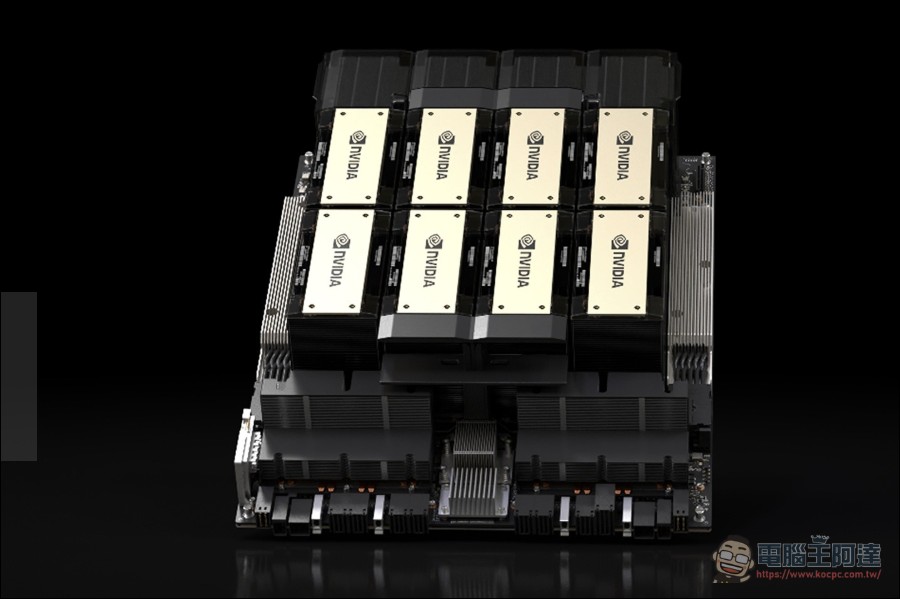
Reports say China will allow AI companies limited procurement of NVIDIA H200 chips, with the total under 200,000 units
The total is less than 200,000 units, which is even less than half of the applications received.
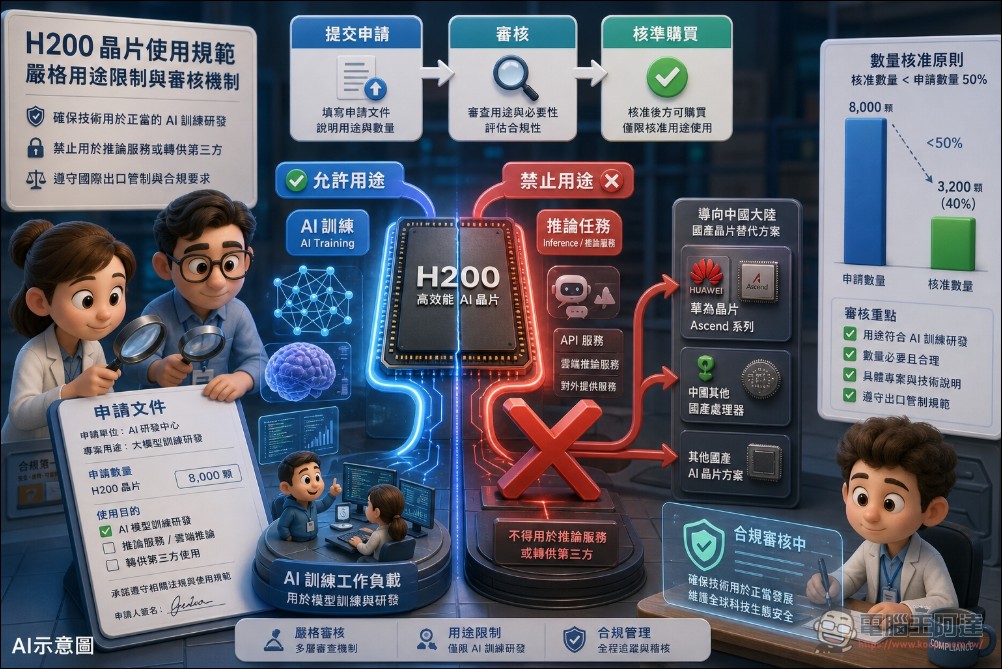
According to people familiar with the matter, the Chinese government is still evaluating the final approval numbers, with the total likely to be below 200,000 units—a figure that represents less than half of what these companies applied for earlier this year. This approval differs from a full opening up, as Beijing is only positioning the H200 as a scarce resource to supplement cutting-edge AI training needs, not to have China’s AI industry comprehensively switch to American chips.
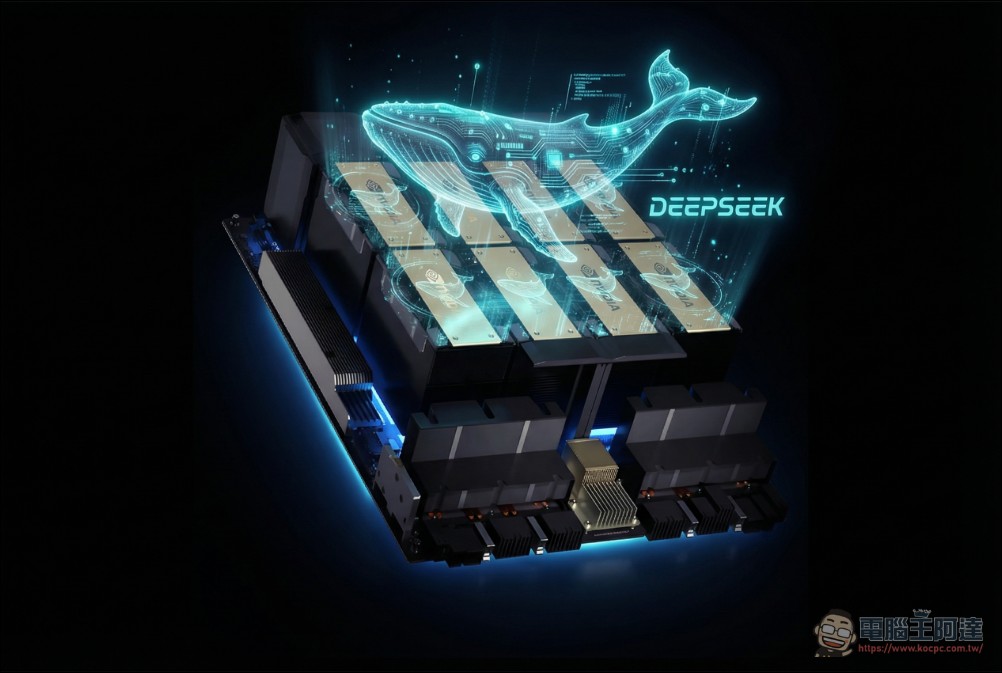
The use of these chips is also subject to strict restrictions. Reports indicate that H200 chips approved for purchase can only be used for AI training, while inference is prioritized using Huawei and other Chinese-made GPU processors. This design reveals the Chinese government’s strategy: to have NVIDIA chips serve as accelerators in the performance-critical training phase, while continuing to nurture the domestic chip industry.
The U.S. gave approval long ago, but Beijing has yet to give the green light.
Looking back at the approval journey of these chips, it has been quite a rollercoaster. As early as December 2025, U.S. President Trump announced on Truth Social that NVIDIA had been approved to export H200 chips to China, though with multiple conditions attached, including a 25% surcharge, restriction to “approved customers” only, and requirement for third-party review before export.
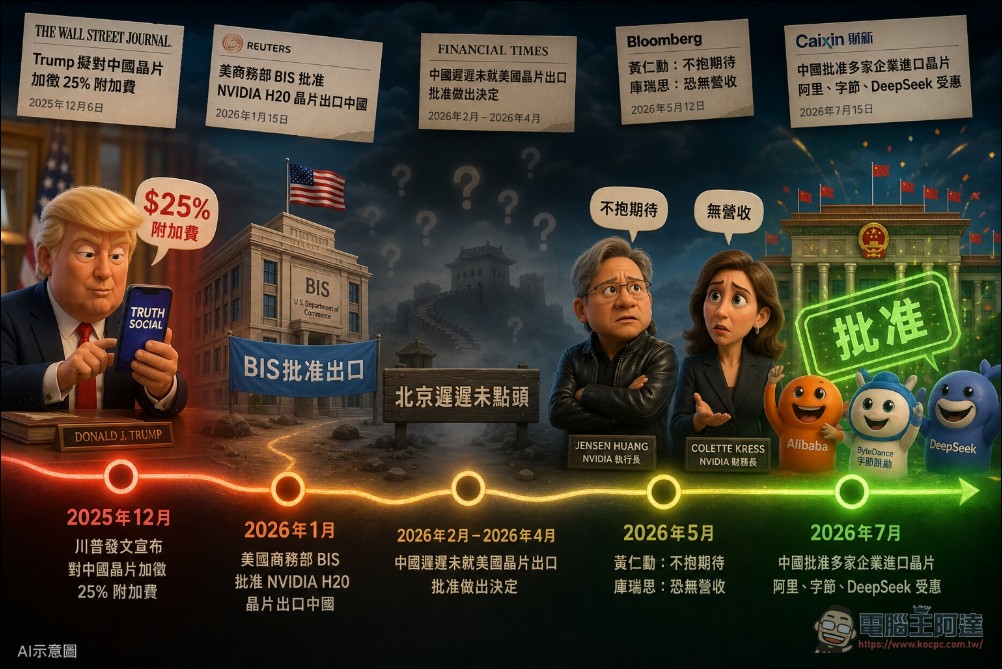
In January 2026, the U.S. Department of Commerce’s Bureau of Industry and Security (BIS) officially issued a rule to greenlight H200 exports to China, while requiring NVIDIA to ensure adequate supply for the U.S. domestic market, prohibit China from using the chips for military purposes, and limit imports to no more than 50% of U.S. customer purchases. Reports indicate that approximately 10 Chinese companies received U.S. approval to purchase this batch of chips.
However, despite Washington’s green light all along, Beijing has yet to give its approval. NVIDIA CEO Jensen Huang admitted in a May interview with CNBC that he has “no expectations” for Beijing to approve the sales. NVIDIA CFO Colette Kress also said during the May earnings call that the H200 has not yet generated any revenue for the company in China, “We’re uncertain whether any imports will be allowed into China.”
Why Beijing shifted from resistance to relaxation
China’s concerns about H200 imports mainly stem from two aspects. First, cybersecurity risks: Beijing worries that a large influx of American-designed AI processors into the Chinese market could create network security vulnerabilities. Second, industrial autonomy: China has long promoted domestic semiconductor production, and allowing American chips to flood in could weaken the development momentum of the local chip industry.
However, reports indicate that Chinese AI labs’ demand for computing power is rapidly rising. Similar to their American counterparts, Chinese AI companies are also facing a severe shortage of computing resources, especially when training increasingly complex large language models. While Chinese companies are gradually shifting to domestic chips for inference, they will still struggle to fully replace NVIDIA’s advantages in high-performance training in the short term.
In response to this matter, Liu Chang, spokesperson for the Chinese Embassy in the United States, stated: “We advocate that China and the United States achieve mutual benefit and win-win outcomes through cooperation, and oppose the politicization, instrumentalization, and weaponization of technology and trade issues. We are willing to work with all parties to maintain the stability of global industrial and supply chains.”
The H200 Chip’s Position: Not the Newest but Still Critical
The NVIDIA H200 is part of the Hopper series, launched in 2023, featuring more high-bandwidth memory (HBM) than the H100, giving it an advantage in data processing speed. Before the Blackwell architecture arrived in late 2024, the H200 was the most powerful AI chip on the market. Currently, a single H200 is priced at approximately $27,000 (about NT$860,000).
Although the H200 is already a previous-generation product, the U.S. government continues to maintain export bans to China on the most advanced Blackwell chips, as well as the next-generation Rubin series expected to launch in the second half of 2026. This makes the H200 the most advanced NVIDIA chip that Chinese AI companies can obtain through legitimate channels.
DeepSeek’s Homegrown Chips: A Long-Term Strategy for China’s AI Industry
Chinese AI companies are also not entirely dependent on NVIDIA. In May this year, it was reported that DeepSeek is developing its own inference chips, attempting to break free from reliance on both NVIDIA and Huawei. This aligns with the Chinese government’s “two-pronged approach” strategy: meeting training needs through the H200 in the short term, while replacing imports with domestic chips in the long term.
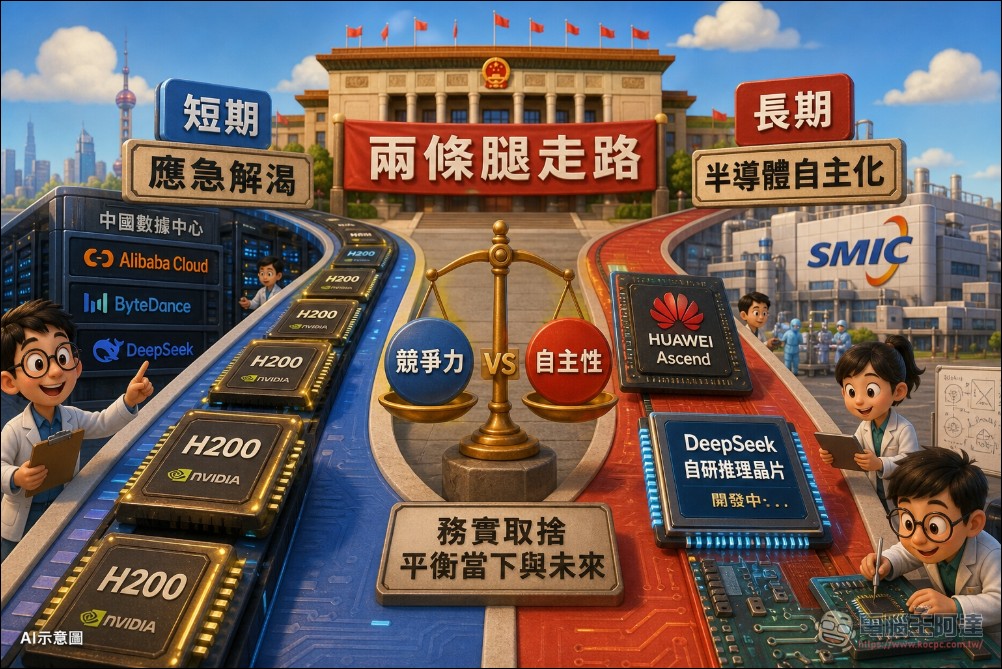
Beijing’s shift in stance reflects the pragmatic compromise in US-China tech competition: maintaining AI industry competitiveness while not abandoning the long-term national strategy of semiconductor self-sufficiency. The 200,000 H200 chip quota represents a middle ground for Beijing between short-term relief and long-term planning.
Source: KOCPC Chinese