


This morning (February 15, 2026), another bombshell announcement shook the artificial intelligence world: OpenAI CEO Sam Altman officially announced on his personal X (formerly Twitter) account that Peter Steinberger, founder of the popular open-source personal AI assistant project OpenClaw, has officially joined OpenAI and will lead the development of the “next-generation personal agent.” This appointment not only signals OpenAI’s aggressive push into the personal AI assistant space, but also marks a new chapter for OpenClaw, an open-source project that has drawn significant attention from the developer community.
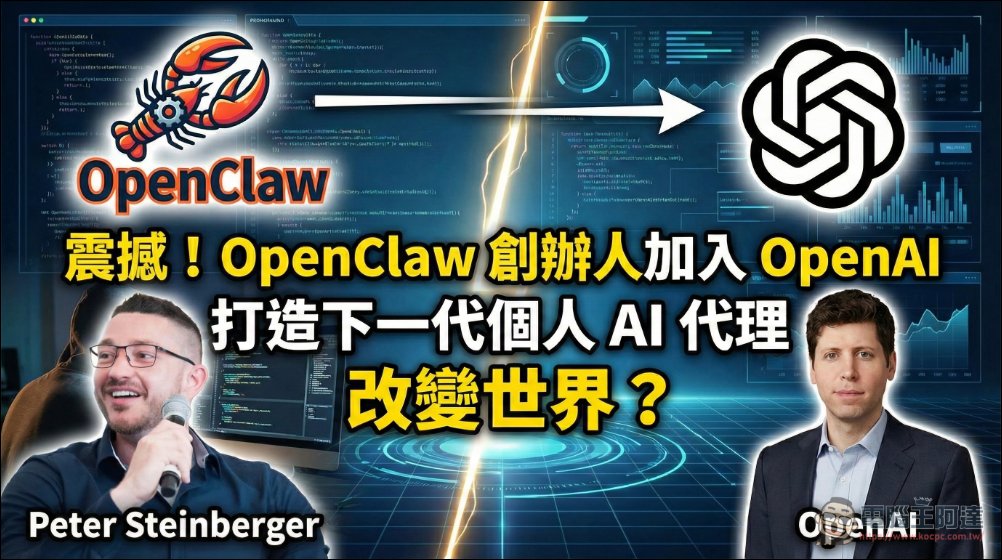
OpenAI poaches OpenClaw founder Peter Steinberger
From Clawdbot to OpenClaw: A Naming Journey Full of Twists and Turns
The story of the OpenClaw open-source project starts with its predecessor, Clawdbot. Independently developed by Austrian developer Peter Steinberger, this AI personal assistant has gone viral over the past few weeks. Its core selling point is “AI that actually performs tasks”: it not only answers questions, but can also proactively manage users’ calendars, book flights, and even join a social network of other AI assistants.
However, the project’s naming journey was anything but smooth. When it was first named Clawdbot, Anthropic issued a legal warning, arguing that the name was too similar to its own product Claude, forcing Steinberger to rename it for the first time to Moltbot. The second rename came because Steinberger personally preferred the connotations of the new name, ultimately settling on OpenClaw—a name that preserved the core identity of “Claw” while adding the open-source spirit represented by “Open.”
Steinberger’s Choice: Changing the World Over Building a Big Company
In the blog post announcing his move to join OpenAI, Peter Steinberger candidly shared the thought process behind his decision. The Austrian developer said that while he did have the opportunity to grow OpenClaw into a “huge company,” “building a big company doesn’t excite me.”
I’m joining @OpenAI to bring agents to everyone. @OpenClaw is becoming a foundation: open, independent, and just getting started.🦞https://t.co/XOc7X4jOxq
— Peter Steinberger 🦞 (@steipete) February 15, 2026
Steinberger elaborated further on his vision: “I want to change the world, not build a large company, and partnering with OpenAI is the fastest way to bring this vision to everyone.” These words reflected the sentiments of many open-source developers: the value of technology lies not in the size of its commercial scale, but in whether it can truly benefit the masses.
OpenAI’s personal agent strategy
Sam Altman made it clear when announcing the appointment that Steinberger would be responsible at OpenAI for “driving the development of the next generation of personal agents.” This reveals OpenAI’s ambitions in the personal AI assistant space: not only making AI capable of conversation, but enabling AI to truly understand user needs and take action.
Peter Steinberger is joining OpenAI to drive the next generation of personal agents. He is a genius with a lot of amazing ideas about the future of very smart agents interacting with each other to do very useful things for people. We expect this will quickly become core to our…
— Sam Altman (@sama) February 15, 2026
Personal agents (Personal Agent) are regarded as the next major milestone in AI development. Unlike traditional chatbots, personal agents are proactive, persistent, and capable of execution; once authorized, they can complete complex tasks for users across platforms and services. OpenClaw’s accumulated technical expertise in this area is exactly the core asset OpenAI values.
The Future of OpenClaw: Foundation Management Model
For the vast community of OpenClaw users and developers, the most pressing concern is undoubtedly the future direction of this open-source project. Sam Altman provided a clear answer in his statement: “OpenClaw will continue to exist as an open-source project managed by a foundation, with ongoing support from OpenAI.” The foundation governance model is not uncommon in the open-source world. The Linux Foundation and the Apache Software Foundation are both successful examples, ensuring that open-source projects can continue to develop through neutral governance structures, free from the influence of any single company or individual.
viewpoint; perspective; point of view; opinion
Peter Steinberger’s decision to bring his OpenClaw into a rapid union with OpenAI was, frankly, quite surprising. Industry rumors had it that Meta was also offering a very high price to acquire the project at the same time, so it was truly admirable that Peter Steinberger could uphold his belief in “open source” and “changing the world matters more than building a big company.” OpenClaw’s transition to a foundation-managed model also provides a valuable template for the sustainable development of open-source projects. This episode also highlights the huge potential of the personal AI assistant market. OpenAI’s aggressive recruitment of related talent shows that tech giants have realized the next killer application is likely to emerge in the personal agent space.
Editor’s note: I was somewhat more surprised that Claude, the best fit for OpenClaw, ended up doing nothing…
Source: KOCPC Chinese