


short videoMany parents should have a deep understanding of how attractive it is. As soon as you slide it in, time will be eaten up unknowingly. For growing children, it is more likely to affect their work, rest and concentration. Faced with such a situation, YouTube Recently, it has quietly strengthened the parental control function, focusing on Shorts usage management.
From viewing time limits, temporary or permanent blocking, to bedtime reminders and intermission settings, parents are no longer just passive reminders, but have practical tools to help their children establish healthier usage habits.
This update is not only for children’s accounts, but also reflects the platform’s re-adjustment of the user experience for minors, which may bring considerable changes to the daily use methods of parents and children.
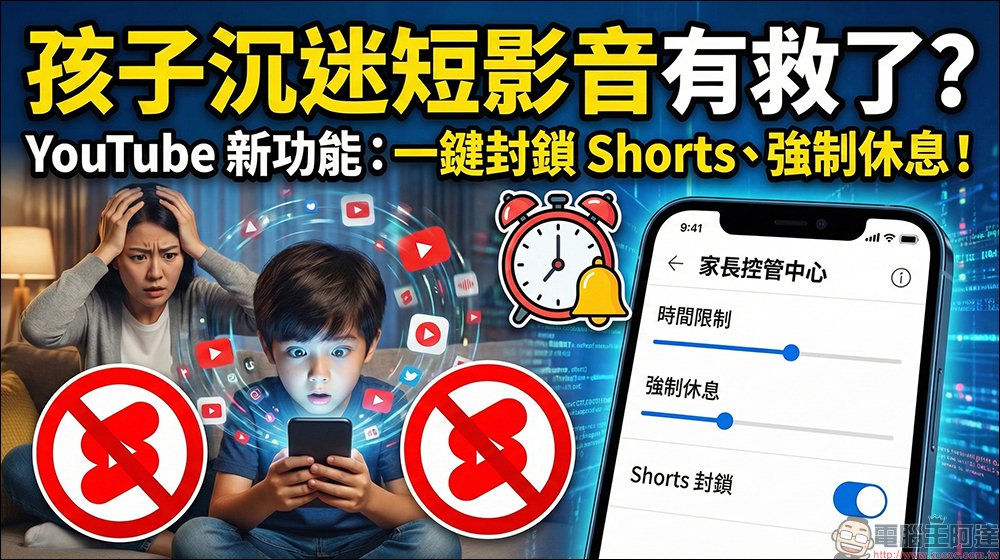
YouTube launches new feature to prevent teenagers from becoming addicted to Shorts short videos
Short videos have long become a mainstream content format. They are fast-paced, stimulating, and have accurate recommendation algorithms. It is easy for people to watch one video after another without stopping. It is no longer easy for adults to control themselves, let alone children and teenagers whose self-control has not yet matured. Therefore, how to help children establish reasonable viewing boundaries without a complete ban has become the most troublesome issue for many parents.
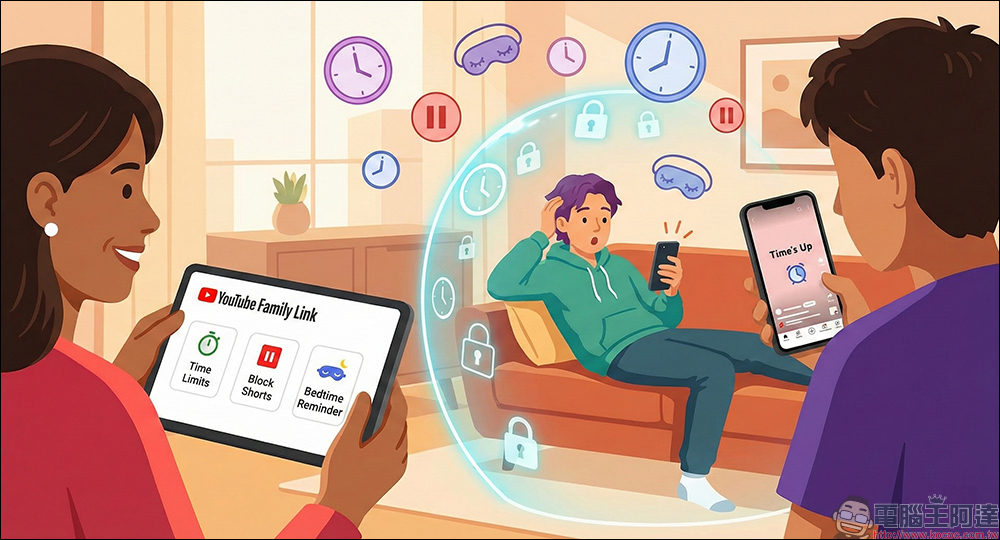
YouTube recently addressed this issue by further focusing its parental controls on Shorts. Parents can now set an exclusive viewing time limit for Shorts for their children’s linked accounts. Once the set time is reached, the system will interrupt playback to avoid endless scrolling. This design is equivalent to handing over the matter of “it’s time to stop” to the system, reducing repeated reminders and even conflicts between parents and children.
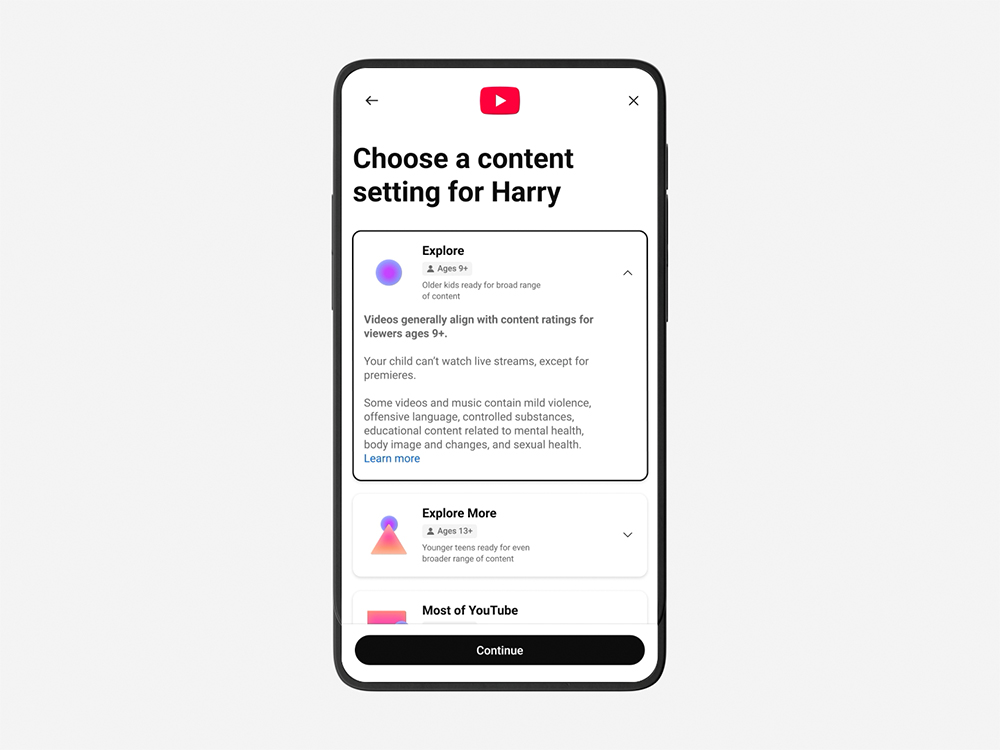
▲Image source: YouTube
In addition to time limits, more importantly, parents can also directly block the viewing permissions of Shorts. This block can be permanent or temporary. For example, if a child needs to watch instructional videos on YouTube to prepare for an exam, he or she can turn off Shorts first to avoid being distracted by entertainment content. This kind of flexible setting makes YouTube no longer just an entertainment platform, but can adjust the purpose of use according to different situations.
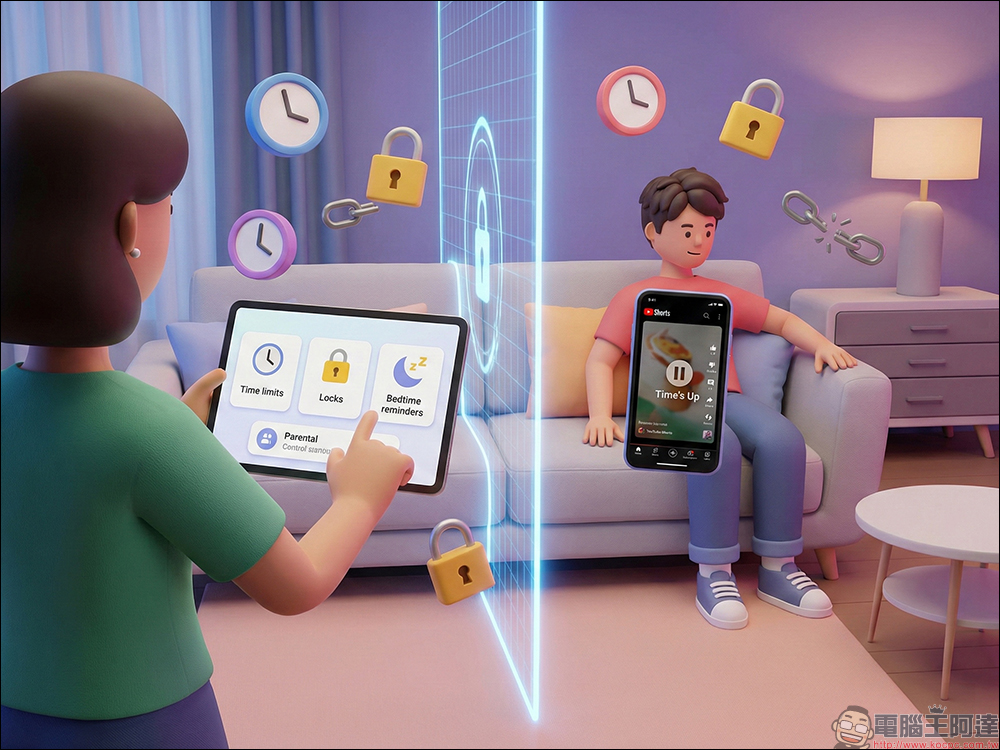
In terms of work and rest management, YouTube has also strengthened its reminder mechanism. Parents can set exclusive bedtime reminders for their children, as well as “take a break” interruption prompts to encourage children to pause after watching for a long time. These functions can actually be used by adult accounts, but for children’s accounts, the effect will be more clear through prior settings by parents.
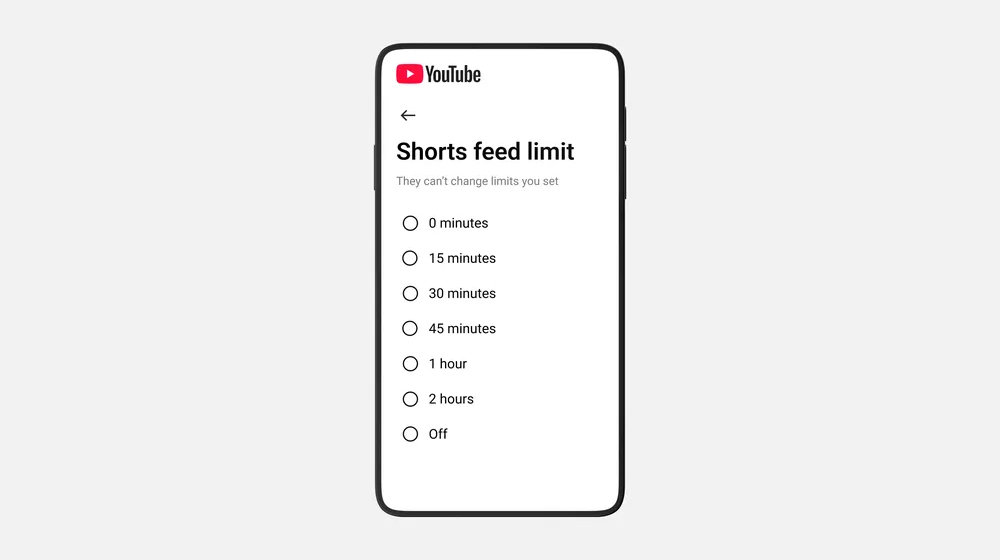
▲Image source: YouTube
Another pain point that many parents feel is the trouble of switching accounts. When many families share devices, they often switch back and forth between the parent account and the child account, and accidentally forget to switch back, causing the entire recommended content to be washed out by children’s videos. YouTube also announced that it will optimize the registration and login process within the app so that parents and children can quickly switch accounts in fewer steps and reduce misuse. Of course, the prerequisite is to remember to actually switch.
This adjustment to Shorts is actually based on the existing youth supervision mechanism. Parents can originally monitor their children’s channel activities, such as whether to upload videos, interaction status, etc., and this function has become a basic feature of most social platforms. The overall trend is clear. All major platforms are responding to society’s high concern for the online safety of minors.
It is worth mentioning that YouTube introduced age estimation technology as early as the previous year to try to determine whether the account belongs to a teenager and provide a corresponding user experience. This means that even if children’s accounts are not actively set up, the system itself will try to reduce the exposure of age-inappropriate content. This approach shows that the platform is shifting from a passive response to a more active protection design.
Further reading:
Source: KOCPC Chinese