


The advancement of digital technology has brought much convenience to daily life, but also created many problems. Among them, the rampant spread of digital fraud has become a nightmare that keeps Taiwanese citizens on edge. To prevent digital fraud, the government has introduced the new four anti-fraud laws. Through heavier penalties for fraud and collaborative anti-fraud efforts by relevant government agencies, monthly fraud-related financial losses—which once exceeded NT$10 billion—have improved. However, digital fraud has still not completely disappeared.
Why is digital fraud so rampant in Taiwan, and how can Taiwan improve? Below is an explanation:

As digital life becomes part of people’s daily routines, fraud groups using telecommunications and digital technology to carry out scams has become a major headache for governments nationwide. Although the Taiwan government has tried to curb digital fraud through legal amendments and public education, Taiwan still suffered NT$89.326 billion in fraud losses last year. Why is digital fraud so rampant in Taiwan? Below is a summary video and detailed explanation.
1. Why is digital fraud so rampant in Taiwan?
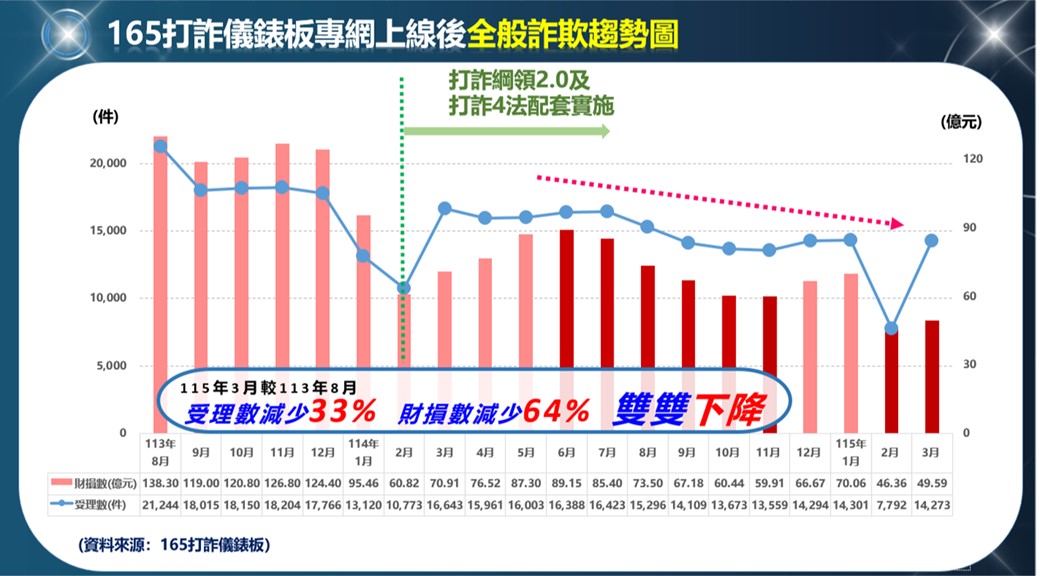
According to the 165 Anti-Fraud Dashboard, fraud losses in March 2026 reached NT$4.959 billion, with 14,273 cases received. Compared with the same period last year, losses dropped by 30% and reported cases fell by 14.2%, showing that government agencies and businesses have made some progress in their active anti-fraud efforts in recent years. However, monthly fraud losses of nearly NT$5 billion and over 10,000 fraud cases still terrify the public, who are calling for continued improvement.
Why is digital fraud so rampant in Taiwan? The main reasons can be summarized into five points:
A. Scams require little investment but yield huge profits, and fraud rings are full of hidden talent, making them nearly impossible to guard against.
According to the National Police Agency’s 165 Anti-Fraud Dashboard, Taiwan’s total fraud-related financial losses in 2025 reached NT$89.326 billion, showing just how lucrative scams have become.
In the past, many people believed fraud syndicates were largely made up of gangsters and social outcasts. However, the wide range of scam tactics reveals that these groups are intimately familiar with the operations of financial institutions, telecommunications companies, prosecutors, police, and government agencies—something gangsters and social outcasts alone could never accomplish.
Where there is big money, there are willing hands. Many dismantled fraud syndicates have included collaborators such as lawyers, telecommunications experts, money laundering specialists, cryptocurrency experts, retired prosecutors and police officers, and even transnational authoritarian states. Their members are a formidable mix of hidden talent, making them extremely difficult to guard against.

B. Serious personal data leakage:
For fraudsters to successfully carry out scams, being able to identify precise targets is the most critical factor.
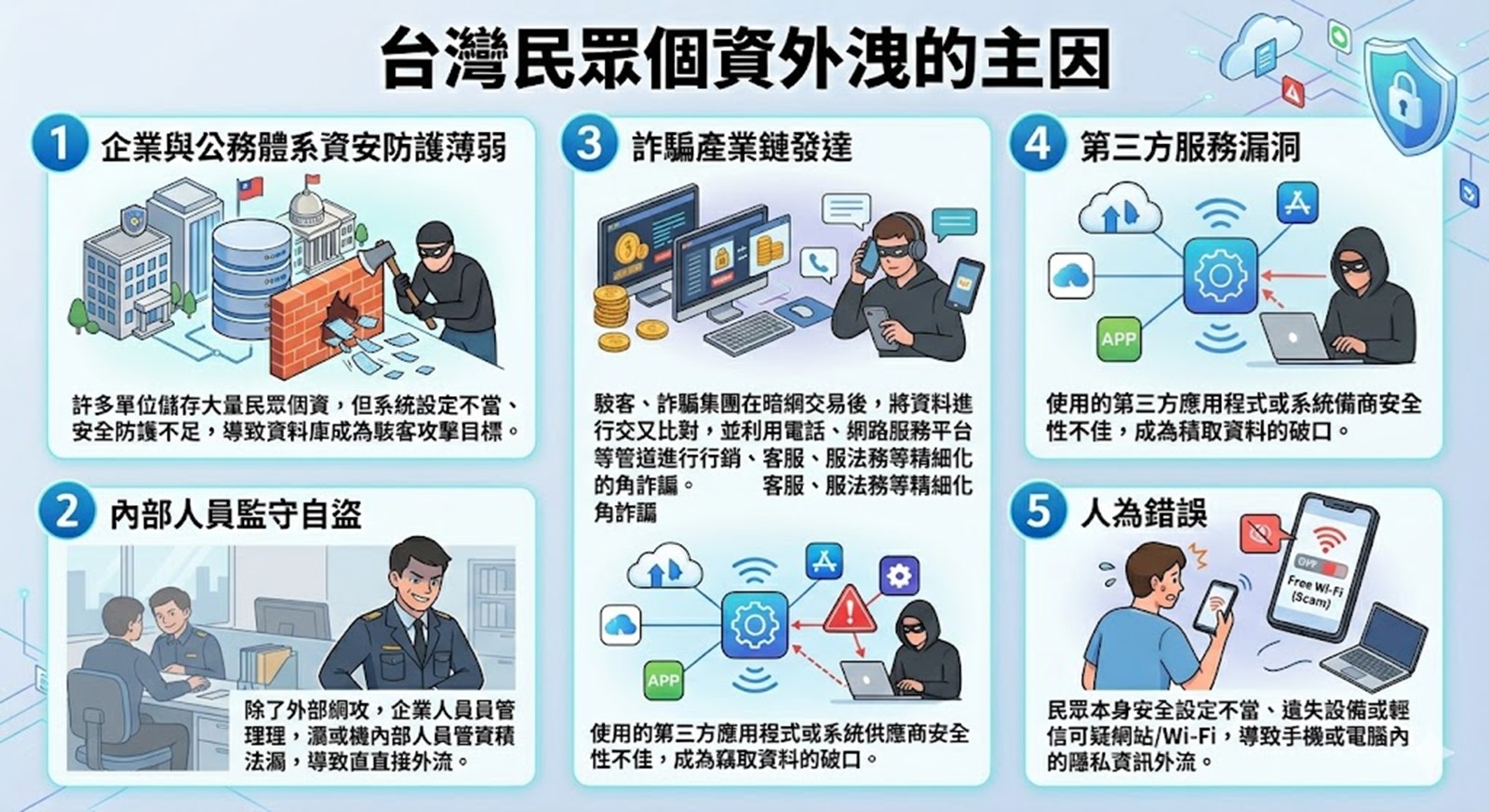
Although the government enacted the Personal Data Protection Act long ago to regulate and protect citizens’ personal information, most people generally do not take the importance of personal data very seriously. In addition, fraud rings are willing to spend huge sums of money or employ hackers to steal personal information from the public. For instance, Taiwan has previously seen a leak of 23 million household registration records, as well as data breaches at several well-known companies such as Coupang.
A Taiwanese SEO guru shared that at a global SEO conference he attended last year, he noticed many participating SEO teams specialized in online gambling SEO. This shows scam groups are willing to invest heavily to obtain people’s personal information and accounts.
C. Effective oversight of cross-border platforms remains insufficient:
In the past, Taiwan imposed relatively light sentences for fraud, and oversight of telecom account numbers and the opening of financial accounts was lax. As a result, the cost of committing fraud was far lower than the profits, leading fraud members to copy one another and spread like an uncontrollable wildfire.Following the implementation of Anti-Fraud 2.0 (the “Four Laws”), the supporting legal measures and controls over telecom numbers and bank accounts have been gradually rolled out. Although often seen by the public as a hassle, the data shows it has indeed had a certain effect.
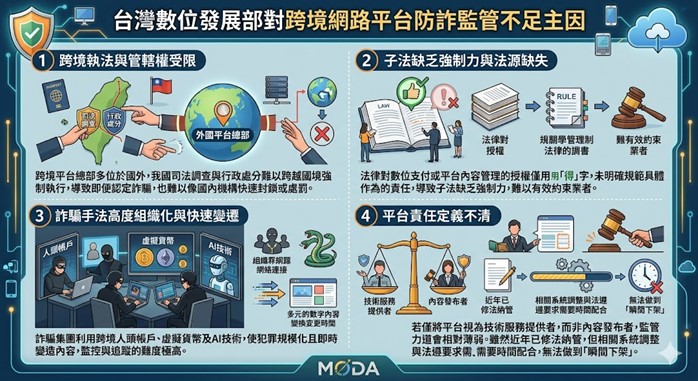
Currently, the biggest challenge is the difficulty of cross-border management. Because Taiwan’s competent authority for regulating online platforms is the Ministry of Digital Affairs—an agency originally positioned to accelerate the digital industry, now forced to apply the brakes—combined with the fact that cross-border platform operators are backed by either U.S. or Chinese companies, and most fraud operations are based overseas, oversight naturally proves ineffective.
Since scam ads are a major revenue source for many platforms, relying solely on moral suasion to get cross-border platforms to self-regulate or passively cooperate is far from enough. We can only hope that the Ministry of Digital Affairs follows the Financial Bureau’s anti-fraud measures toward banks and the NCC’s measures toward telecom operators, using detailed regulations and heavy penalties to produce immediate results and quickly fill the last missing piece of Taiwan’s fraud-prevention puzzle.
D. The Evolution of Science and Technology:
Because digital technology has become deeply embedded in everyday life, yet many people in Taiwan—especially older adults—are unfamiliar with it, and some are overconfident and ignore repeated warnings, digital platforms have become a hotbed for fraud. As AI and Deepfake technology advance rapidly, fraud syndicates forge convincing photos, voice recordings, and videos, making it even harder for the public to tell real from fake. Whenever digital vulnerabilities and traps appear, the human fear of the unknown becomes a loophole that scammers exploit, leading to widespread damage.
2. How can Taiwan improve its fraud prevention?
Since Taiwan implemented Anti-Fraud 2.0, criminal penalties for fraud and fraud-prevention measures by telecom and financial operators have improved significantly, and the efficiency of post-incident remediation has also increased.
For now, the most significant gaps still lie in cross-border platform management under the Ministry of Digital Affairs and the excessive burden on prosecutors, police, and courts. Still, the government will put in place everything it should and can do. In the end, the success of digital fraud prevention will still hinge on public self-reflection and learning.
A. Short-term learning: Identifying AI scams and prevention techniques
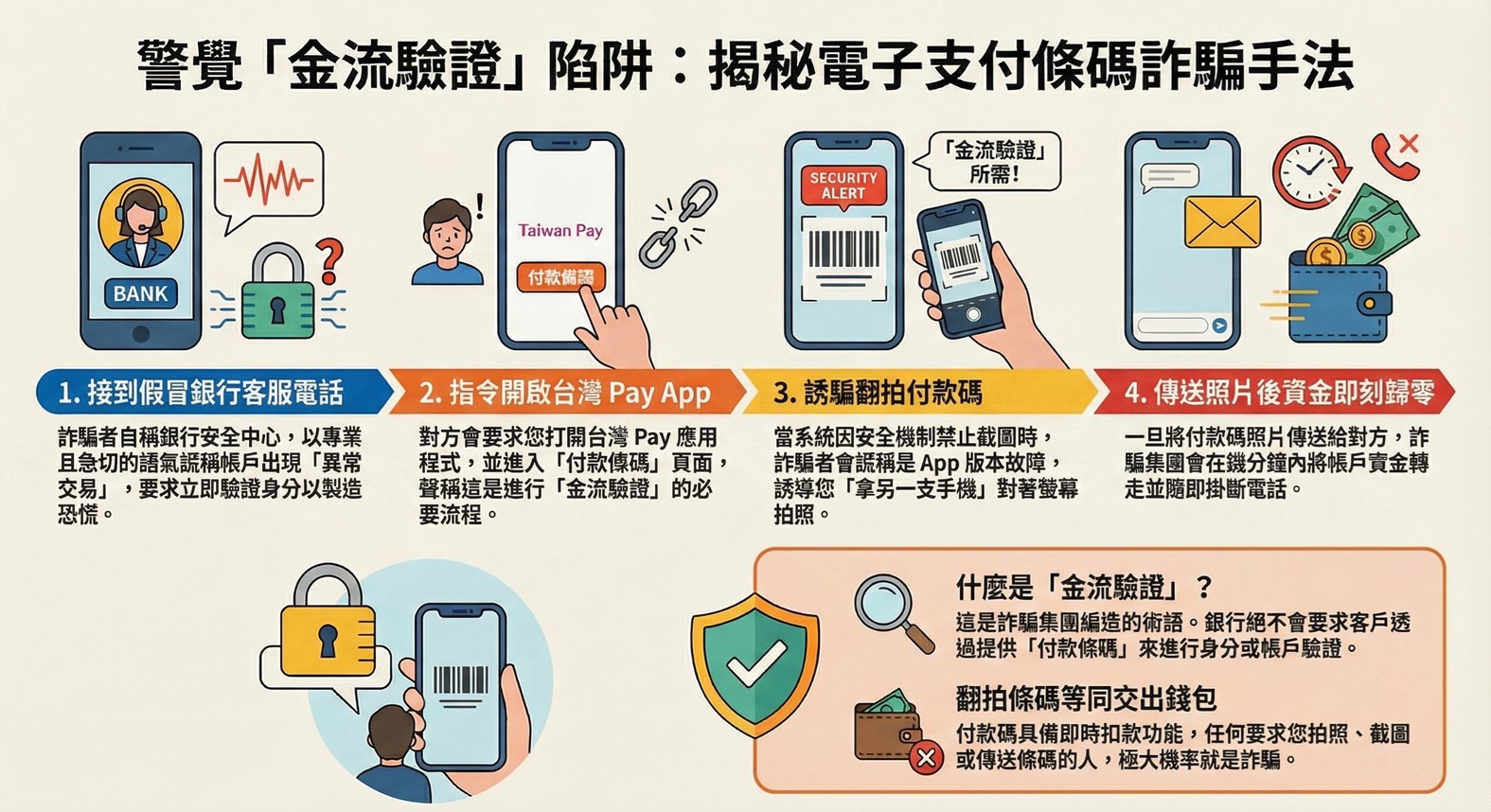
In the face of AI fraud, the general public should learn to identify AI face swaps (Deepfake videos), recognize AI voice cloning (Voice Cloning), guard against pig-butchering scripts and ephemeral links, and make good use of anti-fraud tools and official guidance.

B. In the medium to long term, foster digital literacy among young children and senior citizens through education:
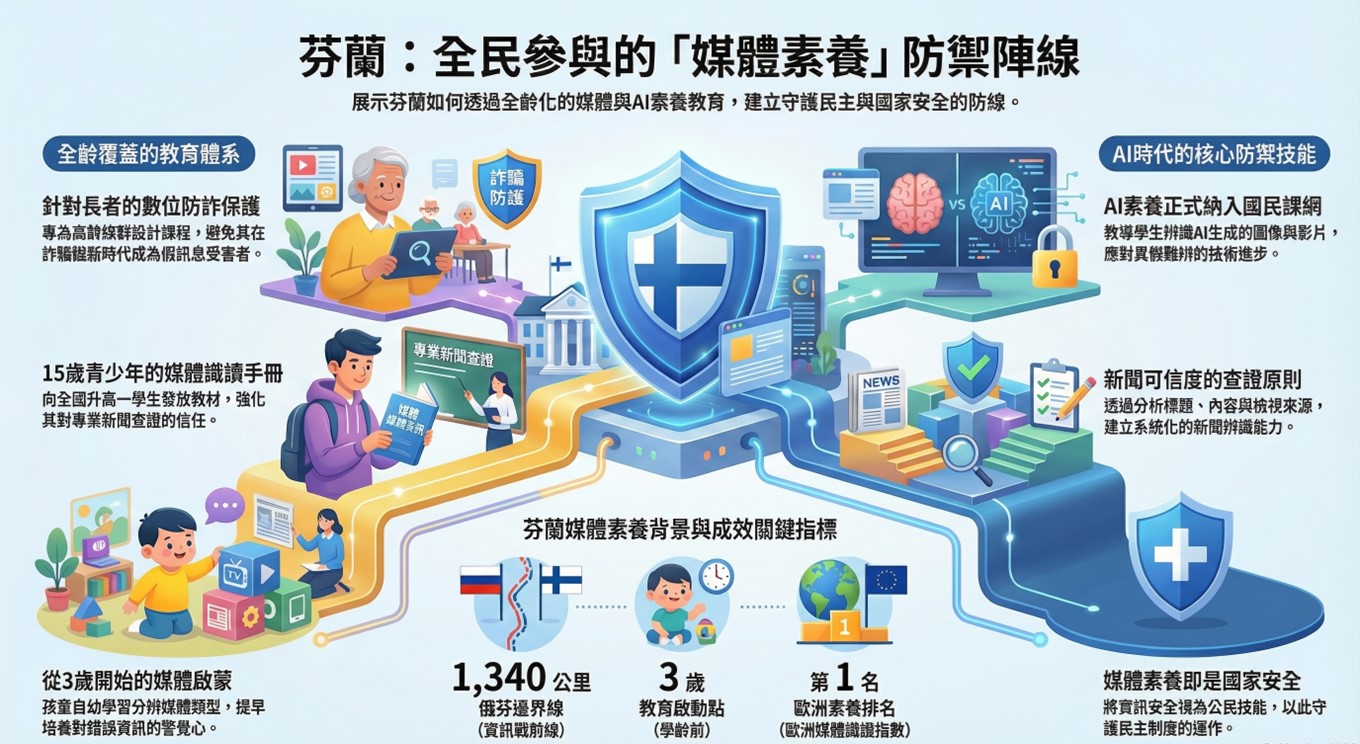
Taiwan should follow Finland’s lead by integrating media and AI literacy education into lifelong learning curricula. From media literacy handbooks for youth to digital fraud prevention education for seniors, these should all be part of civic and educational programs. Starting with education, we can minimize digital fraud!
Source: KOCPC Chinese