


Meta launched a feature called ” on Instagram in early July 2026Muse Imagethe AI image generation feature that allows users to through Meta AI @mention Making an Instagram account public allowed that account’s public posts to be used as material for generating AI images. This feature was live for less than a week before it sparked massive user backlash over privacy concerns, with Meta announcing its removal on July 10. This is the latest case of privacy concerns raised by AI features on social platforms in recent years. Training data licensing and default consent mechanisms for user-generated content each reflect Meta’s disregard for user privacy in its AI product design.
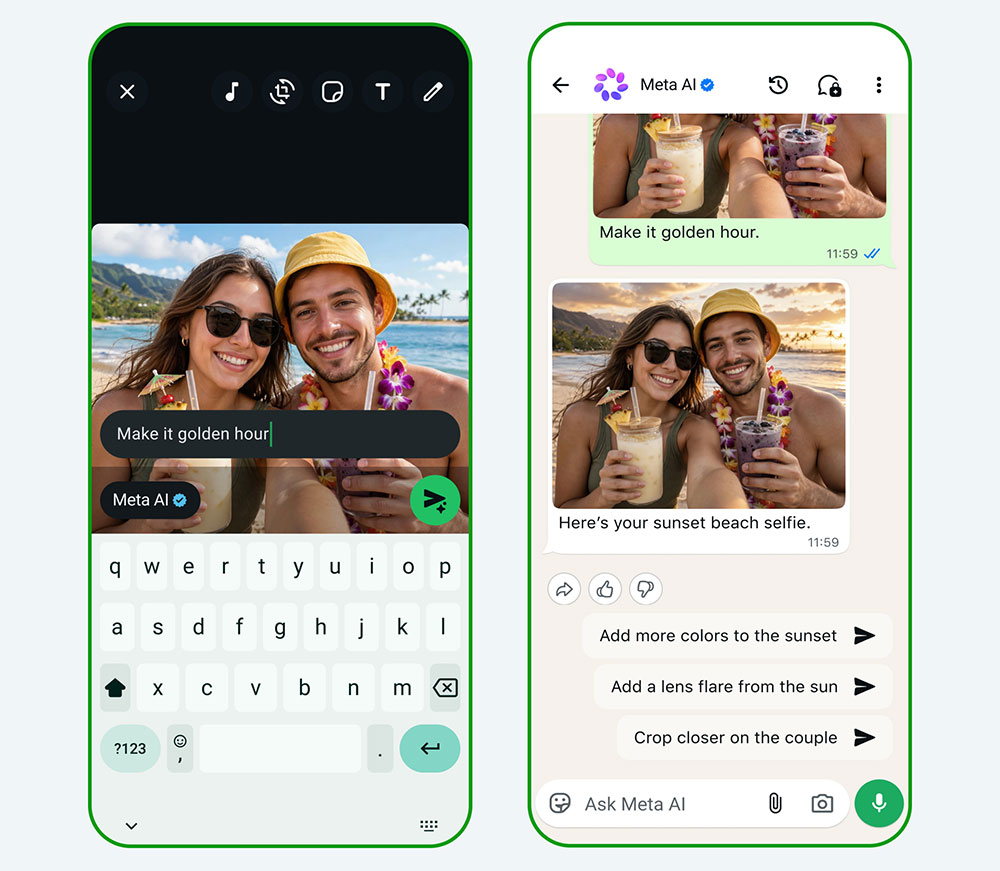
What is Muse Image
Muse Image is part of Meta AI’s image generation feature. Users when they Meta AI When chatting, simply @mention a public Instagram The system will then reference that account’s public posts to generate new AI images. For example, users can input “Generate me an image in the style of @someaccount,” and the AI will extract visual elements from that account’s public photos to create the artwork.

According to Meta, this feature was designed as a “useful creative tool” that allows users to generate images inspired by public content on Instagram.
Core of the Dispute: Opt-Out vs. Opt-In
The biggest controversy surrounding this feature lies in its default setting. All posts from public Instagram accountsare all preset toYour photos are automatically added to Muse Image’s material library, and users must actively go into settings to opt out. In other words, unless you explicitly turn it off, your public photos can be used by anyone at any time to generate AI images.
This “opt-out” rather than “opt-in” design pattern has been a contentious issue in the field of privacy protection. Critics argue that the majority of users have no idea their content has been included in AI training and generation materials, let alone that they need to manually opt out.
Additionally, since there is a vast amount of publicly available works by photographers, illustrators, and creators on Instagram, the use of these public works for AI image generation has raised further concerns about creators’ rights. The photography community has responded particularly intensely, viewing it as using others’ creative work as AI “raw material” without authorization.
Meta’s Response and Retraction
Facing an overwhelming backlash, Meta on July 10Issue a statementAnnouncing the removal of Muse Image’s @mention feature. Meta stated: “Our original intent was to provide a useful creative tool and give people control over whether their public content can be referenced in this way. We’ve heard the feedback that this feature didn’t meet expectations, so it’s no longer available.”
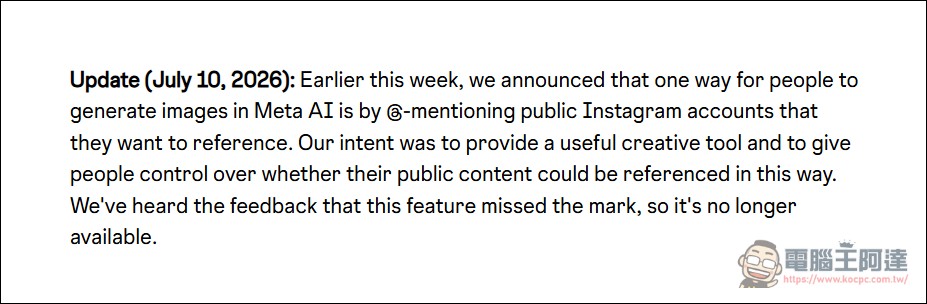
Notably, Meta’s statement used the phrasing “failed to meet expectations” (missed the mark) rather than acknowledging it as a design flaw. From launch to removal, the feature lasted less than a week. This rapid rollback pace suggests Meta was ill-prepared for the controversy the feature might spark.
Meta’s historical baggage on AI privacy
This isn’t Meta’s first time facing controversy over AI-related privacy issues. For years, Meta has faced questions about how it uses user data to train AI models. In Europe, Meta paused its plans to use user data for AI training due to GDPR regulations. In the United States, although regulations are more lenient, user dissatisfaction with social platforms using their content for AI training continues to grow.
What makes the Muse Image incident particularly special is that it doesn’t just use user data to “train” models (which is already controversial enough), but directly treats users’ public posts as a “素材庫” (source material library) for AI-generated images, allowing anyone to create based on them. This makes the sense of intrusion felt by users even more direct and tangible.
Impact on creators and photographers
For photographers and creators who maintain portfolios on Instagram, Muse Image poses a particularly significant threat. Their public work may be used to generate style-similar AI images without their knowledge, and AI-generated images could even compete with the original works.
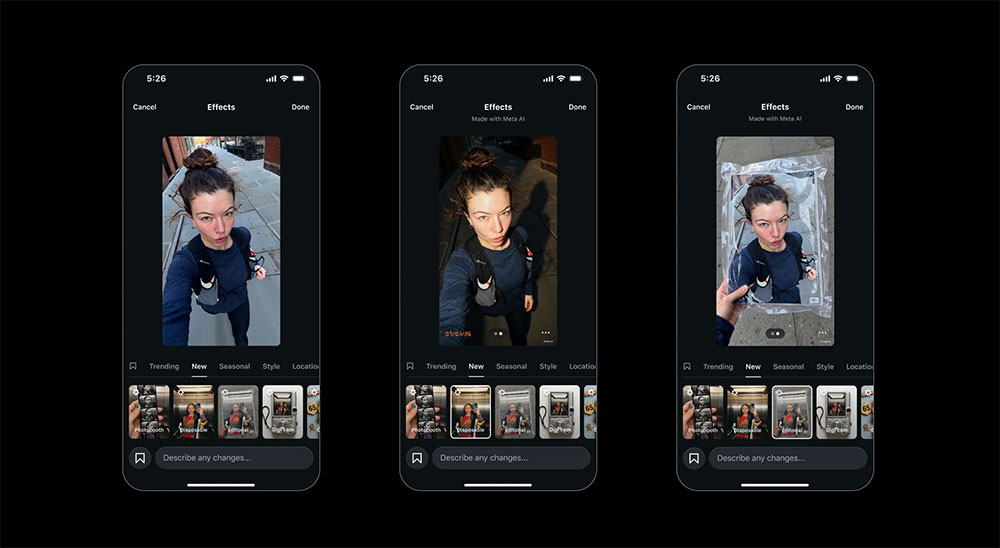
Although Meta provides options to disable these permissions, the problem is that most creators are completely unaware of this feature’s existence, let alone that they need to actively opt out. The information asymmetry combined with a default opt-in design essentially amounts to obtaining “authorization” without users’ knowledge.
Opt-out vs. Opt-in: The Endless Dilemma for Social Platforms
The Muse Image incident once again highlights the fundamental tension between opt-out and opt-in mechanisms. From a platform’s perspective, opt-out maximizes feature coverage and user engagement; from a user’s perspective, opt-in is what constitutes informed consent. In recent years, as privacy awareness has grown, more regulations—such as the EU’s GDPR and DMA—have begun requiring platforms to adopt opt-in mechanisms. However, in the United States, where there is no unified federal privacy law, platforms still retain considerable leeway in choosing their default settings. Meta’s forced withdrawal of the feature this time around represents, to some degree, the power of collective user action. Even without legal mandates, public pressure can still compel platforms to change their practices.
Source: KOCPC Chinese