


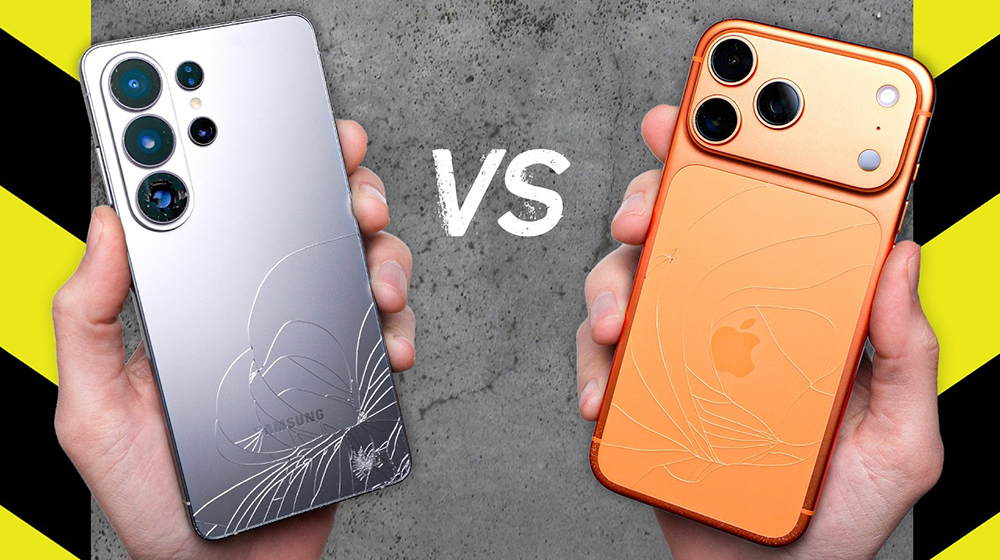
As the price of flagship mobile phones becomes higher and higher, durability has naturally become the most important aspect for consumers. This time PhoneBuff targets Samsung Galaxy S26 Ultra vs. iPhone 17 Pro Max undergoes a complete drop test, falling repeatedly from the back, corners to the front at multiple angles, and even simulates rough ground closer to daily environments. The differences in design and materials between the two mobile phones also caused different changes in the results of each round of testing. Who is more resistant to falling, and what unexpected situations arise during the process? This showdown is more exciting than you think.
▲Picture source:PhoneBuff
iPhone 17 Pro Max versus Galaxy S26 Ultra drop test, the final result is surprising
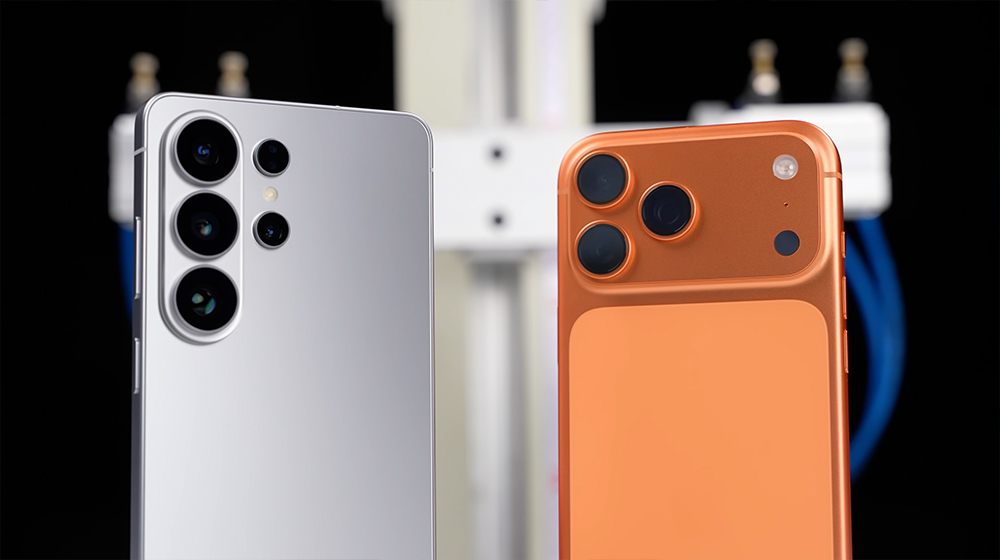
Every year after the launch of flagship mobile phones, in addition to performance and cameras, durability testing has always been the focus of many people’s attention. This time, the YouTube channel PhoneBuff brought a head-to-head confrontation between the Galaxy S26 Ultra and the iPhone 17 Pro Max. Through a series of high-intensity drop tests, the two phones were verified to be resistant to falling in real use situations.
▲Picture source:PhoneBuff
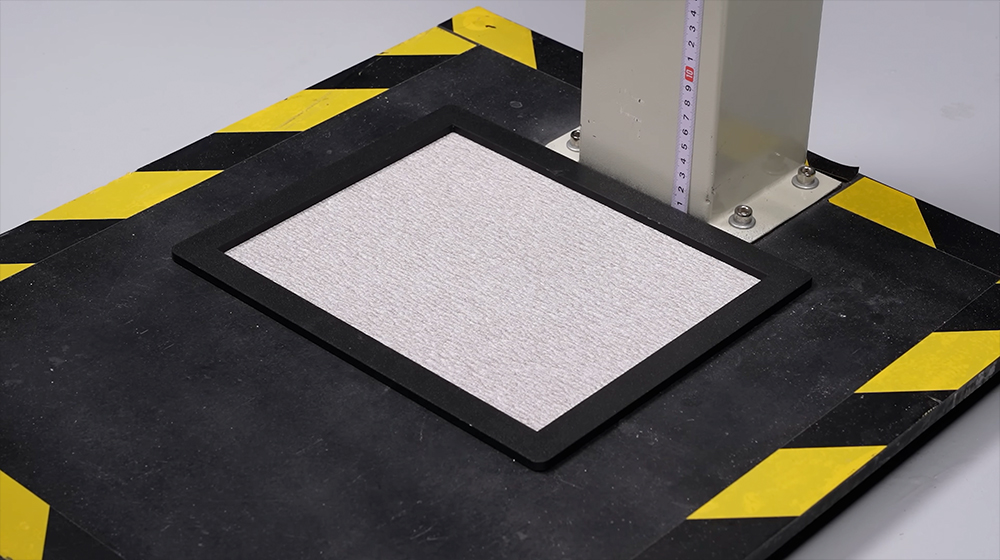
It is worth noting that the test method has also been adjusted this time. In the past, cement blocks were mostly used, but long-term testing will make the surface smoother and smoother, affecting the consistency of the results. Therefore, we switched to 80-grit sandpaper and replaced it with a new surface each time to maintain the same conditions for each drop. This is actually closer to Corning’s testing method in the laboratory.
▲Picture source:PhoneBuff
Material changes to key variables
Before the test began, the design differences between the two phones had already been laid. Samsung’s current generation Galaxy S26 Ultra has returned to an aluminum alloy frame from titanium, which theoretically will reduce its impact resistance slightly. However, the corners of the fuselage are also made more rounded, and the weight is reduced by 4 grams, hoping to reduce the concentrated pressure during impact.
▲Picture source:PhoneBuff
In comparison, the iPhone 17 Pro Max uses a semi-metal back panel design instead of full glass, which does bring considerable advantages in actual testing.
Round 1: Back drop
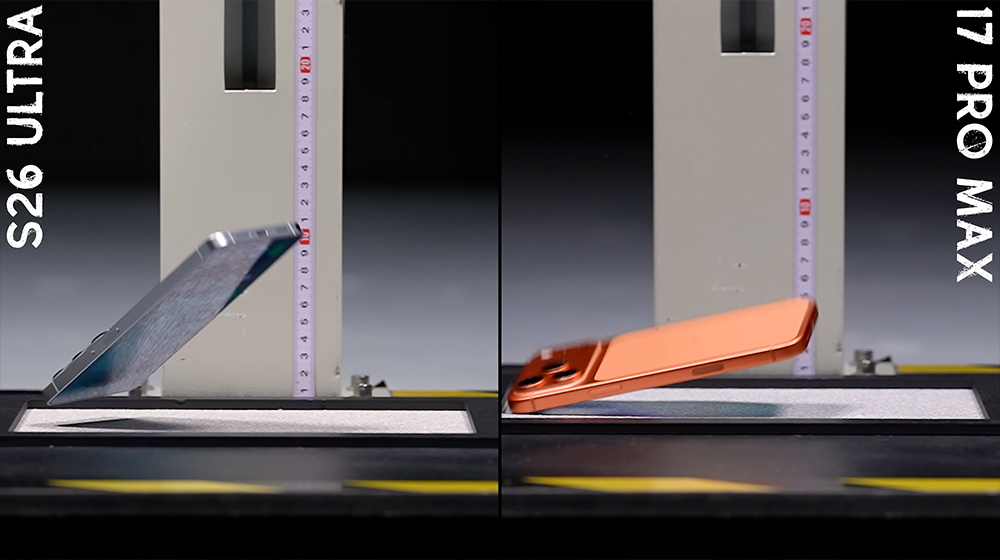
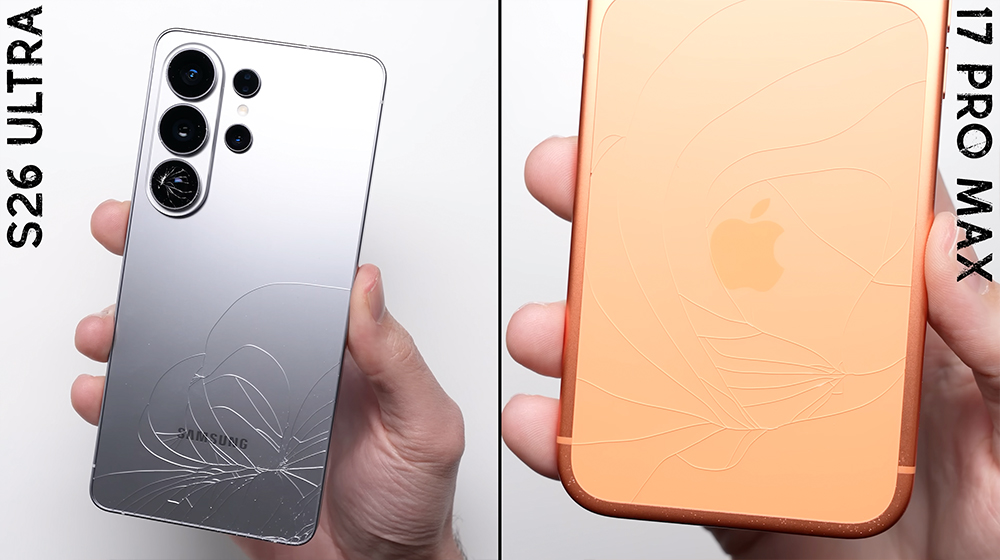
In the first round of back testing, both phones had cracked glass, but the differences quickly became apparent.
▲Picture source:PhoneBuff
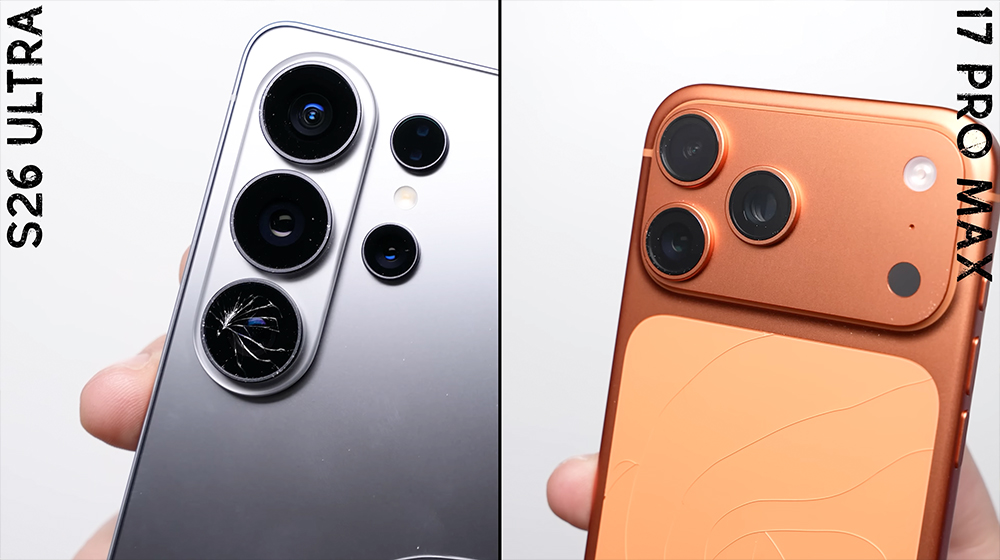
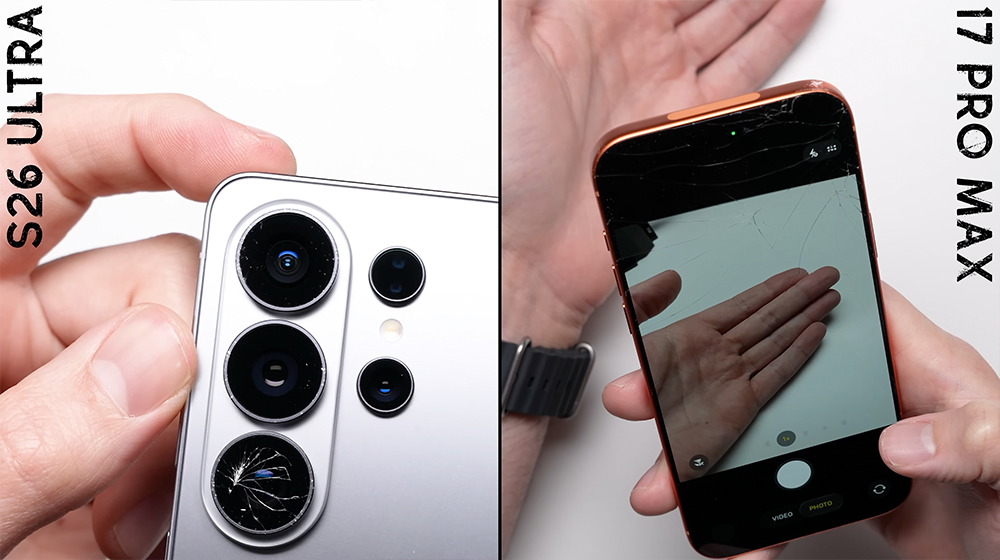
The lens module of the Galaxy S26 Ultra suffered the main impact. The ultra-wide angle was cracked, and the telephoto lens was even directly broken. Although the function is still usable, obvious glare problems have occurred.
▲Picture source:PhoneBuff
Although the back glass of iPhone 17 Pro Max is also cracked, the cracks are concentrated in the glass area, the metal part is almost undamaged, and the lens remains completely normal. This round was clearly won by the iPhone 17 Pro Max.
▲Picture source:PhoneBuff
Round 2: 1 meter corner drop
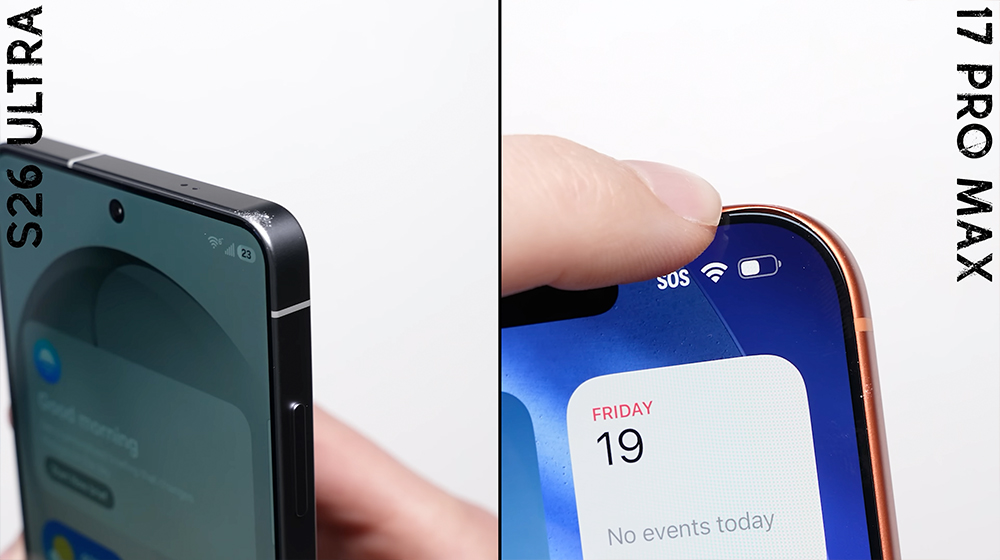
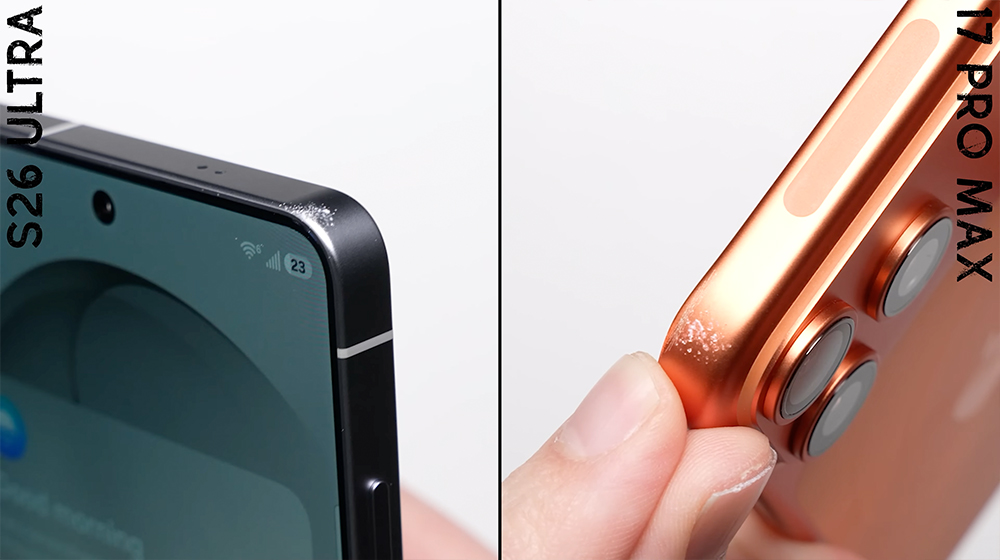
Entering the corner test, the situation is reversed. The aluminum frames of both phones are scratched, but the iPhone 17 Pro Max has more obvious scratches and even obvious dents and deformations because of its brighter body color.
▲Picture source:PhoneBuff
The Galaxy S26 Ultra only has surface wear and the structure remains intact. This time, the Galaxy S26 Ultra has made a comeback.
▲Picture source:PhoneBuff
Round 3: 1 meter head-on drop
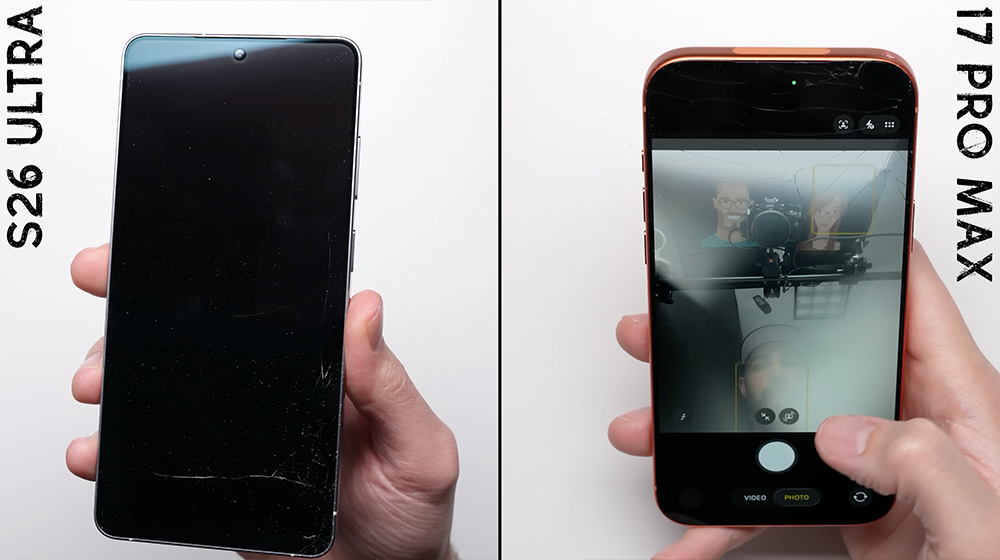
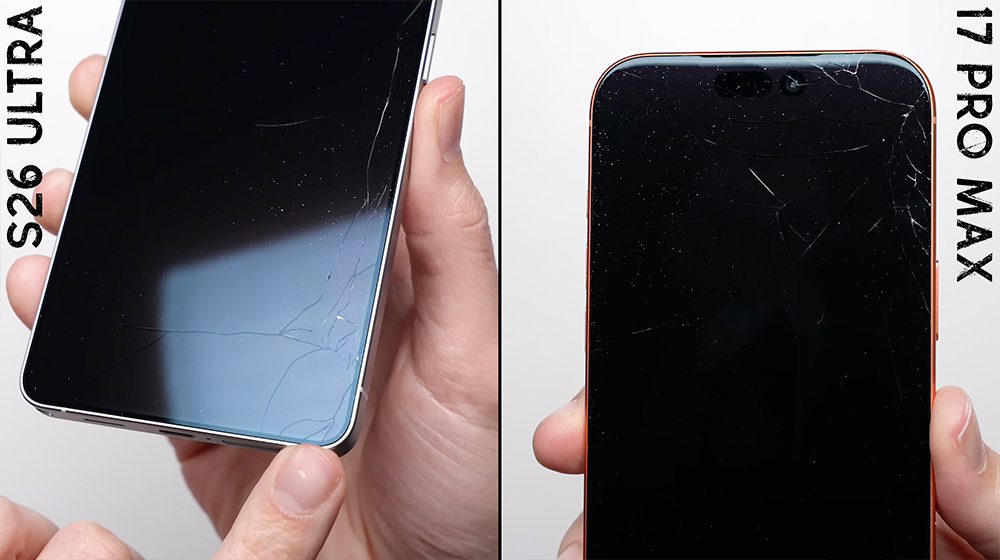
Frontal drop has always been one of the most critical tests. Both phones had cracks on their screens, but the cracks on the iPhone 17 Pro Max spread more severely and even extended to the front lens area, causing halos when shooting.
▲Picture source:PhoneBuff
The cracks on the Galaxy S26 Ultra are relatively concentrated, but the overall display and functions remain normal. It even made people mistakenly think that the fingerprint recognition failed, but it returned to normal after cleaning. This round is won by the Galaxy S26 Ultra.
▲Picture source:PhoneBuff
Round 4: 1.5m back drop
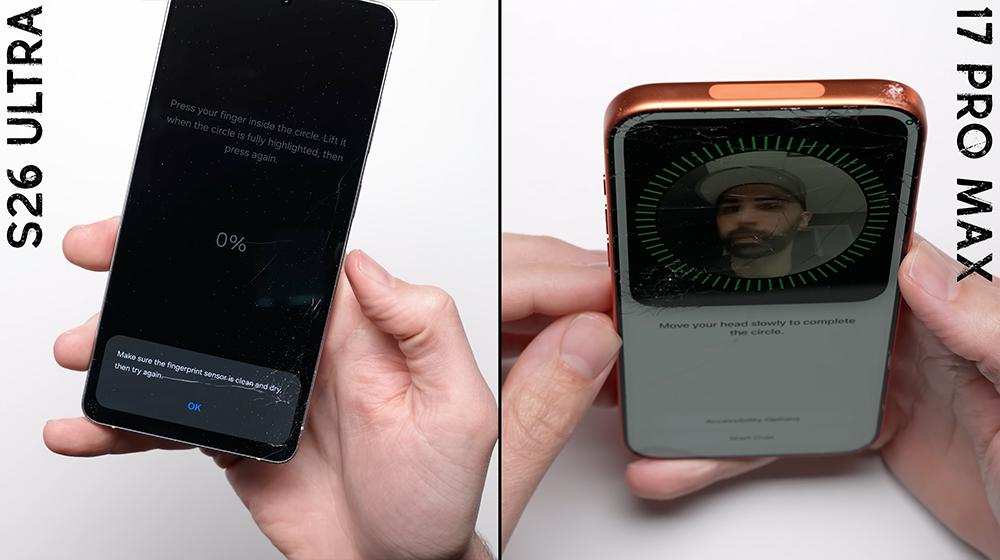
After the test height was increased, the difference widened again. On the surface, it seems that the damage to the two mobile phones is not serious, but after a complete inspection, it was found that the screen fingerprint recognition of the Galaxy S26 Ultra has completely failed and cannot be restored.
On the other hand, the Face ID of the iPhone 17 Pro Max still works normally. The difference is very obvious in daily use, so this round was won by the iPhone 17 Pro Max.
▲Picture source:PhoneBuff
Round 5: 1.5m corner drop
In this round, the performance of the two mobile phones was similar, and there was no obvious new damage, so it was considered a tie. It is worth mentioning that the test also added that the iPhone 17 Pro Max once experienced an abnormal focusing of the main lens, but it later recovered on its own. It is speculated that it was only temporarily stuck.
▲Picture source:PhoneBuff
Round 6: 1.5m head-on fall
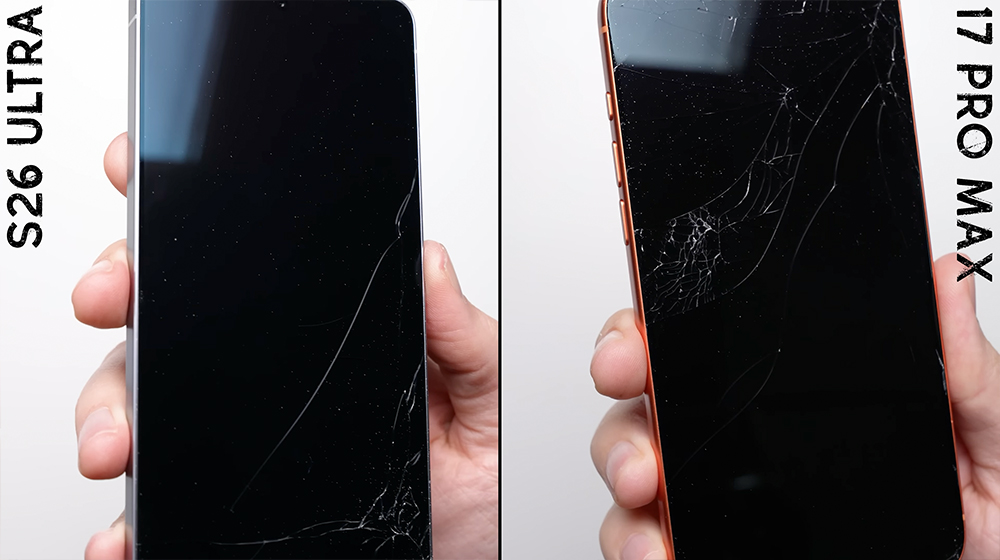
The last round can be said to be the most brutal one. The cracks on the Galaxy S26 Ultra have further spread, and glass fragments have even fallen off the telephoto lens, which not only affects shooting, but may also cause cuts.
Although the screen cracks on the iPhone 17 Pro Max have increased significantly, Face ID can still be used normally, and the overall functionality is maintained at a higher level, finally achieving another success.
▲Picture source:PhoneBuff
final result
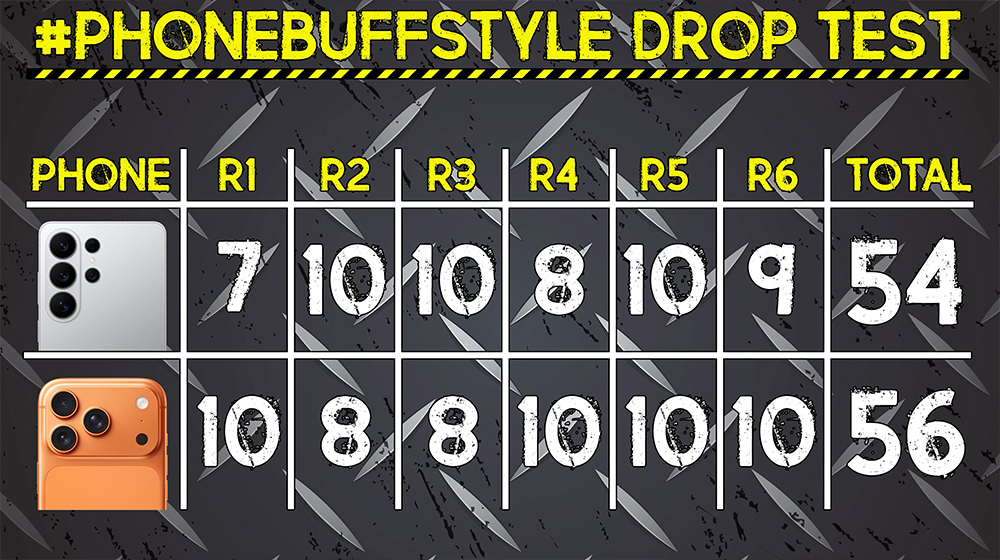
After 6 rounds of testing, the iPhone 17 Pro Max wins overall. The key reason lies in the structural stability and function maintenance ability. Even if the appearance is damaged, the core function can still operate normally.
▲Picture source:PhoneBuff
Conclusion
From this test, it can be seen that the drop resistance of a mobile phone is not only whether the glass is broken, but more importantly, whether the internal structure and key functions can maintain normal after impact. The Galaxy S26 Ultra is designed to be lightweight and feel good, but the aluminum alloy frame and all-glass structure are indeed more prone to damage to key parts in extreme situations.
On the other hand, although the iPhone 17 Pro Max will also break, through different material combinations and structural designs, important functions can be maintained at a higher rate. For ordinary users, this means that even if they accidentally drop their phone, there is still a higher chance that they can continue to use it without immediately affecting their daily experience.
If you usually have slippery hands, this kind of test is actually more valuable than the specification sheet. It also reminds everyone that protective cases and protective stickers are still the most practical investments.
Further reading:
Source: KOCPC Chinese