


in recent yearswireless chargingSpecifications continue to evolve, Qi2 It even pushed the power from the initial 15W to Qi2 25W (Qi2.2 25W) in one go, which seems to have entered the “fast charging era.” But if you go back to daily use scenarios, you will find that most people rarely really need such speed.
Whether you put it on the bedside to charge before going to bed, or put it on the desktop to recharge slowly while working, mobile phones are often left alone for several hours. In this situation, the difference in charging speed is not obvious, but price and user experience are the more critical considerations. When 15W can already meet most needs, whether the 25W upgrade is necessary or just an anxious extension of specifications is worthy of rethinking.

Is Qi2 25W wireless charging really necessary? The key reason why most people don’t actually use it
Qi2 25WThe biggest selling point of (Qi2.2 25W) is intuitive, that is, it is faster than Qi2 15W. For people who are used to wired fast charging in the past, such numbers are indeed very attractive. But the problem is that the use situation of wireless charging is inherently different from that of wired charging.
When most people use magnetic wireless charging, they do not use it to “recharge quickly”, but prefer a “leave it on and charge it slowly” mode. For example, put your phone on the charger when you go to bed at night, or just suck it on while working in the office to keep the battery stable. What these situations have in common is that they last a long time.
When the charging time is often 2 hours, 4 hours or even a whole night, the difference between 15W and 25W is not as obvious as imagined. Because the phone has already been fully charged and even entered the trickle protection stage, the remaining time is just to maintain the power.
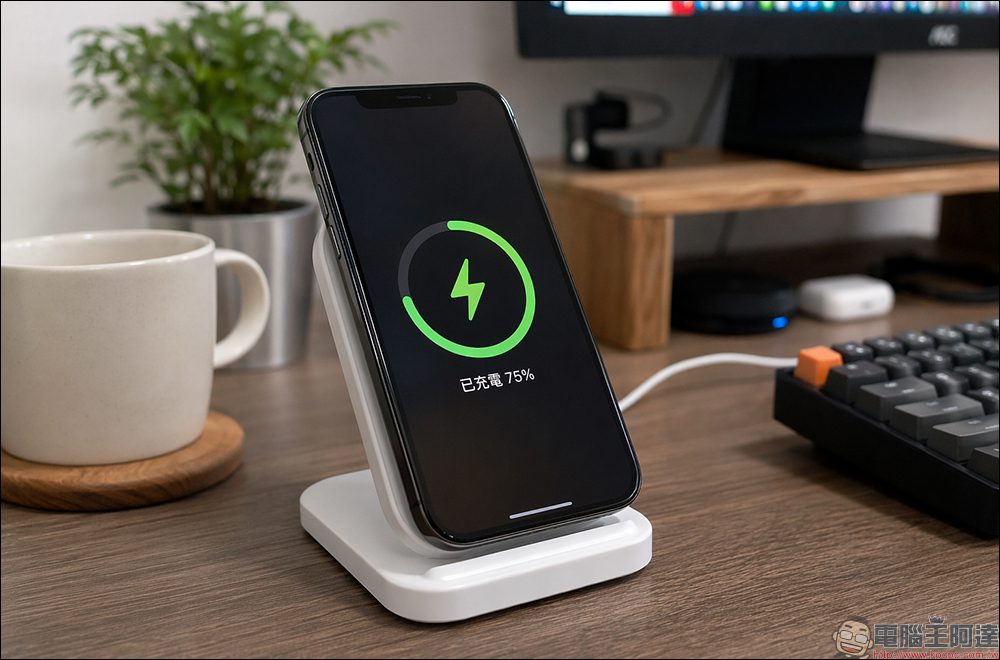
In other words, you spend more money to get “faster”, but most of the time you don’t feel that speed at all.
The essence of wireless charging is not to pursue extreme speed.
If you break down your usage habits, you can actually clearly divide them into two needs. The first is “emergency charging”, for example, if you want to recharge quickly 10 minutes before going out; the second is “long-term charging”, such as when sleeping or working.
What really needs speed is the first one. But the problem is that most people will still choose to use wired charging in this situation. Because wired charging is still the most efficient and lowest loss method. On the other hand, the advantage of wireless charging has never been speed, but convenience. No need to plug or unplug, it can be placed and charged at any time, and the desktop is cleaner. This is its core value.
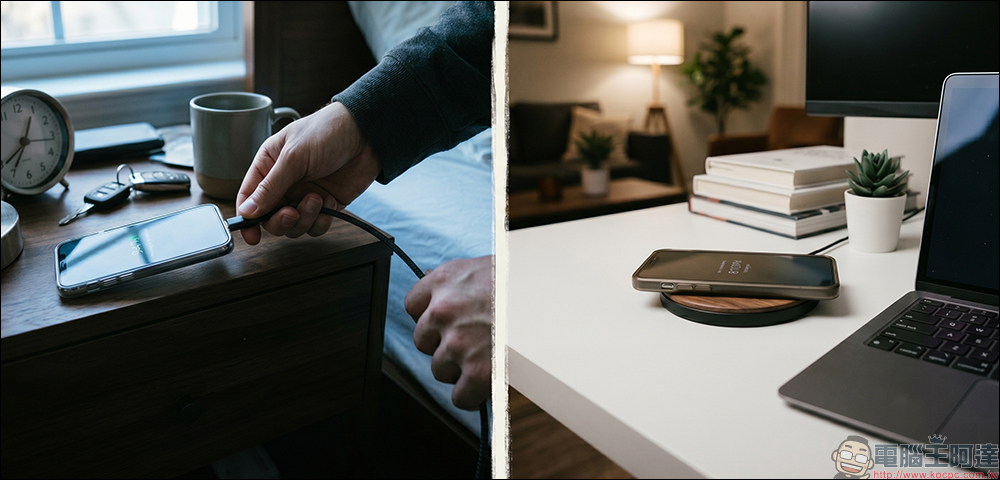
In this case, pushing wireless charging to 25W actually violates its original use logic. You might get a higher number, but that doesn’t necessarily translate into a better experience.
15W Qi2 is enough to handle 90% of usage scenarios
If you go back to real life, you can think about how you charge every day:
- Put it on before going to bed at night
- When I wake up in the morning, I’m fully charged
- Keep it on your desk at work to replenish power at any time
- Go home and continue charging
These are typical scenarios of “long-term charging”, and 15W is actually completely sufficient in these scenarios. For a mobile phone with a power capacity of about 3000mAh to 5000mAh, 15W wireless charging can charge a very practical power in about an hour. In addition, it will be filled up slowly over time, so there will be no battery anxiety.
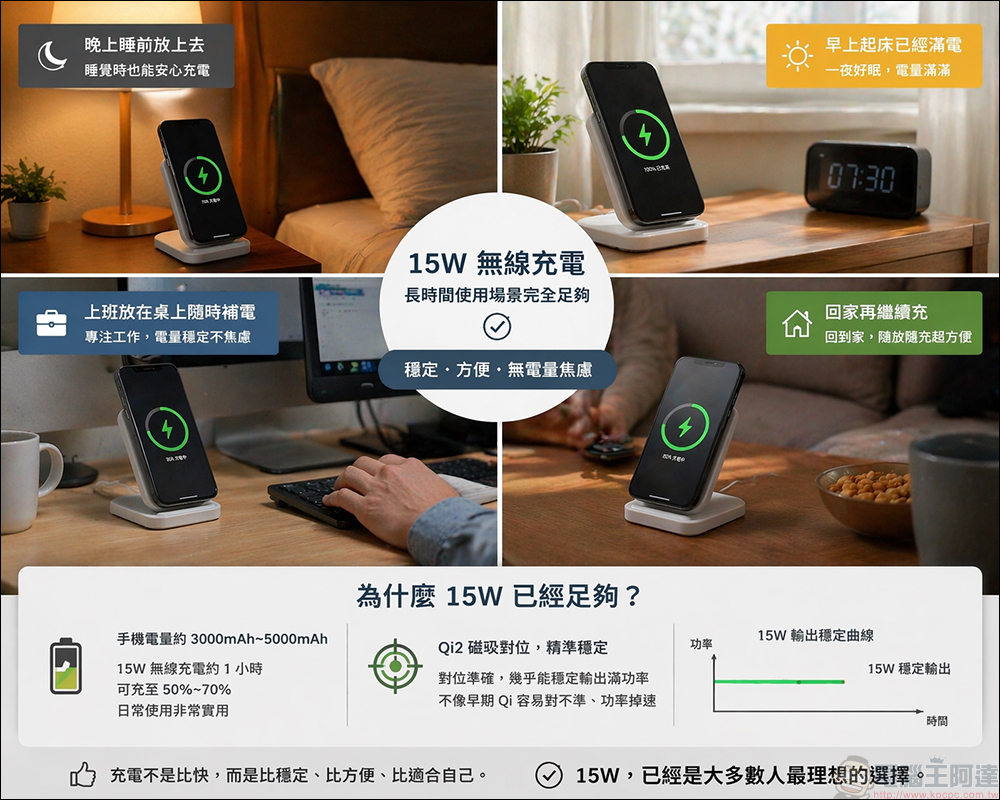
More importantly, Qi2’s magnetic alignment itself has greatly improved charging efficiency and stability. 15W can almost be fully charged stably, unlike early Qi wireless charging that had problems with misalignment and power slowdown. In other words, from the perspective of “stable and easy to use”, 15W has reached the sweet spot.
The price difference is the most important thing
The difference in specifications may not be obvious, but the price is. Currently, the price of Qi2 25W wireless chargers on the market is generally a bit higher than that of 15W, and some are even more than 1.5 times cheaper. This does not include the fact that you may need to use a higher specification charging head to fully utilize the 25W power.
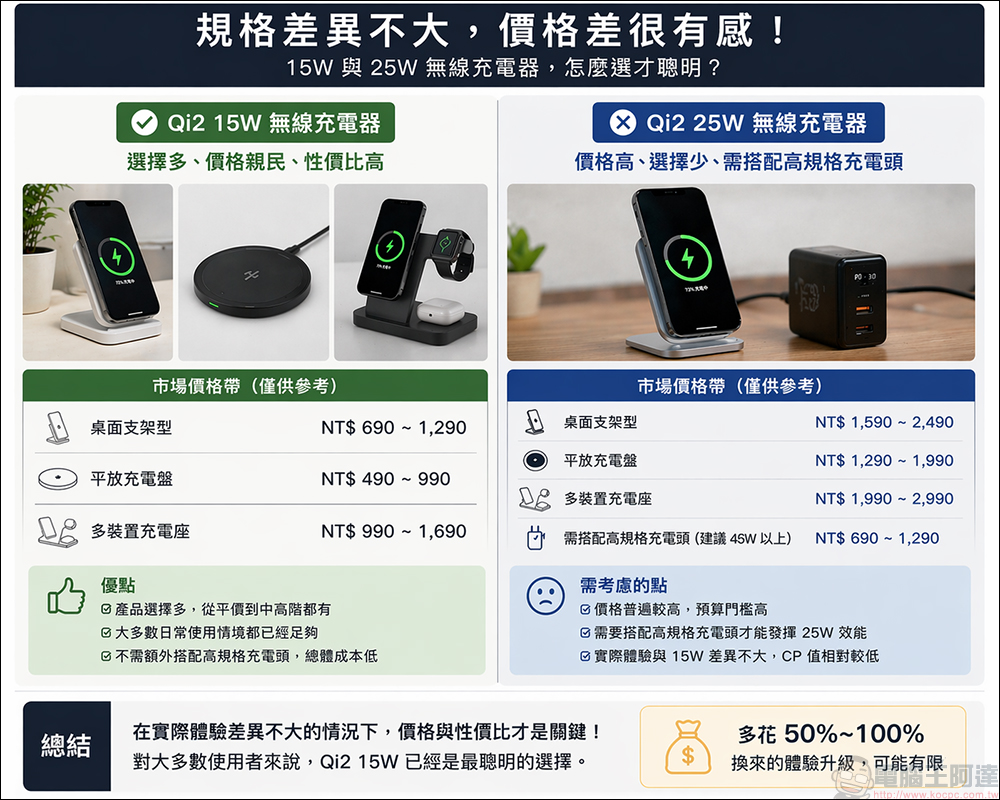
In comparison, Qi2 15W has more product choices and is more affordable. Whether it is a desktop stand type, a flat charging tray, or even a multi-device charging stand, there are more complete price ranges to choose from. When there is “little difference in actual experience” between the two, price naturally becomes the most important decision-making factor. In many cases, it’s not that 25W is bad, but that its price/performance ratio is not as high as 15W.
Heating and efficiency are also neglected aspects
Wireless charging inherently has energy conversion losses, and the higher the power, the more obvious the heat will be. When you pull the power to 25W, although it is theoretically faster, it is also more likely to encounter temperature limitations, causing the actual charging power to be suppressed by the system. This is especially true in summer or in environments without good heat dissipation.
Looking at 15W on the other hand, because the power is lower, the overall heating control is more stable, and it is less likely to trigger the speed-down mechanism. After long-term use, it becomes closer to “stable output”.
This is why many people feel that the difference between 15W and 25W is not as big as imagined.
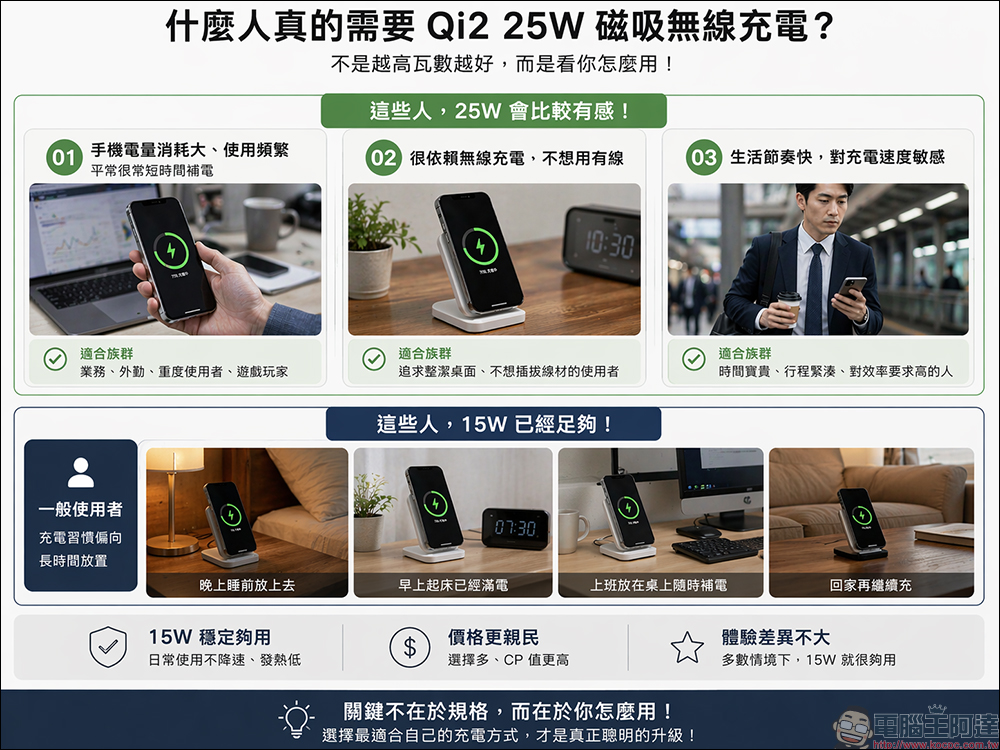
Who really needs Qi2 25W
Of course, the Qi2 25W isn’t completely worthless. If you are one of the following types of users, it may be more beneficial to switch to 25W:
- Mobile phones consume a lot of power and are used frequently, so they often need to recharge in a short time.
- I rely heavily on wireless charging and don’t want to use wires
- Life is fast-paced and sensitive to charging speed
The above groups can indeed gain advantages from 25W. But if you are a general user and your charging habit tends to be left for a long time, then 15W is enough. The key is not the specs, but how you use them.
Conclusion
The emergence of Qi2 25W has indeed brought wireless charging to higher specifications, but improved specifications do not necessarily equal an upgraded experience. For most people, the core value of wireless charging is still convenience and stability, not ultimate speed.
When charging for a long time before going to bed or while working, 15W can actually meet the needs, and even performs more balanced in terms of heat generation and stability. Coupled with the more affordable price, the overall user experience is closer to reality. Instead of blindly pursuing higher power, it is better to look back at your usage habits and choose the most suitable solution, which is a smarter way to upgrade.
Further reading:
Source: KOCPC Chinese