


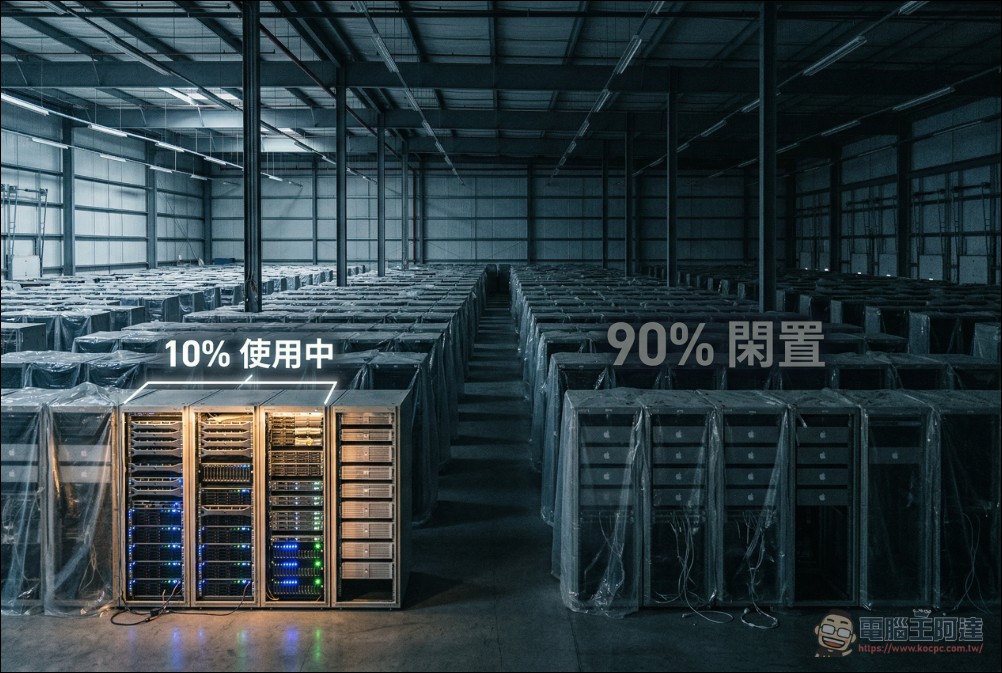
Apple is facing serious challenges in its artificial intelligence development. According to foreign mediaReport, Apple currently only uses about 10% of the Private Cloud Compute (PCC) capacity, with the rest reaching up to 90% Apple’s AI servers sit idle in warehouses, creating enormous waste. This news reveals the chaos in Apple’s AI infrastructure management, and explains why Apple decided to rely on Google’s Gemini model for the next generation of Siri.
Apple AI Servers Sitting Empty! Reportedly 90% Idle
Apple heavily promoted Apple Intelligence features in 2024, spending billions of dollars to build Private Cloud Compute infrastructure. However, according to reports, reality fell far short of Apple’s initial expectations. Sources indicate that actual usage of Apple Intelligence features was significantly lower than Apple’s internal targets. This led to an rather embarrassing situation: only about 10% of Apple’s massively invested Private Cloud Compute servers were actually running in data centers, while a staggering 90% of the compute capacity sat idle on warehouse shelves.
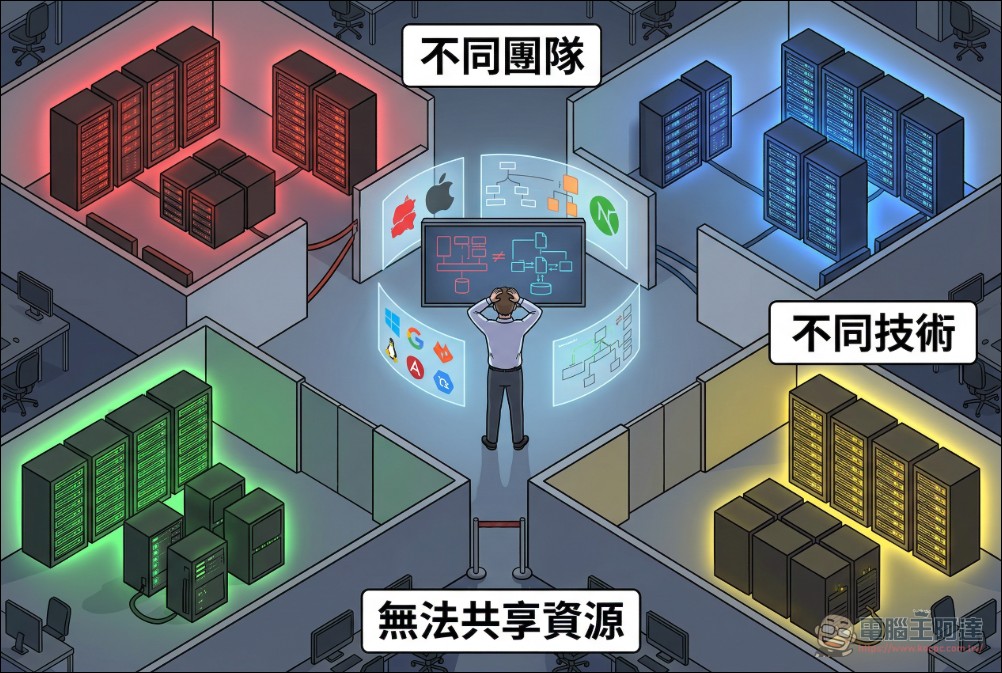
The severity of this issue extends beyond idle hardware, revealing fundamental deficiencies in Apple’s cloud software and server architecture management. Citing sources, 9to5Mac reports that Apple’s cloud infrastructure suffers from a serious “fragmentation” problem: different teams within the company each use different technology stacks rather than a single, unified server technology.
This siloed approach results in massive inefficiencies. When some departments have idle server capacity, other departments that need those resources cannot use them because cross-departmental allocation simply isn’t possible. Reports indicate that Apple’s finance team is frustrated with the costs of this duplicated infrastructure, but is also reluctant to spend billions on a complete overhaul of the entire tech stack.
In fact, Apple has attempted to unify its cloud infrastructure multiple times internally over the past decade, but these plans have repeatedly hit obstacles and stalled. Regarding the Private Cloud Compute system itself, reports indicate that the system is “underpowered” and perhaps “more trouble than it’s worth.”
Additionally, the software upgrade process is also unusually difficult and time-consuming. A more fundamental problem is that the chips currently used for Private Cloud Compute (believed to be modified M2 Ultra processors) lack the performance needed to run the latest frontier models like Gemini, which is exactly what the new Siri is based on.
Apple Turns to Google for Help
In this case, Apple decided to turn to Google for help, with Google assigned to run Siri servers in its data centers while complying with Apple’s strict privacy standards. This isn’t the first time Apple has used Google’s cloud services. In fact, some of Apple’s iCloud features, such as cloud storage, have long relied on Google’s cloud infrastructure. And in the AI era, Apple has chosen to further deepen its partnership with Google, with plans to launch a dedicated Siri chatbot in this year’s iOS 27 update.
According to Bloomberg reporter Mark Gurman, this Siri chatbot will be integrated into Apple’s software rather than launching as a standalone app. It will be able to search the web, generate content (including images), provide coding assistance, summarize and analyze information, and upload files.
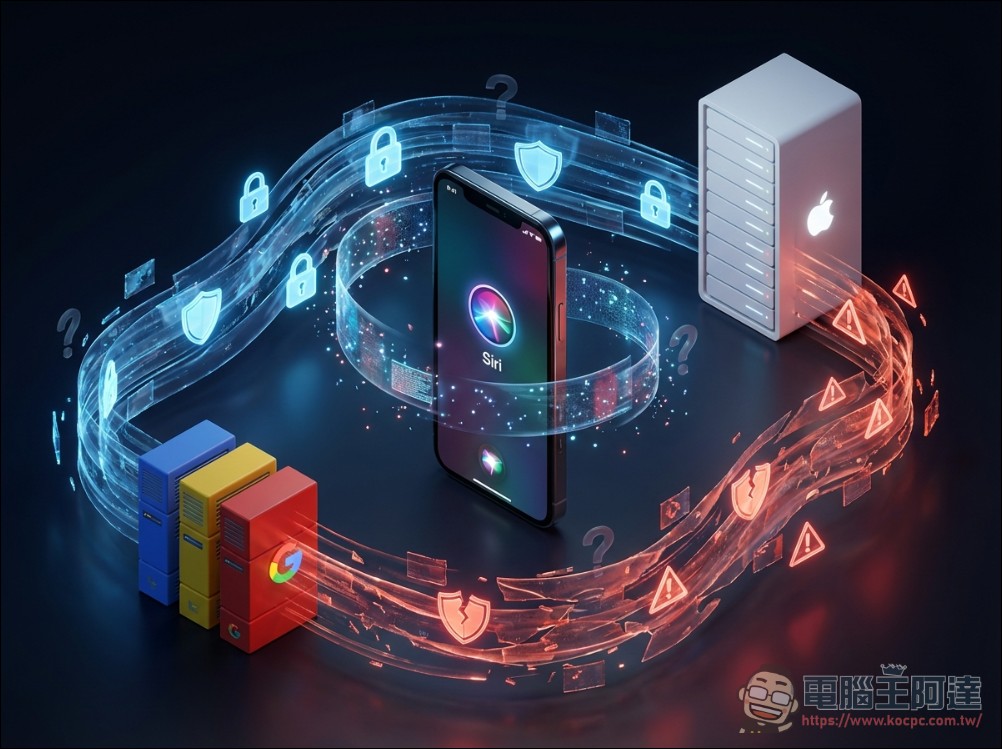
More importantly, this chatbot will be able to use personal data to complete tasks, equipped with significantly improved search functionality. Apple is also designing a new feature that allows the Siri chatbot to view open windows and content on screen, while also adjusting device functions and settings. Reports indicate this Siri chatbot will use an advanced version of Google’s Gemini model, with the internal codename “Apple Foundation Models version 11.” Gurman stated: “This model is expected to be competitive with Gemini 3, and more powerful than the model that powers the new version of Siri.”
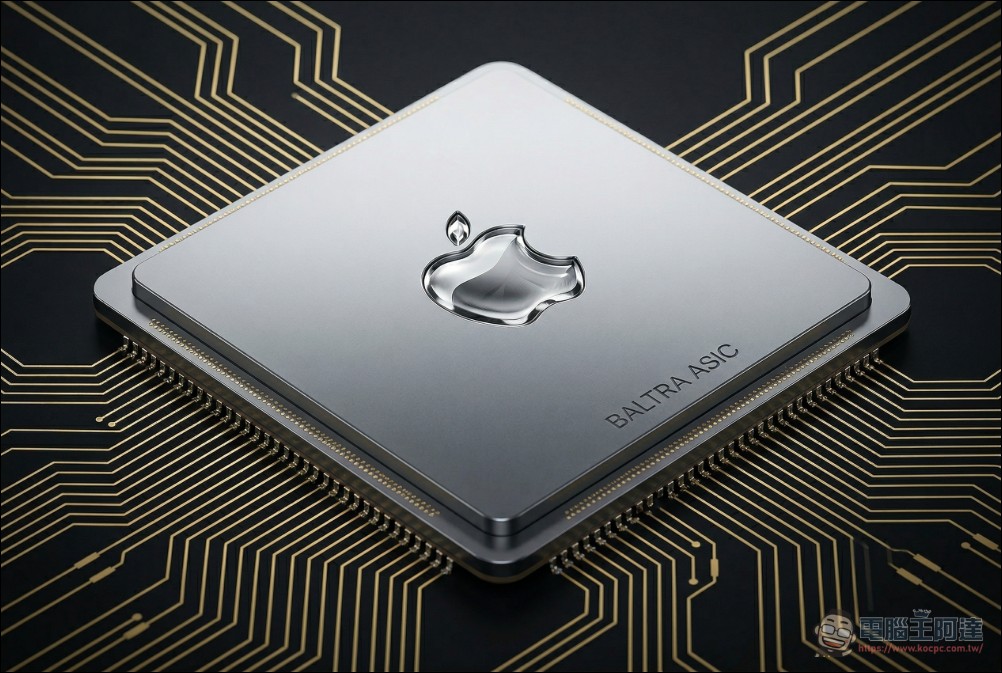
Apple’s In-House Chip Ambition: Baltra ASIC
Facing current difficulties, Apple is placing its hopes on self-developed AI server chips. Back in spring 2024, multiple reports indicated that Apple was working with Broadcom to develop its first AI server chip, internally codenamed “BaltraAccording to reports at the time, this chip would use TSMC’s 3nm “N3E” process, with the design process expected to be completed within 12 months. The chip may adopt a multi-chiplet design, with each chiplet dedicated to specific functions. Apple could later combine these chiplets into a single component, while Broadcom might help handle communication issues when these processors run simultaneously on Apple Intelligence servers. This modular approach would allow Apple to hide the entire AI ASIC design details even from partners like Broadcom.
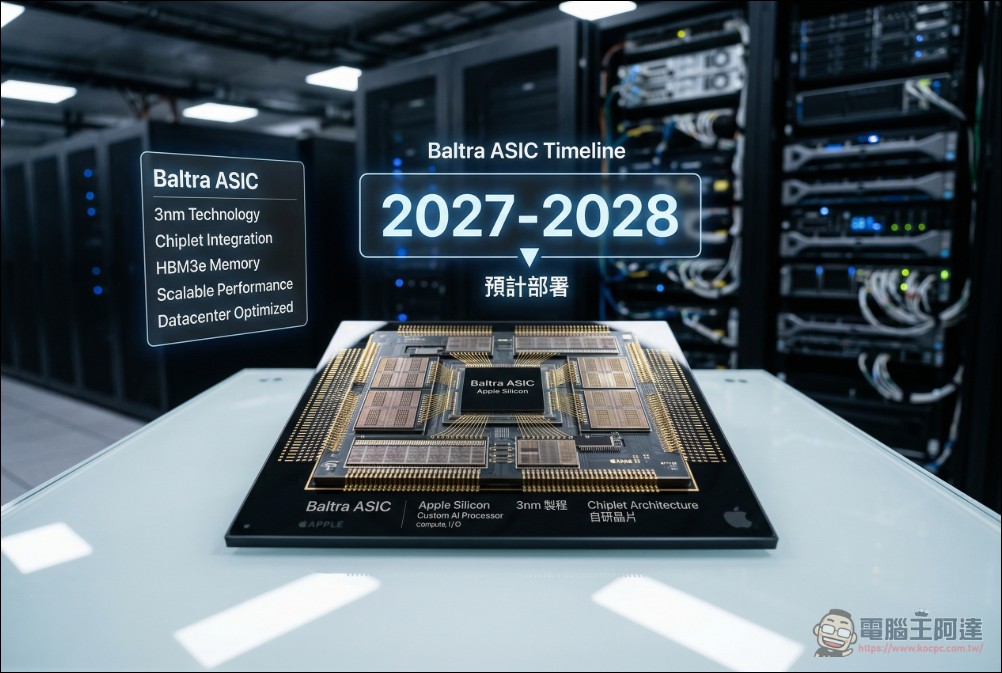
As for the actual servers, earlier reports have indicatedFoxconnWith production already commissioned, Apple’s assembly partners are expected to receive assistance from Lenovo and its subsidiary in overall design. Given Apple’s long-standing server-related chaos, Baltra-architecture servers could be the only viable path for the Cupertino giant to remedy its chronic efficiency issues and break free from Google’s grip. Notably, Apple had previously indicated that using Google’s Gemini models might only be a temporary arrangement. Baltra servers are expected to 2027 or 2028Begin mass deployment.
A $1 Billion Lesson
Apple’s investment in AI infrastructure is staggering. reportedly, Apple has spent over $1 billion building AI servers, but now these machines, specifically designed to run Apple Intelligence queries in the cloud, sit idle in warehouses, waiting for the day they’ll be activated. All of this reflects the rapidly shifting reality of the AI landscape. Even though Apple’s management may increase investment in internal infrastructure in the future, implementing these changes remains a long-term goal. For the near term, Apple appears to have no choice but to continue relying on Google’s cloud computing power to fuel its AI ambitions.
Source: KOCPC Chinese