


Many people probably have experienced this Nano Banana 2 Powerful image generation capabilities, building on the previous generation Nano Banana A huge improvement compared to before, but Nano Banana Pro Compared to that, there doesn’t seem to be much difference.Gemini Nano Banana Pro hasn’t been completely removed either—Google AI paying users can still use it—so some people might not know whether it’s better to use Nano Banana 2 or Nano Banana Pro. For this reason, a few days ago In an article published by the Google communityIt covers the differences between Nano Banana, Nano Banana 2, and Nano Banana Pro, and how you should choose. Here’s a summary for you all.
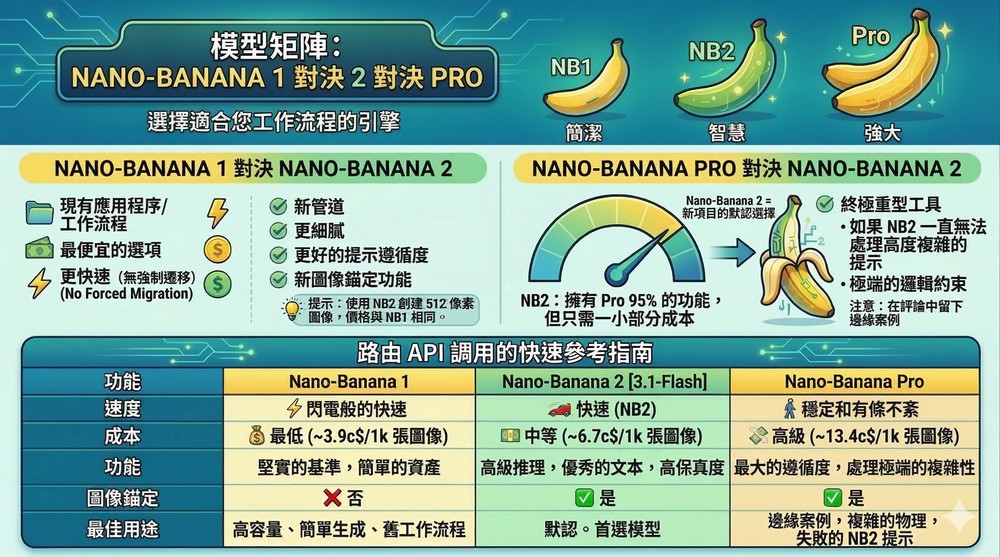
The difference between Nano Banana 2 and Nano Banana Pro
While Nano Banana 2 combines the capabilities of Nano Banana Pro, it’s not 100% but closer to 95%. Google states that Nano Banana 2 can achieve roughly 95% of the Pro version’s image quality, with the difference being nearly imperceptible for everyday use. The Pro version still has a slight edge in texture details, lighting performance, and spatial composition, but the gap has become quite small.
In terms of speed, since Nano Banana 2 is based on the Flash architecture, generating an image takes just about 4 to 6 seconds, while the Pro version takes 10 to 20 seconds. For generating 4K resolution images, Nano Banana 2 takes roughly 15 to 30 seconds, and the Pro version requires 30 to 60 seconds, making the speed difference nearly twofold.
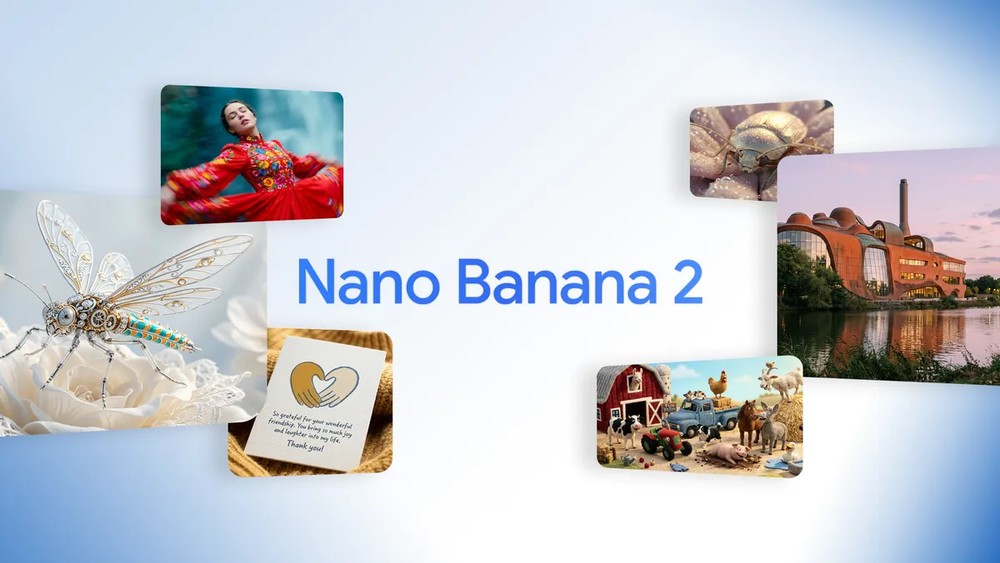
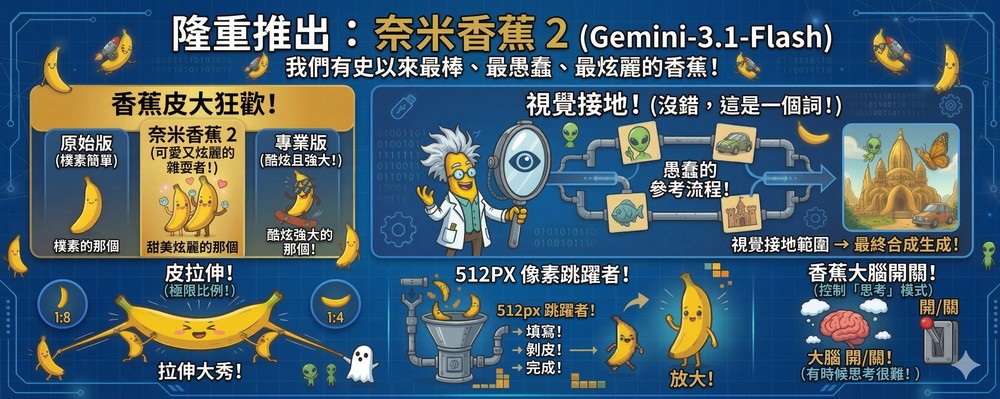
Additionally, Nano Banana 2 has a unique feature called “Image Grounding” that is not available on the Pro version. Simply put, when generating images, Nano Banana 2 doesn’t rely solely on training data—it can also search in real-time through Google’s search engine to find real-world reference images and information, making the generated results more realistic.
Google suggests you can try asking it to generate specific locations or natural creatures to experience the differences. Here is an example below.
Prompt: Generate a cinematic dusk photo of the main historic church in Voiron, France. Please ensure the architectural details, spire, surrounding square, and background landscape (mountains) are all accurate to the real world.

Image source: Google
Therefore, by default, Nano Banana 2 is always the first choice. However, when prompts are very complex with multi-layered logic, extreme logical constraints, or situations where Nano Banana 2 cannot generate reliably, Nano Banana Pro is the better choice.
For API users, pricing is also a key differentiator. Nano Banana 2 has lower generation costs than Nano Banana Pro, especially when outputting high resolutions (such as 2K, 4K), where overall costs decrease significantly. Additionally, Nano Banana 2 introduces a new 512px low-resolution mode with extremely affordable pricing, meaning you can first generate many low-resolution versions to find the best result, then switch to higher resolution generation to further reduce costs.
In Gemini, regardless of whether you’re on the free or paid version, image generation defaults to Nano Banana 2 (even when selecting the Pro model). Google AI Pro and Ultra subscribers, after generating the first image, can use the regenerate button below the image to switch to Nano Banana Pro.
The difference between Nano Banana 2 and Nano Banana
Compared to the original Nano Banana, the improvements in Nano Banana 2 are even more noticeable.
First, resolution. Nano Banana can only generate standard quality at best, while Nano Banana 2 can generate from 512px all the way up to 4K (4096×4096), and also supports different aspect ratios. Second, text generation capability. Nano Banana often produces errors or blurry text in images and doesn’t support Chinese. Nano Banana 2 has greatly improved in this area, and in some cases, its Chinese text rendering even outperforms Pro.
Next is texture and lighting performance. Images generated by Nano Banana 2 feature richer textures, more natural lighting effects, and sharper details. Overall, the quality improvement is more than just one tier.
However, Google noted that Nano Banana still has its value—if you’re currently using Nano Banana and it’s working well for you, there’s actually no need to rush to upgrade. It remains the cheapest option, and because it’s not a “thinking” model, it’s also faster than Nano Banana 2.
Source: KOCPC Chinese