


In the age of digital music streaming, physical album sales have declined sharply, with musicians now paid based on streaming counts. But if this system is maliciously manipulated using artificial intelligence, the entire model may need to be reconsidered. Recently, 54-year-old musician Michael Smith from North Carolina was caught generating songs with AI and orchestrating bot armies to massively boost streaming numbers for profit. He recently pleaded guilty to conspiracy to commit wire fraud in the U.S. District Court for the Southern District of New York. This case is being viewed as the world’s first successfully prosecuted and convicted AI-assisted streaming fraud case.

US Fraudulent Musician Caught Generating Hundreds of Thousands of Songs with AI + Bot Streams, Defrauding Streaming Platforms of Over $10 Million in Royalties
According to court documents released by the U.S. Attorney’s Office for the Southern District of New York, Smith’s fraud scheme began in 2017 and wasn’t exposed until 2024. The entire operation was incredibly sophisticated. Smith first partnered with the CEO of an AI music generation company (referred to as an “unindicted co-conspirator” in the court documents), obtaining thousands of AI-generated songs every week. These songs were assigned to fictional artist accounts with bizarre names like “Calm Force,” “Calm Knuckles,” “Calms Scorching,” and seemingly random combinations such as “Zygophyceae” and “Zygophyllaceae.”
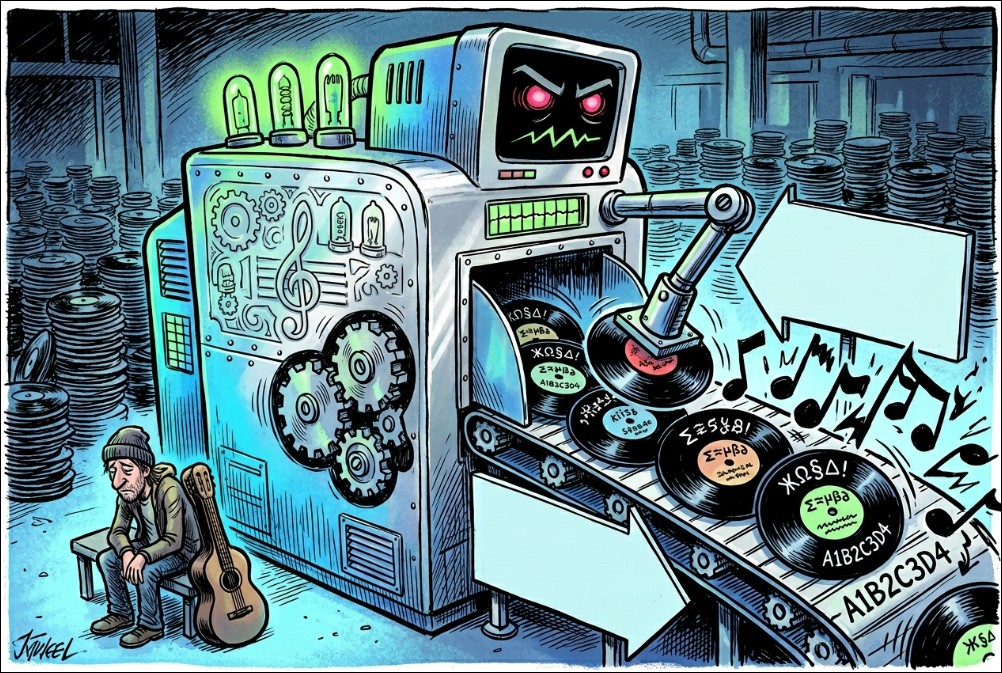
To generate authentic-looking streaming data, Smith built a massive bot army. During peak operation periods, he deployed over 1,000 bot accounts, managing them in a distributed manner through 52 cloud service accounts, with each cloud account hosting 20 bots. To evade the platform’s anti-fraud detection systems, these bots disguised their access as originating from different regions through virtual private networks (VPNs).
The Astonishing Revenue Behind Billions of Views
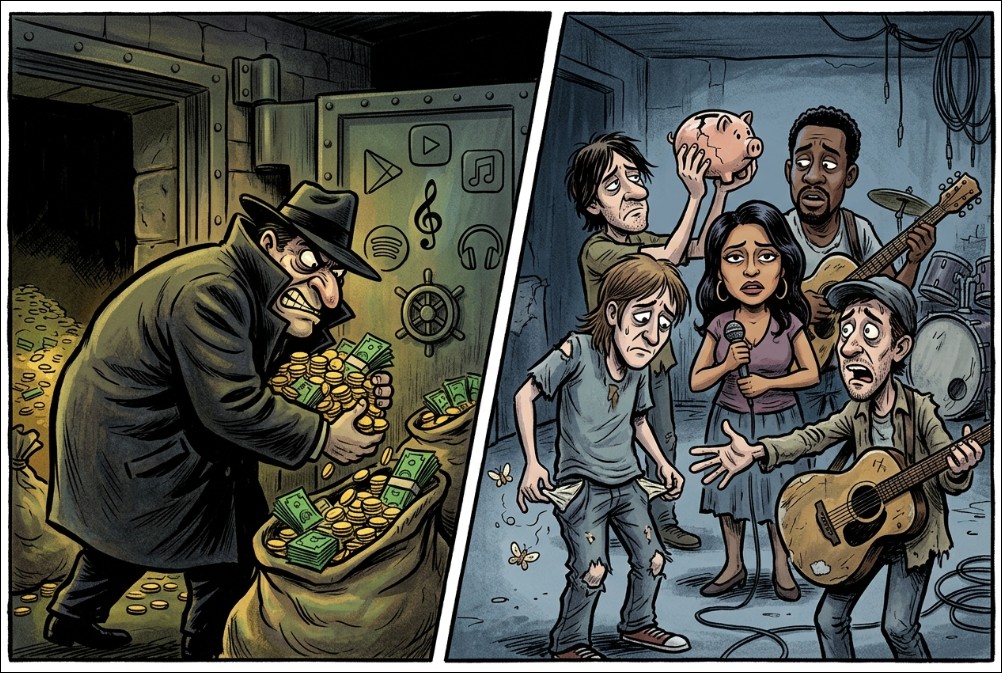
Smith himself boasted in internal emails that since 2019, these AI-generated songs have accumulated over 4 billion streams, generating more than $12 million in royalties for him. At an average of half a cent per stream, the scam ring’s annual illegal income exceeds $1.2 million.
U.S. Attorney Jay Clayton emphasized in a statement: “Michael Smith used artificial intelligence to generate thousands of fake songs, then had these fake songs streamed billions of times. Although the songs and listeners were fake, the millions of dollars he stole were real. These royalties should have gone to artists and rights holders who truly deserve support.”
Technology Empire Dissected: 1,040 Bots and 52 Cloud Accounts in a Distributed Assault
What was most staggering about Smith wasn’t his creativity, but the “industrial-grade” scale of his technical infrastructure. To evade the platform’s increasingly strict anti-fraud algorithms, rather than employing traditional single-point review manipulation, he built an extremely complex distributed architecture:
- 52 cloud service accountsHe registered 52 independent server accounts on AWS (Amazon), Azure (Microsoft), and Google Cloud respectively.
- An army of 1,040 robotsEach cloud account only hosts 20 bot accounts. This low-density deployment effectively disperses system detection, making each bot’s behavior appear more like “real humans” in the backend data.
- Full-process VPN anonymityHe used VPN services to constantly change IP addresses, disguising these 1,000+ accounts as listeners scattered across the globe, avoiding security alerts triggered by sudden traffic surges in a single region.
- Traffic homogenization strategyThis was the key to his successful infiltration over seven years. He didn’t pursue creating “million-hit hits,” but instead evenly distributed his streaming numbers across hundreds of thousands of AI-generated singles. Each song might only get a few plays per day, appearing utterly mediocre in the backend reports, yet accumulating an astonishing billions of plays in total.

The Exposé: The MLC’s “Digital Detectives”
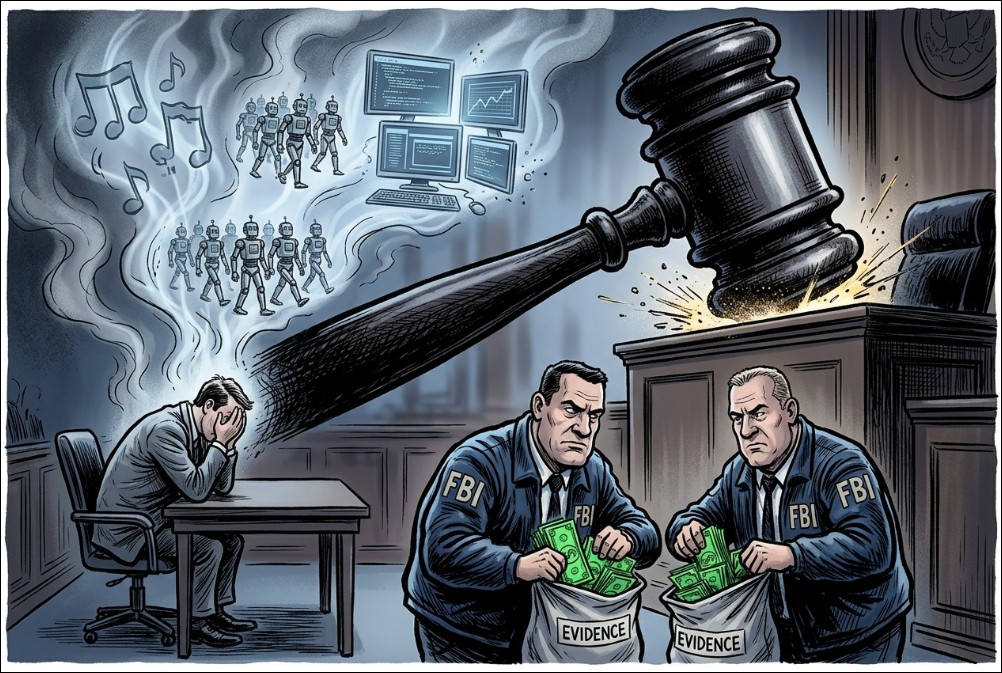
This elaborate scheme was ultimately exposed not by the streaming platform’s algorithm, but by the vigilance of a royalty settlement organization. In early 2023, the Mechanical Licensing Collective (The MLC) detected anomalies: a specific batch of music catalogs with modest individual stream counts, but an extraordinarily steady and staggering ratio of output to total revenue. After months of cross-referencing, The MLC discovered that all these songs pointed to a fictional entity controlled by Smith. Subsequently, The MLC engaged in covert cooperation with the FBI, tracing the underlying financial flows across 52 cloud accounts, ultimately pinpointing Smith in North Carolina.
After a year-long legal battle, Smith ultimately chose to plead guilty in exchange for a lighter sentence. According to the plea agreement released by the U.S. Attorney’s Office for the Southern District of New York, the charges and key sentencing details are as follows:
- Return of illegal proceedsThe court ordered Smith to return a total of $8,091,843.64 in illegal royalty income. This amount was calculated based on exact financial flow records obtained through the FBI investigation.
- Risk of incarcerationAlthough he pleaded guilty to a lesser conspiracy charge, he still faces up to 5 years in federal prison under the law. This also officially marks “數位刷量” as having escalated from civil disputes to serious criminal offenses.
- Money Laundering and Telecommunications FraudProsecutors specifically emphasized that Smith’s use of cloud accounts to conceal illegal proceeds has already constituted a typical pattern of telecom fraud and money laundering crimes.
The anti-fraud dilemma facing streaming platforms
This case highlights the systemic challenges faced by music streaming platforms. According to WIRED’s in-depth investigation, Spotify claims its anti-fraud mechanisms did work, with spokesperson Laura Batey stating: “Our preventive measures seem to have worked, limiting Smith’s royalties from Spotify to approximately $60,000 rather than part of the $10 million total.”
However, this also exposed loopholes in coordinated fraud prevention across major platforms. Smith operated across multiple platforms simultaneously, including Apple Music, Amazon Music, and YouTube Music. Morgan Hayduk, co-CEO of streaming fraud detection startup Beatdapp, estimates that this type of fraud causes approximately $1 billion in losses to the streaming industry annually, “The Michael Smith case is just the tip of the iceberg.”
This case is not merely the fraudulent act of a single criminal, but also reflects structural contradictions in the digital creative economy. When AI can mass-produce “music” and when bots can simulate real listeners, the traditional play-count based royalty distribution model is facing fundamental challenges. The streaming ecosystem that the music industry painstakingly rebuilt after the Napster piracy crisis in the 2000s is now encountering entirely new threats in the AI era. AI music generation itself is not illegal; French streaming platform Deezer estimates10% of songs uploaded daily are AI-generated. The real problem lies in how bots are used to create fake traffic to scam royalties. This case could prompt streaming platforms to redesign their royalty distribution mechanisms or strengthen AI detection capabilities for abnormal playback patterns.
Legal Consequences and Industry Impact
This case, as the first successful AI fraud prosecution in the music industry, is a landmark. A 2021 study by France’s Centre national de la musique found that approximately 1% to 3% of streams involved fraud, while Beatdapp’s data suggests this number could be as high as 10%. Some clients have even consistently flagged 17% to 25% of streams as fraudulent, with extreme cases reaching as high as half. As AI music generation tools become more prevalent, these fraudulent tactics may become even more widespread.
As one X platform user commented after the case came to light: “He uses AI to make music, and AI to create listeners, earning $1.2 million a year with no real human ever actually listening to any of it.” This statement perfectly captures the absurdity and irony of the scam.