


Samsung recently announced that three new flagship folding phones, Z Fold8 Ultra, Z Fold8 and Z Flip8, have officially launched. Compared with the previous generation of folding phones, one of the most talked about upgrades is the first introduction of silicon-carbon batteries (Silicon-carbon Batteries) that Chinese brands have been actively using in recent years. Although the battery capacity and battery life have been improved (about 10%), durability has been sacrificed by 40%!?
What are the differences between Samsung’s new generation flagship folding machine compared to the previous generation? Why has the battery life of the new machine been improved but its durability has been greatly sacrificed? Here is an analysis:
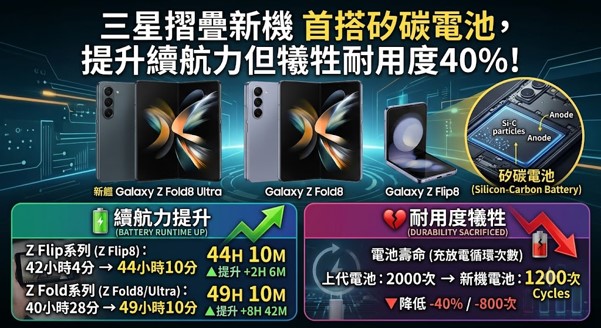
Samsung’s new generation flagship folding machine uses silicon-carbon batteries for the first time, increasing battery life by more than 10% but sacrificing 40% of battery durability. What kind of plaster does Samsung sell in its gourd? The following is a summary video and detailed description:
1. What are the differences between Samsung’s new generation flagship folding machine and the previous generation?
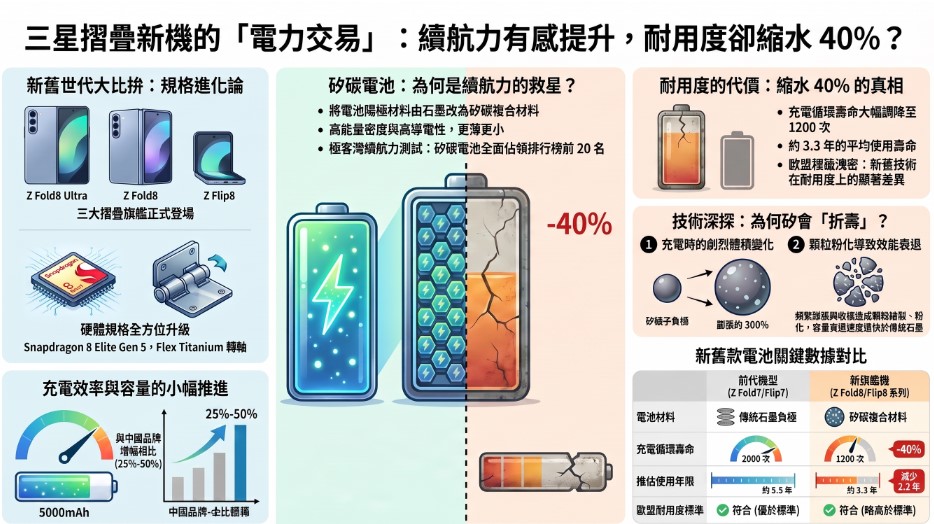
Samsung has launched a new generation of Galaxy Z series folding machines including Z Fold8, Z Fold8 Ultra and Z Flip8. Compared with the previous generation (Z Fold7 and Z Flip7), the main differences are the introduction of Flex Titanium titanium hinges to soften the creases, upgraded Snapdragon 8 Elite Gen 5 processor, use of high energy density silicon carbon batteries and improved charging power. For the first time, the Fold series is split into wide and Ultra models.
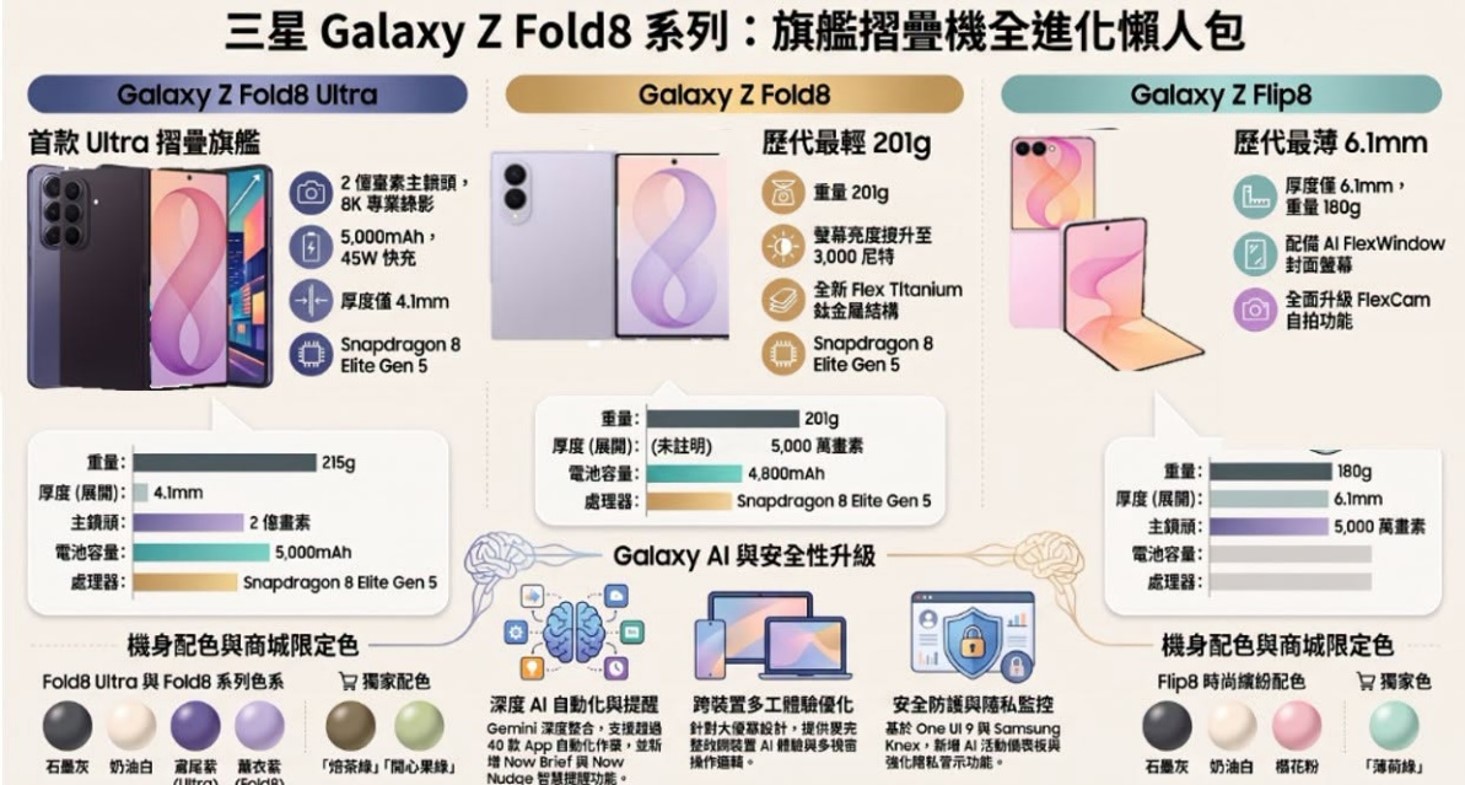
In terms of battery capacity and battery life, Samsung’s new generation Galaxy Z series foldable machine uses silicon-carbon batteries (Silicon-carbon Batteries) that have been widely used by Chinese brands in recent years for the first time. It provides larger battery capacity in a limited institutional space. In addition, it uses an upgraded Snapdragon 8 Elite Gen 5 processor, which improves battery life.
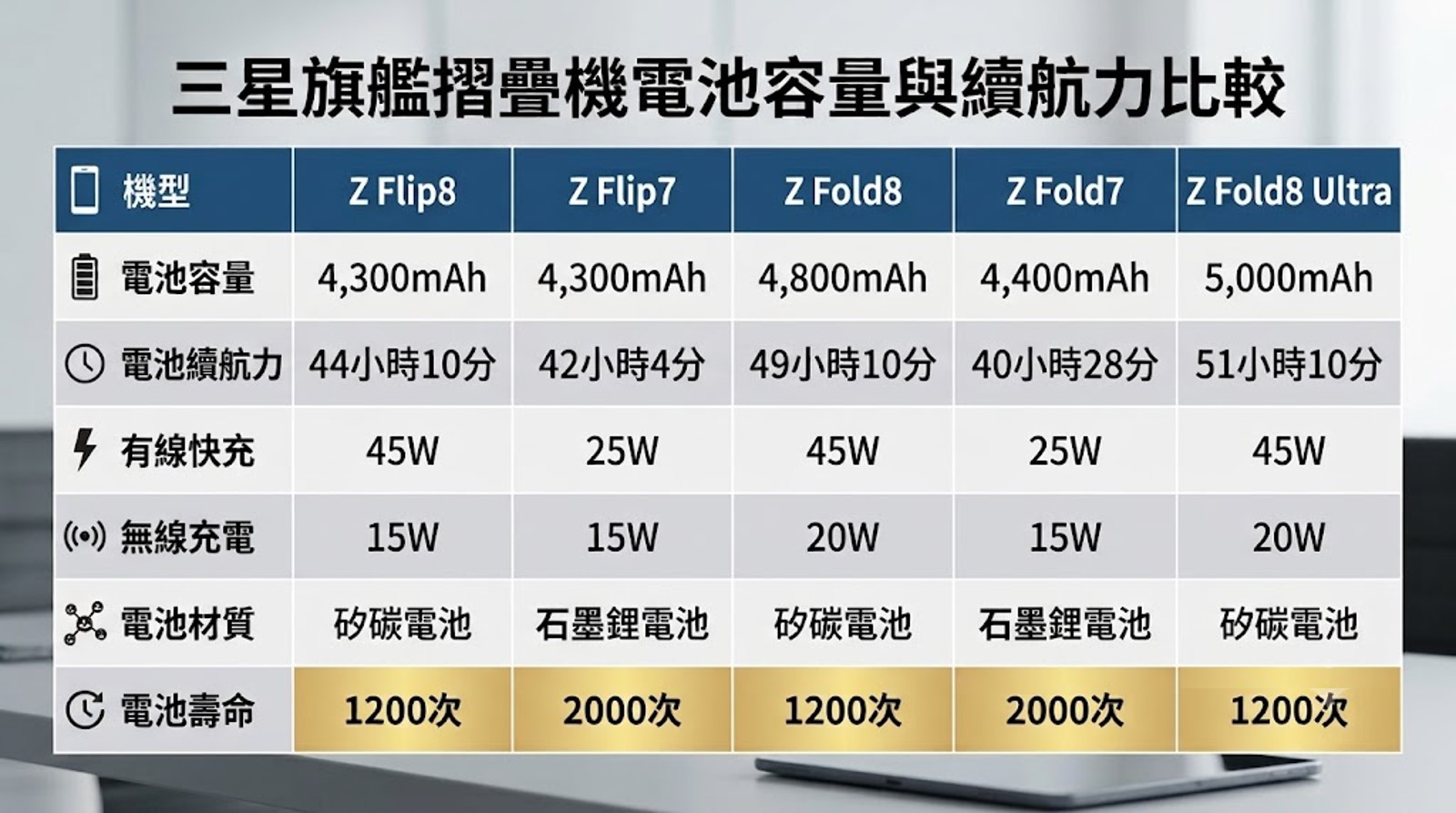
However, the EU product label disclosed information that the battery life of the new generation of folding machines using silicon-carbon batteries has dropped from 2,000 times in the previous generation to 1,200 times. 1,200 charging cycles is equivalent to about 3.3 years of use, although it is still higher than the EU professional maintenance exemption qualification (if the smartphone battery has extremely high durability, it can still maintain more than 83% of the capacity after 500 complete charge and discharge cycles, or maintain more than 80% of the capacity after 1,000 cycles), and is also better than the 500 to 1,000 lithium battery for ordinary mobile phones. However, due to the rising prices of global flagship mobile phones, the replacement cycle is getting longer and longer, and the battery durability has dropped by 40%, which may test the loyalty of fans who love folding machines!
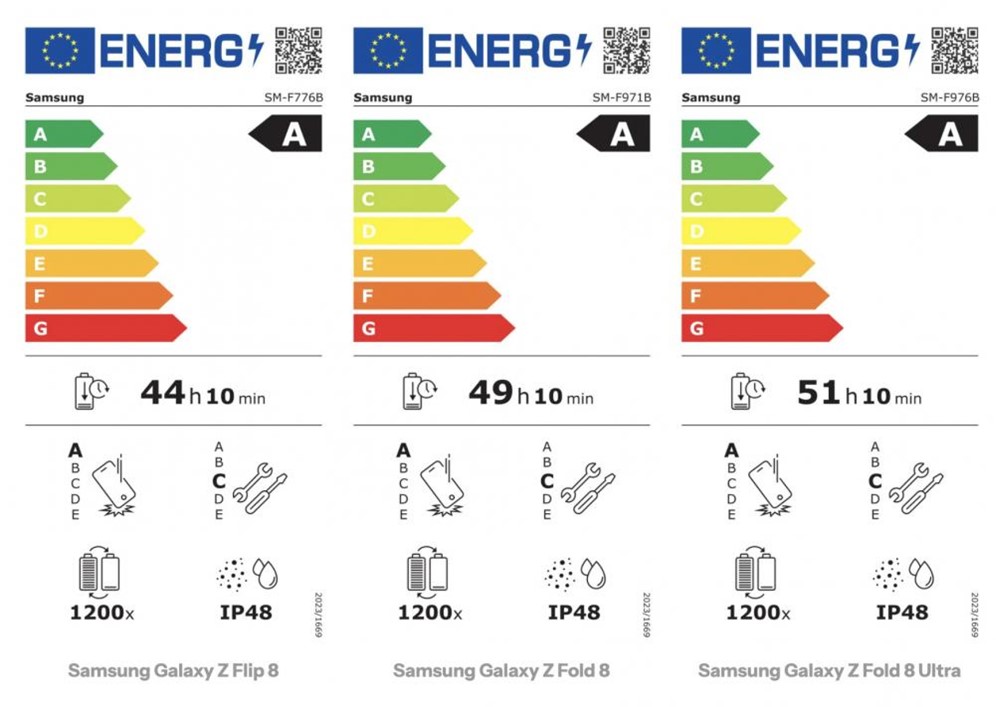
△Samsung Z Fold8, Z Fold8 Ultra and Z Flip8 EU product labels
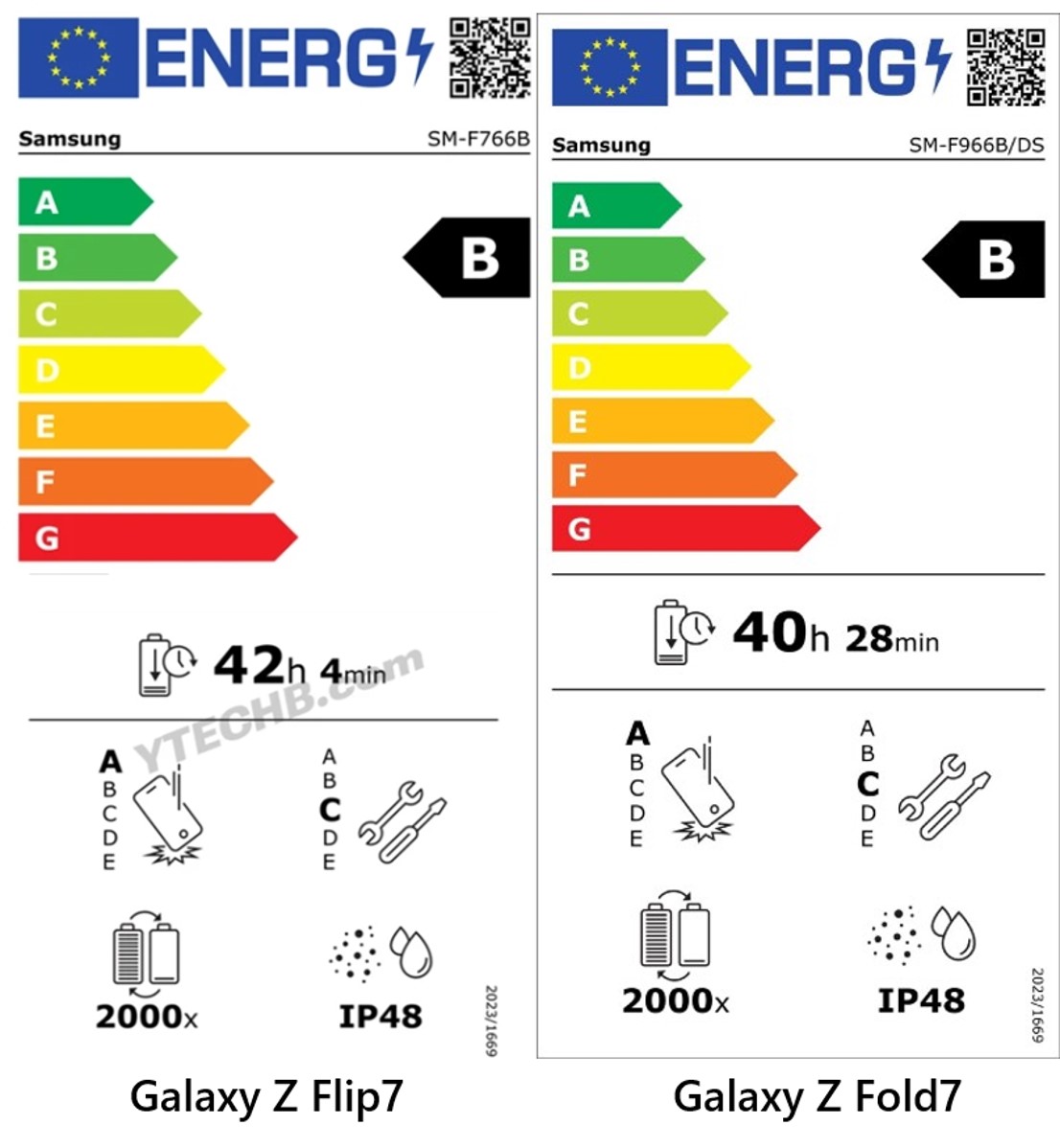
△Samsung Z Fold7 and Z Flip7 EU product labels
2. Why has the battery life of the new phone been improved but its durability has been greatly sacrificed?
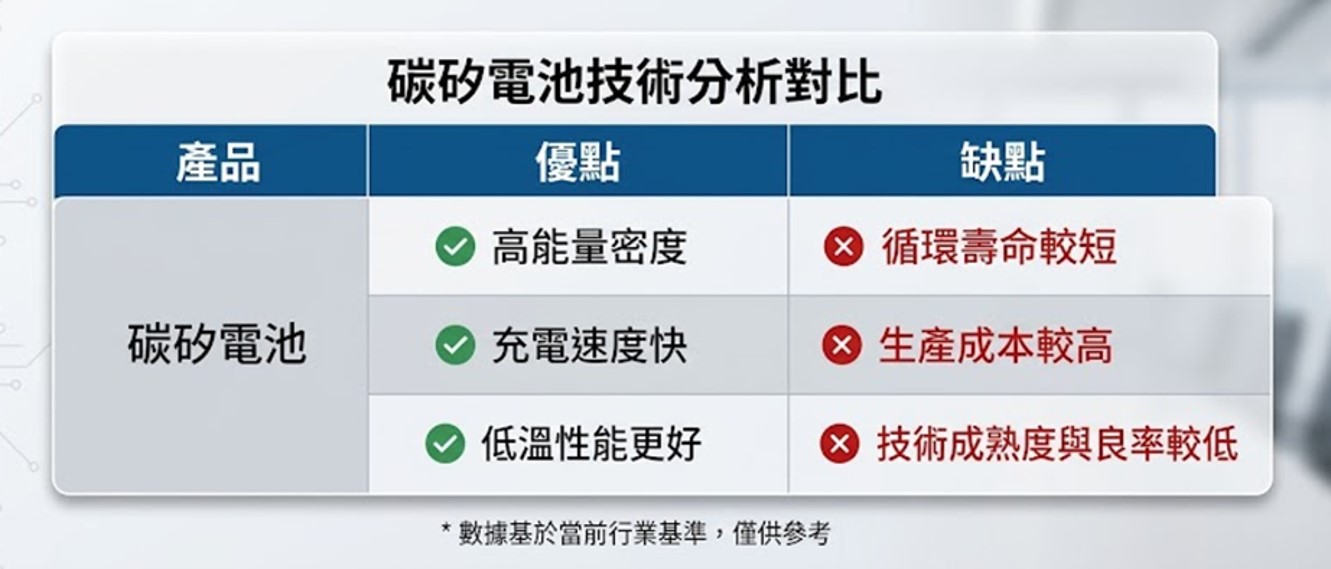
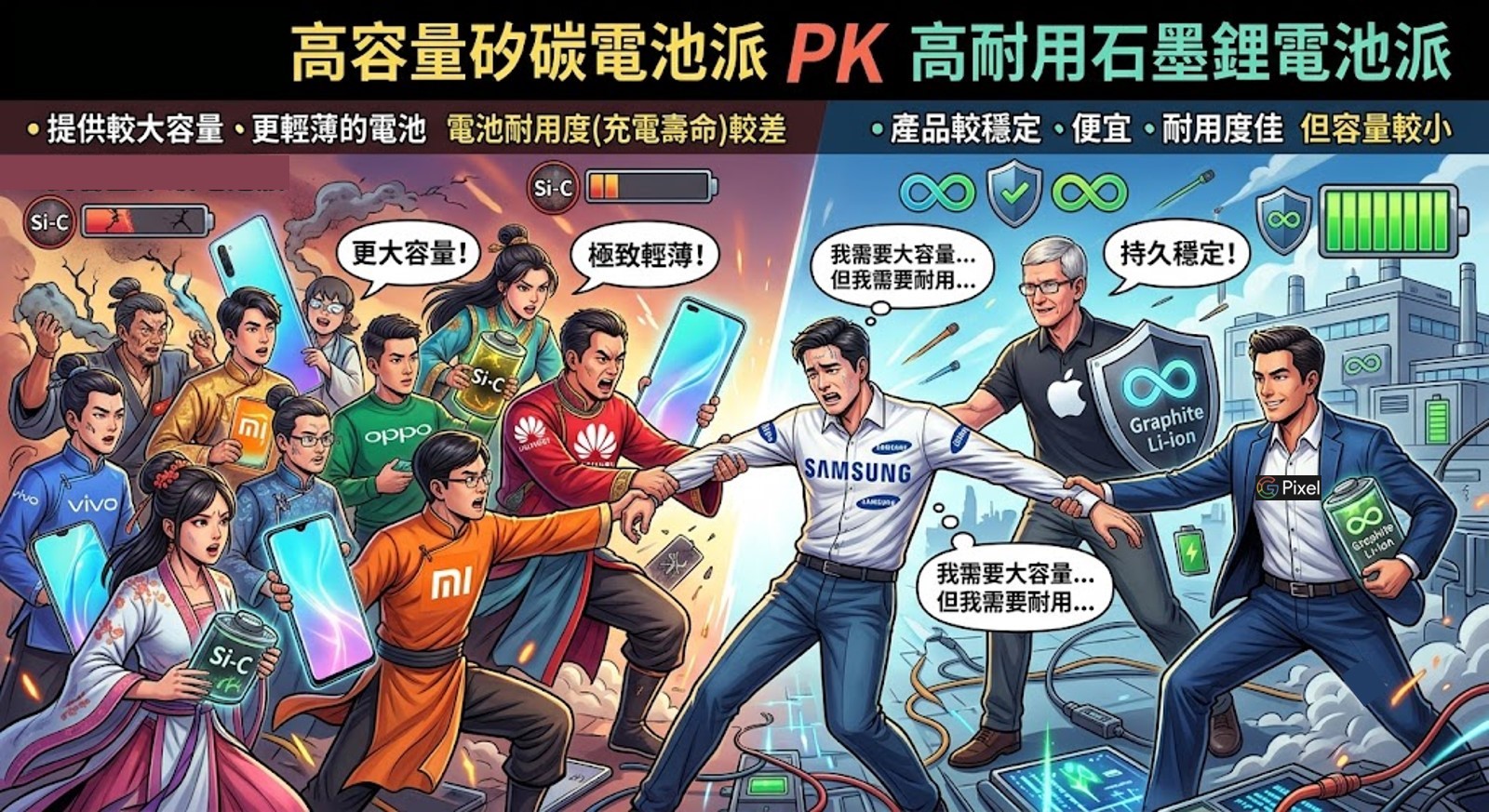
“Silicon carbon battery” uses silicon carbon composite material as the anode of the liquid lithium battery instead of graphite. The silicon carbon composite material can store 15 lithium atoms for every 3 silicon atoms. The higher density can store more electricity in the same volume, and the higher conductivity allows for faster charging. The biggest advantage is that the same volume can provide larger battery capacity and support greater power charging, but the biggest disadvantage is that the silicon material will expand by about 300% and shrink during discharge. This repeated volume change can easily cause the silicon particles to crack and pulverize, resulting in poor cycle performance and shorter battery life. In other words,The capacity of new-generation silicon-carbon batteries may decline faster than traditional lithium batteries with graphite anodes, which is one of the known characteristics of current silicon-carbon battery technology.
“You know there are tigers in the mountains, so why go to the Tiger Mountains?”Since both 5G and AI are very power-consuming, processor performance improvements can no longer reverse the fatal problem of insufficient mobile phone battery life. Increasing battery capacity through physical means is the simplest and crudest solution. In recent years, Chinese mobile phone brands have continued to use a large number of 5,000~10,000mAh silicon carbon batteries. According to the latest “5G Battery Life 5.0” released by Geek Bay, the top 20 are all taken by Chinese brands, with Apple iPhone and Samsung S series flagship phones almost at the bottom. It can be seen that the physical advantages of “silicon carbon batteries” completely overwhelm the performance of processors and operating systems.
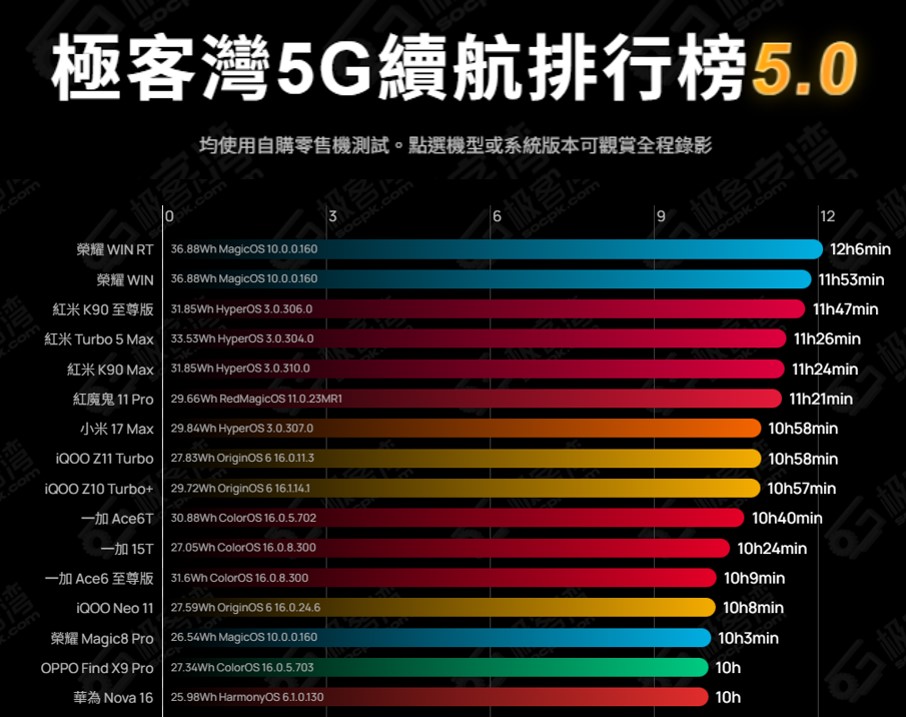
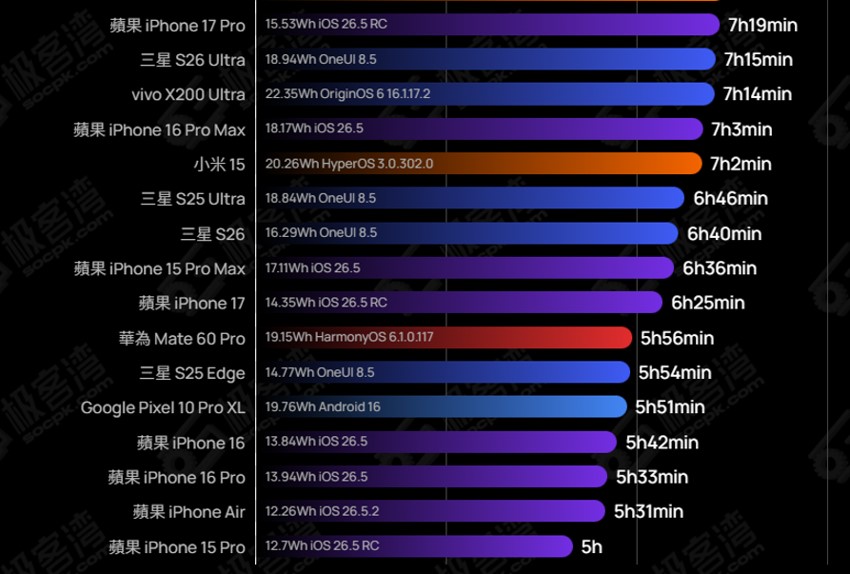
Image source: geek bay
Samsung’s flagship phone uses silicon-carbon batteries for the first time just to test the water temperature!
Although Samsung’s new generation Galaxy Z series uses “silicon carbon batteries” for the first time, its battery capacity only increases by more than 10% (the maximum is only 5000mAh and Z Flip8 does not even have an increase in capacity), which is significantly different from the 25% to 50% increase in carbon silicon battery capacity of mainland brands. It can be seen that Samsung’s use of “silicon carbon batteries” this time may just be to take advantage of its thinner and lighter characteristics, and it is still taking a wait-and-see attitude towards the emerging “silicon carbon batteries”. The reason is that South Korea currently lags far behind China in the commercialization process and market share of silicon carbon (silicon anode) batteries. Whether Samsung will fully adopt “silicone carbon batteries” in its main Galaxy S series and A series in the future will be the most important indicator of whether Samsung will switch to the high-capacity silicon carbon battery camp. Among them, according to the current news broke by GalaxyClub,The rated capacity of the Galaxy S27 Pro and S27 Ultra batteries will exceed 5000mAh for the first time, which will be the most important indicator to observe.!
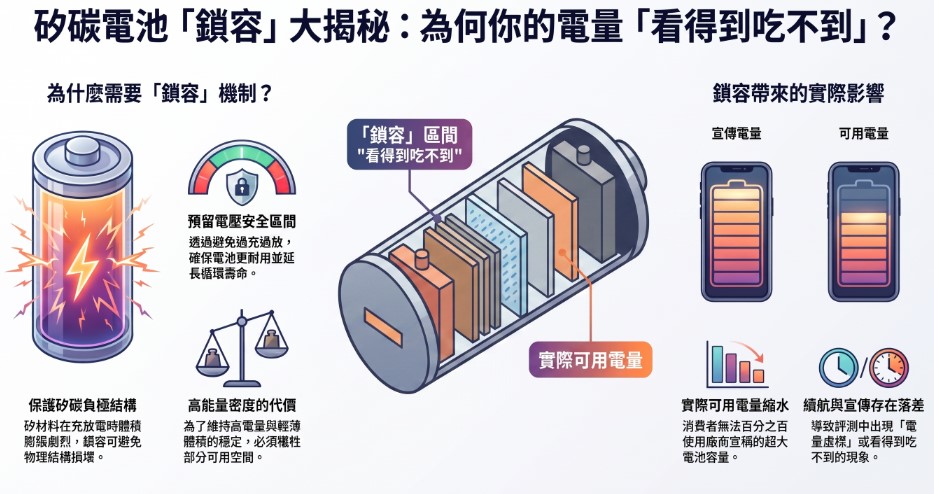
However, Samsung’s first use of “silicon carbon battery” only increased the battery capacity by more than 10%. It cannot be ruled out that it is using “silicon carbon battery”.lock capacity“Technology, deliberately low-standard capacity.
In order to overcome the problems that silicon materials easily produce during power cycles,volume expansionandstructural damageproblem, mobile phone manufacturers will deliberately block part of the battery capacity to preventOvercharge and dischargeand extend service life. Chinese manufacturers often deliberately fail to include “lock capacity“Battery capacity deduction” caused the problem of false battery capacity standards. Samsung may have caused the battery capacity increase of its “silicon carbon battery” to be lower than that of Chinese brand mobile phones in order to avoid disputes about the actual available capacity.
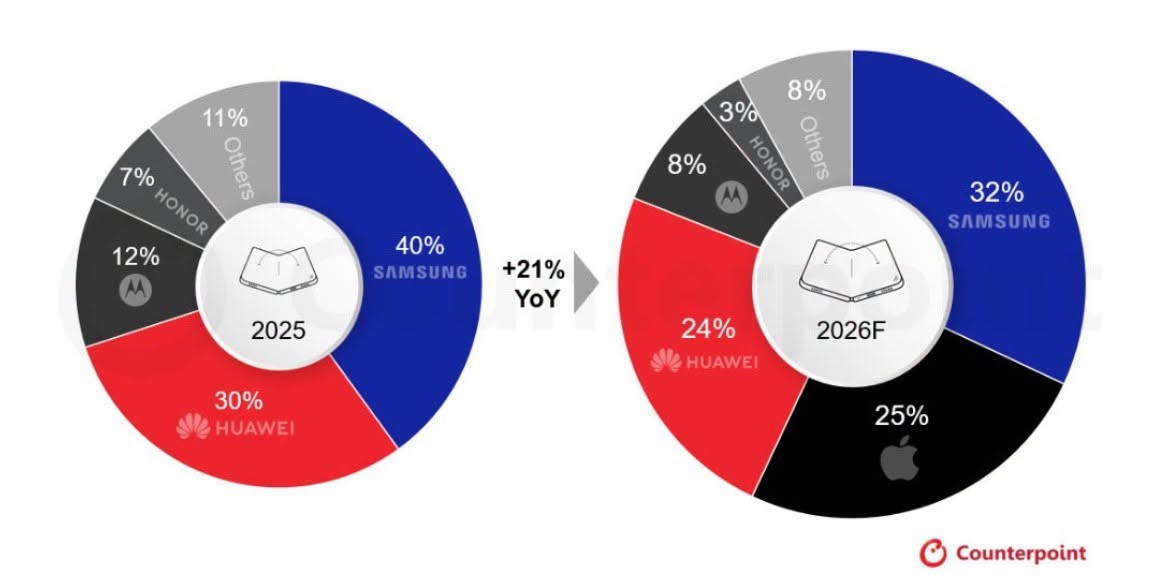
According to Counterpoint’s forecast, as AI productivity demands drive the upgrade of foldable phones, global foldable smartphone shipments will increase by 21% annually in 2026. Among them. Apple’s first foldable iPhone (tentatively called iPhone Fold or iPhone Ultra) as soon as the end of September 2026, and it is expected to achieve a market share of 25% in the first year. Whether Samsung’s new generation Galaxy Z series, which sacrifices battery durability to achieve battery life, can win the favor of star fans and stabilize its leading position in the global foldable mobile phone market, which accounts for 32% of the market, we can only wait and see what happens!
Source: KOCPC Chinese