


As previously announced,Intel Officially unveiled the first next-generation Core Ultra 3 series featuring the 18A process during the CES 2026 keynote (Panther Lake) processor, which not only CPU and GPU Performance has been significantly improved. Combined with features such as the 18A process and low-power E-cores, this also results in greater energy efficiency, with battery life measured in “days.” And most importantly, AI In addition, its inference performance has improved by 50% compared to the previous generation, delivering up to 180 TOPS of computing power. Combined with 96GB of memory, users can run large language models with 70 billion parameters locally. Products featuring the Core Ultra 3 processor are expected to begin appearing on the market in late January.
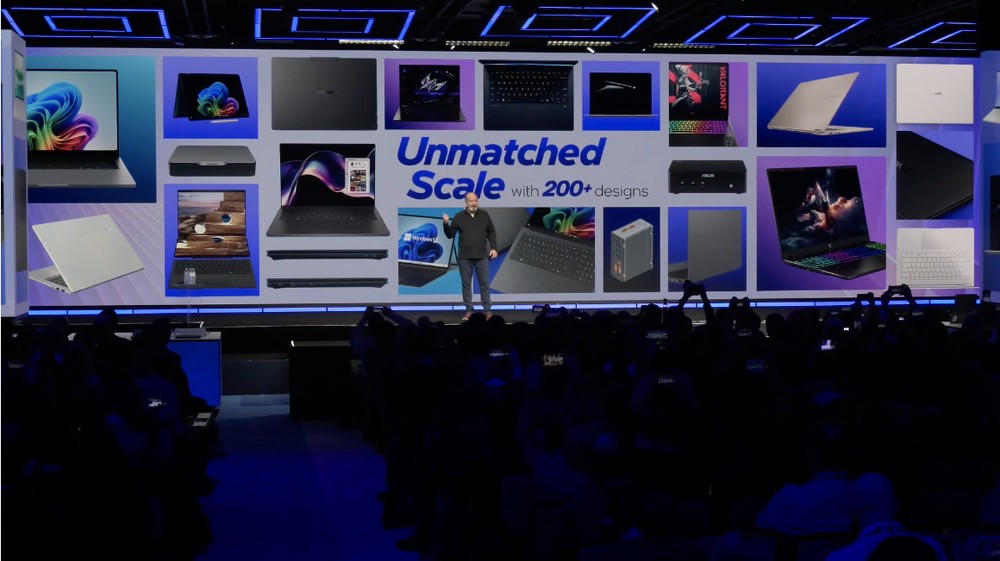
Intel has officially launched its first-ever next-generation Core Ultra 3 series laptop processors built on the 18A process, offering enhanced performance and improved energy efficiency.
First, the Core Ultra 3 series of laptop processors is expected to include 14 models, with the top-of-the-line model being the Intel Core Ultra X9 388H, featuring 16 cores—comprising 4 P-cores, 8 E-cores, and 4 LP E-cores—and supporting LPDDR5 or LPDDR5x at up to 9,600 MT/s, with a maximum memory capacity of 96GB:
| CPU Model | P Core (Cougar Cove) | E Core (Darkmont) | LP-E Core (Skymont) | CPU Clock Speed (Max) | Xe3 iGPU Core Count | TDP (Base / MTP) |
|---|---|---|---|---|---|---|
| Core Ultra X9 388H | 4 | 8 | 4 | 5.1 GHz | 12 | 25-80W |
| Core Ultra 9 386H | 4 | 8 | 4 | 4.9 GHz | 4 | 25-80W |
| Core Ultra X7 368H | 4 | 8 | 4 | 5.0 GHz | 12 | 25-80W |
| Core Ultra 7 366H | 4 | 8 | 4 | 4.8 GHz | 4 | 25-80W |
| Core Ultra 7 365 | 4 | 0 | 4 | 4.8 GHz | 4 | 25-55W |
| Core Ultra X7 358H | 4 | 8 | 4 | 4.8 GHz | 12 | 25-80W |
| Core Ultra 7 356H | 4 | 8 | 4 | 4.7 GHz | 4 | 25-80W |
| Core Ultra 7 355H | 4 | 0 | 4 | 4.7 GHz | 4 | 25-55W |
| Core Ultra 5 338H | 4 | 4 | 4 | 4.7 GHz | 10 | 25-80W |
| Core Ultra 5 336H | 4 | 4 | 4 | 4.6 GHz | 4 | 25-80W |
| Core Ultra 5 335H | 4 | 0 | 4 | 4.6 GHz | 4 | 25-55W |
| Core Ultra 5 325H | 4 | 0 | 4 | 4.5 GHz | 4 | 25-55W |
| Core Ultra 5 332 | 4 | 0 | 4 | 4.4 GHz | 2 | 25-55W |
| Core Ultra 3 322 | 4 | 0 | 4 | 4.4 GHz | 2 | 25-55W |
Intel has previously shared Panther Lake Architecture Features (Core Ultra 3 Series)…so I won’t go into detail here; anyone interested can read my previous post. I’ll just give a quick overview here.
The Core Ultra 3 series is Intel’s first processor to use the 18A process, offering better performance per watt and higher chip density. Simply put, it packs more into a smaller space and operates more energy-efficiently. Featuring a next-generation core architecture, it not only includes all-new P-cores and E-cores but also introduces dedicated “low-power E-cores” and independent caches. Think of it as adding an energy-efficient core to your computer that’s dedicated to handling everyday tasks. Intel states that in a typical scenario—such as streaming 4K video, which is a common daily activity—power consumption is only one-third that of the previous generation.
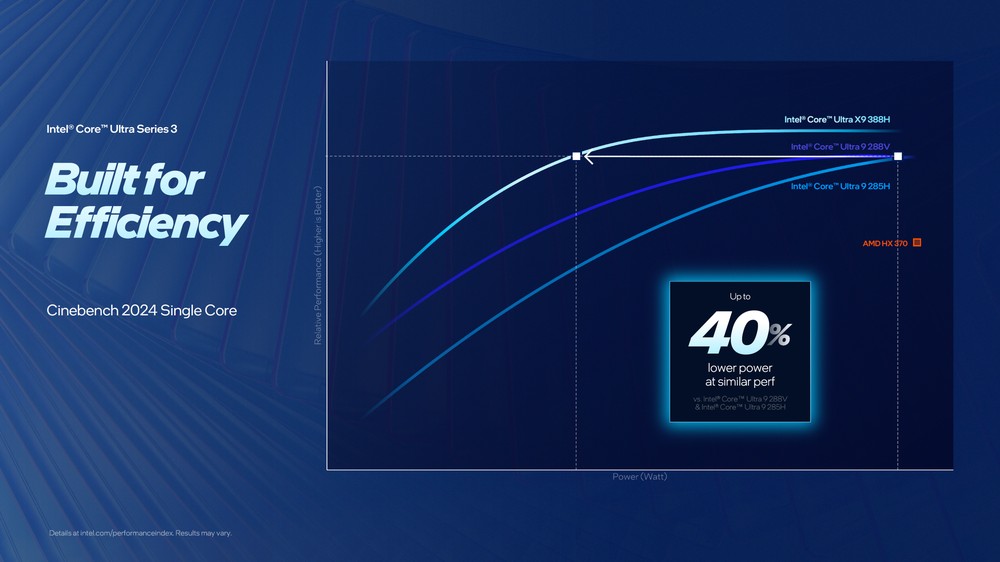
Intel also shared several performance test results. In Cinebench 2024 tests, under specific low-power conditions, the Core Ultra X9 388H from the Core Ultra 3 series achieved up to a 40% reduction in power consumption compared to the previous generation or competing products in single-core performance:
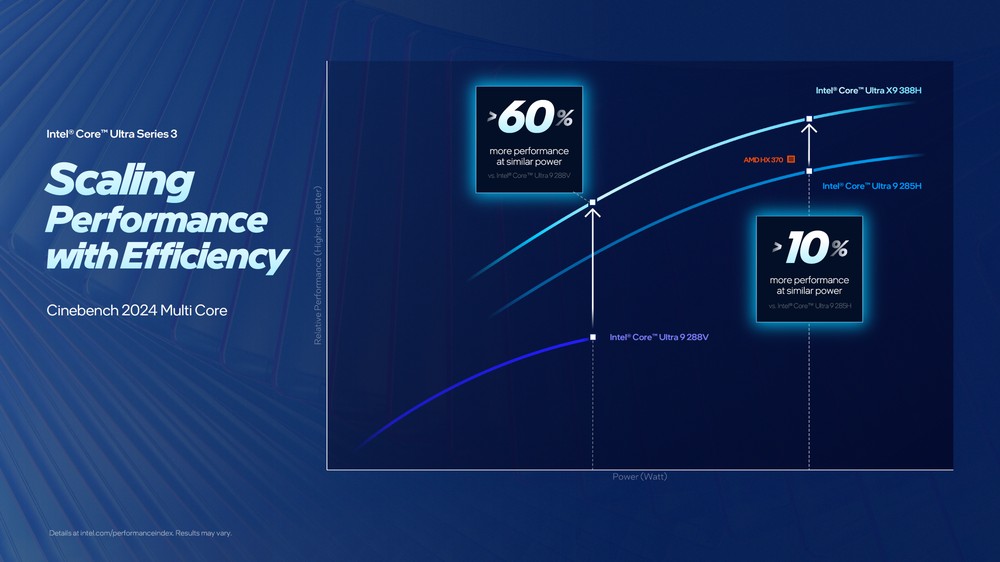
In terms of multi-core performance, compared to the Core Ultra 9 288V, it delivers up to a 60% performance boost at roughly the same power consumption. Compared to the Core Ultra 9 285H, it also offers a 10% improvement:
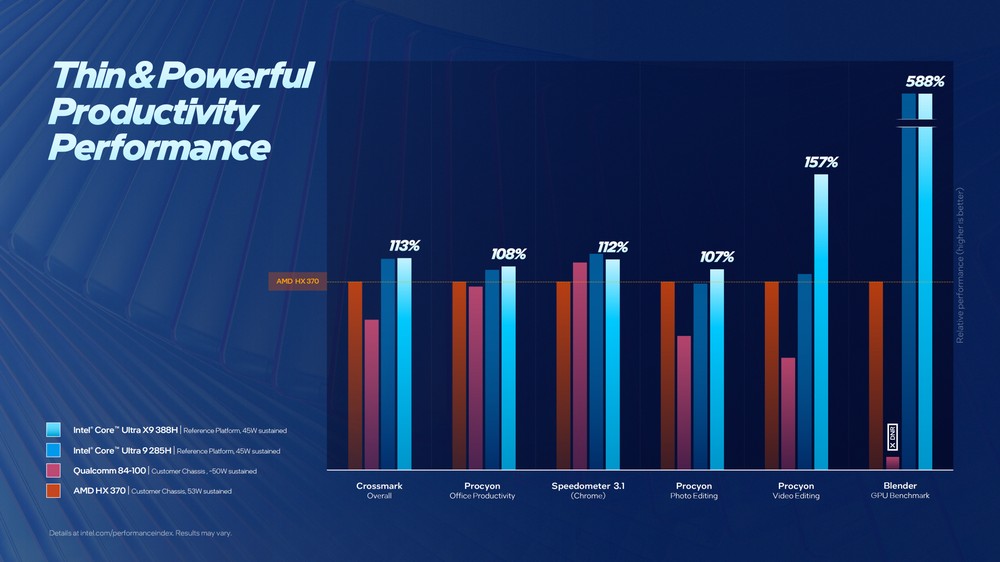
The performance test results for the other four models also outperformed those of the previous-generation products and competitors Qualcomm and AMD:
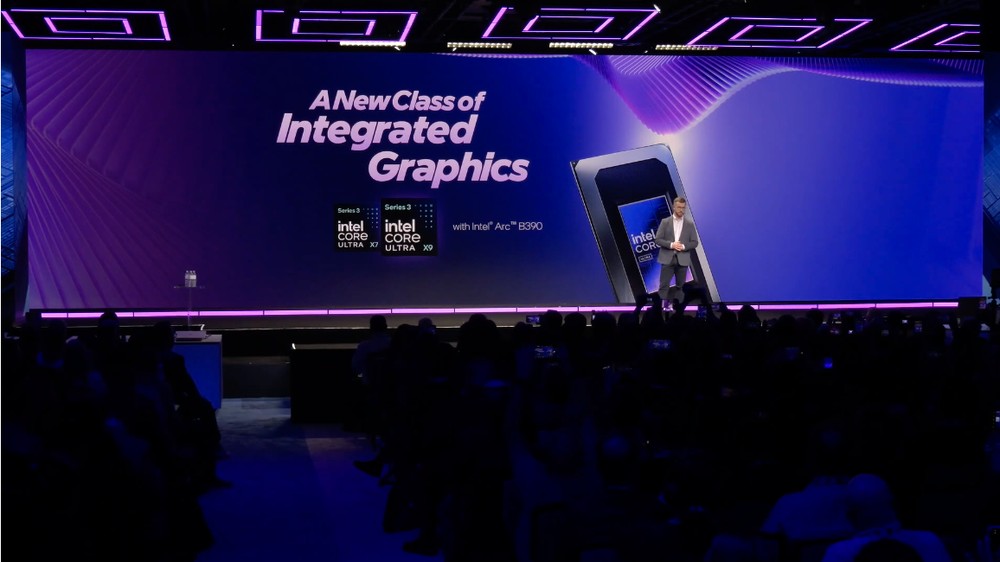
The Core Ultra 3 series also integrates the next-generation Intel Arc B390 integrated graphics, delivering a massive performance boost. Not only does it feature built-in ray tracing, a larger cache (twice the size), and 96 XMX units, but it also offers up to 120 GPU TOPS of AI computing power. More importantly, this is also the first integrated graphics solution to support AI multi-frame generation on its launch day, generating 3 AI frames for every 1 rendered frame:
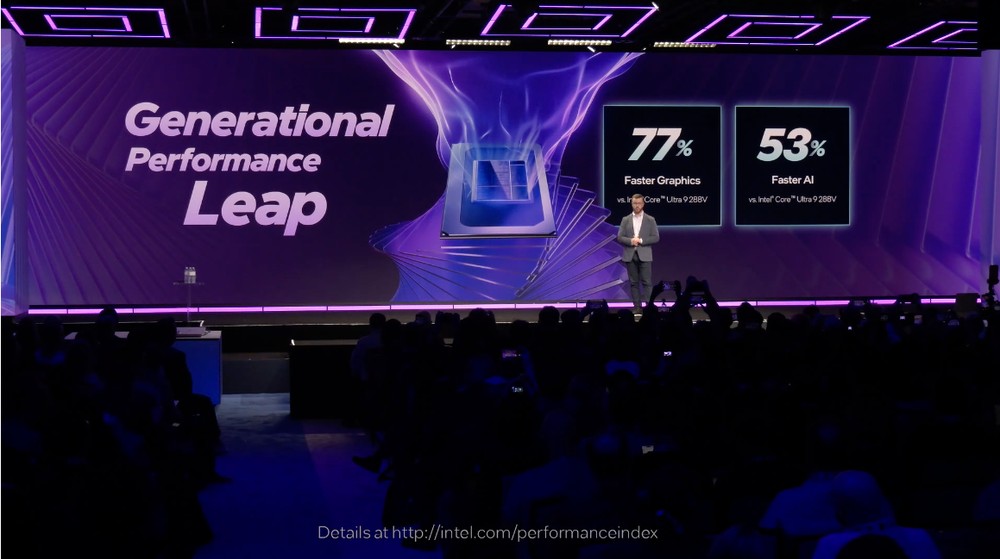
Compared to the previous generation, performance has improved by up to 77%, and AI inference performance has also increased by 53%:
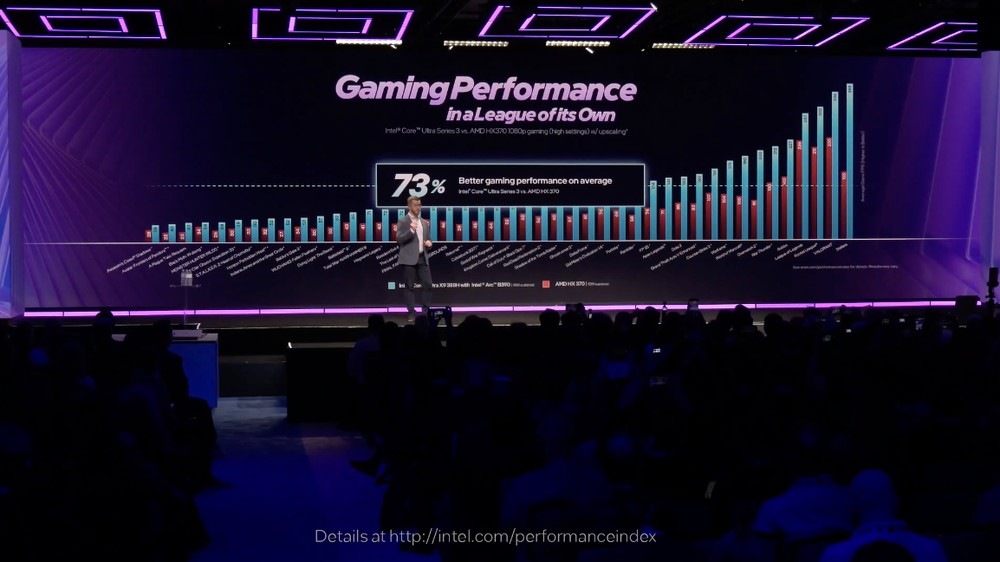
It also far outperforms AMD Radeon’s latest products from the competition. Under similar power consumption and memory conditions, it delivers 73% higher average FPS, and in certain games, it’s even up to twice as fast:
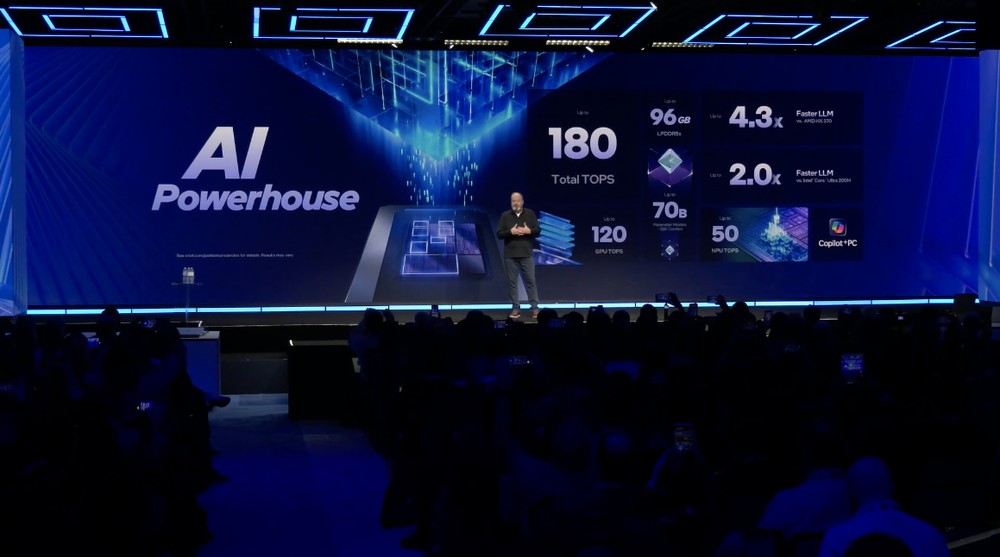
As mentioned above, the GPU can deliver up to 120 TOPS of AI computing power. Combined with the CPU and the NPU’s 50 TOPS, the Core Ultra 3 series reaches a total of 180 TOPS:
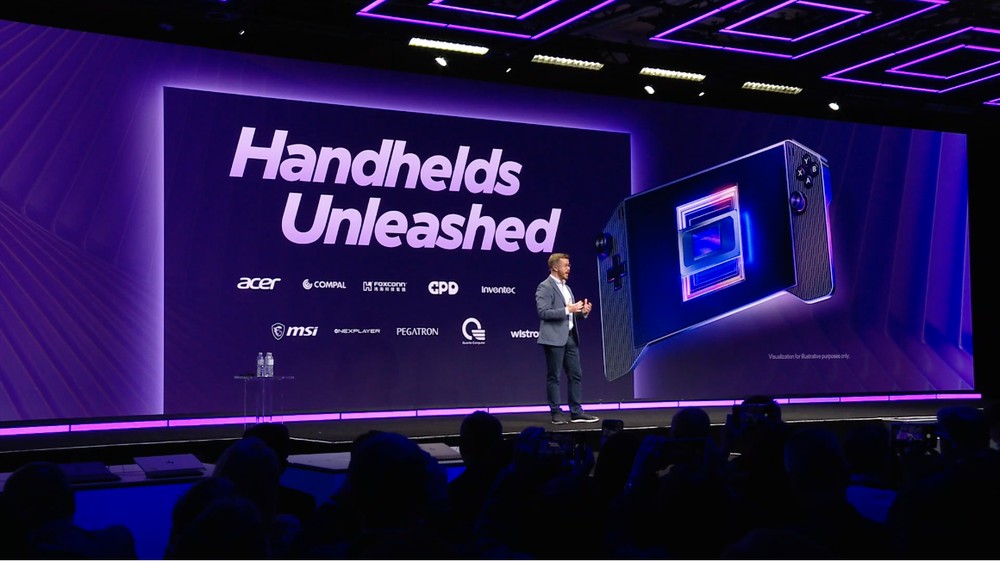
During the event, Intel also announced plans to launch Panther Lake-powered handheld gaming consoles in collaboration with partners such as MSI, Acer, and GPD. These are expected to be available later this year:
Source: KOCPC Chinese