


According to data from the Ministry of Economic Affairs, Taiwan imports nearly 5 million portable power banks annually, indicating that Taiwanese people generally suffer from a strong fear of running out of cell phone battery (Nomophobia). Recent incidents of power banks catching fire or spontaneously combusting have raised safety concerns among many consumers regarding the portable chargers they carry, sparking heated discussion this year about the emerging SSB solid-state battery power banks that claim to be explosion-proof. Currently, the Taiwanese market is flooded with brands of power banks claiming to use solid-state, quasi-solid-state, or semi-solid-state batteries, leaving consumers unsure of which to choose.
Which SSB solid-state battery power bank should you buy from those available on the market in Taiwan? Based on the latest search results from Gemini Pro, here are the top four brands of solid-state battery power banks recommended:
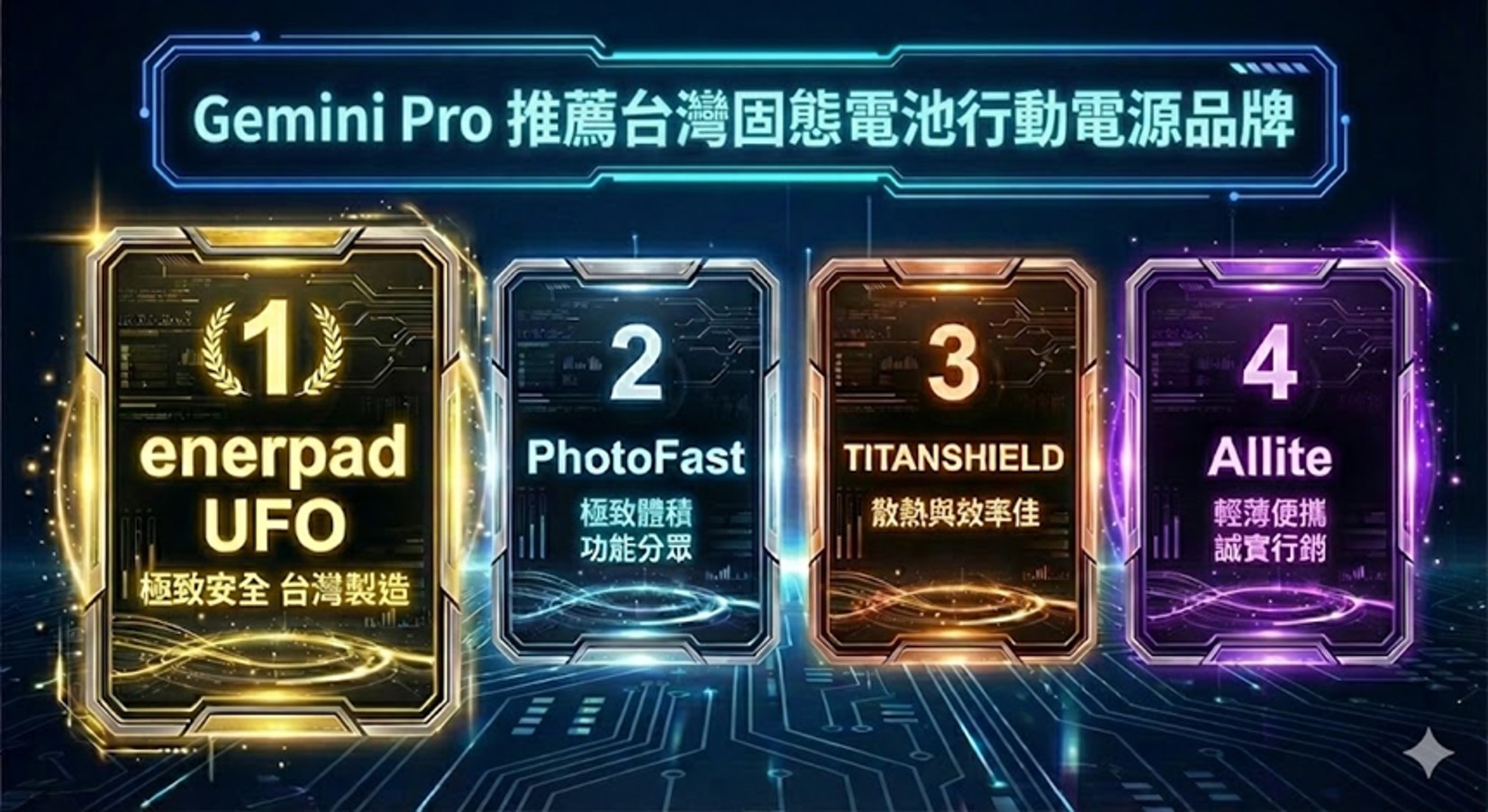
As consumers increasingly prioritize the safety of power banks, the emerging solid-state battery power banks have sparked widespread discussion. With several solid-state battery power banks posting impressive sales figures, many brands have recently entered the fray, making the market overwhelming. Which solid-state battery power banks does Gemini Pro recommend? Below is a summary video and detailed explanation:
Solid-State Battery Power Bank Brands and Products Recommended by Gemini Pro
Gemini Pro has compiled a list of well-reviewed solid-state, quasi-solid-state, and semi-solid-state battery power bank brands and products for the Taiwan market in 2025–2026, recommending four brands: the Enerpad UFO MX and MT series magnetic solid-state power banks, the PhotoFast SSB mini and SSB AllDay chargers, the GC TITANSHIELD MagSafe solid-state power bank, and the Allite explosion-proof semi-solid-state power bank. Gemini Pro outlines the key features of these four power banks as follows:
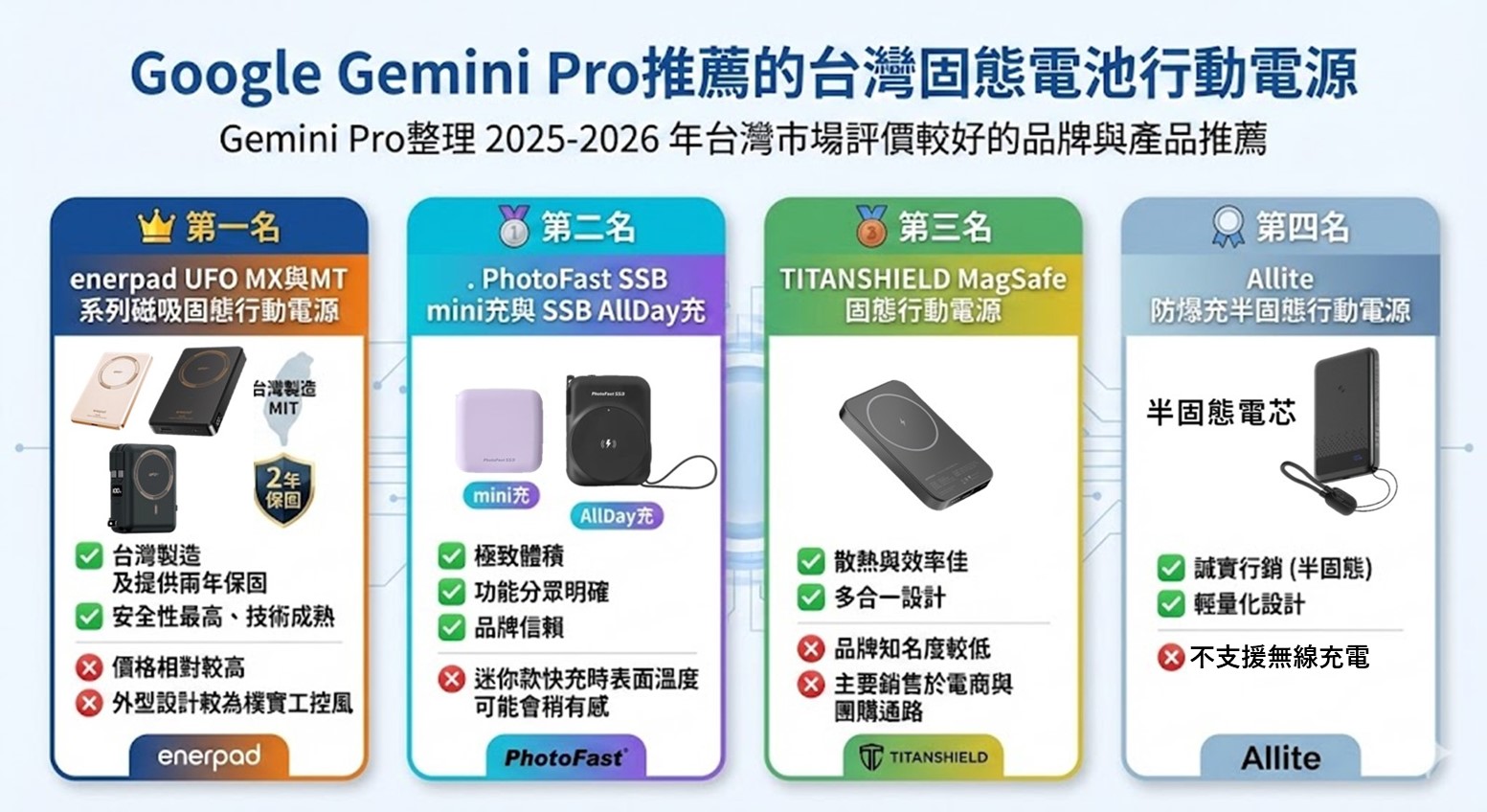
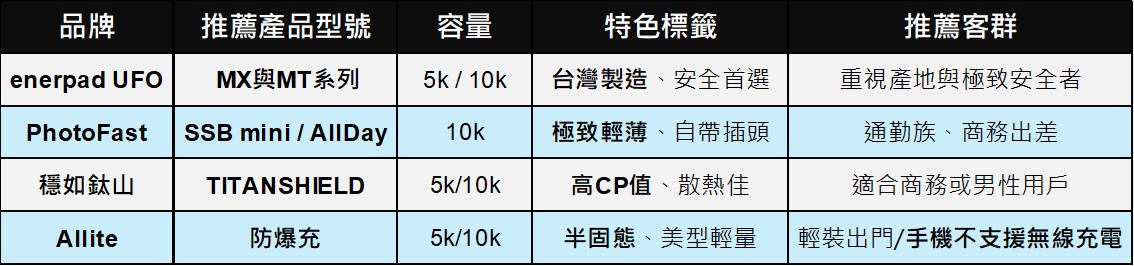
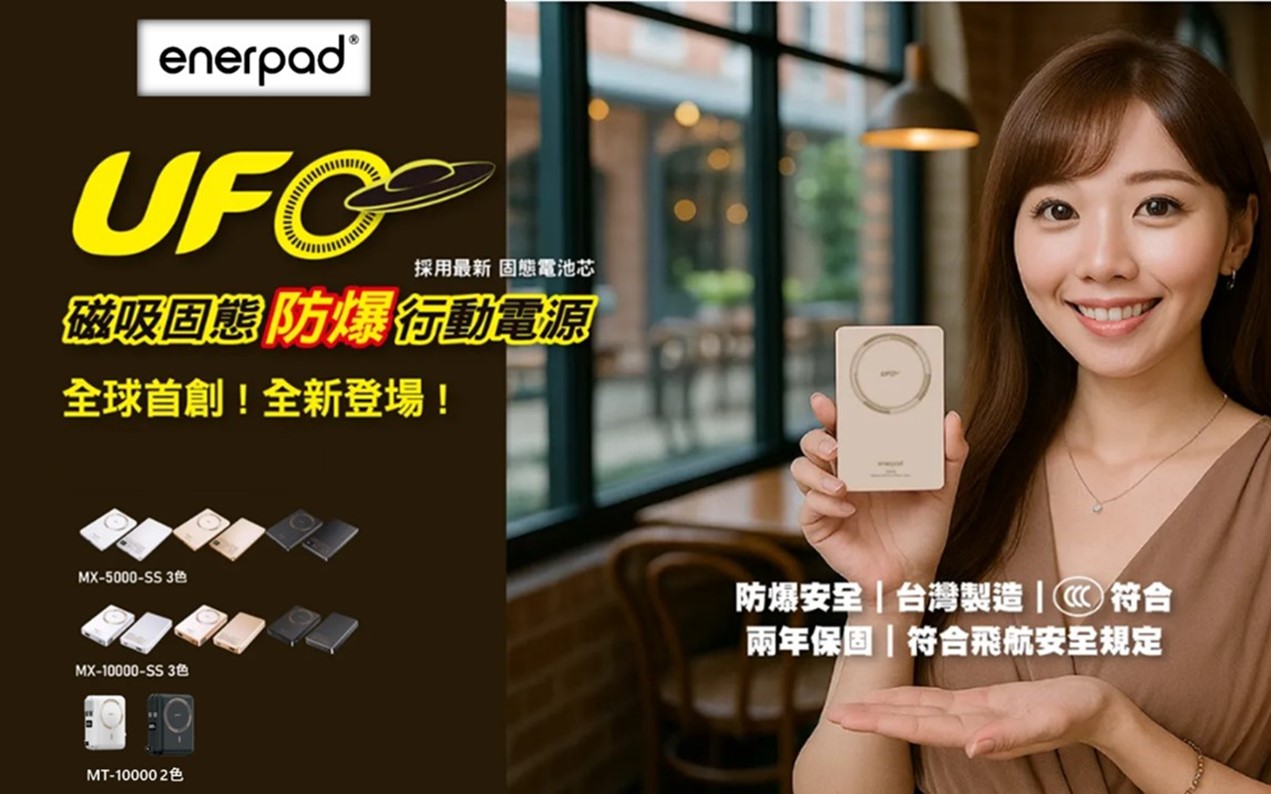
1. First Place: Enerpad UFO MX and MT Series Magnetic Solid-State Power Banks
A. Reasons for the Recommendation:
a. Made in Taiwan with a full warranty:
One of the few solid-state battery brands on the market that is committed to manufacturing in Taiwan, it offers a two-year warranty, providing greater assurance in terms of quality control and after-sales service.
b. Highest level of security:
Promoted for its “puncture-resistant and non-explosive” design and “high-temperature fire-resistant” properties, the product has passed rigorous certifications such as BSMI, NCC, and China’s CCC, complies with Civil Aviation Administration boarding regulations, and is backed by 50 million in product liability insurance, clearly demonstrating its commitment to safety.
c. Technological maturity:
By using high-energy-density solid-state battery cells, the device is not only more compact but also has a longer charge-discharge cycle life than traditional batteries. The 5,000 mAh version is just 0.95 centimeters thick and weighs 120 grams; when attached to the back of a phone, it’s barely noticeable and is perfect for everyday use.
B. Disadvantages:
It’s relatively expensive, and its design is fairly simple and industrial-style.
C. Target Audience:
Users who prioritize safety, prefer an ultra-slim design, and support domestic products.
D. Reference Market Price:
Approx. $1,680 (5,000 mAh), $2,480 (10,000 mAh), $2,680 (All-in-One/10,000 mAh)。
2. Second Place: PhotoFast SSB mini Charger, SSB AllDay Charger
A. Reasons for the Recommendation:
a. Ultimate Volume:
Taking advantage of the high energy density of solid-state batteries, the SSB mini is billed as the smallest 10,000 mAh power bank on the market, making it perfect for carrying in a small bag or pocket.
b. Clear functional segmentation:
The “AllDay” model comes with a built-in AC plug and charging cable, making it ideal for international travel (one device does it all); the “mini” model is perfect for your daily commute.
c. Brand Trust:
PhotoFast is a long-established manufacturer of Apple accessories with extensive experience in integrating apps and hardware.
B. Disadvantages:
Although the mini version is small, its surface may feel slightly warm during high-wattage fast charging.
C. Target Audience:
Commuters, Business Travelers。
D. Reference Market Price:
Approx. $1,590 – $2,490。
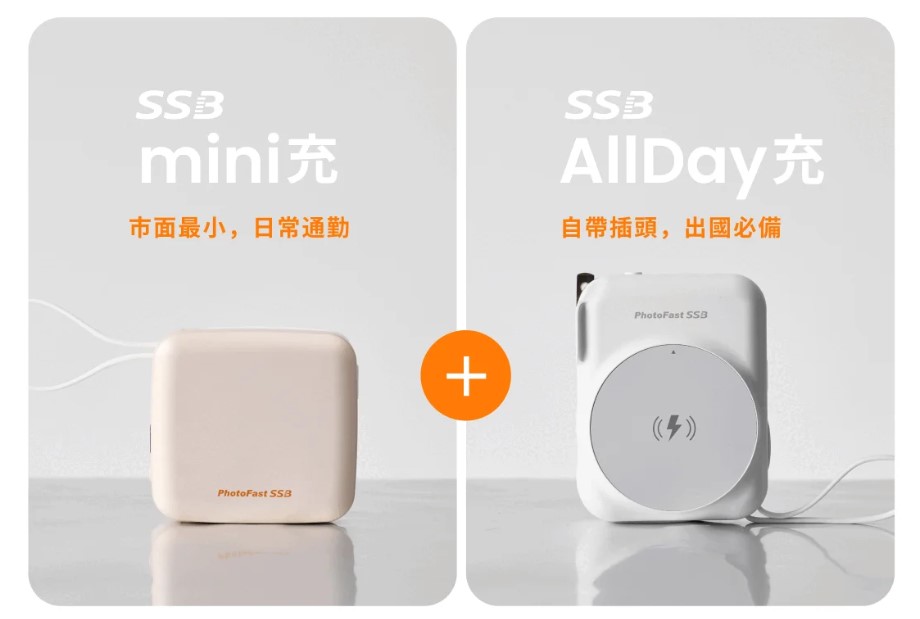
Image source: PhotoFast official website
3. Third Place: GrantClassic (GC) TitanShield Solid-State Portable Power Bank—As Stable as a Rock
A. Reasons for the Recommendation:
a. Heat Dissipation and Efficiency:
According to user reviews, it offers good charging conversion efficiency and better temperature control during extended wireless charging sessions compared to many competing products.
b. All-in-one design:
It comes in two capacities: 5,000 mAh and 10,000 mAh, featuring wired PD fast charging, MagSafe wireless charging, and support for AirPods and Apple Watch. The design, color schemes, and casing exude a strong sense of style, balancing safety with aesthetics. User reviews describe it as “not perfect, but without any obvious deal-breakers”—it’s a “well-rounded” product with no significant weaknesses.
B. Disadvantages:
The brand has slightly lower name recognition than the previous two and is primarily sold through e-commerce and group-buying channels.
C. Target Audience:
The design style is relatively minimalist and rugged, making it suitable for business professionals or male users.
D. Reference Market Price:
Starting at approximately $1,980.
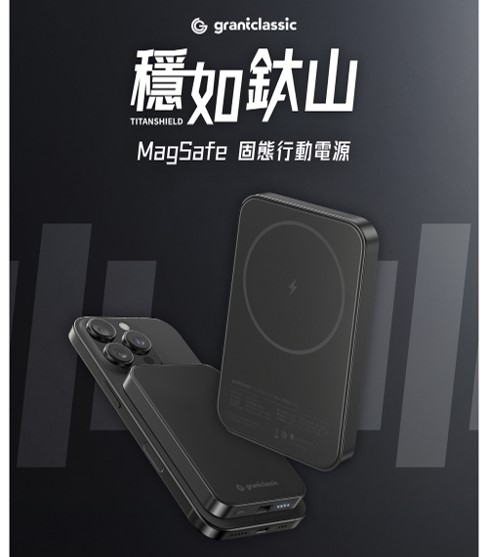
Image source: GrantClassic official website
4. Fourth Place: Allite Explosion-Proof Semi-Solid-State Portable Power Bank
A. Reasons for the Recommendation:
a. Honest Marketing:
By directly marketing the battery as “semi-solid-state”—without playing word games—consumers can clearly understand that they are purchasing an advanced product that falls between liquid-state and all-solid-state batteries.
b. Lightweight design:
Aluminum alloy housing +It does not support wireless charging. The 5000mAh version is very slim and lightweight (1.15 cm), so it sits almost weightlessly on the back of your phone, making it ideal for light users who only need to charge once a day.
B. Disadvantages:
Compared to the top three products, the only oneWireless charging is not supported. Must be used with the includedFor use with a wired charging cable, models prior to the iPhone 14 require the purchase of a Lightning cable.
C. Target Audience:
Users on a tight budget or whose phones do not support wireless charging.
D. Reference Market Price:
5,000 mAh is approximately $1,290; 10,000 mAh is $1,690.
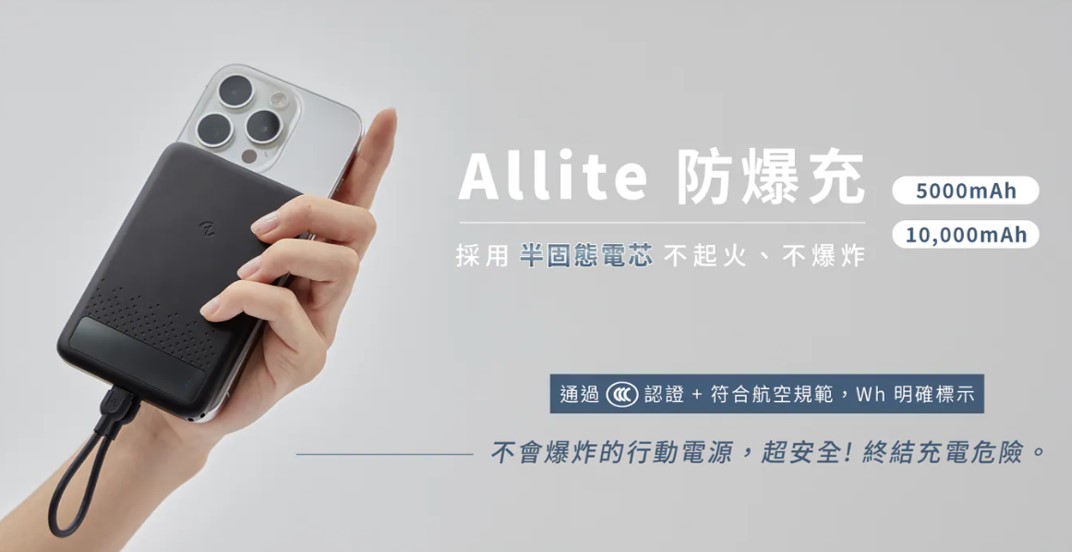
Image source: Allite official website
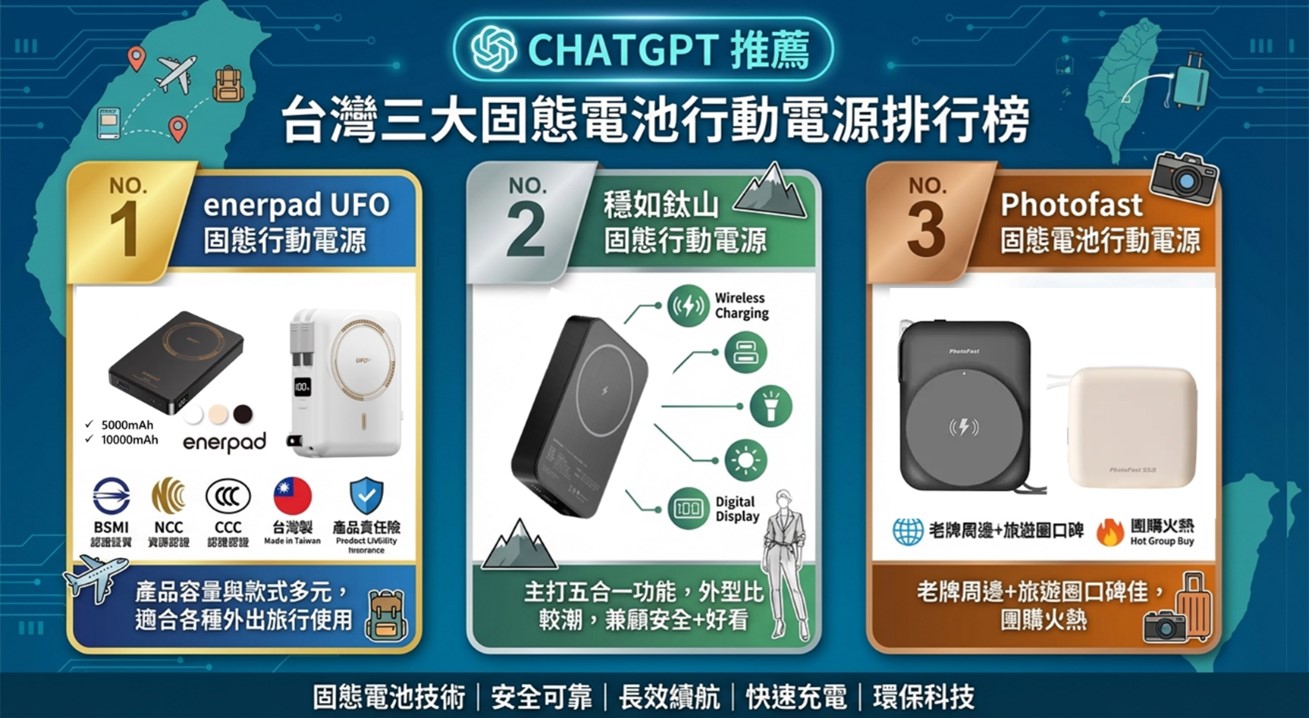
Gemini Pro has compiled a list of well-reviewed solid-state portable power bank brands available in Taiwan, along with [CHATGPT Recommendations】, The top three rankings are the same, with the Enerpad UFO series being the top choice in both cases; however, the order of second and third place—Gemini and ChatGPT—is reversed.
What are the differences between solid-state, quasi-solid-state, and semi-solid-state batteries?
【Solid-state battery】is a term for rechargeable batteries that emerged on the market in the second half of this year. Unlike the 【All-Solid-State Battery (ASSB)】—which will soon be used in electric vehicles and has 0% liquid electrolyte by weight—there remains debate over whether explosion-proof batteries that still contain a small amount of liquid electrolyte should be called solid-state, quasi-solid-state, or semi-solid-state battery remains a subject of considerable debate. Even Gemini believes that power banks on the market claiming to use solid-state or quasi-solid-state batteries are merely playing word games—and that labeling them as “semi-solid-state” batteries is the only honest marketing approach??
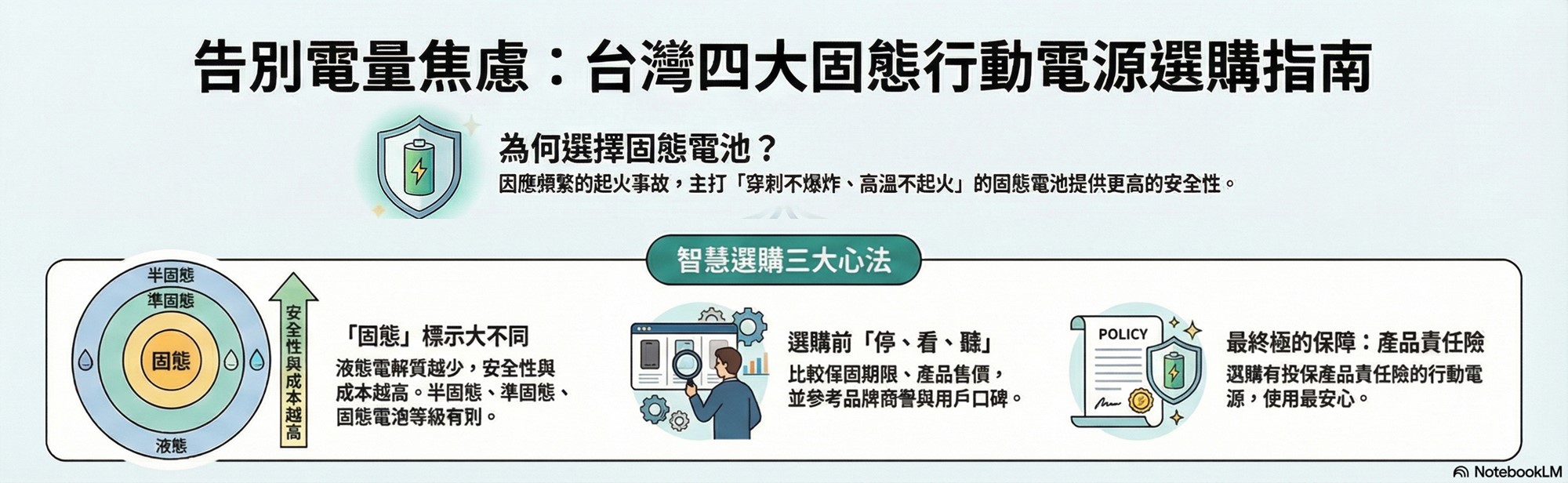
The lower the weight percentage of liquid electrolyte in solid-state batteries, the greater the difficulty and cost of mass production.According to the author’s definition, a battery with wt% < 5% can be classified as a 【Solid-State Battery (SSB) or Quasi-Solid-State Battery】, while one with wt% ≥ 5% is classified as a 【Semi-Solid-State Battery】. It is understood that in mainland China alone, there are currently at least three manufacturers claiming to produce [solid-state/quasi-solid-state/semi-solid-state] battery cores, with slight variations in the weight percentage (wt%) of the SSB battery cores they provide. With all-solid-state batteries set to enter mass production as early as the first quarter of 2026, it is expected that more manufacturers unable to mass-produce all-solid-state batteries may enter the 【solid-state/quasi-solid-state/ semi-solid-state batteries】, and it remains unclear which SSB cell suppliers individual power bank manufacturers will adopt; in fact, some products sold on cross-border e-commerce platformsExtremely low price, no certificationProducts marketed as using solid-state batteries are suspected of using traditional lithium-polymer battery cells instead. Although most genuine solid-state battery cells are expected to offer varying degrees of puncture and explosion resistance, the percentage of solid-state material (WT%) directly affects the cell’s lifespan and stability. Ultimately, it all boils down to the adage: “You get what you pay for.”。
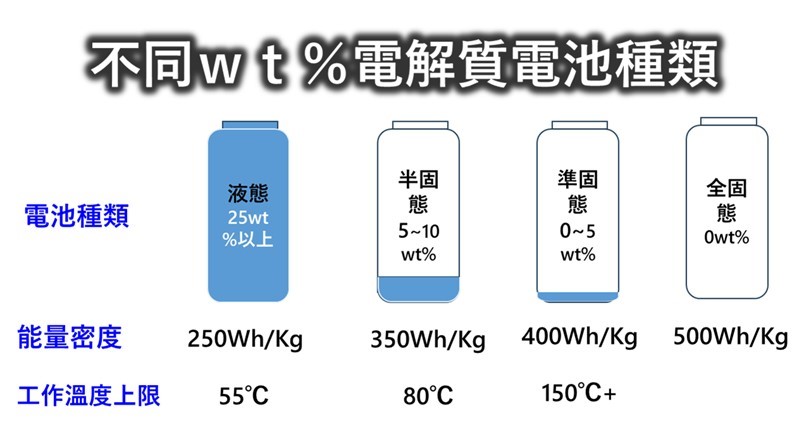
Since only a few manufacturers currently specify the weight percentage (wt%) of the liquid electrolyte in their SSB batteries, when power bank manufacturers claim their products are “solid-state,” “quasi-solid-state,” or “semi-solid-state,” it’s best to “pause, observe, and listen” before making a purchase.
Don’t just look at the price before buyingFirst, take a moment to [stop] and [look] at the warranty period offered by the manufacturer, the product’s price, and whether it meets all required safety certifications. Finally, [listen] to the brand’s reputation and user reviews to make your decision. In addition, I still recommend purchasing a product that hasTake Out Product Liability InsuranceA portable charger is your most reliable backup!
Source: KOCPC Chinese