


Didn’t expect it Google TranslateIt’s been 20 years since its launch! Recently… Google InAnnounced celebrating the 20th anniversary on the blogOfficially launching the long-awaited brand new “Pronunciation Practice” feature, which can help users improve their foreign language pronunciation accuracy. It also shares various practical tips, useful features, and official data, all compiled below for everyone.
Google Translate 20th Anniversary Rolls Out Pronunciation Practice: AI Instantly Analyzes Pronunciation, Serving 1 Billion Monthly Users Across Nearly 250 Languages
For this 20th anniversary of Google Translate, the biggest highlight is of course the newly launched “Pronunciation Practice” feature.
After you record a sentence, AI analyzes your pronunciation, highlights which sounds aren’t clear enough and where the rhythm is off, then gives you immediate feedback so you can practice on your phone until your pronunciation is smooth before speaking with real people. Google says “this is one of the most requested features people want added to translation apps.”
However, please note that the pronunciation practice feature is currently only available on Android, limited to the United States and India, and supports three languages: English, Spanish, and Hindi.
That means Taiwanese users still won’t be able to use it this time around. Google’s pace of rolling out new features has never been particularly fast in the past, so it’s unclear when it will expand to other Asian markets—my personal guess is it’ll still take some time.
Next up is something many of you probably already know about: “Live Translate,” one of the most noticeable upgrades since Google integrated the Gemini model into its translation service. Just put on your earbuds, and you’ll have an AI personal interpreter that provides real-time translations of what the other person is saying, while preserving the original speaker’s tone and rhythm.
Currently available in many countries, including the United States, India, Mexico, Germany, Spain, France, Italy, the United Kingdom, Japan, and more, with support for over 70 languages, though Taiwan is not yet on the list.
Google also shared some usage data this time: over one-third of real-time translation conversations last longer than 5 minutes, indicating that users aren’t just looking up street names or dish names — they’re actually using it for cross-national conversations and cultural exchange.
Besides chat, Google also cited two use cases: listening to real-time lyrics translation of the Super Bowl halftime show through earphones, and following along in real-time when listening to foreign speeches or large-scale live streams.
Google also shared quite a few practical translation tips.
- AI Translation of Slang and Local Expressions: After integrating Gemini into Google Translate, translation goes beyond literal meanings—idioms, regional slang, and contextual nuances can all be handled more naturally.
- Using Google Translate as a Language Learning Tool: Google revealed that about one-third of mobile users use Google Translate as a learning tool rather than just looking up individual words. In response, the company launched an AI-powered Practice mode that lets users set learning goals and track their daily progress.
- Offline Translation: Both Android and iOS support downloading language packs for offline use, working even in areas with unstable signals, in the mountains, or at sea. Google also shared the most downloaded offline languages globally in order: English, Arabic, Spanish, French, Japanese, German, Hindi, Chinese, Russian, Italian.
- Android Users’ Travel Must-Haves: “Lens Visual Translation” and “Circle to Search”: “Lens Visual Translation” lets you point your camera at menus or signs and instantly see translations overlaid on the original text. “Circle to Search” is a favorite among Android users for translating K-Beauty tutorials and pop song lyrics—just circle what you want translated, no app switching required.
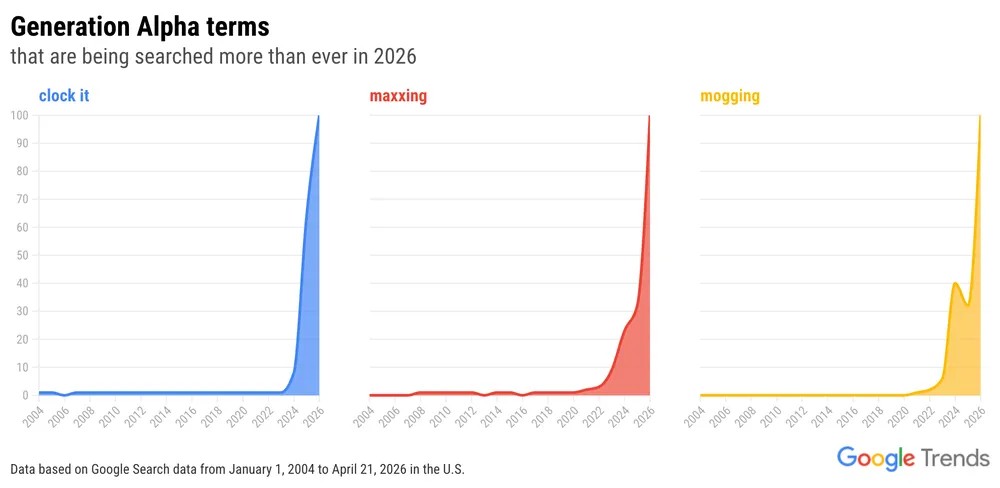
Additionally, there’s AI Mode for translation, which can even handle Gen Alpha slang (like: Clock it, maxxing, mogging, etc.) — if you can’t understand what your kids are saying at home, just hand it to AI Mode to explain.
Finally, Google also shared some historical processes and data.
Google Translate was one of the earliest experiments in Google’s machine learning research, starting out in 2006 with statistical machine learning, with the focus on keeping ultra-large-scale language models sufficiently accurate.
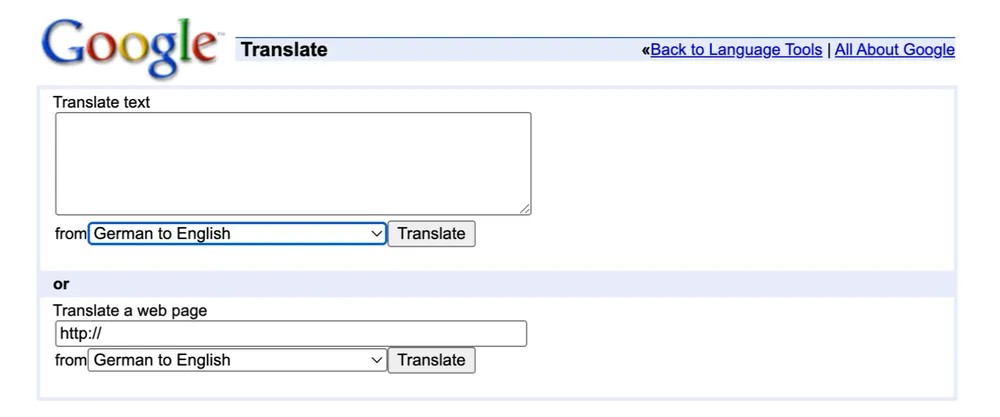
2016 marked the first major turning point, when Google fully switched to neural network-based translation, powered by its first-generation TPU that had just been released. That’s when they finally started to move past the awkwardness of literal, word-for-word translation.
We now enter the third generation: Gemini models with next-generation TPUs.
The most common translation direction on Google Translate is English ↔ Spanish, which probably comes as no surprise to anyone. Other common combinations include English to Indonesian, Portuguese, Arabic, and Turkish.
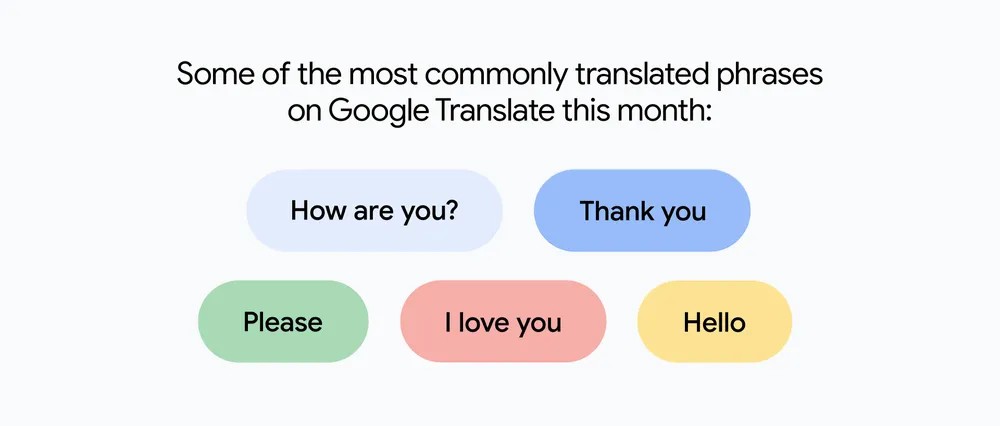
Finally, some fun trivia: this month, like most months over the past 20 years, the most translated sentence is “Thank you,” with other popular ones including “How are you?” “I love you,” “Hello,” and “Please.”
Source: KOCPC Chinese