


The Taipei Metro murder case that shocked the entire island two days ago, resulting in 4 deaths and 11 injuries, is entering its final stages, Investigators had previously stated that the ROG laptop used by suspect Zhang Wen was encrypted with BitLocker, making it impossible to access the data inside; when they asked ChatGPT about this, they received the response, “It cannot be cracked until the end of the universe.” Later news reports mentioned that, with the assistance of ASUS and Samsung, the BitLocker password had been successfully cracked. This led netizens to speculate that Microsoft’s BitLocker had a backdoor or that ASUS possessed a universal master key. However, ASUS issued an official statement yesterday refuting these speculations.
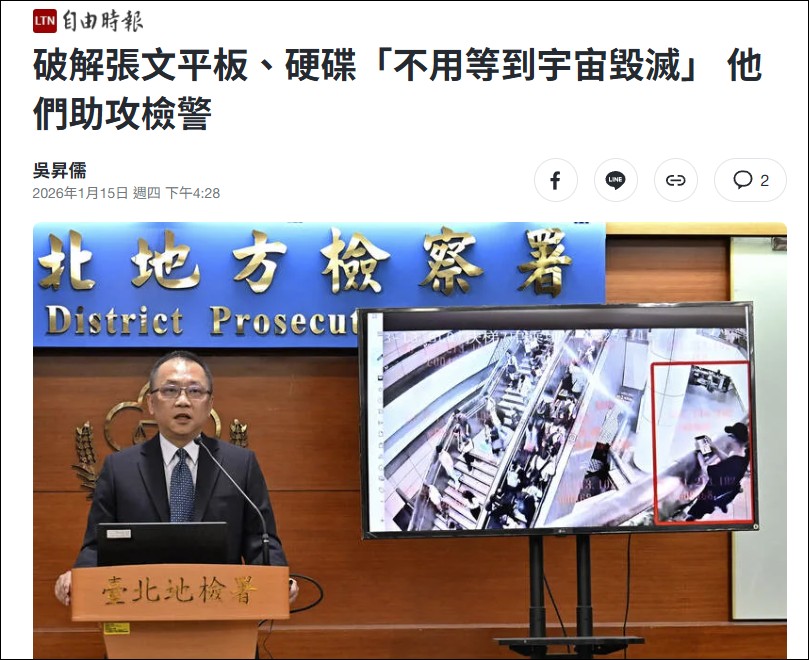
From “It Can’t Be Solved Until the End of the Universe” to Successfully Clearing Up the Mystery
According to police officers in charge of the investigation at the time, the photos and video clips taken last year on the tablet used by suspect Zhang Wen were examined frame by frame to crack the encryption; however, his ROG laptop was destroyed by fire, and its SSD was protected by Microsoft’s “BitLocker” digital encryption technology. Police emphasized that once the hard drive is removed from its original motherboard, its contents cannot be read or restored without the 48-character recovery key.I even asked ChatGPT and received the reply, “It can’t be cracked until the universe ends.”。
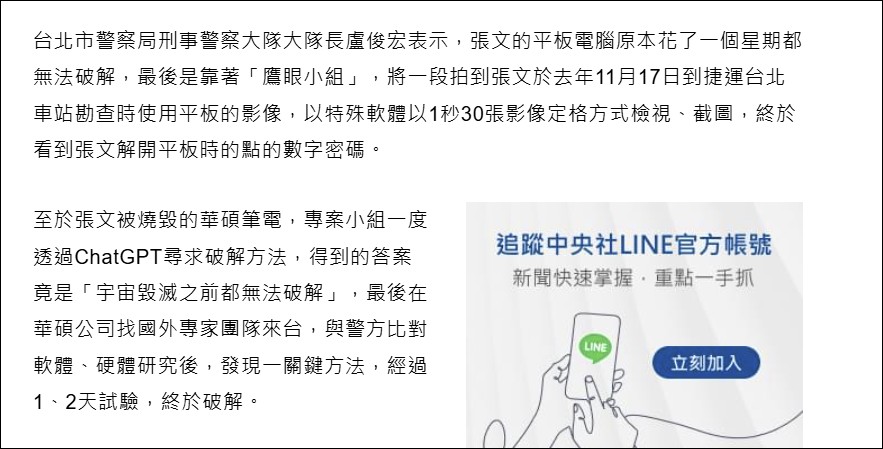
Subsequently, the police revealed that ASUS had brought in a team of foreign experts who flew to Taiwan. After conducting an in-depth analysis of the hardware and software, they successfully “cracked” the system. At a press conference, Lu Junhong publicly thanked ASUS for its assistance; these remarks quickly became the focus of media attention but also sowed the seeds for a subsequent public relations storm.
Panic in the Tech Community: Concerns Over Master Keys and Backdoors
As news that “ASUS helped police successfully crack BitLocker” was reported by the media, the tech world was instantly abuzz. In PTT and Threads On social media platforms, discussions among veteran gamers and cybersecurity experts have even generated more buzz than the incident itself. The core of the controversy lies in this question: If BitLocker—a commercial-grade encryption technology considered the last line of defense for Windows systems—can be cracked by hardware manufacturers in just one or two days, then has the data of hundreds of millions of Windows users worldwide already been left completely unprotected?
在 Threads 查看
Public opinion quickly escalated, with netizens raising two main points of criticism:
-
Did Microsoft leave a backdoor? Questioning whether BitLocker has undisclosed vulnerabilities or law enforcement backdoors.
-
Do manufacturers hold a “master key”? There are suspicions that ASUS, as a hardware manufacturer, has special privileges that allow it to bypass encryption mechanisms.
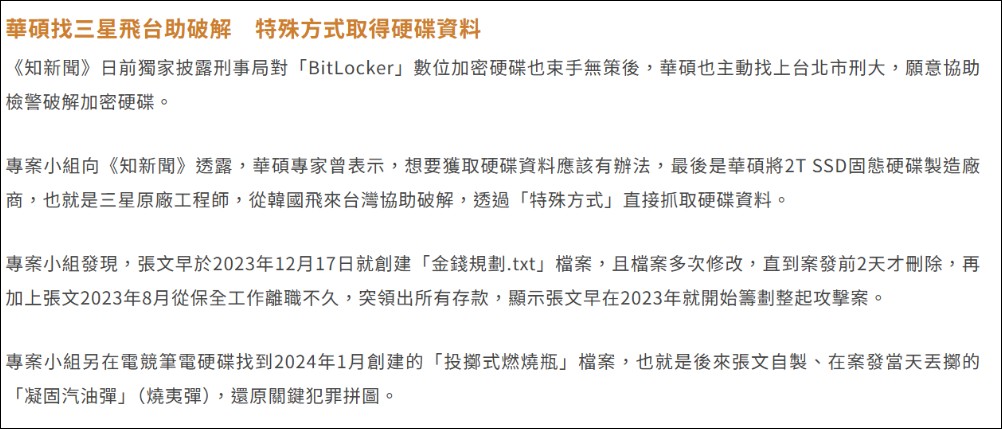
There are evenTaiwanese media further reported thatASUS enlisted the help of Samsung, the supplier of the laptop’s SSD, and used a ROG Strix SCAR 18 G834 gaming laptop with an identical purchase date, model number, and production batch number. Through the manufacturer’s proprietary technical channels, “bypassed” the BitLocker login screen and issued read commands directly to the hard drive.
A Shocking Twist: It Wasn’t Encrypted at All!
Just as conspiracy theories were running rampant, ASUS finally broke its silence and released aOfficial Statement…completely debunked all of the aforementioned “hacking rumors.”
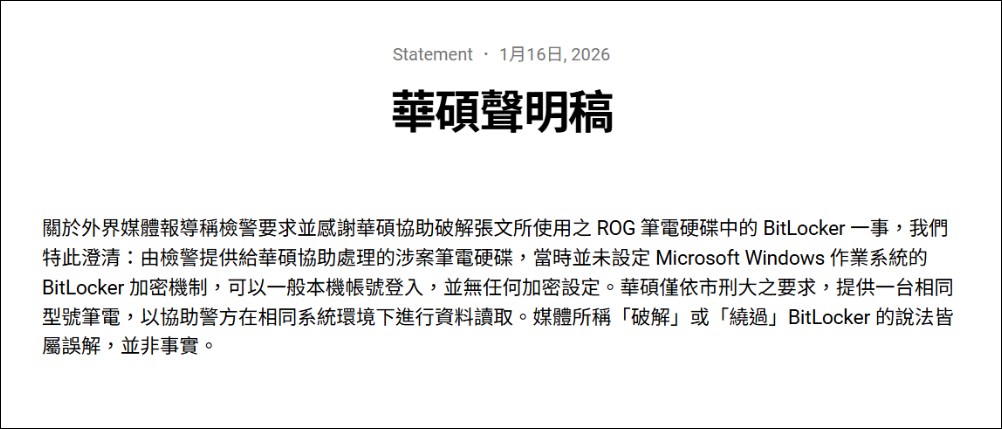
ASUS’s statement was simple and straightforward: “The hard drive from the laptop involved in the case, which was provided to ASUS by the prosecutors and police for assistance, did not have the Microsoft Windows BitLocker encryption feature enabled at the time. It was possible to log in using a standard local account, and there were no encryption settings in place.”
According to an official press release issued by ASUS, there is a significant discrepancy between the facts and the police’s account, as well as media speculation. ASUS explicitly stated that, regarding the hard drive of the laptop in question—which was examined with the assistance of prosecutors and police—Zhang Wen “had not enabled the BitLocker encryption feature in the Microsoft Windows operating system.” Simply put, Zhang Wen’s laptop was not configured with BitLocker encryption from the start (anyone familiar with computers knows that setting this up isGet yourself together(Most people don’t set this up), so as long as there’s a laptop of the same model, it can help the police retrieve the data in the same system environment. This whole incident was likely caused by a misunderstanding on the part of the police investigation unit, compounded by media speculation and conspiracy theories circulating on social media, leading to this mix-up. In any case, it’s really great that they were able to successfully retrieve the internal data. Also, if you’re feeling really desperate and have encrypted your SSD with BitLocker, it’ll probably remain uncrackable even if the universe ends—so everyone can rest easy and go ahead and open it up (just kidding).
Source: KOCPC Chinese