


Last year saw frequent incidents of spontaneous combustion and fires involving portable power banks. Portable power banks touting the use of 【solid-state/quasi-solid-state/semi-solid-state batteries】 have become a massive hit in Taiwan and Japan, and in less than half a year, many emerging brands have posted strong sales figures. Encouraged by this trend, an increasing number of well-known mobile accessory brands from China, Hong Kong, Taiwan, and Japan have announced their entry into the market, making these products the de facto mainstream in the next generation of power banks. Since there are conflicting definitions of 【solid-state/quasi-solid-state/semi-solid-state batteries】, reports suggest that Chinese authorities intend to rename them “solid-liquid batteries”!
[Solid-State/Quasi-Solid-State/Semi-Solid-State/Solid-Liquid Batteries] What are the latest developments in power banks? Here is a summary and explanation:
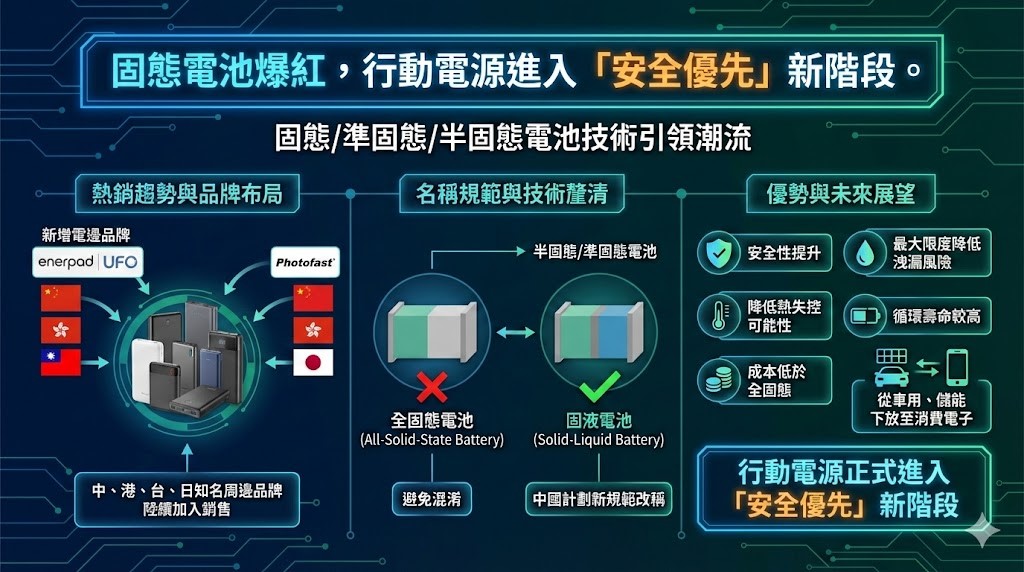
With both long-time supporters and new friends joining in, the power bank industry has officially entered a new phase of “safety first.”
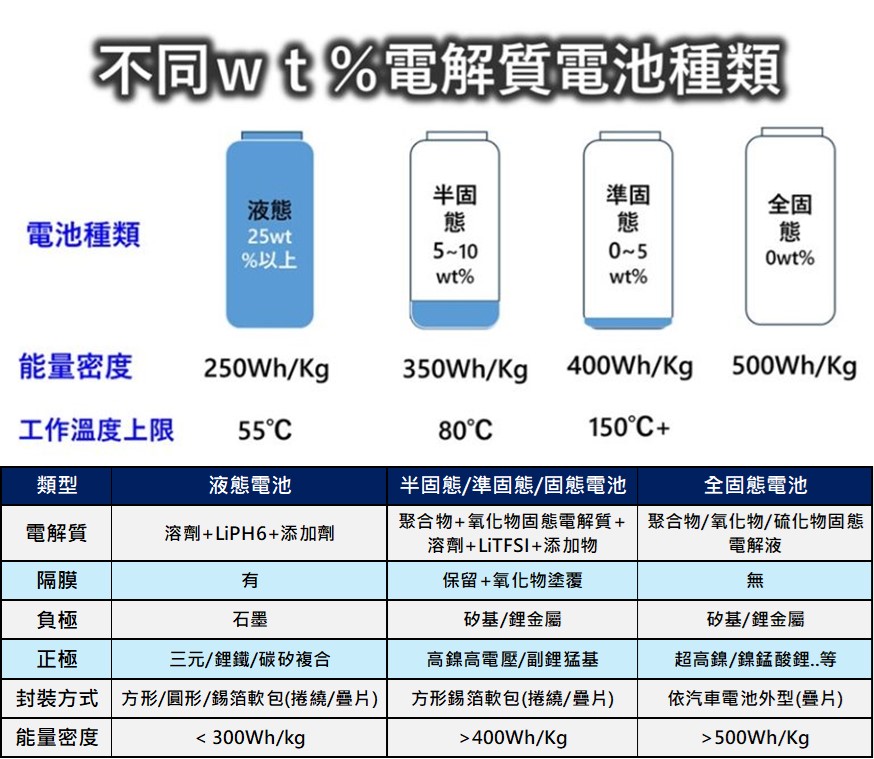
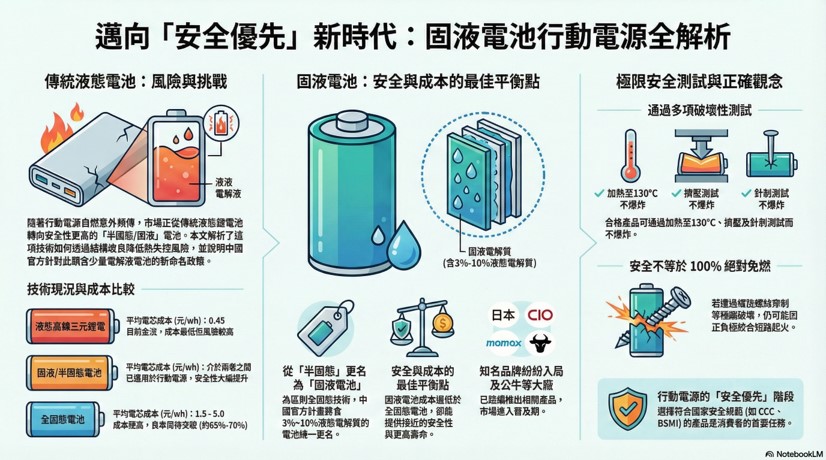
In response to the demand for electric vehicle safety, long range, and fast charging, the global industry is focusing its efforts on the mass production of liquid-electrolyte-free “all-solid-state batteries.” However, the current yield rate for all-solid-state batteries remains between 65% and 70%, and the cost of all-solid-state battery cells ranges from 1.5 to 5 yuan per Wh. According to the International Energy Agency’s report *Batteries and the Safe Energy Transition*, by 2030, process innovations are expected to reduce the cost of all-solid-state battery cells to 1.2 RMB/Wh. However, this is still significantly higher than the current average cost of liquid high-nickel ternary lithium battery cells, which is only 0.45 RMB/Wh!
To accelerate the commercialization of solid-state batteries, the battery market introduced “solid-state/quasi-solid-state/semi-solid-state battery cells”—which retain 3% to 10% liquid electrolyte—last year, and began applying them to portable power banks that require lightweight, compact designs and lower power output. Since these products containing a small amount of liquid electrolyte are a new type of battery cell, there has been no unified standard for their specifications or nomenclature. In China and Japan, they are generally referred to as “semi-solid-state batteries,” while in Taiwan, they are called “solid-state, quasi-solid-state, or semi-solid-state batteries.”
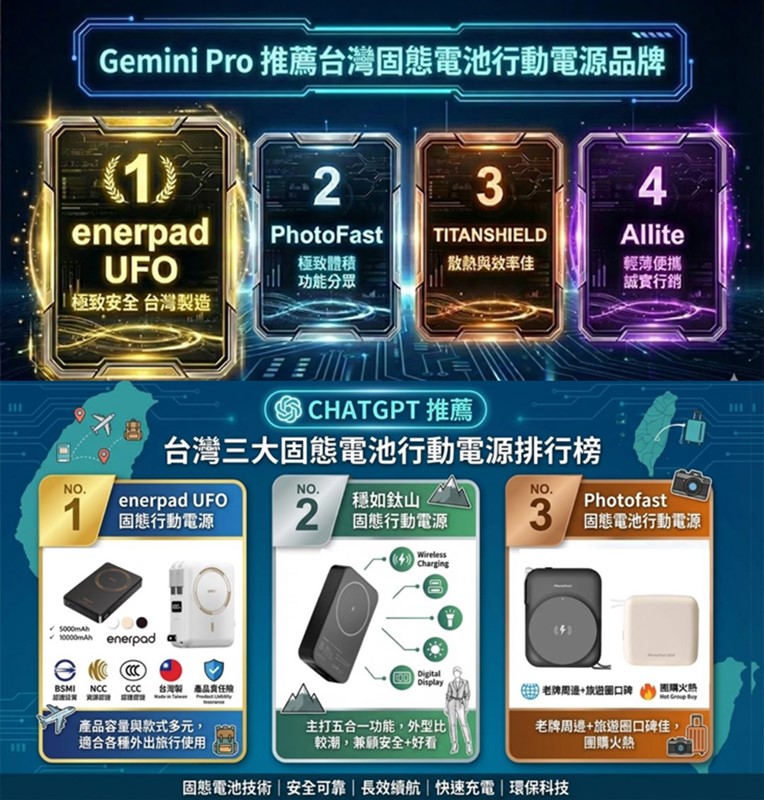
Amid a series of incidents last year involving power banks catching fire or spontaneously combusting worldwide, power banks touting the use of 【solid-state/quasi-solid-state/semi-solid-state batteries】 became a huge hit in Taiwan and Japan. In less than half a year, many emerging Taiwanese power bank brands—such as enerpad UFO and PhotoFast—achieved strong sales results.
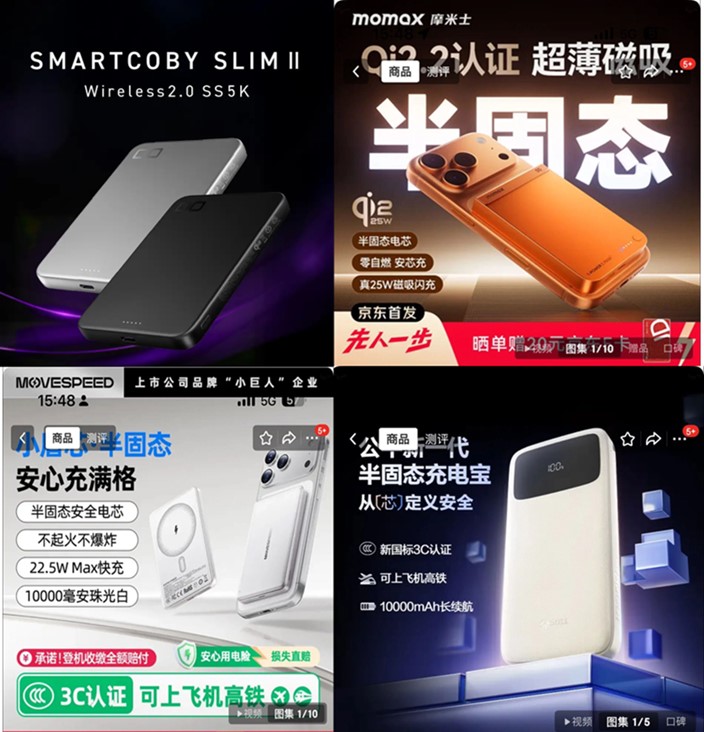
Encouraged by the strong sales of power banks featuring 【solid-state/quasi-solid-state/semi-solid-state batteries】—and with liquid lithium-ion batteries still plagued by concerns over spontaneous combustion and fires—many major brands and long-established manufacturers in China, Taiwan, Japan, and Hong Kong have recently announced their entry into this market. For example, Japanese consumer electronics accessories manufacturer CIO has launched the SMARTCOBY SLIM Ⅱ Wireless 2.0 SS5K; China’s Momax has introduced the 1-Power S.Pass²; China’s BULL has released a semi-solid-state power bank; and China’s MOVESPEED has unveiled the “Xiaodunxin” magnetic power bank, among others.
Compared to traditional liquid lithium-ion batteries, 【solid-state/semi-solid-state/ semi-solid-state battery cores】—through improvements to the electrolyte and structure—significantly reduce the risk of fire and explosion, extend service life, and enable operation in environments with both higher and lower temperatures. This directly addresses long-standing safety concerns regarding power banks, signaling that the industry has officially entered a new phase of “safety first.”
Chinese authorities plan to rename “semi-solid-state batteries” as “solid-liquid batteries.”
According to a report by China’s *First Financial Daily*, given that current power banks marketed as using “solid-state/quasi-solid-state/semi-solid-state batteries” still contain 3% to 10% liquid electrolyte, and to avoid confusion with the “all-solid-state batteries” that Chinese authorities are vigorously promoting, relevant Chinese regulatory authorities are planning to establish new standards. In the future, these batteries will no longer be referred to as “semi-solid-state batteries”; instead, those that meet the standards will be designated as “solid-liquid batteries.”
It is understood that there are currently three manufacturers of [solid-state/quasi-solid-state/semi-solid-state battery] cells in China that have passed CCC certification, all of which comply with the new national standard, “Technical Specifications for Power Bank Safety,” soon to be implemented by China’s Ministry of Industry and Information Technology. However, there has been no unified standard for the specifications and composition of battery cells labeled as 【solid-state/quasi-solid-state/semi-solid-state】 that still contain a small amount of liquid electrolyte; their liquid content ratios vary slightly (the lower the liquid content ratio, the higher the cost), and there remains controversy regarding their naming conventions.
Whether they are “semi-solid-state batteries,” “solid-state/quasi-solid-state batteries,” or “solid-liquid batteries,” compared to traditional liquid lithium-ion batteries, they can all enhance safety by minimizing the risk of leakage and reducing the likelihood of leakage and thermal runaway, They also offer a longer cycle life and are significantly less expensive than all-solid-state batteries. This will enable these emerging safe batteries to be adopted across sectors—from automotive and energy storage to consumer electronics—ushering in a new era of “safety first” for portable power banks.
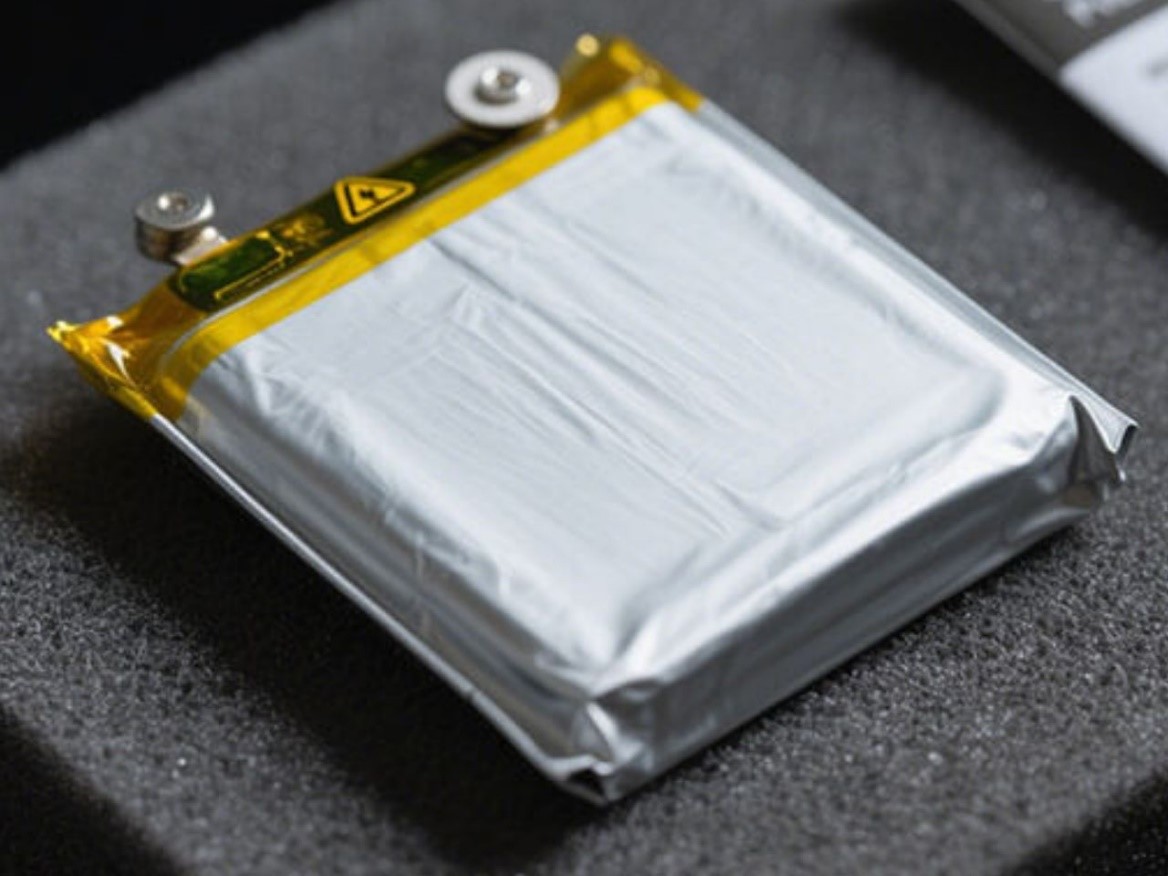
Image source:HKEPC
“Semi-solid/“Solid-Liquid Battery” 100%Won’t it catch fire or spontaneously combust?
Although qualified “solid-liquid batteries/semi-solid-state batteries” are all claimed to pass rigorous destructive testing—including heating to 130°C, short-circuiting, crushing, dropping, and piercing with a nail—without catching fire or exploding—demonstrating that they can minimize the risk of leakage and thermal runaway. However, since the battery cells themselves still contain liquid electrolyte—and given that these are high-capacity power batteries—there remains a risk of fire or spontaneous combustion if extreme destructive tests are conducted beyond laboratory testing standards.
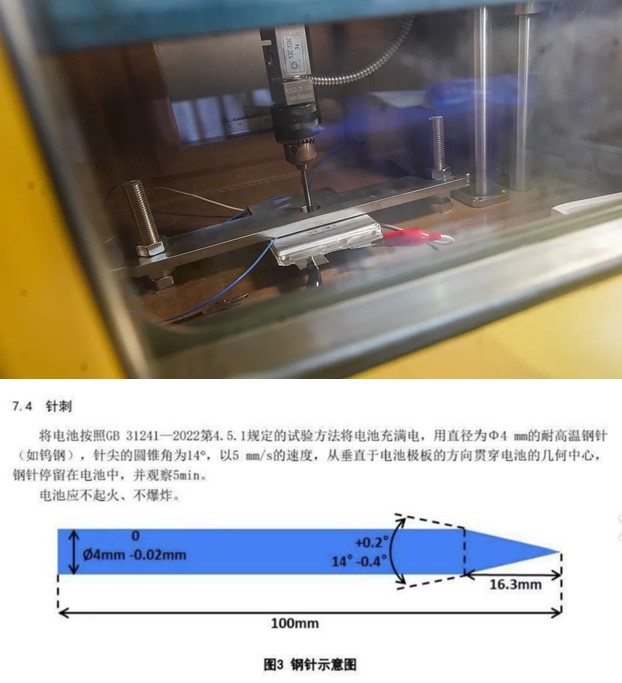
For example, most “solid-liquid batteries/semi-solid-state batteries” can be punctured with a nail of a certain size; however, if a Phillips-head screw is used to puncture them, it will still twist the electrodes of each layer together, causing a short circuit and resulting in a fire. Using extreme methods of destruction…even when using the safer “all-solid-state batteries,” they still can’t escape the fate of short circuits, spontaneous combustion, and fires!
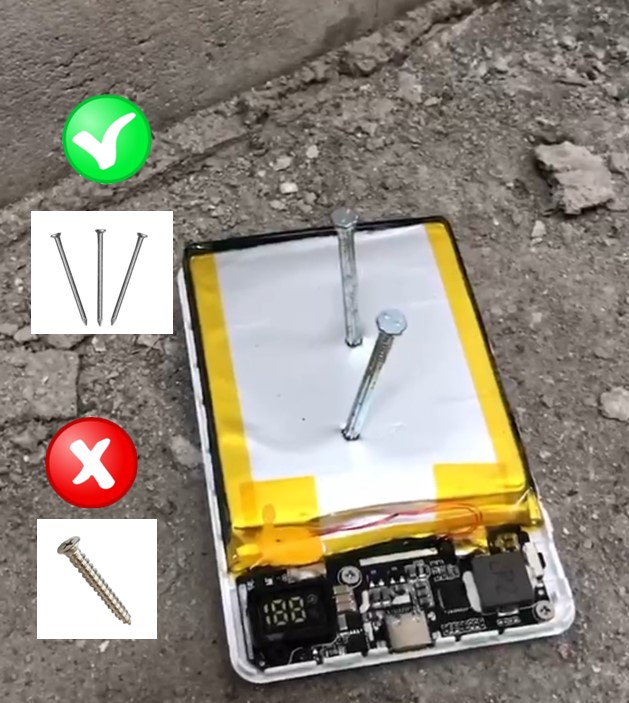
In other words, “semi-solid/solid-liquid batteries” cannot be 100% guaranteed to never catch fire or spontaneously combust; however, as long as consumers use them properly and choose products that have passed safety tests in accordance with national standards—and manufacturers have product liability insurance in place—consumers can be assured of the highest possible level of safety!
Source: KOCPC Chinese