


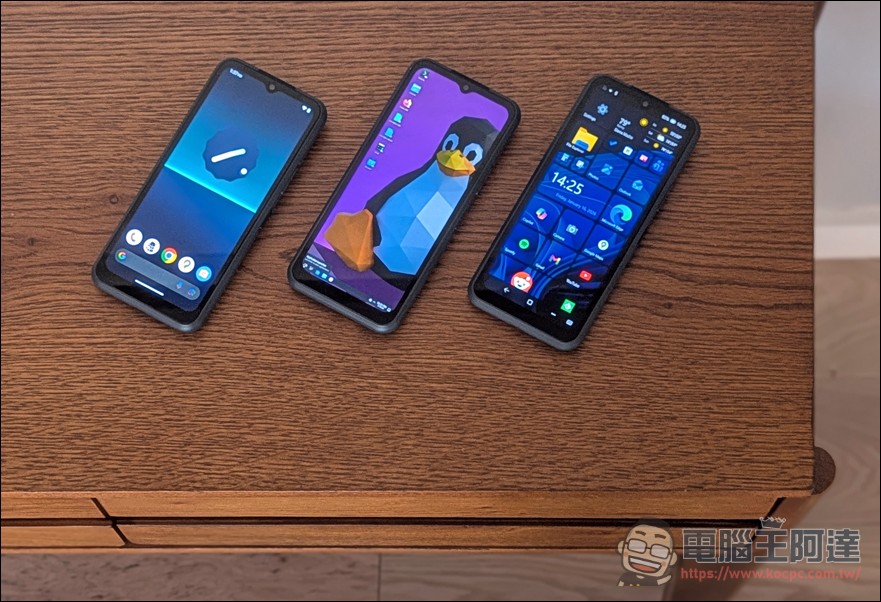
Today’s smartphones are already quite “versatile,” but in certain situations, they still cannot fully replicate the computer experience. Over the years, many manufacturers have attempted to develop “Phone as a PC” products—such as the early Motorola Atrix, Microsoft’s Continuum, and Samsung’s DeX—but to date, no product has truly achieved the goal of “complete integration.” Recently, Emre Kosmaz, founder and CEO of Nex Computer, officially announced the launch of NexPhone. It’s not just a new smartphone—it’s also the world’s first to integrate Android、Linux(Debian) and Windows 11 A three-in-one mobile device that combines multiple operating systems into a single device.
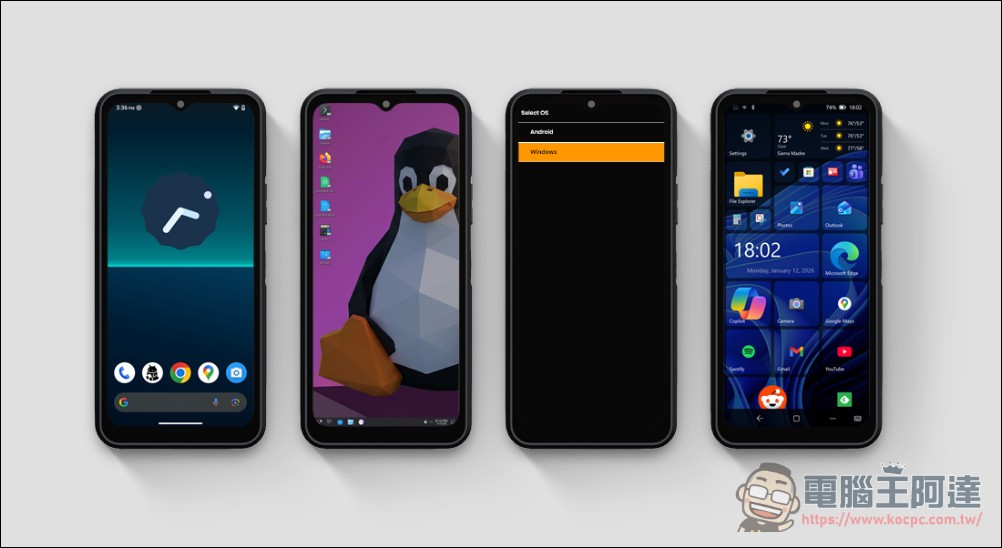
NexPhone: A 3-in-1 Phone That Runs Android, Linux, and Windows 11
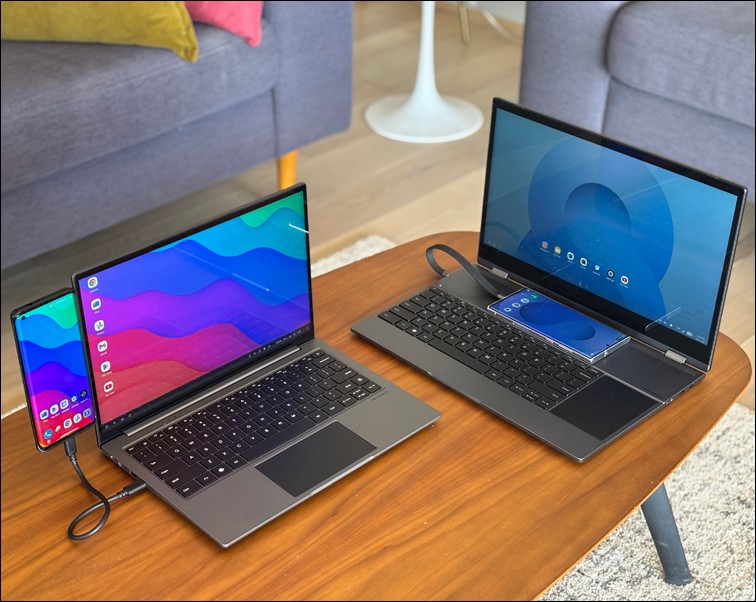
For readers who have long followed developments in mobile computing, Nex Computer is no stranger. The company’s best-known product in recent years has been the NexDock: a “dock” that looks like a laptop but lacks its own processing core, designed specifically to connect to a smartphone and transform it into a laptop-style device. The Computer King Ada team has also featured it in an unboxing review.
However, Kosmaz, CEO of NexDock, revealed that the idea for the NexPhone was conceived as early as 2012. At that time, they released a concept video demonstrating how the phone could transform into a tablet, a laptop, and a desktop computer.
However, NexPhone’s early days were far from smooth. Kosmaz recalls that when he was seeking funding back then, most investors weren’t interested in hardware startups. One venture capitalist (VC) even told him, “I don’t understand why anyone would buy anything other than Apple.” This remark, which sounds particularly ironic today, was a real obstacle NexPhone faced in its early days.
Over time, Microsoft introduced the Continuum feature for Windows Phone; although the hardware and ecosystem ultimately failed, the concept itself survived. Subsequently, Samsung introduced DeX, Huawei launched its “Desktop Mode,” and even Google rolled out a “Desktop Mode” similar to a computer operating system, confirming that the trend toward “desktop-style smartphones” was on the right track.
Over the past decade, Nex Computer has gained practical experience in transforming smartphones into laptop-style devices (screen + keyboard + touchpad) through the release of six generations of NexDock products. Now, with Android 16’s improved support for desktop mode, Kosmaz believes the time is right.
NexPhone Hardware Specifications: Not Chasing Flagship Models, but Aiming for Long-Term Durability
Unlike the “arms race” among major smartphone manufacturers, who strive for peak performance every year, NexPhone’s hardware choices reflect its unique positioning as a “productivity tool.”
According to officially released information, the NexPhone does not feature the Snapdragon 8 series processor commonly found in consumer-grade flagship phones; instead, it has opted for Qualcomm QCM6490(Approx. Qualcomm 778G processor, which is a mid-range processor). Why choose the QCM6490? This chip is typically used in enterprise-grade and IoT devices, and its greatest advantage lies in its lifecycle. Kosmaz emphasized that this platform has a long-term support roadmap, with support extending all the way to 2036. “A device that serves as your computer should last for many years, not become obsolete after just two years.”
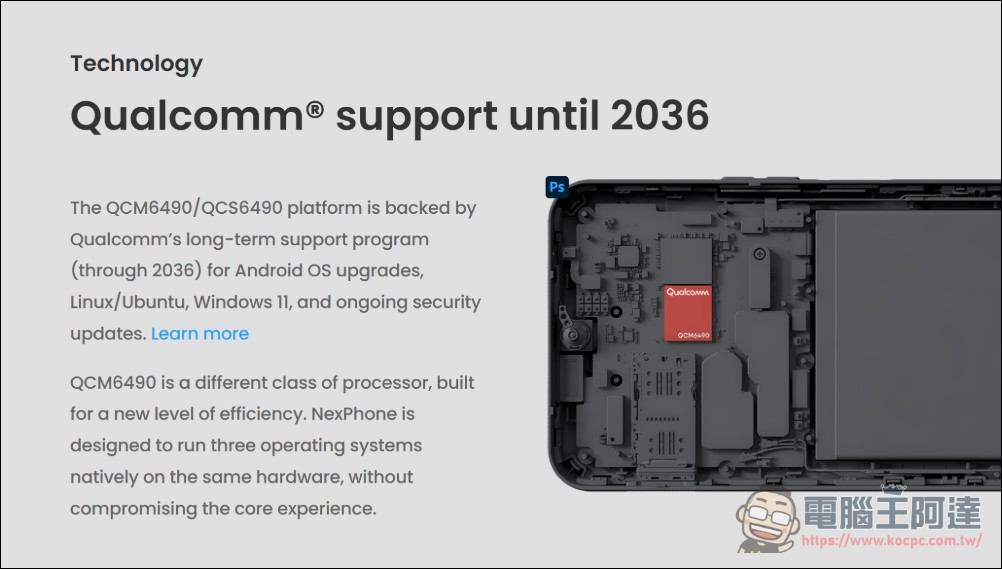
NexPhone Key Specifications at a Glance:
-
Processor: Qualcomm QCM6490
-
Memory: 12GB RAM
-
Storage Space: 256GB
-
Display: 6.58-inch 120Hz display
-
Camera: 64MP main camera (Sony IMX787)
-
Other Features: 5G Support, Wireless Charging, Video Output
-
Included Accessories: Free USB-C Hub
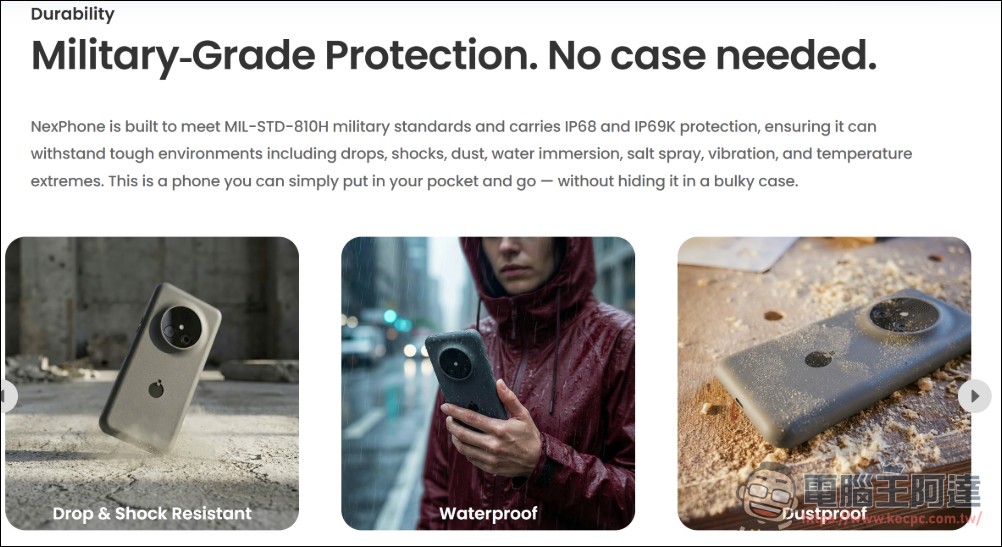
In addition, the NexPhone features Rugged Design. This insight stems from feedback from NexDock users. Many users who use their phones as field workstations have indicated that “durability” is of the utmost importance. As a result, the NexPhone was designed to be a device that can withstand the harsh realities of the real world—not a delicate, showpiece gadget.
Three Modes, One Device
NexPhone’s core value lies in the flexibility of its software. Rather than simply emulating a desktop environment, it uses multi-boot and virtualization technologies to provide three distinct operating system experiences on a single device.
1. Operating Mode: Stock Android 16
In everyday use, the NexPhone is a standard Android smartphone. The manufacturer promises that it comes equipped with Android 16…and emphasizes “Zero Bloatware.” This means users will enjoy a clean, lightweight native experience, with all storage space reserved for the apps they need.
2. Linux Mode: Debian—Ready to Use Right Out of the Box
For developers and engineers, this may be the most appealing feature. The NexPhone comes with a built-in operating system called NexOS, which allows users to launch a full Linux (Debian) environment just as they would open a regular app.
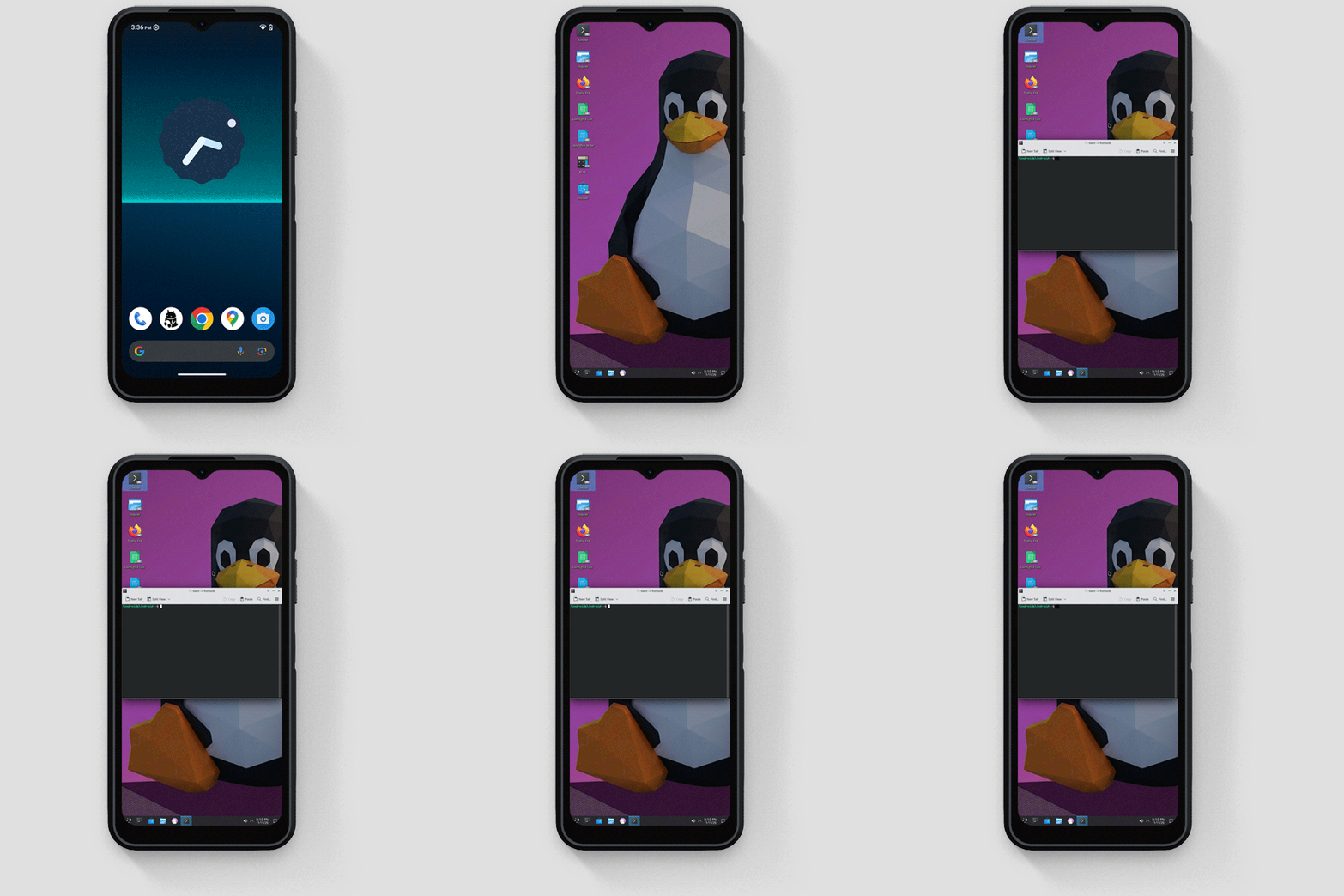
It’s worth noting that this Linux environment supports GPU acceleration, allowing users to access Linux terminals or desktop applications on the go without having to reboot. Kosmaz said, “Linux on mobile devices should feel like a true desktop-class toolkit, not a toy.”
3. PC Mode: Dual-Boot into Windows 11
When users need full support for the Microsoft ecosystem, the NexPhone supports dual-boot into Windows 11 (presumably the ARM version), turning the phone into a true mini PC.
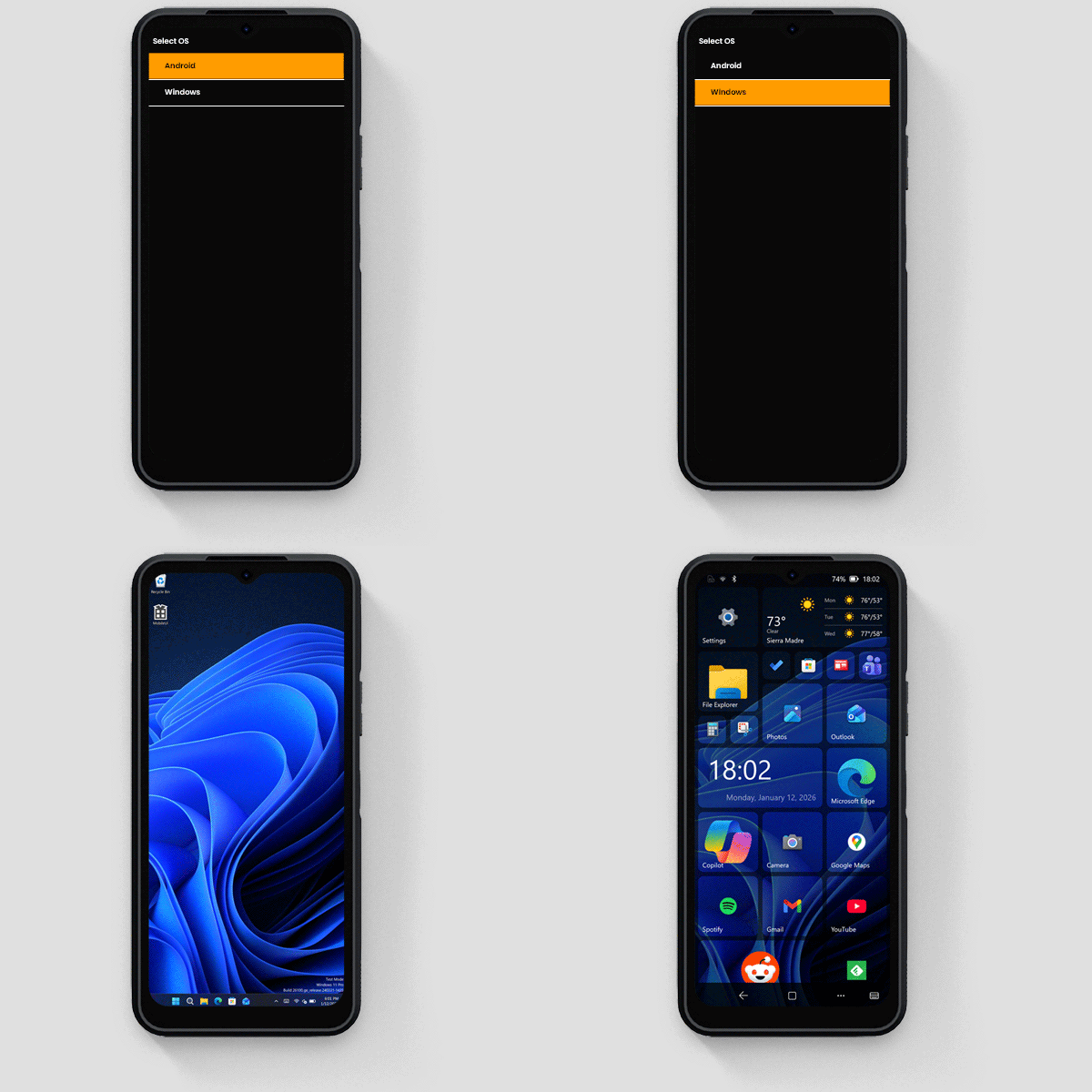
To address the difficulty of using Windows on small screens, the Nex Computer team developed a proprietary Mobile UI. Built from the ground up, this interface is designed to make Windows 11 easier to navigate and use with touch in handheld mode.
Real-world use case: From pocket to desk
The design philosophy behind the NexPhone is based on all-around “adaptability,” allowing it to run various applications in different scenarios.
-
On the go:Rely primarily on the Android interface, or use UI-optimized versions of Windows and Linux in emergency situations.
-
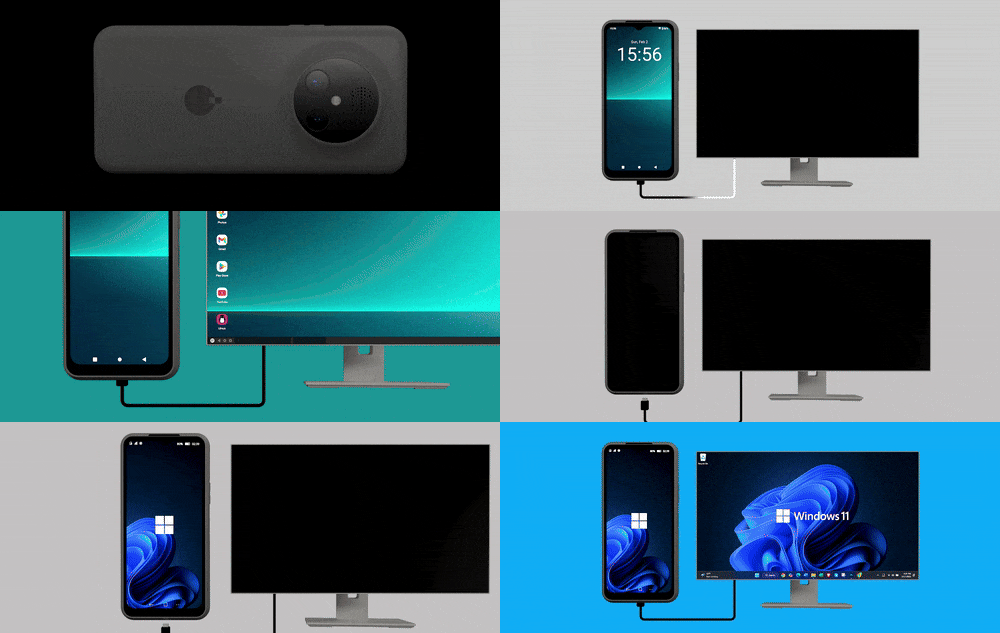
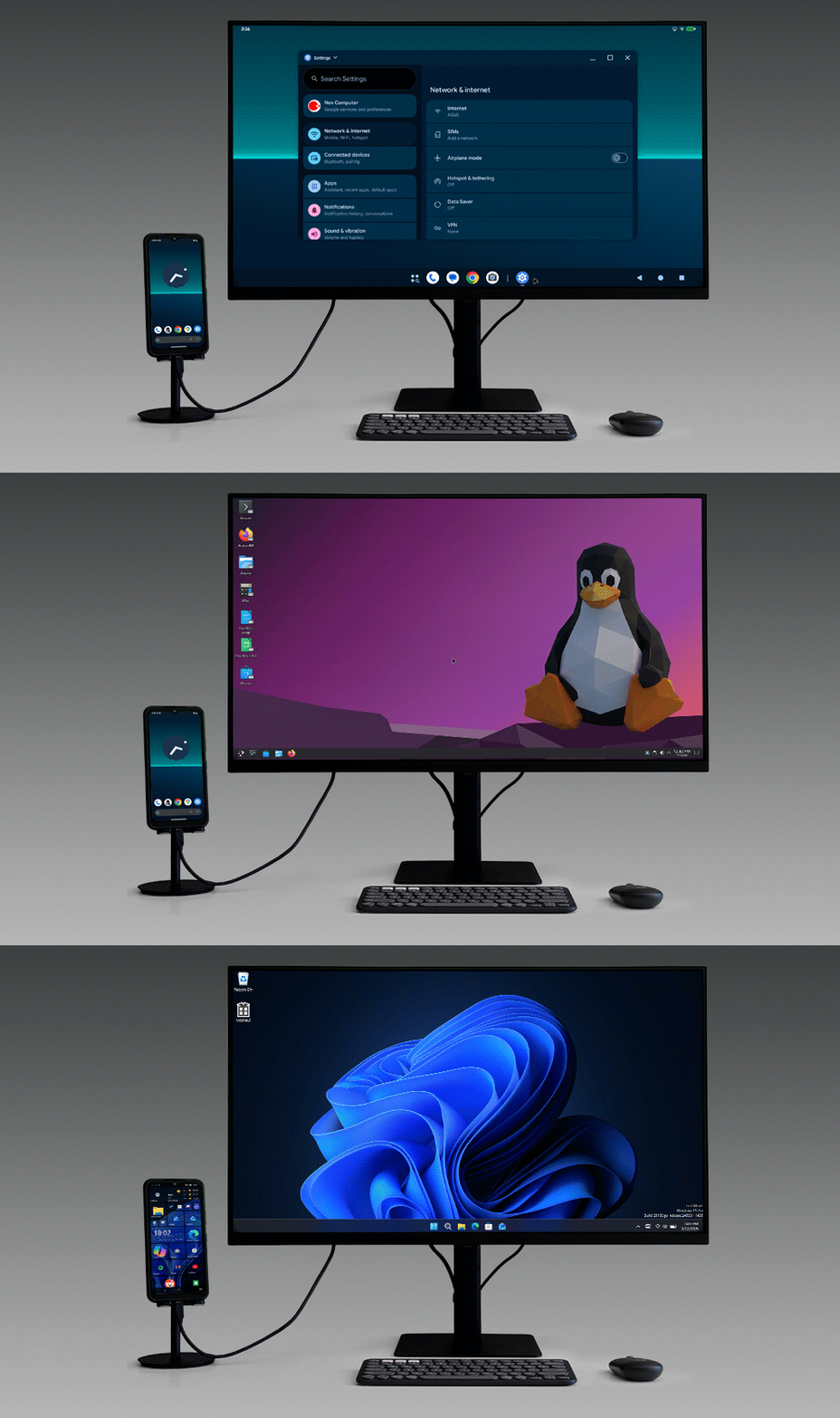
At your desk: Once the NexPhone is connected to an external monitor, keyboard, and mouse via a USB-C hub, it can function in three different modes:
-
Android Desktop Mode: Offers a lightweight workflow similar to that of a Chromebook.
-
Linux (Debian): A complete development environment with hardware acceleration.
-
Windows 11: After restarting, it becomes a standard Windows computer that runs traditional desktop applications.
-
Kosmaz said, “The point isn’t to replace everyone’s devices overnight. The point is to make a single device flexible enough to cover far more use cases throughout your day than a typical smartphone can.”
Market Positioning and Release Information: A Crowdfunding Gamble
Nex Computer acknowledges that, as a bootstrapped startup, it must make pragmatic choices. This explains why NexPhone has adopted a pre-order model similar to crowdfunding, as well as its longer delivery times.
Pricing and Launch Schedule:
-
Total Price: $549 (approximately NT$17,500, excluding tax and shipping).
-
Reservation Deposit: $199 (fully refundable).
-
Final payment upon shipment: $350.
-
Estimated Shipping Date: Third Quarter of 2026 (Q3 2026)。
The current status is “the start of mass-production tooling.” This means there is still a wait of more than a year and a half between now and when the product actually reaches consumers. Since the hardware specifications aren’t particularly high, Kosmaz showed a rare degree of honesty in the announcement. He stated that he is not trying to persuade users who own the latest iPhone or Galaxy models to immediately abandon their flagship devices: “If you already own the latest flagship phone, the NexPhone probably won’t replace it as your primary device on day one.”
Instead, he positions the NexPhone as a powerful “backup phone” or “second phone,” particularly for professionals who need rugged protection or who rely on specific Windows software but don’t want to carry a laptop with them.
Conclusion
Based on the NexPhone’s current specs and price, $549 for a rugged smartphone with 12GB of RAM, 256GB of storage, and the ability to run Windows 11 isn’t too expensive—it’s a reasonably realistic price point. If you’re a business professional who wants to carry just one phone when you’re on the go and be able to switch between different operating systems for work at any time, the NexPhone certainly has its appeal. For example, carrying an external display and keyboard like the NexDock lets you work on the go, and being able to instantly transform it into a desktop setup at the office with just a single cable sounds great. However, you’ll want to consider its mid-range specs and the fact that shipments won’t begin until Q3 (I’ve already pre-ordered one myself).