


Apple’s mobile chips have long dominated the smartphone market with their formidable raw computing power. However, the Qualcomm Snapdragon 8 Elite has outperformed the A18 Pro SoC powering the iPhone 16 Pro in some benchmark tests, putting Apple in an awkward position once again—especially as the overheating issues with the iPhone 15 Pro have not yet been fully resolved. Faced with mounting pressure from competitors, Apple has finally sought a breakthrough for the A19 chip, introducing a vapor chamber cooling design into its SoC for the first time.

Why Is the Thermal Management Technology in the iPhone 17 Pro and 17 Pro Max a Real Upgrade?
The iPhone 17 Pro and 17 Pro Max are Apple’s first models to adopt this highly efficient passive cooling technology, which is designed to thoroughly address overheating issues. Interestingly, it has been nearly a decade since Samsung introduced the same technology in the Galaxy S7 back in 2017. Apple has always excelled at reshaping tech trends with bold trade-offs and truly innovative features, but it is also known for its conservative approach to new technologies—especially when Android manufacturers have already adopted them first. Over the years, Apple has typically only officially adopted a feature once a certain “killer feature” on Android has become impossible to ignore—or once it has refined that feature into its own “breakthrough innovation.”
Now, the iPhone has finally caught up with the Android camp in terms of thermal management. Next, let’s take an in-depth look at how the vapor chamber represents a true upgrade and delivers a more stable, more powerful gaming experience for the iPhone 17 Pro and 17 Pro Max.
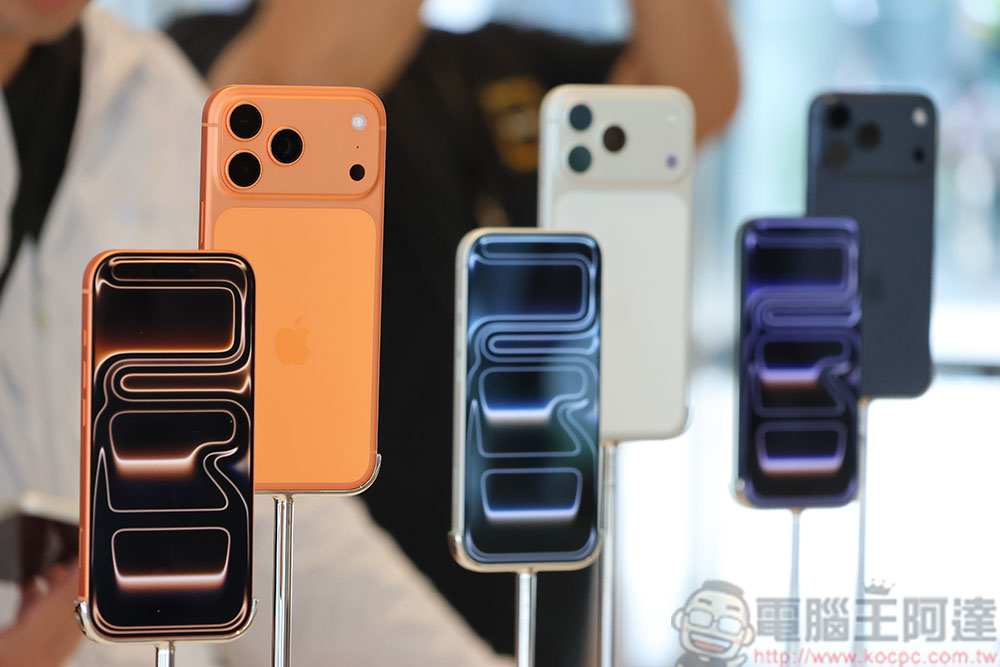
Why is it necessary to cool the steam chamber?
The SoCs in modern smartphones integrate multiple high-power-consumption components onto a single chip, making them prone to generating heat even during everyday use. The CPU, GPU, and NPU convert several watts of power directly into heat during extended gaming sessions or when running AI-accelerated applications; embedded ISPs and DSPs also heat up when taking photos or recording videos. Even seemingly light tasks, such as voice calls or web browsing, can cause the RF transceiver and mobile modem to rapidly raise the SoC’s temperature. Even LPDDR memory (RAM) can overheat under heavy loads.
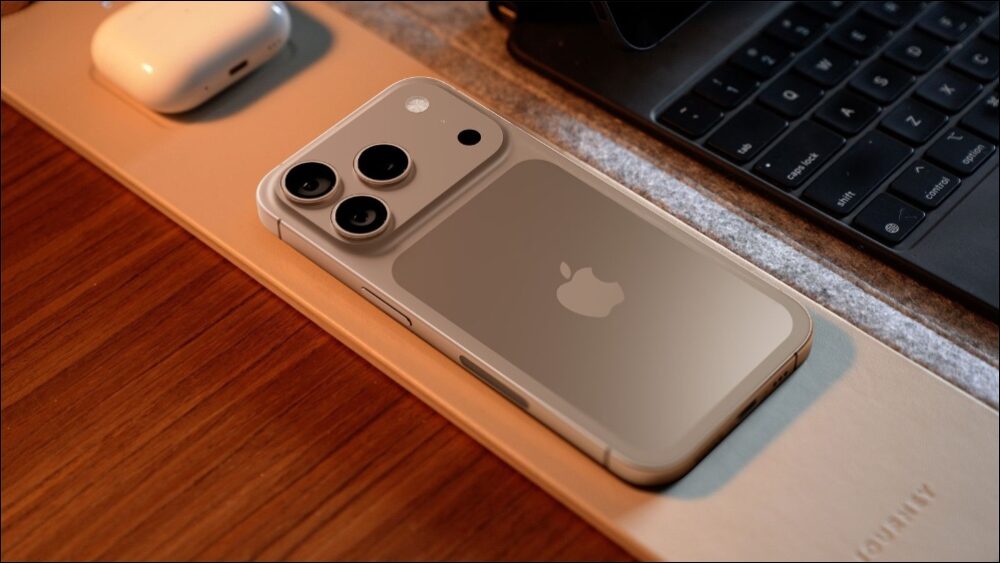
Typical smartphones rely on the thermal conductivity of an aluminum alloy frame to draw heat away from the SoC and dissipate it along the edges of the device. However, this method is still insufficient to effectively manage the high heat density of the SoC and RAM. In contrast, laptops and desktop computers use copper heat spreaders with superior thermal conductivity, combined with a network of heat pipes and aluminum heat sinks, with axial fans blowing cool air over the heat sinks to achieve more efficient heat dissipation. Understanding the differences between air cooling and liquid cooling also helps in selecting the most suitable cooling solution for a computer. However, in smartphones, space, weight, and power consumption constraints make such complex cooling architectures nearly impossible to implement. This is precisely where vapor chamber cooling shines. Through sophisticated thermodynamic design, it can significantly improve cooling efficiency without increasing weight, volume, or structural complexity.
How does steam chamber cooling work?
Smartphones are constrained by their size, weight, and power consumption, making it difficult to effectively dissipate heat from high-thermal-density SoCs. Thermal performance depends largely on the thermal conductivity of the materials used. Although copper is heavier and more expensive than aluminum and offers better thermal conductivity, it is still insufficient to handle the enormous amount of heat generated by modern SoCs. The value of vapor chambers lies in overcoming the limitations of simple “heat conduction” to remove heat more efficiently.
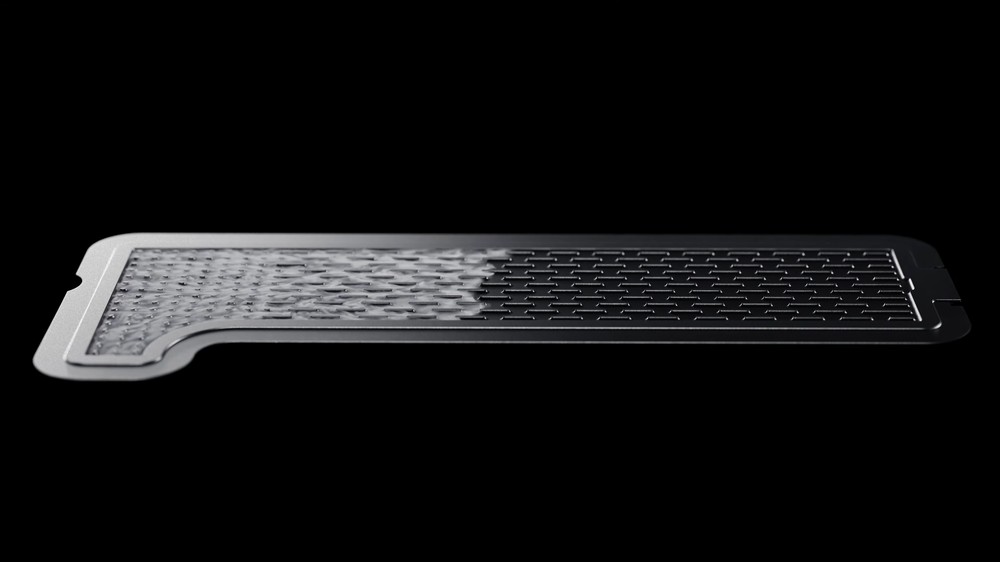
Unlike traditional metal heat sinks, a vapor chamber is a sealed chamber filled with a metal mesh structure and a small amount of coolant (Apple uses deionized water). These capillary structures facilitate the circulation of coolant between the hot and cold ends of the vapor chamber, drawing heat away from the SoC. The true key to the vapor chamber lies in its vacuum environment. By reducing the pressure inside the chamber, the boiling point of water is lowered, allowing the iPhone 17 Pro’s SoC to vaporize the coolant in an extremely short amount of time. As the water vapor moves to the cooler region, it condenses at the cold end and releases a large amount of latent heat, reverting to a liquid state. This “phase change” cycle—from liquid to gas and back to liquid—is the core principle that allows the vapor chamber to significantly improve heat dissipation efficiency.
During the vaporization process, water molecules must absorb a large amount of energy to break hydrogen bonds, and this energy comes directly from the heat generated by the SoC. As a result, the vapor chamber can rapidly transport and dissipate heat far more efficiently than metal, significantly enhancing overall heat dissipation.
Why Should iPhone Users Care About Vapor Chamber Technology?
Most people tend to think that the key to improving processor performance lies in increasing the number of transistors or improving the microarchitecture, but this is actually only one of three major approaches. Professional overclockers rely more on two other methods—increasing power delivery capacity and enhancing the cooling system—to push standard desktop CPUs beyond 9GHz. With transistor count and architecture remaining constant, a CPU’s limit is actually determined by its power supply and cooling capabilities. This is why overclockers use liquid nitrogen for continuous cooling and pair it with two 1,200W power supplies—only then can they push consumer-grade processors to such insanely high clock speeds.
Smartphones have long solved their power supply issues with lithium-polymer batteries, which offer high discharge currents and greater capacity (although we still occasionally run into problems due to improper use). In other words, thermal management is the biggest bottleneck preventing modern smartphone SoCs from reaching their full performance potential. Given that the past two generations of iPhones were heavily criticized for overheating issues, it’s actually not surprising that Apple has finally chosen to follow the Android camp’s approach nearly a decade after the introduction of vapor chamber technology.

The addition of a vapor chamber allows the iPhone 17 Pro and Pro Max to maintain higher clock speeds for longer periods when performing CPU/GPU-intensive tasks, such as image processing or mobile video editing. For gamers, the most noticeable improvement is the ability to maintain a stable, high frame rate even during extended gaming sessions, as performance no longer drops rapidly due to heat buildup.
Source: KOCPC Chinese