


For PC DIY enthusiasts and esports fans over the past year, “memory” has undoubtedly been the most heartbreaking item on their build lists. As the wave of generative AI swept across the globe, data centers’ insatiable demand for High Bandwidth Memory (HBM) directly led to a structural collapse in the consumer-grade DRAM supply chain. Over the past 12 months, DRAM prices have experienced the most dramatic surge in history. However, as of April 2026, a massive crack finally appears to have opened in the long-standing wall of high prices.
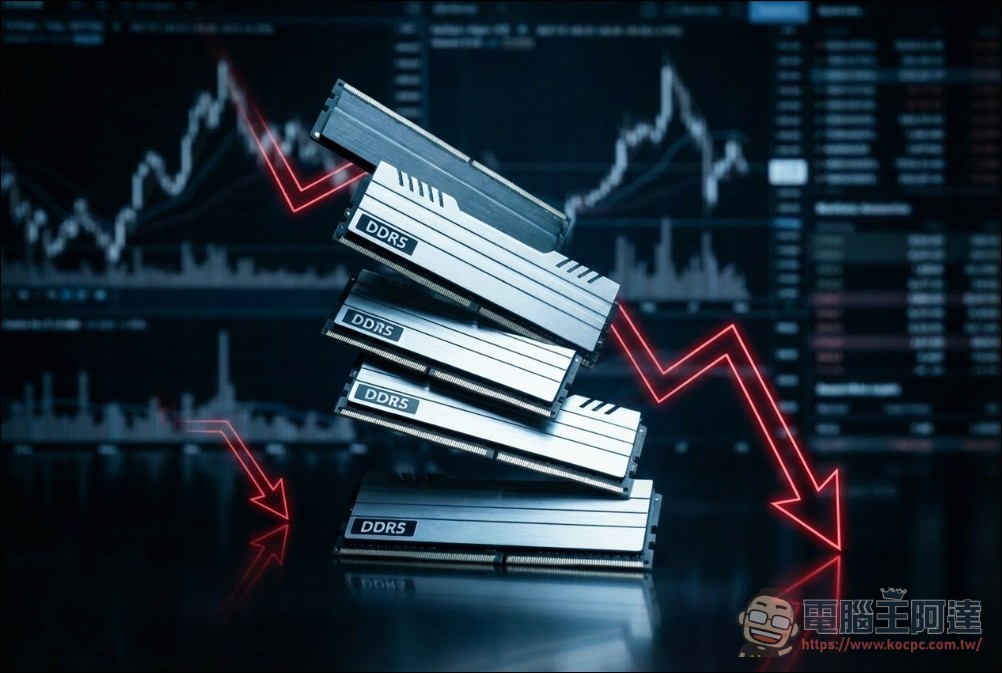
According to the latest quotes from the supply chain, spot prices for DDR5 memory plummeted by nearly 30% last month without warning, while DDR4 prices—which had been rising steadily—also saw a simultaneous pullback of about 5%. This marks the first significant monthly decline in spot memory prices since the market entered an “AI frenzy” in early 2025.
Why Are Memory Prices Rising?
To understand the significance of this price correction, we must first look back at the absurd history of price hikes. In early 2025, the spot price for a single 16GB DDR4 chip was just $3.20 (approximately NT$102); However, driven by AI servers crowding out production capacity, the price of this chip skyrocketed by a staggering 2,200% within a year, peaking at $74.10 (approximately NT$2,371).
This price increase was directly reflected at the retail level. A 32GB DDR5 memory kit, which originally cost between 3,000 and 4,000 New Taiwan dollars, even briefly surpassed the 16,000 New Taiwan dollar mark in early 2026, causing many gamers who had originally planned to upgrade their systems to think twice.
However, according to *DigiTimes*’FollowThis extreme upward trend came to an abrupt halt between late March and early April of this year. Currently, the spot price of 16GB DDR5 modules has fallen back to $37.20 (approximately NT$1,190). On e-commerce platforms such as Amazon and China’s JD.com, the listed prices of some 32GB DDR5 kits are even 30 percent lower than last month—a ray of hope for consumers who have long been enduring a “hardware winter.”
Two Major Drivers of the Price Drop: A Wave of Inventory Sales and Google’s “TurboQuant” Variable
The sharp correction in the spot market this time can be attributed primarily to two key factors:
1. Dealers’ Mental Breakdown and Inventory Liquidation
In the early stages of the price hike, many distributors and speculators with a keen sense of the market stockpiled large quantities of DDR5 chips in an attempt to profit at the peak. However, weak demand in the consumer market (PCs, laptops), coupled with high prices that severely dampened the willingness to upgrade, led to a prolonged stagnation in end-user sales. When distributors realized that while demand for AI servers was strong, it was primarily driven by original manufacturers (such as Samsung, SK Hynix, and Micron) directly to major OEMs—gradually decoupling from the spot market—a massive wave of sell-offs emerged in the spot market as distributors sought to cut their losses and liquidate their positions.
2. The Ripple Effects of Google TurboQuant Technology
Another technical factor is Google’s recently released “TurboQuant” memory compression technology. This AI-powered compression algorithm, which claims to significantly optimize memory utilization on servers and personal computers, is believed to increase the effective memory capacity of existing systems by 20% to 30%. The emergence of this technology has prompted enterprises and some distributors—who had previously engaged in panic buying—to reassess whether they truly need to stockpile such an enormous amount of physical hardware. This shift in sentiment became the final straw that broke the camel’s back for spot prices.
Warning: The “Polarization Phenomenon” Between the Futures and Spot Markets
Despite the sharp drop in the spot market, ordinary consumers may not yet feel the benefits when purchasing laptops or desktop PCs. The market is currently showing clear signs of “polarization”:
- Spot Market: Prices are highly sensitive to short-term supply and demand and are significantly influenced by dealer sentiment.
- Contract Market: Prices are stable and continue to rise.
According to TrendForce’sAnalysis and ForecastsAlthough spot market traders are lamenting the situation, contract market prices for major PC original equipment manufacturers (OEMs) are still expected to rise by 58% to 63% quarter-over-quarter in the second quarter of 2026, following a staggering 95% increase in the previous quarter.
The reason is that memory manufacturers are still allocating the vast majority of their wafer production capacity to the highly profitable HBM (High Bandwidth Memory) and enterprise-grade server markets, which has resulted in continued constraints on the production capacity of “standard DRAM” for the general PC market. Unless the new facilities being expanded by manufacturers can successfully begin mass production by the end of 2026, the hardline stance of the contract market is unlikely to waver in the short term.
The Next Battleground: The Across-the-Board Surge in NAND Flash Memory and SSDs
It is worth noting that the correction in DRAM spot prices has not led to an overall decline in memory product prices. On the contrary, NAND flash memory is experiencing another sharp surge in prices.
The report notes that, due to major manufacturers deliberately cutting production over the past two years in response to poor market conditions, the market is currently experiencing a severe shortage, and NAND prices are expected to surge by 70% to 75% this quarter. This means that SSD prices will be even higher than they are now in the coming weeks. For gamers who have been waiting for RAM prices to drop, this could lead to the awkward situation of “cheaper RAM but more expensive SSDs,” and the overall budget for building a PC may not decrease significantly as a result.
Analyst Recommendation: Is Now the Right Time to Buy?
In response to this adjustment in DDR5 spot prices, industry experts have offered several recommendations:
- DIY enthusiasts may enter the market in moderation: Since spot prices are closely tied to retail channels, if you’re a gamer who buys RAM kits on your own, now is indeed a good time to start looking for well-known brands that were previously “mispriced” or are currently clearing out inventory.
- Avoid Brand-Name Pre-Built PCs: Since brand-name computers and laptops use components purchased at contract prices, price reductions will be reflected very slowly; in fact, prices may even remain high due to price increases for other components (such as SSDs and power supplies).
- Be Wary of the Secondhand Market: Recent reports indicate that a large number of DDR5 modules appearing in some spot markets may be “refurbished secondhand” products salvaged from decommissioned servers. Consumers should pay special attention to warranties and product origins when purchasing items priced significantly below market value.
Summary
The correction in the memory market in April 2026 was more like a “release of pressure” amid high inflation. Although a 30% drop sounds quite attractive, current prices remain about 20 times higher than the lows seen a year ago. Although the demand boost driven by AI has cooled slightly due to technological optimizations, the industry’s overall resource allocation continues to favor data centers.
For the vast majority of tech consumers, the memory market is moving beyond the phase of “collective price surges” and entering a more complex, volatile, and polarized era. However, observations show that while price fluctuations have been more significant in the Chinese and European markets, prices in Taiwan’s retail market have remained largely unaffected by international pricing trends. Those looking to buy affordable memory will still need to wait a little longer.
Source: KOCPC Chinese