


Less than a week after Anthropic’s Fable 5 and Mythos 5 were emergency-suspended by the US government, OpenAI met the same fate. According to multiple foreign media reports, the US Trump administration has formally requested that OpenAI restrict the public release of its latest model GPT-5.6, initially only available to a few government-approved partners, with customer eligibility subject to case-by-case review. This marks the second time in just one week that the US government has intervened in the public release of large AI models, following the Commerce Department’s order to suspend Anthropic Fable 5 / Mythos 5 on national security export control grounds. Together, these two incidents signal the beginning of a shift in US AI regulation from voluntary safety commitments to an era of “national security gatekeeping.”
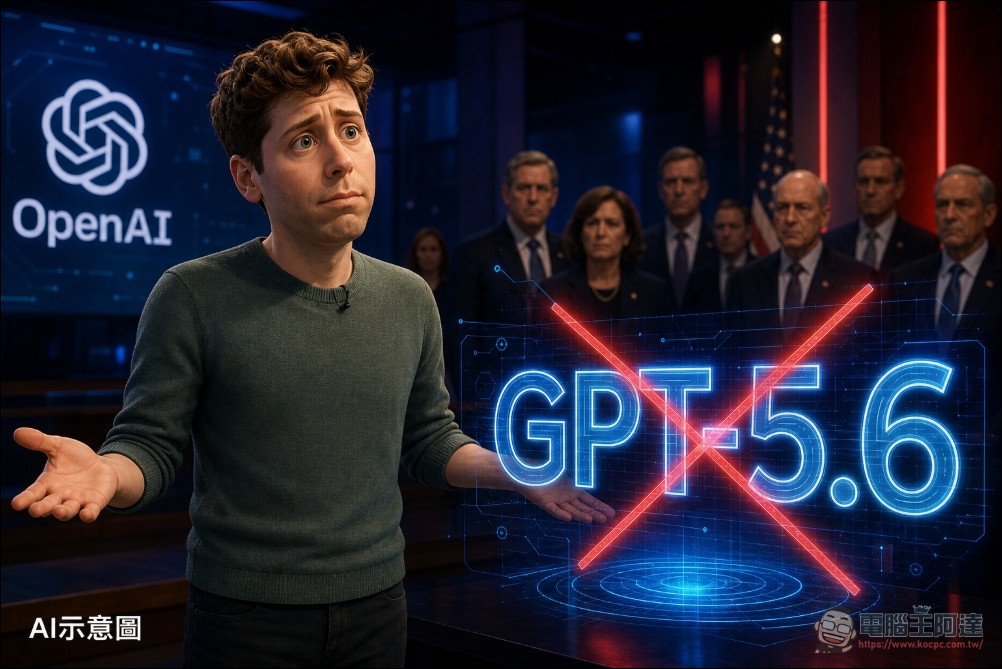
Not just Calude banned — White House steps in to block GPT-5.6 release
Sam Altman personally meets with Commerce Ministry officials
Multiple sources indicate that OpenAI CEO Sam Altman personally met with Commerce Secretary Howard Lutnick a few days ago to discuss the release plan for GPT-5.6. According to Axios, after evaluation, the US government determined that GPT-5.6 possesses “Mythos-class” cutting-edge capabilities, and therefore decided to intervene. Both the White House Office of the National Cyber Director (ONCD) and the White House Office of Science and Technology Policy (OSTP) participated in this review decision.
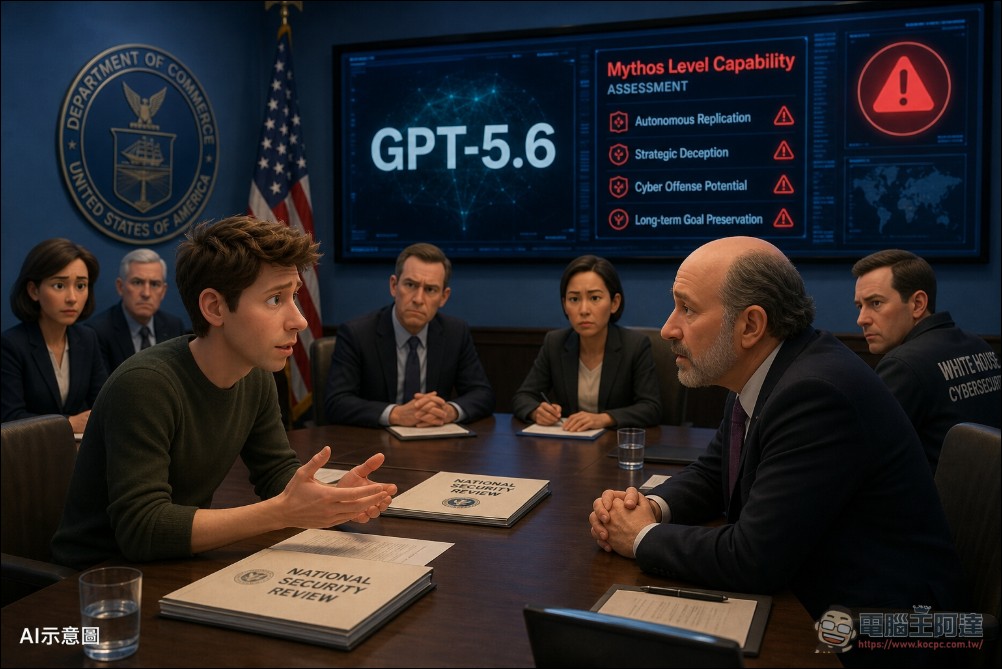
It is reported that OpenAI has been pushing to release GPT-5.6 even before Anthropic’s Fable 5 was banned. This suggests that OpenAI may have anticipated government censorship coming, yet still hoped to release the model ahead of the ban being broadened.
Specifications and Positioning of GPT-5.6
Although OpenAI has not officially released the detailed specifications of GPT-5.6, according to rumors, GPT-5.6 offers capabilities comparable to Fable 5 / Mythos 5, with pricing expected to be 3 times cheaper than Anthropic Fable 5, demonstrating strong market positioning intent following Fable 5’s ban. GPT-5.6’s core specifications include a 1.5M token context window and an architecture designed specifically for Agentic Coding rather than simple conversation. This highly overlaps with Anthropic Fable 5’s positioning, explaining why OpenAI is eager to launch an alternative immediately after Fable 5 was banned.
In fact, OpenAI was originally scheduled to release GPT-5.6 on June 23, exactly the day after Fable 5 was banned. A model under the pseudonym “Kindle” even emerged in the community and quickly climbed various rankings. Though unconfirmed by officials, many suspect it was an anonymous test version of GPT-5.6. Currently, GPT-5.6’s release plan may have been forced into a “partners only” model, where each customer requires case-by-case approval from the Trump administration. This is no longer a voluntary safety commitment, but a selective release mechanism directly controlled by the government.
Comparing approaches: US closure vs China wide open
The two bans sparked heated discussions about the shifting landscape on social platforms: “Fable 5 was banned, GPT-5.6 is stuck in government review, while DeepSeek-V4-Pro is MIT licensed with million-token context, completely open. America is building a moat that only locks itself in.”
This asymmetric situation could lead to the so-called “Public Frontier Inversion” effect: the US may still possess the strongest models internally, but if regular developers cannot access them, while Chinese models remain fully open, replicable, and locally deployable on Hugging Face, OpenRouter, and various cloud platforms, then China will win the public frontier, even without winning every internal benchmark.
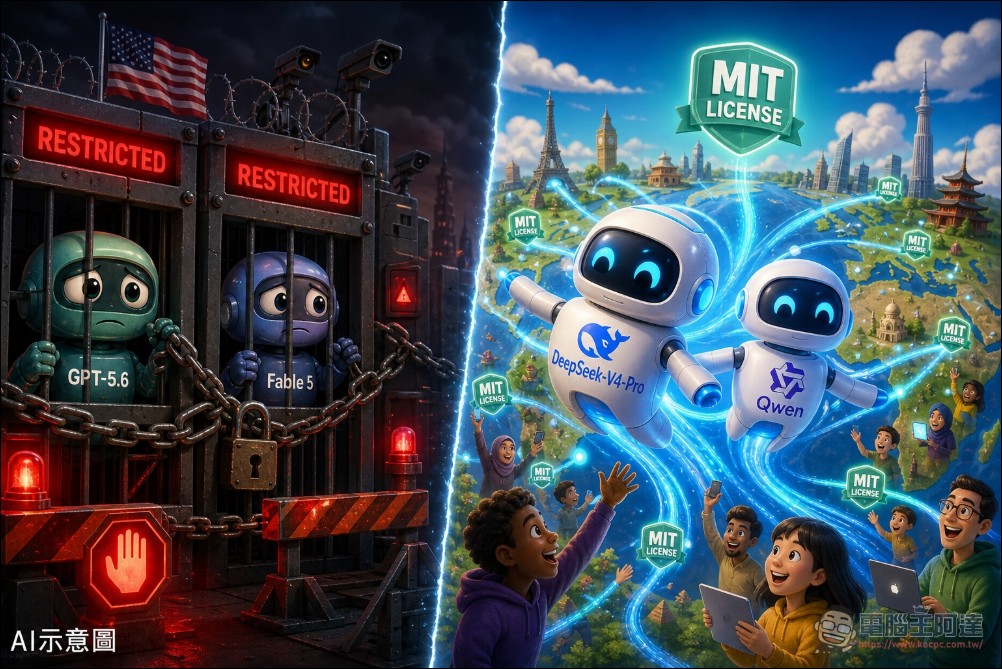
Moreover, this concern is not unfounded – it is already being reflected in actual data. Vercel’s AI Gateway data shows that DeepSeek jumped from less than 1% token share to 17% within a month, while in coding agent workloads, DeepSeek generated 49% of token usage but accounted for only 4% of costs. OpenRouter’s 100T Token research also shows that Chinese open-source models’ weekly usage share has risen from 1.2% at the end of 2024 to nearly 30%.
Fable 5: Lessons from Past Prohibitions
What’s concerning is that the restrictions on GPT-5.6 are not an isolated case—just a week ago, Anthropic’s Fable 5 and Mythos 5 were urgently ordered to be suspended by the US government on export control grounds, with all non-US citizens (including foreign employees at Anthropic) barred from accessing them.
Anthropic 最強模型 Fable 5 / Mythos 5 遭美國禁止外國公民存取,連大神 Andrej Karpathy 也無法使用
This marks the first time the U.S. government has forced a commercially available AI model offline. Anthropic strongly disputed this, stating that when they received the directive at 5:21 PM, they were lacking details about specific national security concerns, and believes the so-called “jailbreak vulnerability” is insufficient grounds to recall a commercial model. A legal technology company, Legion, has filed a lawsuit alleging that the government’s export control order has severely disrupted its operations. However, the U.S. government’s review pattern for GPT-5.6 differs from Fable 5—not an outright ban, but rather adopting a “Staggered Release” mechanism.
Impact Analysis: Key Turning Points in the AI Industry
This series of events has profound implications for the AI industry. First, the competitive landscape between open-source and closed-source models is being completely reshaped by political factors. When the US government imposes numerous restrictions on its most powerful models, while Chinese open-source models flood the market with MIT licensing and extremely low costs, the question of “which model is best” will no longer be a purely technical question. For developers, the actual decision-making logic is shifting. The old approach was “default to GPT/Claude unless cost pressure forces you to downgrade,” but it may now become “default to DeepSeek/Qwen/GLM/Kimi unless security or compliance requirements force you to upgrade to a US-censored model.”
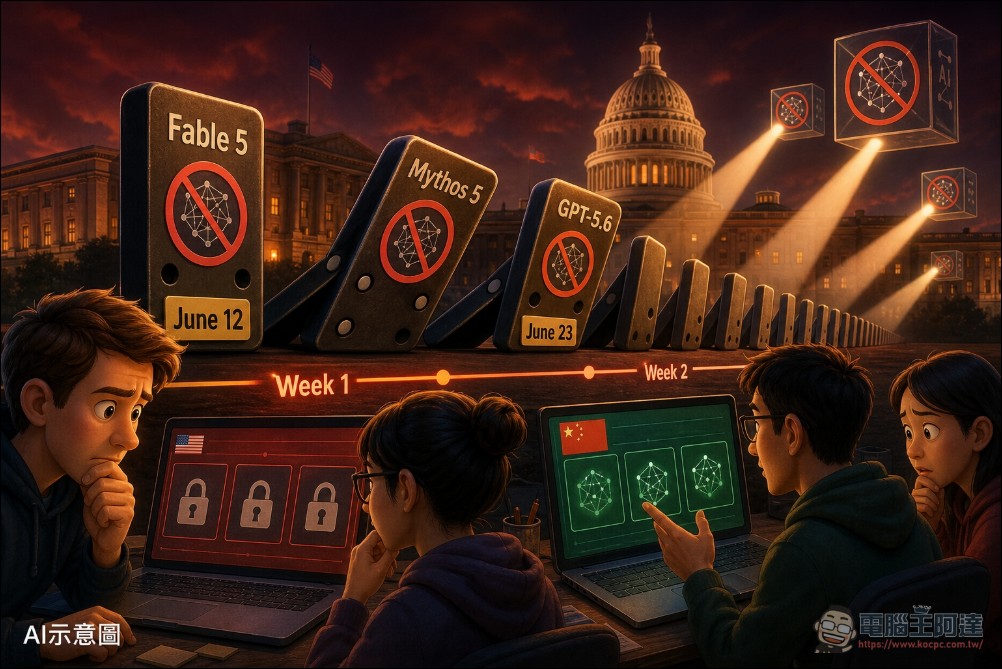
And once developers have built their toolchains, model routers, and deployment workflows around open models, it will be extremely difficult to win the market back even if the US government lifts the ban in the future. Polymarket’s prediction market data shows that even after Fable 5 was banned, traders still believed GPT-5.6 had a chance to be publicly released before the end of June. But with the White House’s formal intervention, that possibility is rapidly declining.
Conclusion
From Fable 5 being banned to GPT-5.6 being blocked, in just one week the US government’s regulation of frontier AI models jumped directly from “lip service” to “direct intervention.” As one analyst put it, America is building a moat that only traps itself. While Chinese open-source models are conquering the globe with MIT licensing and rock-bottom costs, the US has chosen to let its most powerful models lie dormant in government review limbo. Once that gate comes down, reopening it won’t be so easy.
Source: KOCPC Chinese