


Everyone should take note! The ability to swap faces in real-time during video calls using just a single photo—once something only seen in spy movies and news reports—is no longer the exclusive domain of elite hackers. It’s now an open-source technology that anyone can easily use. Deep-Live-Cam, a video face-swap tool that recently hit 93,000 stars on GitHub, claims to work with any Zoom meeting, livestream, and random video chat, and is completely free, running locally on your machine.
This tool lets you face-swap on a live webcam in real-time using just one photo.
zoom calls, omegle, livestreams.. you can be literally anyone.
93k stars on github. runs on your laptop. 100% free. pic.twitter.com/asZ8t8kM7H
— How To Prompt (@HowToPrompt__) June 27, 2026
What tool is this powerful? An open-source face-swapping project with 93,000 stars
This one is called “Deep-Live-CamAn open-source project that runs locally on personal computers without requiring cloud servers or paid APIs. Users simply provide a photo of the target person, and the software can replace their face with the target’s facial expressions and movements in real-time video streams with virtually zero delay.
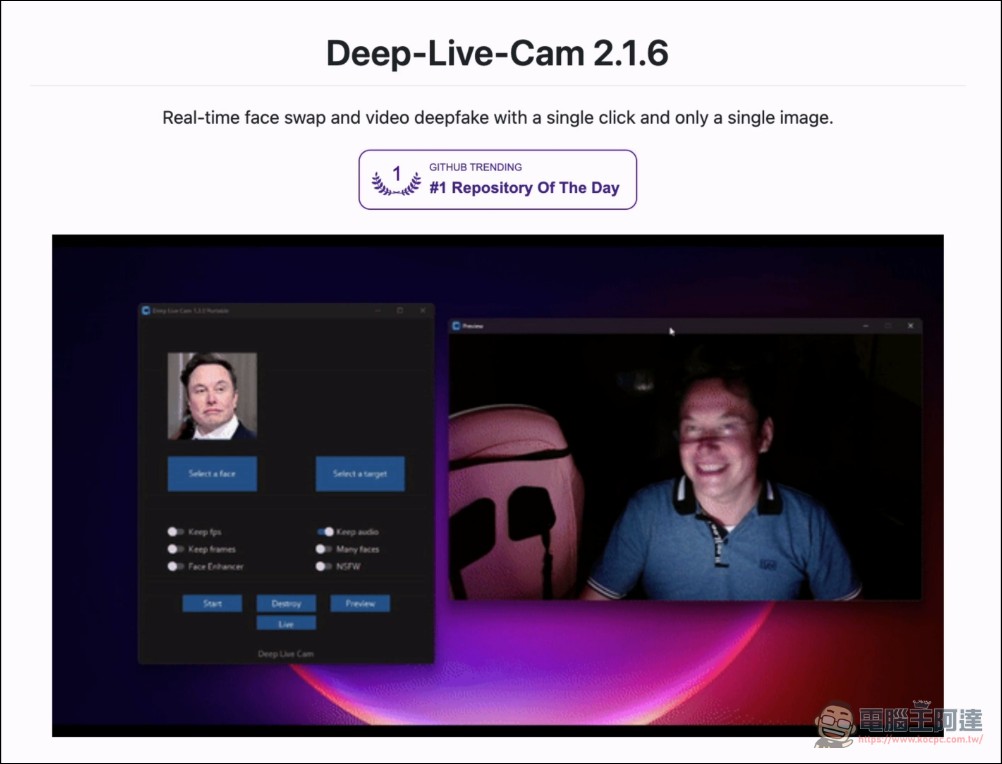
Technology itself is neutral. These tools do have legitimate uses: content creators can use them for video production, streamers can use them to transform into virtual characters, and the film industry can use them for post-production effects. However, the problem arises when it’s packaged as a use case for “Zoom meetings,” “Omegle random chat,” or “live streaming.”
According to media reports, this type of “DeepFake” scam case has in recent yearsshows explosive growthAnnual growth has reached 147%, and AI-generated images are becoming increasingly realistic, with traditional liveness detection mechanisms already bypassed. Cybersecurity experts point out that criminal groups have begun using real-time face-swapping technology to impersonate corporate executives in video conference fraud schemes.
One Photo Is All It Takes to Impersonate You: The Fraud Risks of Instant Face Swapping
The barrier to entry for these tools is alarmingly low. Scammers only need to find one front-facing photo of their target from social media platforms (Facebook, Instagram, LinkedIn) to impersonate them during video calls. This means:
- Impersonating a supervisor to scamAfter obtaining publicly available photos of company executives, scammers impersonated the executive during a video conference, demanding that finance personnel transfer funds or provide sensitive information.
- Romance scamRomance scams involving impersonation of others’ appearances on dating apps or video chats
- Fraudulent account opening / authenticationExploiting real-time face swapping to bypass video verification systems at certain financial institutions
- Fake News / Fake LivestreamImpersonating political figures or public figures to conduct fake live streams and spread false statements
How to protect yourself? Practical methods for identifying Deepfake videos
Facing increasingly sophisticated face-swapping technology, here are the prevention measures recommended by cybersecurity experts:
- Ask the other person to turn their head or change their angleIn real-time face swapping technology, edges tend to become blurry or distorted when the face rotates significantly or at extreme angles.
- Observe blinking and lip syncIn AI face swapping, unnatural artifacts may still appear in the synchronization of blink rate and lip movements with audio.
- Watch for background interferenceAt the edges of the face where it meets the background, face swapping often produces flickering or color discrepancies.
- Set passcodeAn agreed-upon code word known only to you and your family or colleagues, used to verify identity during a video call
- Confirm through other channelsIf someone in a video call asks you to transfer money or provide sensitive information, be sure to verify through a phone call or in person.
- Restrict community photos from being publicReduce public exposure of front-facing photos on social media to minimize materials that could be stolen or misused
Also, recentlySome smartphone brands also have built-in deepfake video detection features.If you have concerns, you might also consider purchasing and using them. In any case, the emergence of open-source real-time face-swapping technology marks the official end of the era of “pictures don’t lie”: starting now, the face you see during a video call may not actually be the person themselves. While enjoying the convenience of technology, staying vigilant (for example, if someone suddenly asks to borrow money or asks you to transfer funds out of nowhere… these could all be scams) and building verification habits (such as agreeing on a set of verification keywords privately) have become essential skills for everyone in the digital age.
Source: KOCPC Chinese