


Recently, a jury in the U.S. Federal Court for the Northern District of California found that 38-year-old former Google software engineer Linwei Ding (also known as Leon Ding)Convicted of all 7 counts of economic espionage and 7 counts of stealing trade secrets, this is also the first case in which the U.S. Department of Justice has been convicted of economic espionage involving AI technology.
Former Google Engineer Found Guilty of Economic Espionage and Theft of Confidential AI Technology https://t.co/RZcsxwdDoV@FBISanFrancisco pic.twitter.com/Ey5oskdACU
— FBI (@FBI) January 30, 2026
Case history: Two years of planning to steal secrets
The case is based on the indictment and court evidence:
| time | event |
|---|---|
| 2019 | Ding Linwei joins Google as a software engineer |
| May 2022 | Start stealing confidential documents from Google’s internal network |
| June 2022 | Secretly negotiated to serve as Chief Technology Officer (CTO) of Beijing Rongshu Lianzhi Technology Co., Ltd. |
| Early 2023 | Founded Shanghai Zhisuan Technology Company in China and served as CEO |
| December 2023 | Two weeks before leaving office, downloaded secrets to personal computer |
| March 2024 | Arrested by FBI |
During his tenure at Google, Ding Linwei claimed to have led the team to build a computing power platform with 60,000 card TPUs and 26,000 GPUs, and won many awards:
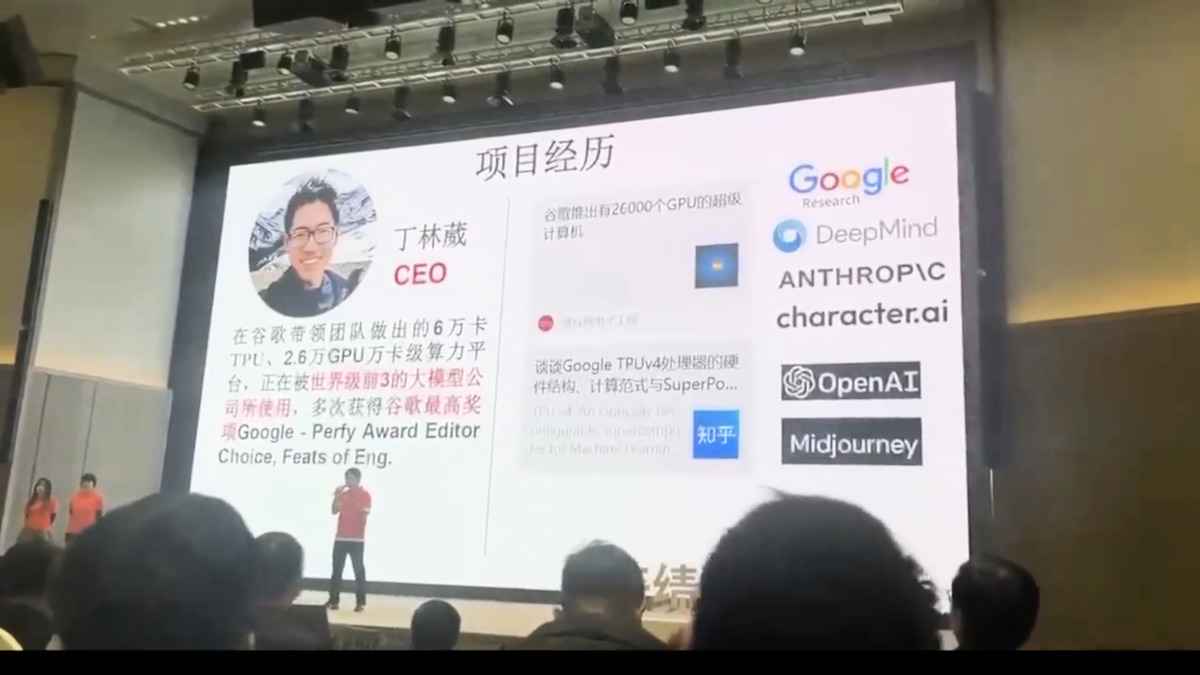
Ding Linwei allegedly downloaded this confidential information from the Google network to his personal Google Cloud account while he was a Google employee from May 2022 to April 2023. He also secretly established ties with two technology companies based in China and downloaded stolen Google trade secrets to his personal computer before leaving Google at the end of 2023. These documents relate to:
– Google’s self-developed TPU (Tensor Processing Unit) chip architecture
– GPU system design and functionality
– Software that orchestrates thousands of chips into a supercomputer
– Google’s customized SmartNIC (intelligent network card) technology
Victims and beneficiaries
Victim: Google
– AI training technology in supercomputing data centers
– Core technologies for cutting-edge AI infrastructure
Beneficiary:
1. Beijing Rongshu Lianzhi Technology (Ding Linwei serves as CTO)
2. Shanghai Zhisuan Technology (founded by Ding Linwei and serves as CEO)
According to court evidence, Ding Linwei claimed to investors that he could “build an AI supercomputer by copying and modifying Google technology” and applied for funding from the Shanghai government’s “Talent Plan” to “help China have computing infrastructure capabilities comparable to international standards.”
The maximum possible sentence is 175 years
| crime | quantity | maximum sentence for each |
|---|---|---|
| Economic espionage (18 U.S.C. § 1831) | 7 items | 15 years |
| Theft of trade secrets (18 U.S.C. § 1832) | 7 items | 10 years |
Maximum possible sentence: 175 years (if all sentences are served consecutively)
Ding Linwei is expected to attend a status hearing on February 3, 2026. The specific sentencing date has yet to be announced by the court.
Ministry of Justice Statement: A Stern Warning on National Security Levels
“This conviction uncovers a deliberate breach of trust involving the theft of the world’s most advanced AI technology at a critical moment in the development of AI,” said John A. Eisenberg, Assistant Secretary of the Justice Department’s National Security Division. “Ding used his privileged access to steal AI trade secrets while pursuing entrepreneurial projects aligned with the Chinese government. His deception jeopardized America’s business leadership and competitive advantage.”
Roman Rozhavsky, Assistant Director of the FBI’s Counterintelligence Division, emphasized: “This case not only marks the first conviction of AI-related economic espionage, but also demonstrates the FBI’s strong determination to protect American companies from the growing threats posed by my country to our economy and national security.”
Expert Analysis: Profound Impact on Global AI Competition
European Policy Analyst Sam Whitlam pointed out: “At the core of this case is knowledge of cutting-edge AI infrastructure, that is, the ‘pipeline system’ that supports the large-scale computing of today’s leading models. Europe has fallen behind in cutting-edge laboratories, private computing investment and sovereign AI capabilities. Every stolen U.S. technological advance will accelerate China’s catch-up: narrowing the window for European companies, universities and governments to compete or shape global standards. “
He called on European countries to require stricter data sovereignty protection measures when cooperating with large American technology companies.
Information security warnings for the technology industry
An analysis by security firm ThreatSynop noted: “This case highlights the insider risk exposure surrounding high-value AI infrastructure IP and raises the standard for monitoring data leakage paths (cloud synchronization, local copies). This is the front line of strategic technology competition.”
🚨 Ex-Google Engineer Convicted of Stealing AI Infrastructure Trade Secrets for China-Linked Ventures
A U.S. jury convicted former Google engineer Linwei “Leon” Ding of economic espionage and trade secret theft after prosecutors said he exfiltrated 2,000+ pages detailing…
— ThreatSynop (@ThreatSynop) January 31, 2026
Industry response
The case has sparked widespread discussion in the tech community, with many analysts believing it will prompt tech companies to step up:
– Insider threat detection system
– Confidential document access rights management
– Pre-employment information review process
– Employment review by companies related to Chinese employees
in conclusion
The Ding Linwei case is not only the first conviction of AI economic espionage in the United States, but also a microcosm of the intensifying technological competition between the United States and China. In an era when AI technology has become a core asset of national security, the protection of commercial secrets has risen to the level of national security. This case is expected to have a symbolic impact on subsequent related cases, and may also prompt the United States to further tighten technology transfer restrictions on Chinese companies and talents. Afterwards, large American technology companies may further reduce their willingness to recruit Chinese employees (the last time Musk changed jobs with secrets was also Chinese).
Source: KOCPC Chinese