


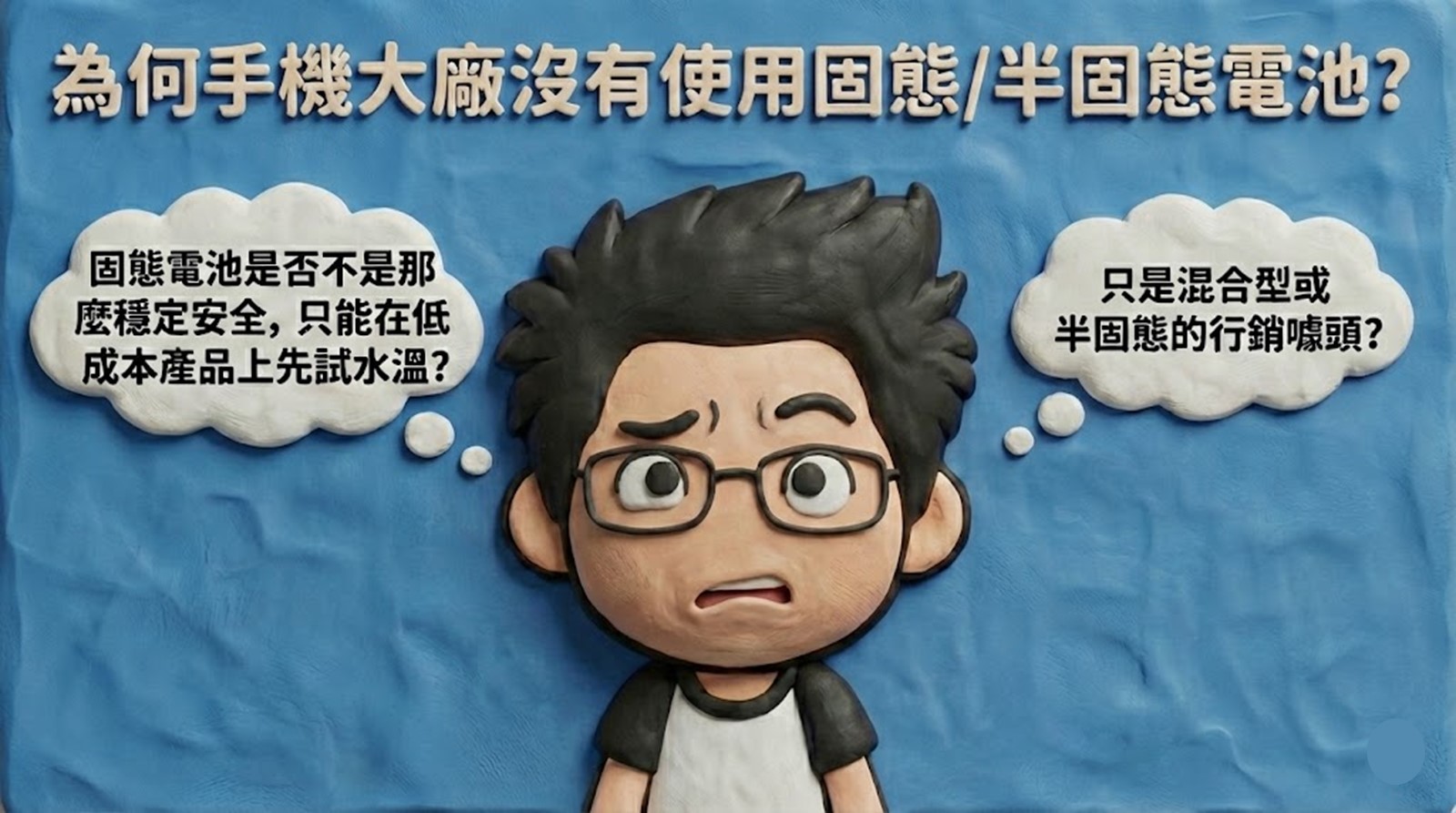
Due to the frequent spontaneous combustion accidents of power banks last year, power banks using solid-state/quasi-solid-state/semi-solid-state batteries have achieved impressive sales results, and new brands have been springing up recently. However, some netizens raised questions on the forum: “Why haven’t many major mobile phone manufacturers adopted it yet? It only appeared on some small brands of power banks?”, “Is the product not so stable and safe, and we can only test the water temperature on low-cost products? Or is it just a hybrid or semi-solid marketing gimmick?”…
Why don’t any mobile phones in the market use solid-state batteries/semi-solid-state batteries? Here’s an analysis:
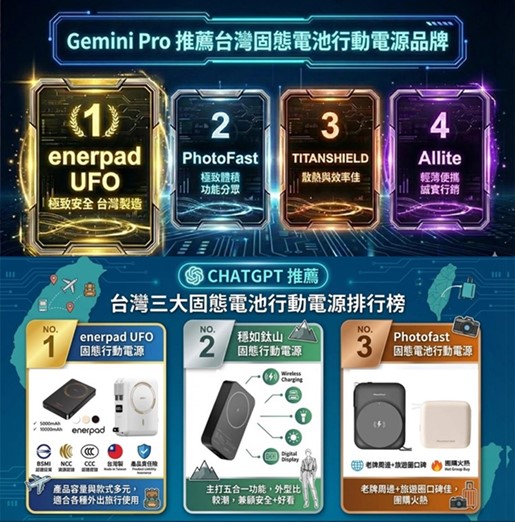
Last year, frequent reports of spontaneous combustion accidents of power banks made power banks that advertised their use of [solid-state/quasi-solid-state/semi-solid-state batteries] become popular in Taiwan and Japan. Emerging power bank brands such as enerpad UFO and PhotoFast… have achieved great sales results and have become popular.
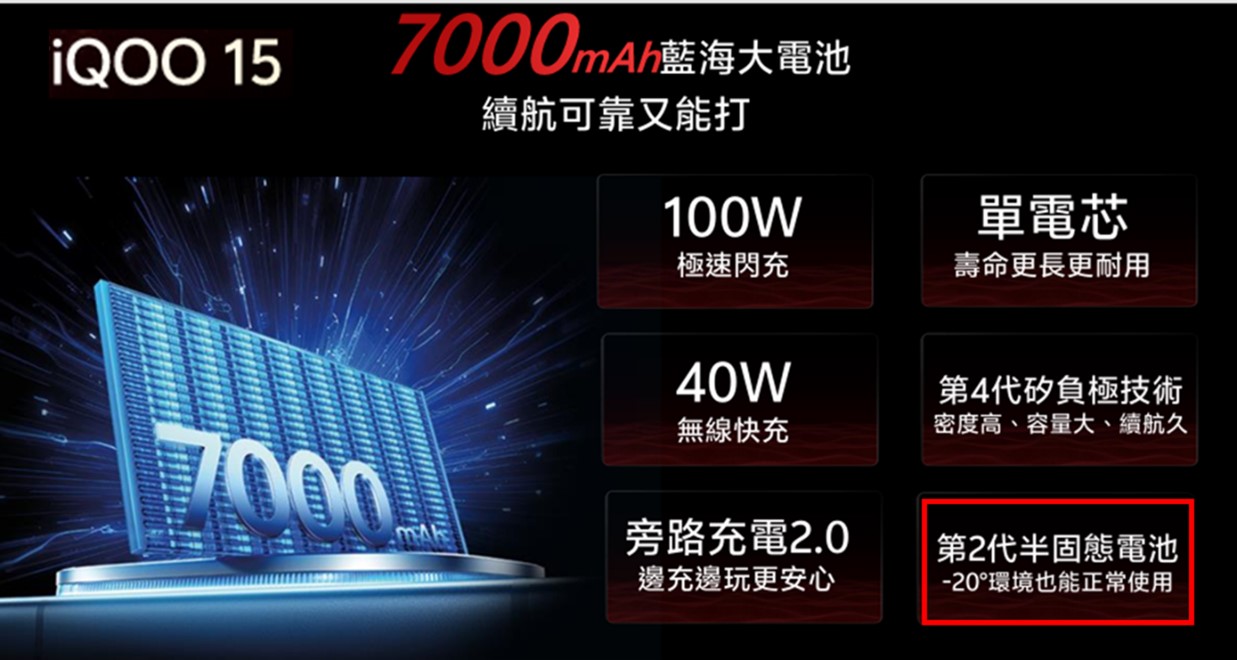
However, [solid-state/quasi-solid-state/semi-solid-state batteries] are mainly safer, have longer service life, and can withstand higher and lower temperatures, but are rarely used by major mobile phone manufacturers. Currently, only iQoo, the e-sports mobile phone brand under Vivo, advertises the use of “second-generation semi-solid-state batteries”, and the batteries should be classified as “Silicon-carbon Batteries”. The liquid ratio WT% may be more than 10%, which is still different from the “solid-state/quasi-solid-state battery” mobile power source advertised.
1.Why haven’t many major mobile phone manufacturers adopted it yet?, only appeared on some small brands of power banks?
Although some netizens have questioned whether [solid-state/quasi-solid/semi-solid-state batteries] are not so stable and safe, actual measurements based on various experiments show that although qualified [solid-state/quasi-solid-state batteries] cannot be 100% guaranteed not to spontaneously ignite and catch fire, they can indeed pass rigorous laboratory destruction tests, including heating to 130°C, short circuiting, squeezing, dropping and piercing with nails. No fire or explosion occurred, proving that the possibility of leakage and thermal runaway can be minimized.
The main reasons why major mobile phone manufacturers have not adopted [solid-state/quasi-solid-state/semi-solid-state batteries] to replace traditional liquid batteries in mobile phones are as follows:
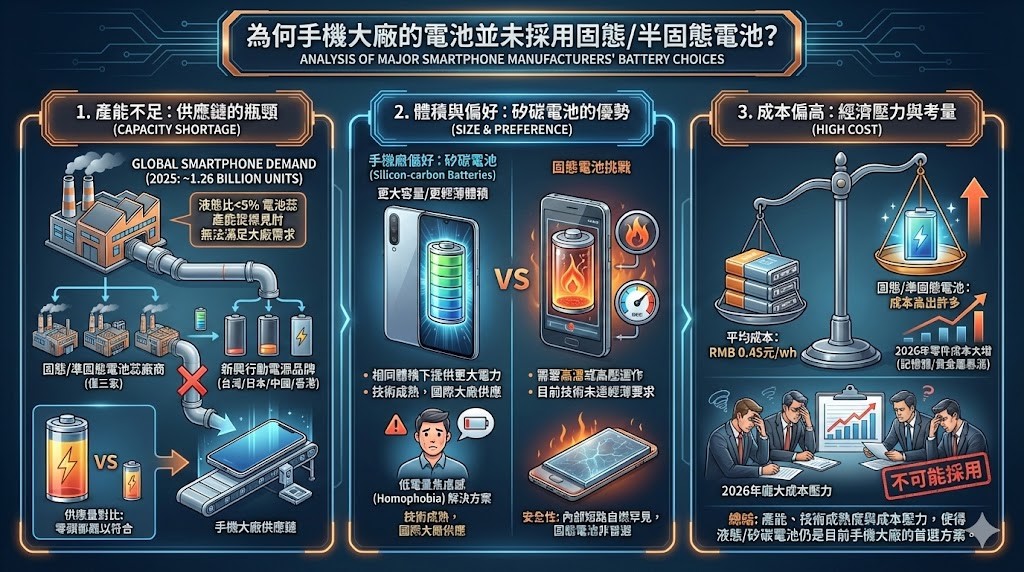
A.[Solid-state/quasi-solid-state batteries] Insufficient production capacity of manufacturers:
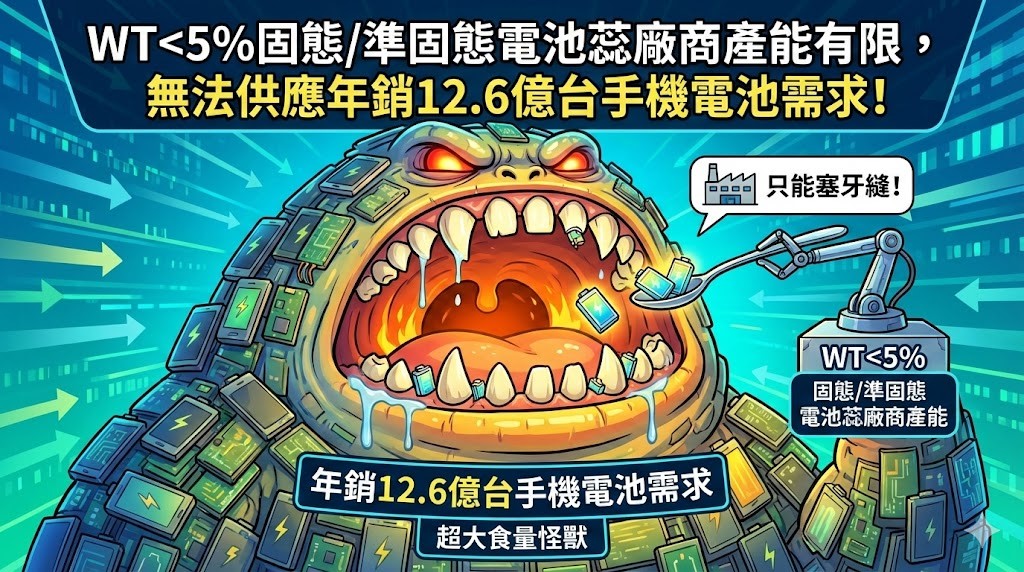
It is understood that there are currently only three battery cores that can produce [solid-state/quasi-solid-state batteries] with a liquid ratio of less than 5%, and these manufacturers are not large manufacturers. In the past, their production capacity could only be provided to several emerging mobile power supply brands in Taiwan and Japan. Due to the hot sales of the products, more mobile power supply manufacturers from China/Hong Kong/Taiwan have joined the sales, and the production capacity has been stretched. IDC estimates that the global smartphone market will ship approximately 1.26 billion units in 2025. The production capacity of [solid-state/quasi-solid-state battery cells] manufacturers cannot meet even a fraction of the lithium battery demand of major mobile phone manufacturers. Naturally, they will not become the supply chain choice of major mobile phone manufacturers!
B. The size of mobile phones is limited, and mobile phone manufacturers prefer to use large-capacity carbon silicon batteries:
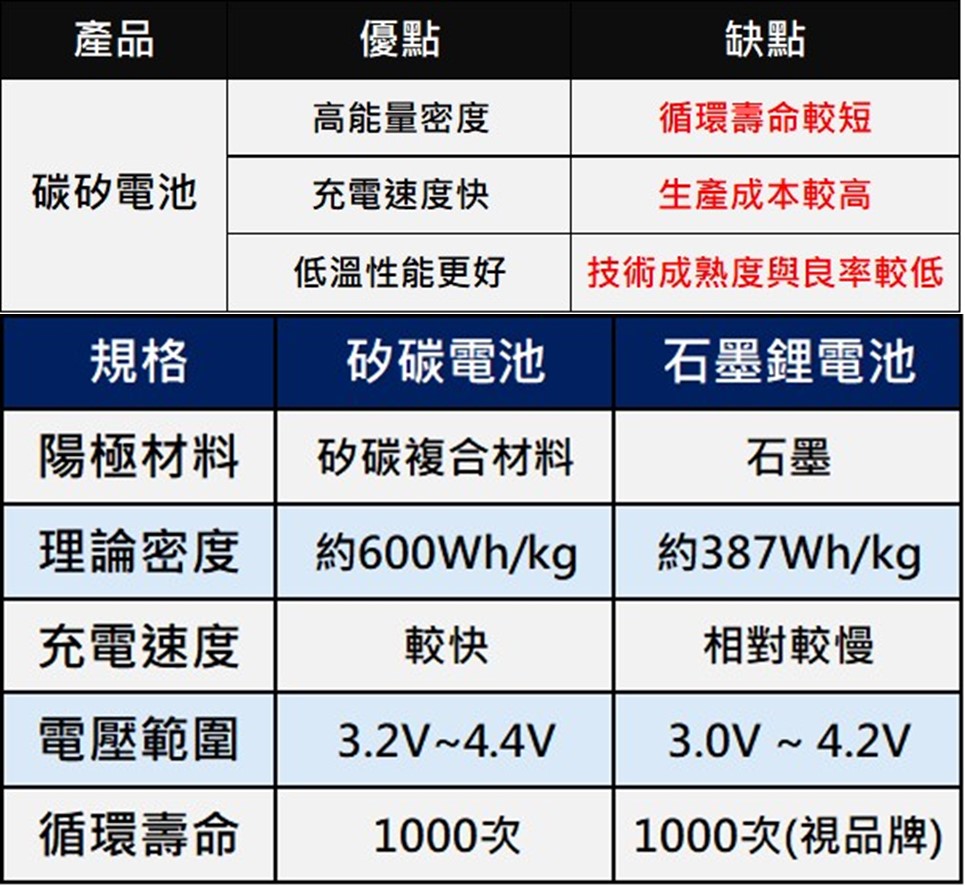
Solid electrolytes require high temperatures or high pressures to operate effectively, and current technology has not yet reached the requirements for thinness, lightness, and small size.Due to the common anxiety among mobile phone users about low battery power (Homophobia), due to the limited size of mobile phones, mobile phone manufacturers currently tend to use “Silicon-carbon Batteries” for new generation batteries that can provide greater power capacity in the same volume or provide thinner and smaller volumes with the same capacity. In addition, most of the battery core suppliers used by mobile phone manufacturers are major international manufacturers. It is very rare for large-scale internal short circuits to spontaneously ignite and catch fire. [Solid-state/quasi-solid-state batteries] that are advertised as having higher safety are difficult to become the first choice!
C.[Solid-state/quasi-solid-state batteries] The cost is relatively high:
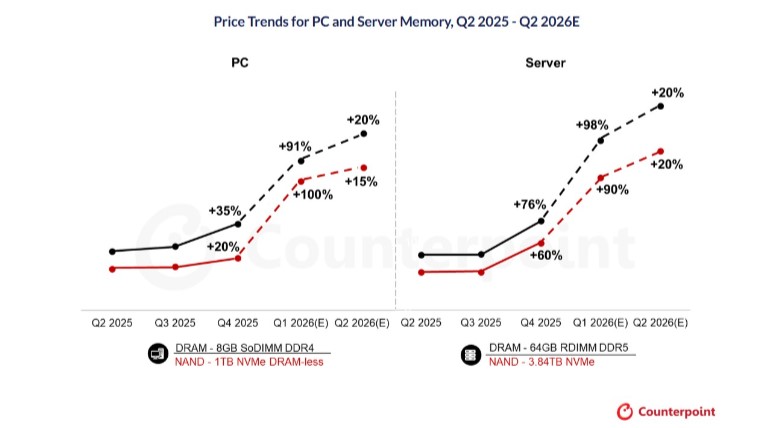
Currently qualified [solid-state/quasi-solid-state batteries] have not been mass-produced. Compared with traditional liquid lithium batteries, the average cost is only RMB 0.45/wh, which is still much higher! Due to the recent surge in global general-purpose memory and precious metals, the cost of major mobile phone parts has increased significantly. In 2026, mobile phone brands will face extremely huge cost pressures, and it is naturally impossible to use higher-cost [solid-state/quasi-solid-state batteries].
2. Major mobile phone manufacturers introduce all-solid-state and solid-state battery planning:
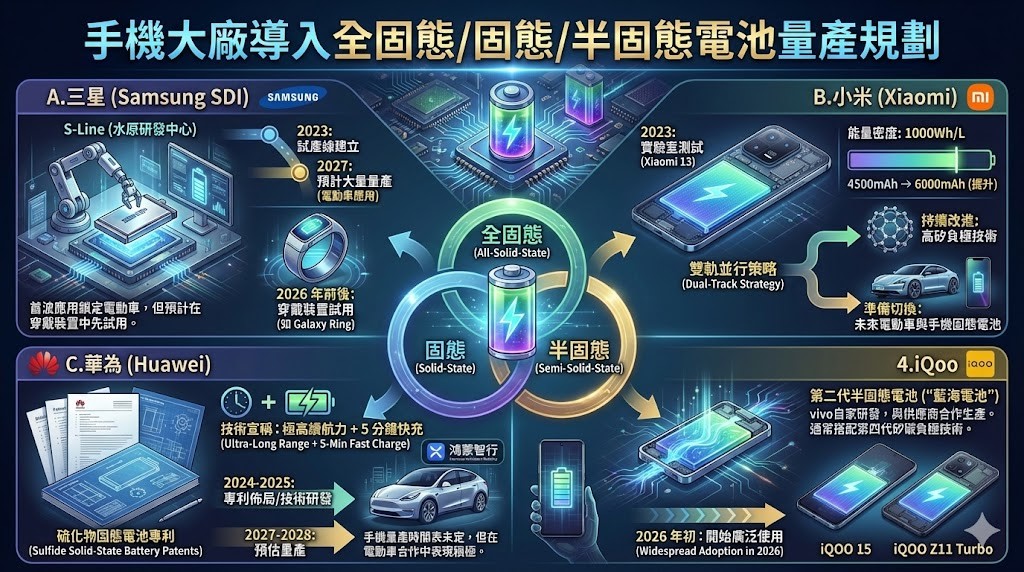
Although currently no major mobile phone manufacturers have used [solid-state/quasi-solid-state batteries] in mobile phones, based on All-Solid-State Battery, has become a globalTechnology giants and mobile phone manufacturers are competing on the main track for next-generation batteries. It is currently known that Samsung (Samsung SDI), Huawei (Huawei), and Xiaomi (Xiaomi) have plans to mass-produce solid-state batteries and introduce them into mobile phones or other devices in 2027. The summary is as follows:
A.Samsung SDI:
Samsung SDI has established an all-solid-state battery trial production line called “S-Line” at its Suwon R&D center in South Korea in 2023, and mass production is expected in 2027. Although the first wave of applications is targeted at electric vehicles, it is expected that solid-state batteries may be trialled in wearable devices such as the Galaxy Ring around 2026.
B. Xiaomi:
In 2023, Xiaomi implanted solid-state battery technology into Xiaomi 13 for testing in the laboratory. The energy density reached 1000Wh/L, which can increase the battery capacity from 4500mAh to 6000mAh.
Xiaomi’s current strategy tends to be two-track: continuous improvement of “high silicon anode” technology, while preparing for future solid-state battery switching for electric vehicles and mobile phones.
C.Huawei:
Huawei applied for a number of sulfide solid-state battery patents from the end of 2024 to 2025. The technology claims to achieve extremely high endurance and 5-minute fast charging, and is expected to be mass-produced in 2027-2028.
However, this product is still in the technology research and development and patent layout stage, and a specific timetable for mass production of mobile phone models has not yet been given. However, it has shown positive performance in cooperation with electric vehicle brands (such as Hongmeng Smart).
4.iQoo:
Currently, major mobile phone manufacturers advertise the use of semi-solid-state batteries for iQoo, a product of vivo. iQoo’s second-generation semi-solid-state battery (usually equipped with fourth-generation silicon carbon anode technology, known as “Blue Ocean Battery”) is claimed to be developed by vivo itself and produced in cooperation with suppliers. This battery is mainly used in models such as iQOO 15 and iQOO Z11 Turbo, and will be widely used in early 2026.
Source: KOCPC Chinese