


Google recently announced the launch of a new security tool designed to help users who have suffered from Non-Consensual Intimate Imagery (NCII) protect their rights more quickly and effectively. This tool helps people who accidentally see nudity or sexually suggestive images of themselves in Google search results take immediate action to stop the image from spreading online and request that the content be removed from search results.

Google launches new tool to remove non-consensually explicit photos from search
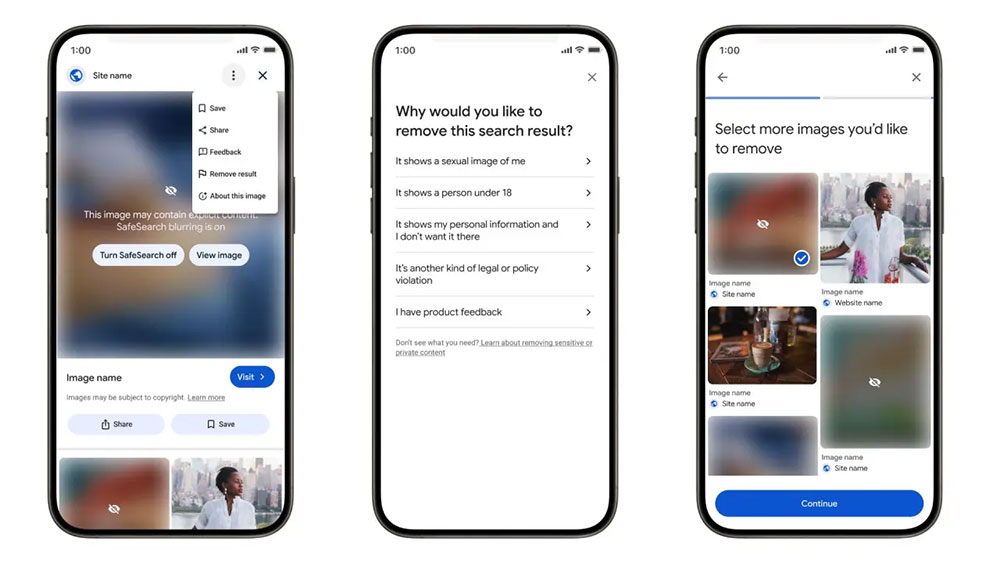
It’s quite intuitive to use. When you see an inappropriate image of yourself in a search result, just click on the three dots in the upper right corner of the image, select “Remove results” from the menu, and then click “Show me sexually suggestive images.” You will be directed to fill out a form providing the necessary details. It is worth mentioning that this tool supports the submission of multiple pictures at one time, so that victims do not have to report each picture one by one, greatly reducing the psychological burden and time cost when handling NCII incidents.
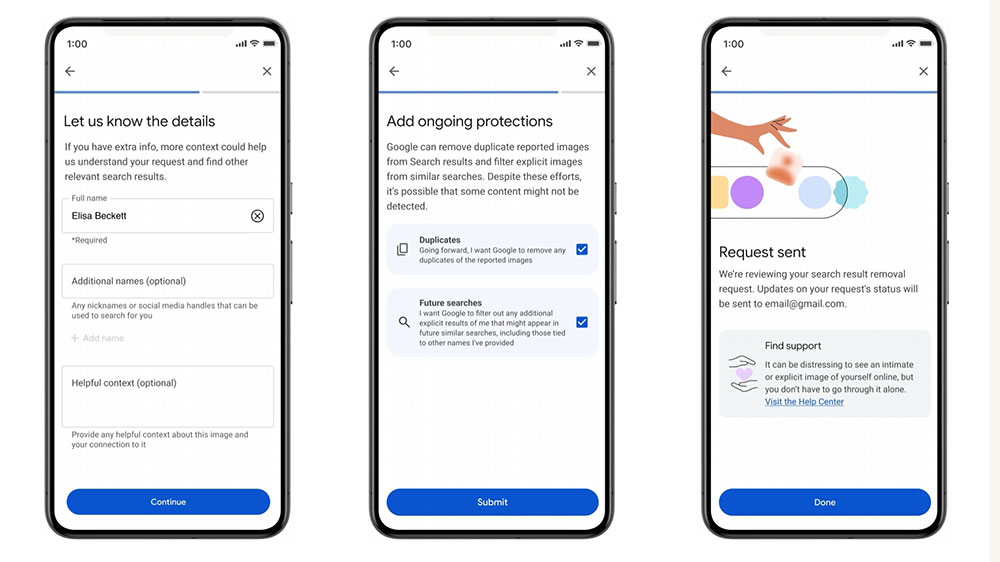
In addition to removal requests, Google also provides additional selective protection measures. Users can enable stricter filtering to avoid seeing potentially explicit images of themselves in search results. These images may be private photos uploaded without consent, maliciously manipulated images, or even deepfake content generated using AI technology. With the popularity of generative AI, the risk of such fake images is increasing day by day, so Google emphasizes that one of the purposes of this tool is to provide stronger protection in an environment where technology is rapidly evolving.
After submitting a removal request, Google will notify the user of the progress via email so that the victim can keep track of the status of the case. If Google determines that an image violates its Personal Content Policy, it will remove it from search results. It is worth noting that the person making the request does not have to be the subject of the image himself. As long as he is the subject in the image or his legal representative, he can apply on his behalf. All requests submitted can also be centrally managed in the “Results About You” center for easy tracking.

Google isOfficial blogZhong expressed the hope that this new removal process will reduce the stress experienced by NCII victims so that they will no longer be alone when facing secondary victimization online. The company also revealed that this tool is currently available in most countries and plans to expand to more regions in the near future.
This new feature is not starting from scratch, but building on the security and privacy protections Google has continued to strengthen over the past few years. Last year, Google partnered with StopNCII.org to use image hashing technology to create a unique digital fingerprint for NCII content, helping the platform more quickly identify and prevent the same or similar images from appearing again. In addition, Google has also adjusted its search algorithm to reduce the exposure of this type of content in search results to prevent victims from experiencing trauma again in their daily searches.
Overall, the new tool is emblematic of tech companies taking a more proactive approach to confronting sexual violence and image abuse online. Although it cannot directly remove the image from the original website, it can at least give the victim more control and block the spread of the image at the search level. As the online environment becomes increasingly complex, the importance of such protective measures will continue to increase.
Source: KOCPC Chinese