


I never thought that by the end of 2026, there would still be so many cases of NVIDIA graphics card power connectors burning out—and no longer just on high-end RTX 5090s; even RTX 5060 Ti owners have run into it. Foreign media outlet VideoCardz recently compiled cases of damaged power connectors and power cables on NVIDIA GeForce graphics cards from the first two weeks of November, and unexpectedly, the number has already reached more than 10. The list includes not only high-power flagship cards like the RTX 5090 and RTX 5080, but even the mid-range RTX 5070, with a rated power of only 250W, has two cases. Earlier, there was another case: the subject became the RTX 5060 Ti, with a TGP of only 180W, and what burned was not a 16-pin connector but the traditional 8-pin connector that has been used for more than a decade.
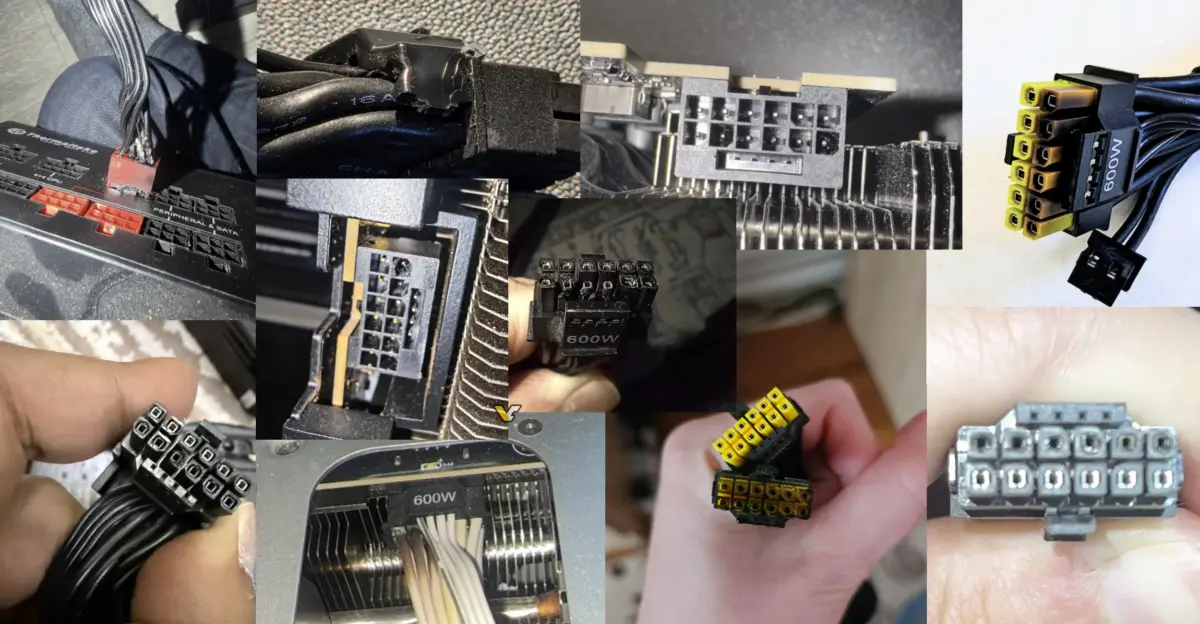
Image source: VideoCardz
November isn’t even half over, and there have already been more than 10 burn cases! NVIDIA graphics card power connector melting cases now include even the RTX 5070 and the 180W RTX 5060 Ti.
VideoCardz This data mainly compiles shares from the X account UNIKO’s Hardware. UNIKO’s Hardware has long been collecting cases of damaged graphics card power connectors on Reddit, Chinese forums, and other communities. VideoCardz looked through recent posts and found that in just over two weeks of November, more than 10 reports had accumulated, spanning both the RTX 40 and RTX 50 generations.
The damaged locations in these cases differ somewhat: in some, the socket on the graphics card side burned out; in others, the power adapter cable melted; and in several cases, the problem occurred on the power supply side. In mild cases, the contacts were discolored or locally scorched; in severe cases, the entire connector had already deformed. The summary is as follows:
| Graphics card model | Rated power consumption | Status Report |
|---|---|---|
| RTX 5090 D | 575W | Chinese Weibo users report signs of melting on both the power cable and the graphics card socket. |
| RTX 4090 (starting at 4) | 450W | Some players only discovered the power cable was overheating after smelling burning plastic; in other cases, an NVIDIA original adapter cable was damaged, and users on Taiwanese forums and Facebook reported deformed connectors. |
| RTX 5080 | 360W | Both the power cable and the connector on the graphics card are damaged. |
| RTX 5070 Ti | 300W | An MSI power adapter cable burned out; in a separate incident, the modular connector on the Thermaltake Toughpower Grand power supply was damaged. |
| RTX 5070 (from 2) | 250W | One gamer experienced a black screen and unexpected restarts; upon inspection, they found the adapter cable had melted. Another ASUS Dual model also showed similar issues, and because the retailer couldn’t provide a replacement, it issued a direct refund. |
| Model not specified (from 3 onwards) | - | The 12VHPWR power cable is deformed near the cable, the 600W connector on the be quiet! power supply is damaged, and the GIGABYTE graphics card socket is damaged. |
VideoCardz specifically highlighted two cases involving the RTX 5070, because this card’s rated power is only 250W, less than half that of the RTX 5090. These photos only prove that “it’s not just the highest-end cards that can run into problems,” so they can’t be used to estimate how high the failure rate is.
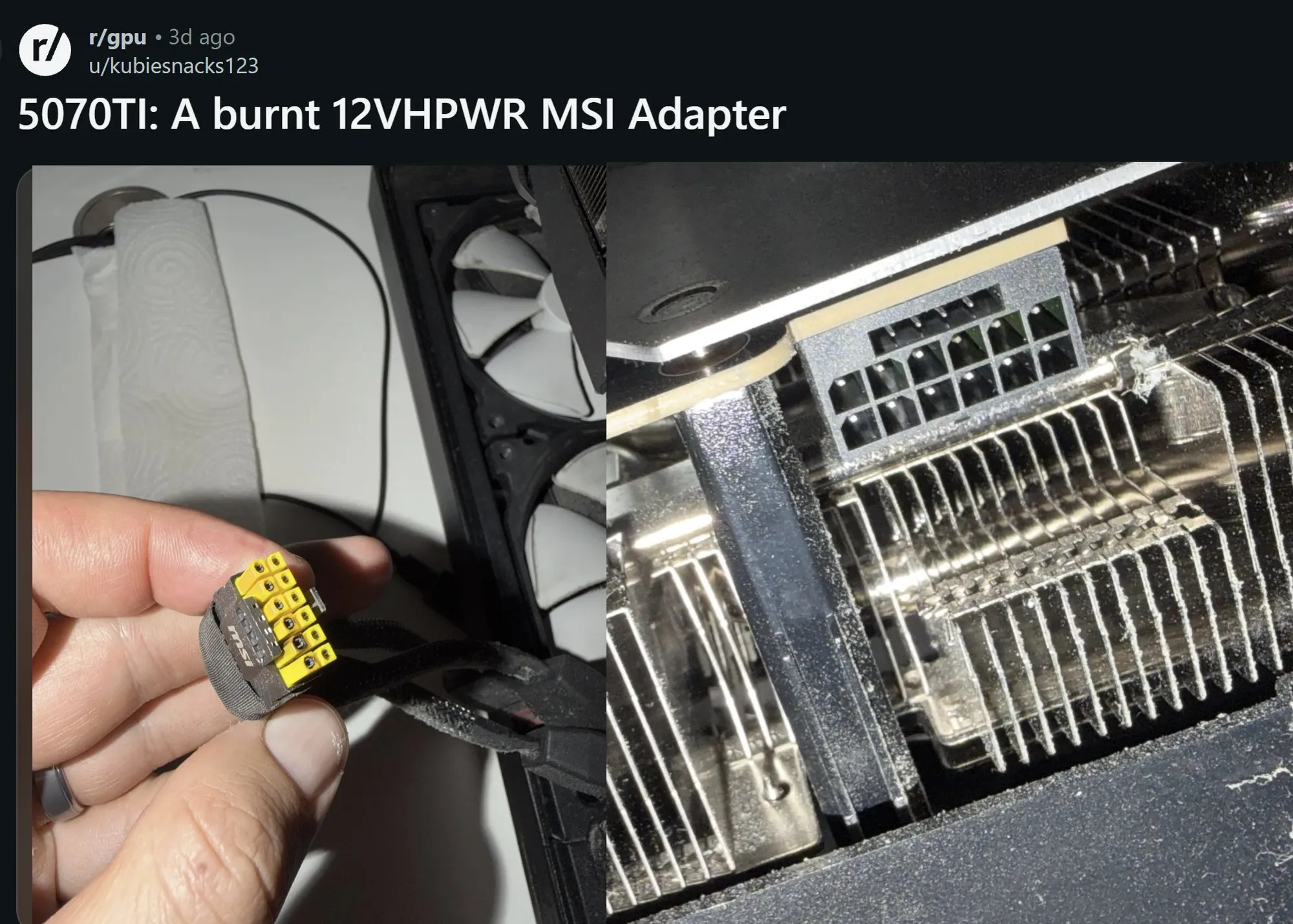
Image source: VideoCardz
Earlier on Reddit, there was another case: a user named JudicialMuscle shared that his GALAX RTX 5060 Ti 16GB suddenly had no display one day. Following the troubleshooting steps ChatGPT gave him, he removed the graphics card to check it and only then discovered that the power cable connector had already burned.
From the photos, it’s not just the power cable that’s damaged—the socket on the graphics card also shows signs of burning, and there’s charred residue left inside the connector. This computer uses an Ant eSports 750W power supply; for a 180W graphics card, the wattage is more than sufficient:
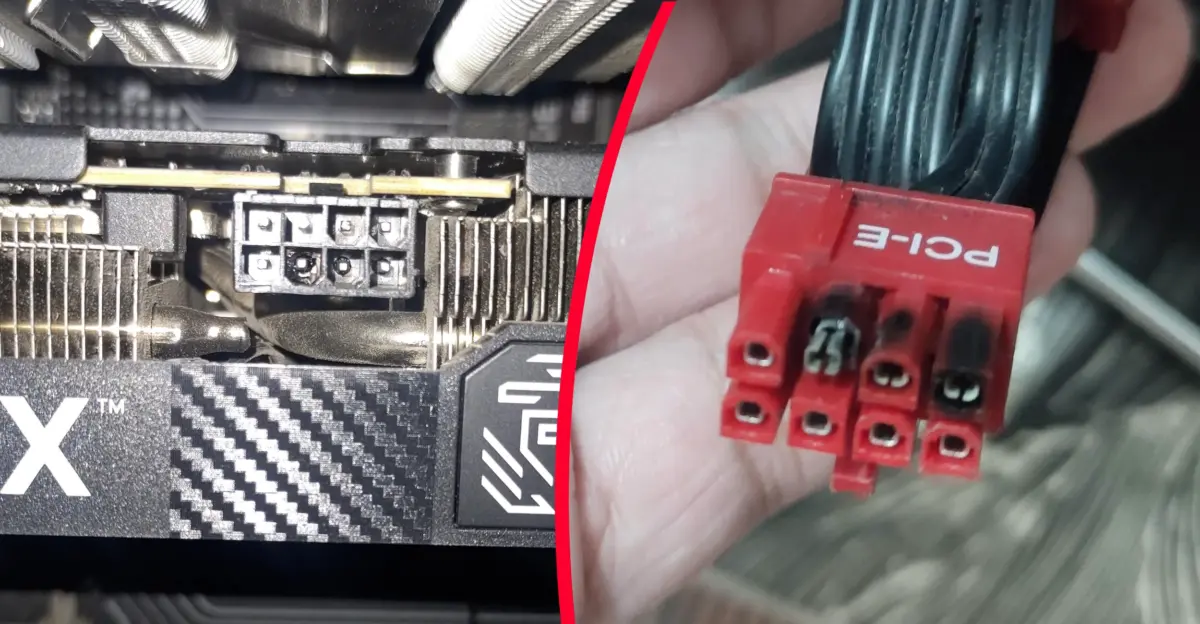
Image source: JudicialMuscle via VideoCardz
What makes this case particularly unusual is that the RTX 5060 Ti draws power from just a single traditional PCIe 8-pin connector, unlike the 16-pin connector that has been repeatedly called out over the past two years. The 8-pin has been regarded as one of the most stable power specifications for over a decade, so this kind of melting is genuinely very rare.
As for the cause, there is still no definitive conclusion. In the Reddit comments, some suspect poor contact or a defect in the cable itself, while others judged from the photos that the connector may not have been fully plugged into the GPU socket. The person involved said they are considering contacting GALAX to file a warranty claim.
So it’s not just high-power graphics cards that can melt—even if you’re using a mid- to low-end graphics card, you still need to be especially careful. Be sure to pay attention to the following key points:
- The connector must be plugged in all the way: listen for or feel a “click” as the latch engages, and there must be no gap between the connector and the socket. After plugging it in, gently pull on both ends to confirm it will not come loose.
- Don’t let cables bend excessively near the connector: if the case is too narrow or the side panel presses directly on the power cable, the connector can be forced to skew, causing poor contact.
- Use original or explicitly compatible cables: prioritize the original cables included with the power supply, or the adapter cable included with the graphics card. Modular cables from different brands—or even different models of the same brand—may have different pinouts, so never mix them.
- Shut down immediately if something goes wrong: if you encounter an unexpected black screen, automatic restart, or smell burning plastic, shut it down and unplug the power first, then check whether the connector has discolored.
- If it has already melted, do not power it on again: once a connector shows signs of melting, do not continue powering it on for testing, and do not just replace the cable with a new one and keep using it, because the socket itself may also be damaged; have it inspected by the original manufacturer or a professional.
Source: KOCPC Chinese