


With the recent decline in the stock market, more and more AI bubble theories have come out. For computer players, you may want to say that the wait has finally come? Will memory prices return to normal prices? The answer may not be what everyone expects. Recently, the chairman of ADATA said that memory shortages may continue for another 10 years. It is too early to talk about an AI bubble now, and we will have to wait until at least 2030, or even 2040 or 2050.
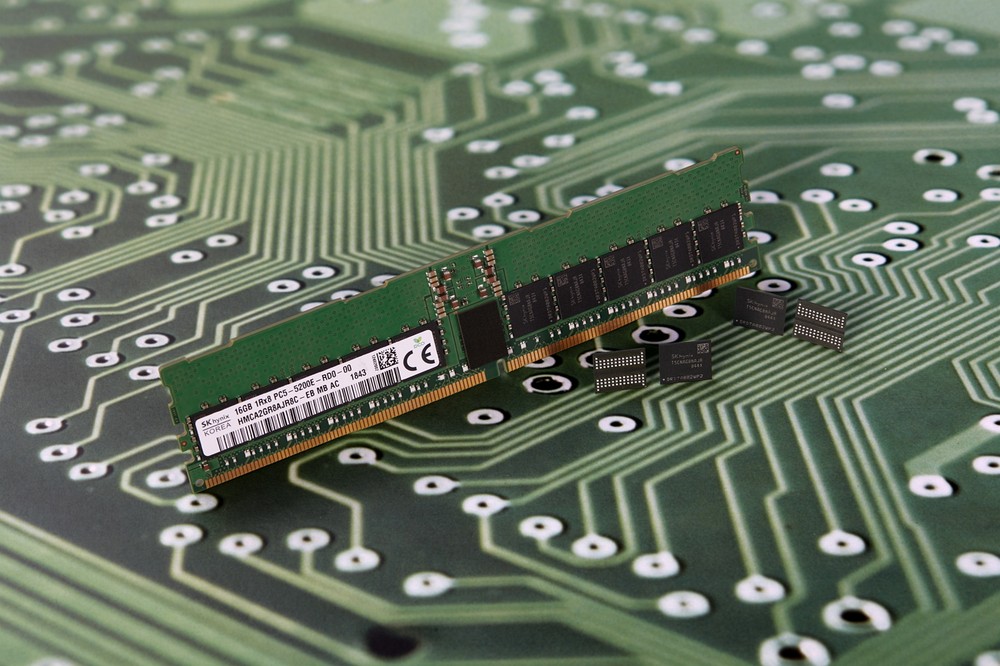
Image source: SK hynix via Wccftech
Chairman ADATA warns that memory will be in short supply for another 10 years, and electricity and memory will become the scarcest resources in the AI era
according toBusiness TimesAccording to reports, the stock price fluctuations after the release of TSMC’s financial report once again triggered market concerns about overheated investment in AI, oversupply of computing power, and the possible bursting of the bubble. Faced with related issues, Chen Libai directly stated that it is too early to talk about an AI bubble now. We can wait until after 2030 to discuss whether a bubble will appear in 2040 or 2050.
One of the reasons why the market is once again worried about excess AI computing power is that cloud and AI companies such as Meta and xAI have begun leasing some of their underused computing resources to other companies. On the surface, since businesses have excess computing power that can be rented out, it seems that the large investments they have made are beginning to exceed actual demand.
For this reason, Chen Libai believes that this does not mean that the demand for AI is cooling down. The current AI computing power is mainly concentrated in large-scale model training and cloud services, and the application will further expand to different business models such as B2B, B2C, B2G and B2B2C. To put it simply, AI will not only stay in data centers to train models, but will enter enterprise customer service, search, software development, video generation, government services, and personal devices.
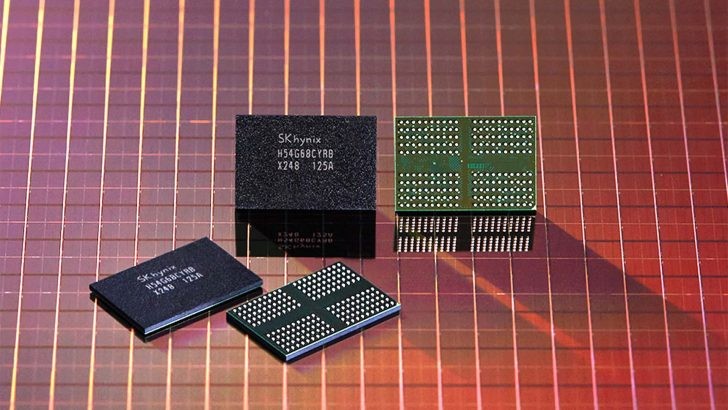
Image source: SK hynix via Wccftech
Training large models is just a phase, but when AI services become truly popular, new inference needs will arise every time you search, generate content, or hand over to an AI agent to perform a task. The more users there are and the longer content the model can process at one time, the more GPU, memory, storage space and power required will increase. Chen Libai believes that the demand seen now is just the beginning, and the excess computing power on the hands of cloud operators will not last long.
He further pointed out that the world’s most scarce resources in the next 10 years will be electricity and memory. These two resources happen to be the key to the continued expansion of the AI data center: the GPU is responsible for calculations, but without enough memory to continuously feed data, no matter how fast the chip is, it cannot achieve full performance. The chips and servers are ready. If the data center does not receive enough power, it will not be able to start up and operate.
Memory prices have been rising, and many people are thinking: “Wouldn’t Samsung, SK Hynix, and Micron build more factories?” The problem is that wafer fabs cannot be shipped in large quantities immediately after building the factory.
It often takes several years from land and factory construction, clean room completion, equipment installation, trial production, yield improvement to customer verification. According to various public factory construction and production line expansion plans, most of the timetables fall between 2028 and 2035, and there are still variables whether the plans can be completed as scheduled and whether the equipment and power can be in place as scheduled.
In addition, memory manufacturers are also cautious about expanding production. This industry has always had an obvious boom cycle in the past. Once all manufacturers expand production capacity at the same time, a slight drop in demand may turn into excess inventory and a sharp drop in prices. Therefore, for original manufacturers, maintaining a balance between supply and demand and making profits is more important than simply pursuing the highest output. Chen Libai believes that Samsung, SK Hynix and Micron all know the risks of large-scale production expansion, so they will adopt a relatively rational and conservative strategy and will not increase production capacity without restrictions just because of an immediate shortage.
The report also mentioned that ADATA believes that DRAM contract prices are expected to increase by 20% to 30% in the third quarter, and NAND Flash will increase by 35% to 40%. That’s optimistic, and other forecasts have suggested that some products could rise more than 50%. Of course, this doesn’t mean that all DRAM, NAND, or every quarter will have a fixed 50% increase. Different products, capacities, customer contracts and spot markets will have different prices.
As for whether prices can return to pre-shortage levels, no original manufacturer can currently guarantee.
Source: KOCPC Chinese