


In the past, Taiwan’s 5G was still mainly NSA (Non-Standalone), and some users often criticized it as fake 5G. As telecom operators continue to build SA (Standalone) networks, and Apple recently released the iOS 27.3 Beta 1 beta in November 2026 that supports 5G SA, Chunghwa Telecom’s directly operated stores officially began on November 9 allowing designated 5G users to replace their cards with new physical SIM cards and eSIMs that support 5G SA and SUCI (Subscription Concealed Identifier), so they can experience the high-speed thrill of “true 5G.”
What are True 5G (5G SA) and SUCI? What are the rules for Chunghwa Telecom users upgrading to a 5G SA card? Should you switch to a 5G SA card? Will the widespread adoption of 5G SA make a noticeable difference? Below is a summary and explanation:
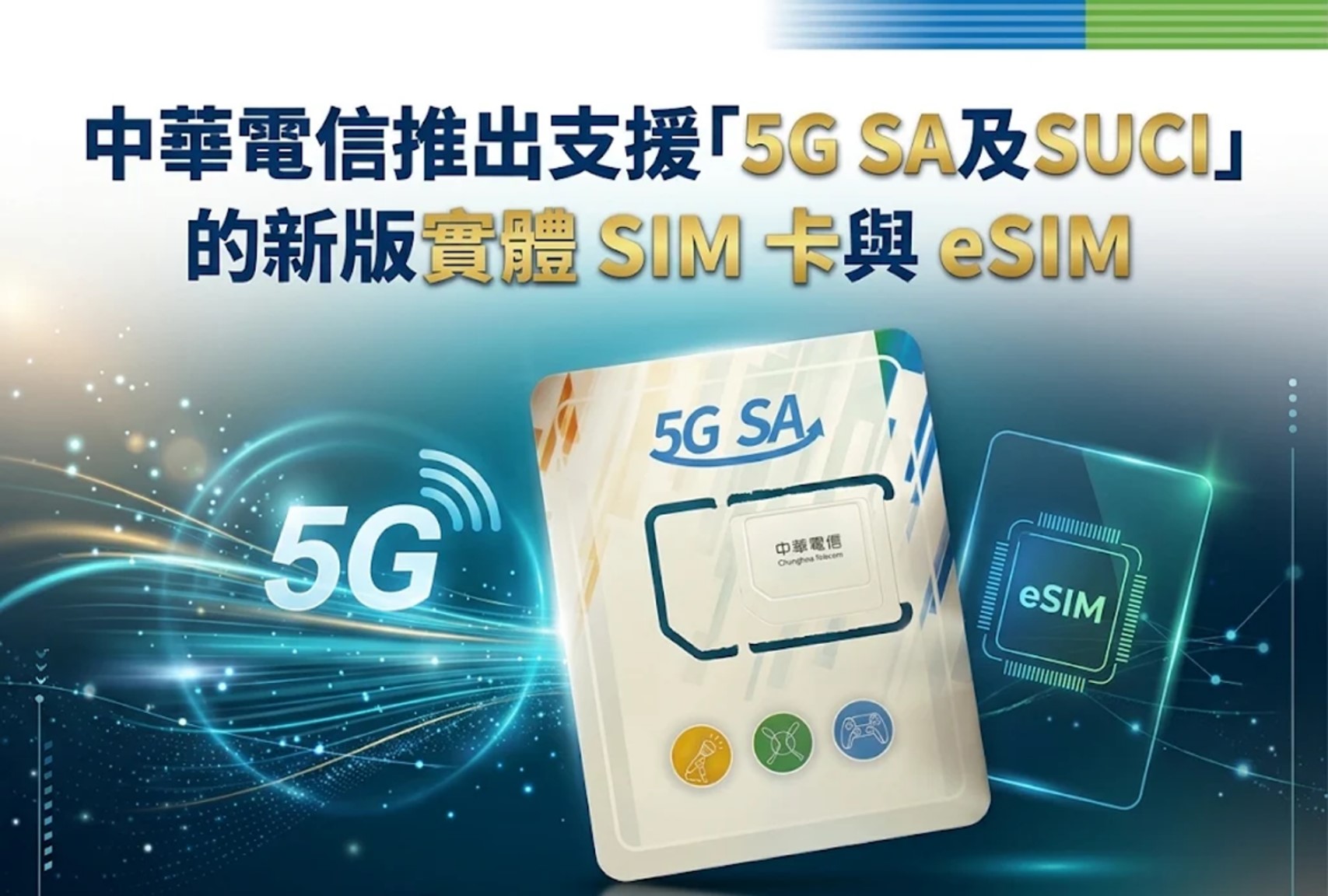
Chunghwa Telecom officially announced on November 9, 2026 that users can apply for 5G SA SIM card replacement, marking Taiwan’s official move into the first year of “true 5G.” Below is a summary video and detailed explanation of Chunghwa Telecom’s 5G SA SIM replacement guide:
1. What are true 5G (5G SA) and SUCI?
A. True 5G (5G SA):
“5G SA (Standalone, independent networking)” refers to a 5G network architecture in which both the mobile network base stations and the core network are built entirely with pure 5G technology, with no reliance at all on 4G LTE infrastructure.
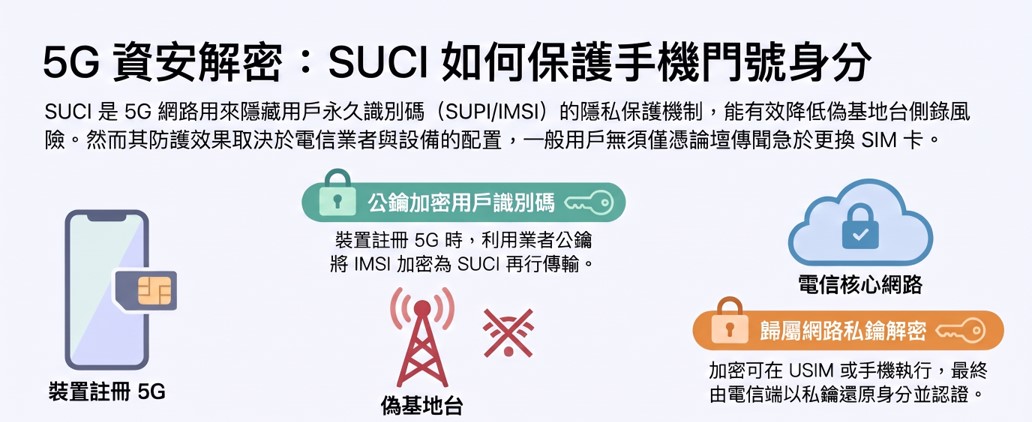
To roll out 5G services quickly without tearing down and rebuilding their 4G base stations and core networks, Taiwanese telecom operators previously adopted a 5G NSA (Non-Standalone) architecture for their 5G networks, directly adding 5G base stations on top of the existing 4G infrastructure. When a phone connects, it is simultaneously attached to both 4G and 5G signals, so network quality often suffers considerably.After mobile networks upgrade to 5G SA, everything from the radio base stations to the backend core network is 100% pure 5G dedicated equipment, enabling the network to gain advantages such as ultra-low latency (URLLC), fast uploads, lower power consumption and better connectivity, and support for network slicing (Network Slicing).., and it is dubbed “true 5G” by outsiders.
Because building a nationwide 5G core network is extremely costly, current signal coverage is limited, and users must replace their SIM cards with 5G SA-compatible SIM cards and face specific hardware and system upgrade restrictions, Taiwan’s three major telecom operators were very slow to deploy 5G SA networks in the past. With policy subsidies from the Ministry of Digital Affairs, the three major telecom operators have accelerated 5G SA network construction starting this year. Chunghwa Telecom was the first to announce a target of more than 50% population coverage by the end of 2026, and on November 9, 2026, it announced new physical SIM cards and eSIMs supporting 5G SA and SUCI (Subscription Concealed Identifier), allowing designated Chunghwa Telecom 5G users to experience the high-speed thrill of “true 5G.”
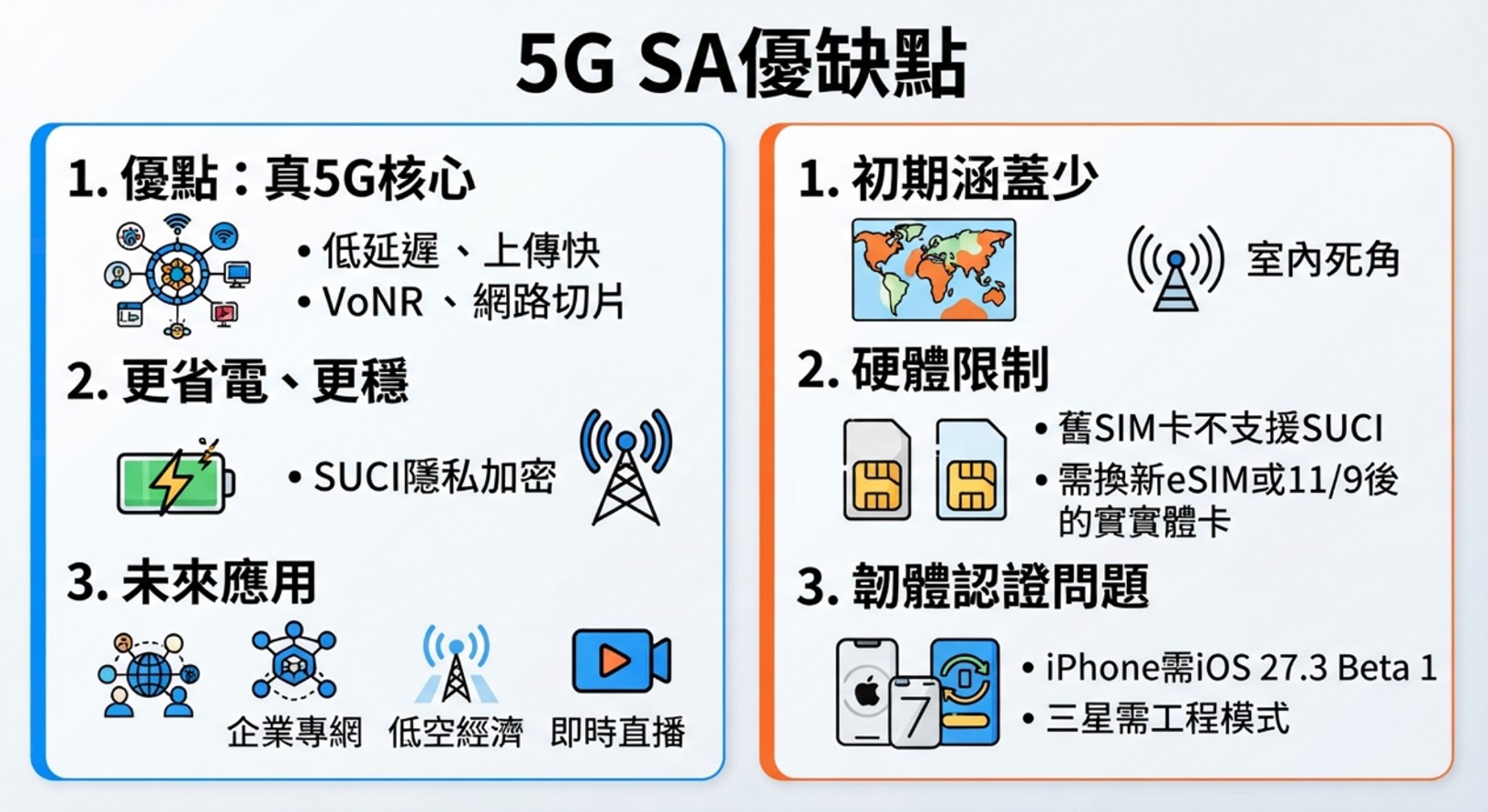
In coordination with the Ministry of Digital Affairs’ launch in 2027 of “SA Network Construction Incentive Program(providing a subsidy of up to NT$38.15 million per company per year for frequency fee discounts, with a total maximum of NT$114 million)Taiwan’s three major telecom operators are going all out to promote the 5G SA standalone architecture. Chunghwa Telecom plans to launch mobile SA services by the end of 2026 and has already installed base stations in several key areas. Taiwan Mobile estimates that SA network coverage will exceed 80% in the same year and is continuing to expand related testing and deployment. Far EasTone Telecommunications expects to gradually implement some SA functions by the end of this year and plans to officially launch full services next year.
Since there are very few initial 5G SA users and they are not constrained by 4G networks, mobile speeds are much faster than those of 5G NSA users. Many early adopters are currently showing off download speeds exceeding 500 Mbps or even above 1 Gbps.
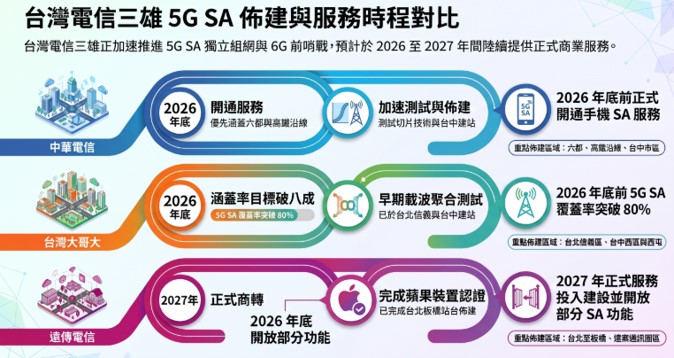
B. “SUCI” (Subscription Concealed Identifier) technology:
“SUCI” (Subscription Concealed Identifier) It is a key mechanism technology used by SIM cards in 5G networks for privacy protection. It puts a “high-tech cryptographic lock” on the phone’s identity, encrypting data at the very start of the connection, so even if the signal is intercepted in the air, hackers cannot decode it at all or read the user’s real mobile number identity. This technology can fully encrypt the phone’s “digital ID,” greatly reducing the risk of people’s phones being targeted, tracked, or eavesdropped on due to “fake base stations,” building a stronger firewall for the privacy and security of mobile users across Taiwan.
Why is it necessary to replace the SIM or eSIM when upgrading to a 5G SA network?
In the 4G and 5G NSA (Non-Standalone) era, when a SIM card sends its identity identifier (IMSI) to the base station, it uses plaintext (unencrypted) transmission. To fully address the issue of user privacy identity credentials, the new 5G SA standard introduced the SUCI mechanism, but such a SIM must have hardware-level computing, encryption, and dynamic update capabilities. The chips and algorithms of older 4G/5G SIM cards cannot support this at all, so they must be replaced with physical SIM cards or eSIMs upgraded to support 5G SA and SUCI.
Why is there a fee for replacing the SIM card when upgrading to a 5G SA network?
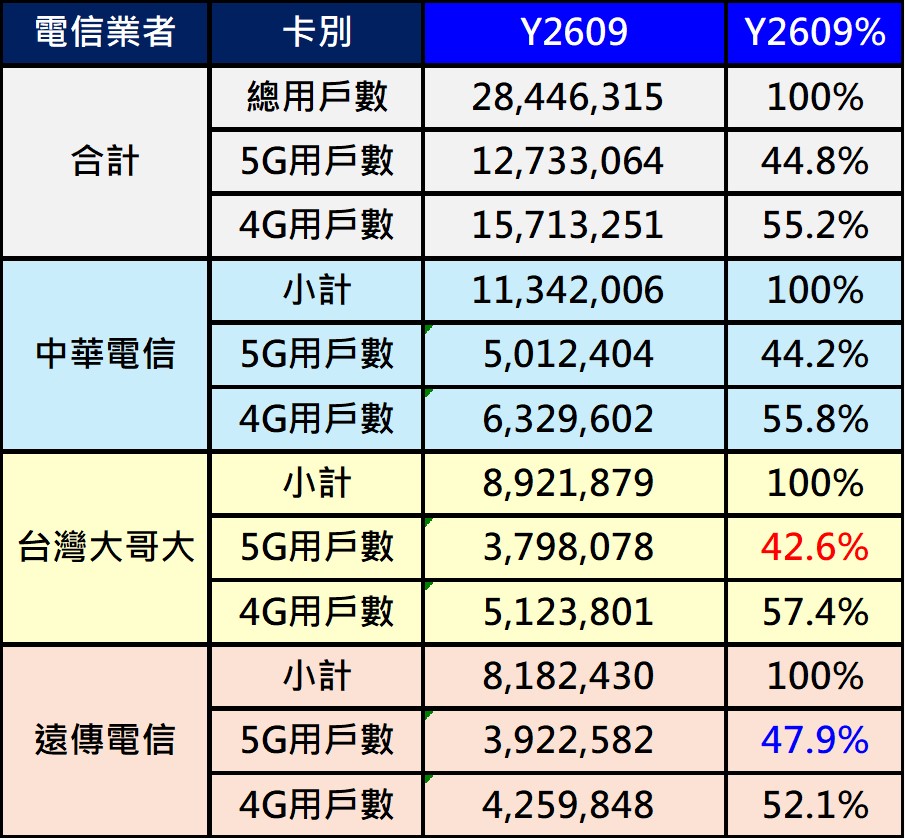
According to the latest Taiwan 5G subscriber figures published by the NCC (2026/09), Taiwan currently has 12.733 million 5G subscribers (44.8% of all subscribers). Of these, Chunghwa Telecom has 5.012 million 5G subscribers (44.2% of its total subscribers), Far EasTone Telecommunications has 3.923 million 5G subscribers (47.9% of its total subscribers), and Taiwan Mobile has 3.792 million 5G subscribers (42.6% of its total subscribers). Fully replacing all SIMs with 5G SA SIMs will be a time-consuming and labor-intensive major project.
Because the NCC has quite strict KYC review requirements for users’ SIM card replacements, and considering operating costs and the cost of new-version SIM cards, Chunghwa Telecom currently only allows 5G users to replace their cards for a fee at directly operated stores (free only under specific conditions), while Far EasTone and Taiwan Mobile remain quiet due to their slower 5G SA deployment. Barring any surprises, the author believes the big three telecoms will subsequently gradually adopt physical SIM cards or eSIM activation supporting 5G SA and SUCI only for users on 5G renewal/new subscription/number porting plans (regardless of channel), while existing users still within contract will still have to go to directly operated or authorized franchise stores and pay to upgrade!
2. What are the rules for Chunghwa Telecom users upgrading to a 5G SA card?
A. Card replacement channels and card replacement guidelines:
Starting November 9, 2026, Chunghwa Telecom subscribers can visit any of its directly operated stores across Taiwan to apply to replace their physical SIM card or eSIM with one that supports 5G SA and SUCI. According to online user feedback, 4G plan subscribers cannot request a card replacement, while 5G users can apply regardless of rate plan (but some stores only accept applications from users on plans of 1,399 or above).
When applying, remember to bring two forms of personal ID (such as your ID card, NHI card, or driver’s license), your original SIM card, and your phone. The original SIM needs to be removed and handed to the counter staff to scan together with your ID (if the original SIM is lost, you need to fill out a lost-item self-declaration). After the original SIM card is scanned, it will be returned to you to keep, or you can give it to the counter staff to discard directly.
B. Eligibility for a free replacement card:
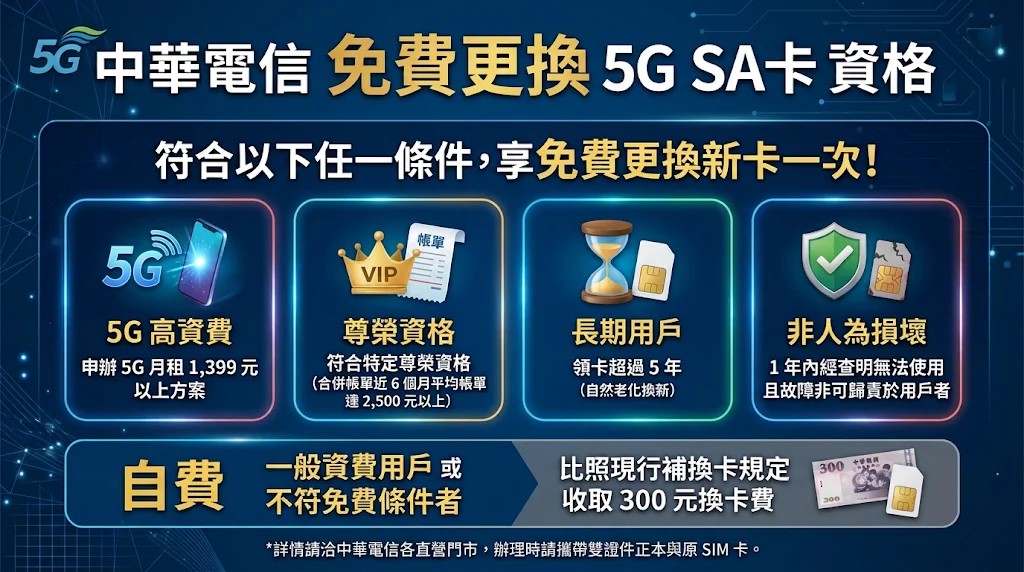
For card replacement fees, users who subscribe to a 5G monthly plan of NT$1,399 or more, meet specific premium eligibility criteria (average consolidated bill over the past six months of NT$2,500 or more), have held their card for more than 5 years, or are verified within 1 year to be unable to use the card due to a malfunction not attributable to the user are all eligible for one free new card replacement. General-rate users or those who do not meet the free conditions will be charged a NT$300 card replacement fee in accordance with current card replacement regulations.
C. Supports 5G SA phones:
a.iPhone:
Apple iPhone users must upgrade to the iOS 27.3 Beta update before they can officially activate and enjoy this cybersecurity protection. Currently, the hardware that already supports it includes the iPhone 18 Pro series and iPhone Duo. After upgrading to the official iOS 27.3 release, it is expected that the iPhone 14 series (including iPhone 14 / Plus / Pro / Pro Max) and newer iPhone models will support 5G SA and SUCI technology.
b. Android phone:
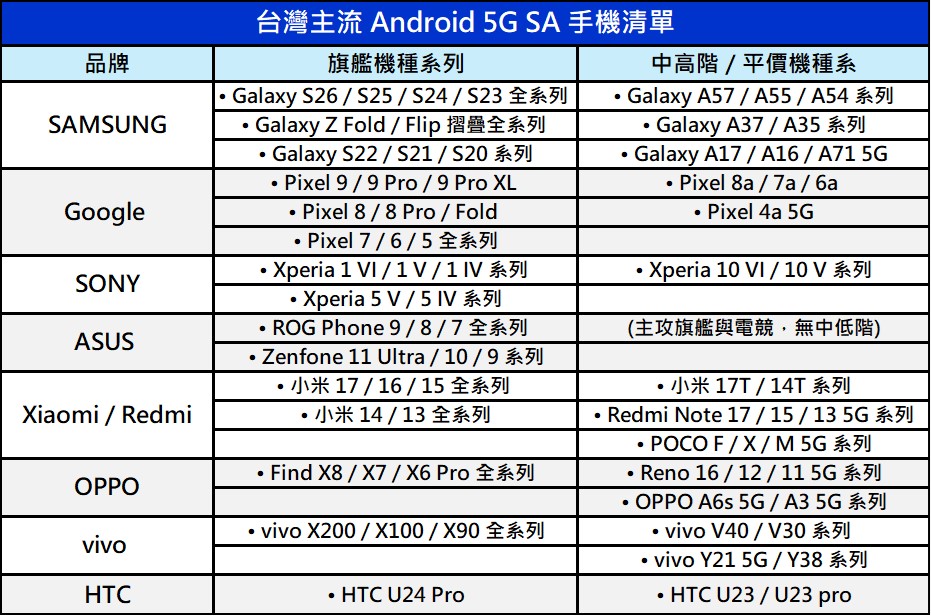
Because 5G services in mainland China primarily promote 5G SA, most mid-to-high-end and flagship Android phones currently using Qualcomm or MediaTek chips generally support 5G SA at the hardware level (supporting the N1 and N8 bands). However, whether 5G SA can actually be used still depends on phone system updates and whether the carrier has completed network verification. Below is a reference list of major Android phones in Taiwan that support 5G SA (for reference only; subject to announcements by phone manufacturers or carriers):
According to user feedback, the Samsung S25 currently requires users to go to Developer Options, find the 5G network mode setting, and select the suggested SA+NSA mode that appears before it can be used; some flagship phones from Chinese brands (such asvivo X300 Ultra…) With the latest version, the “5G Standalone Mode” toggle will appear in the SIM card settings. Chunghwa Telecom users only need to upgrade their SIM to a 5G SA SIM card and be in a 5G SA area already deployed by Chunghwa Telecom to experience Chunghwa Telecom’s ultra-fast, low-latency 5G SA network services.
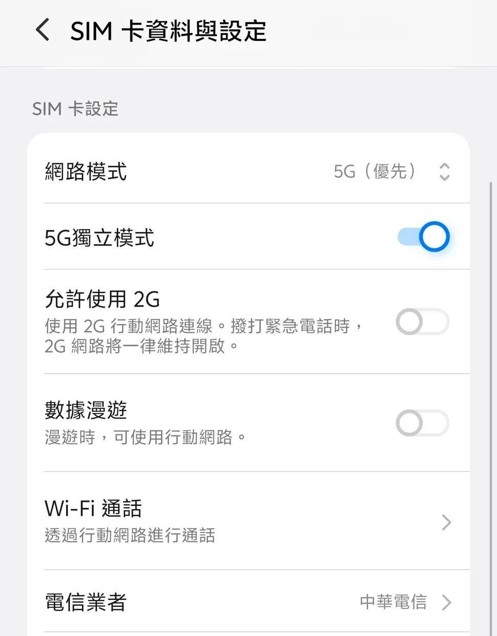
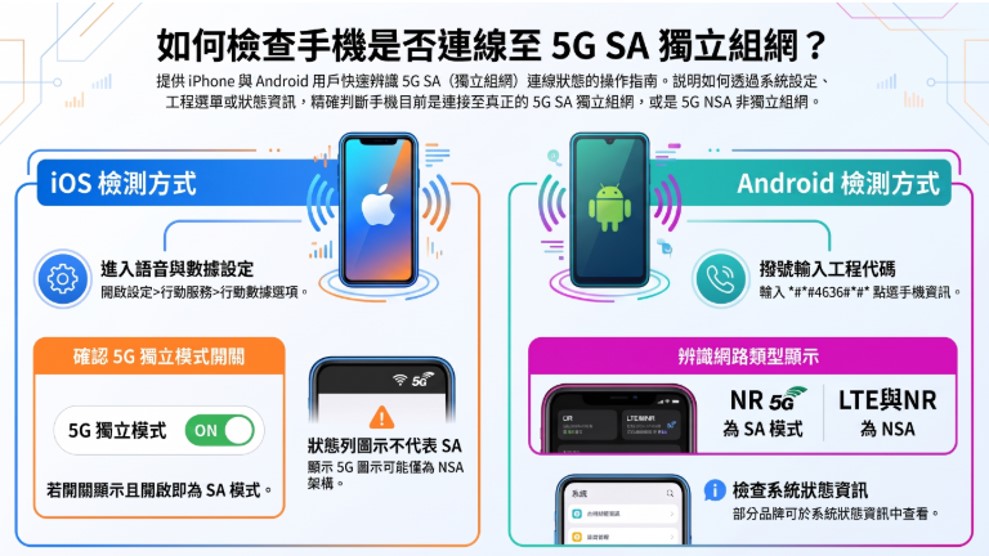
If you have enabled “5G Standalone Mode” and replaced your physical SIM or eSIM with one that supports 5G SA, you can use your phone to check whether you are in a 5G SA network environment.
For iPhone users, go to the Voice & Data menu under Cellular Data and check whether a dedicated standalone mode toggle appears and is enabled. For Android users, the fastest way is to enter a specific engineering mode code and check the network type or NR status to identify it. In addition, some Android phone brands let you check the current connection architecture directly from the system’s About Phone and Status Information pages. Note that a 5G icon simply appearing in the status bar does not mean the device is using an SA network; you must use the detailed settings path or engineering code described above to confirm accurately.
D. Areas supporting 5G SA:
Chunghwa Telecom told the media that it has already deployed 5G SA base stations (such as in the N1 and N8 bands) and test signals in Taipei (such as Nangang Software Park), Taichung (West District, Nantun, downtown, the old downtown area, Provincial Highway 74, Section 4 of Taiwan Boulevard, Guangfu Elementary School, etc.), and some high-speed rail sections (such as the Guishan tunnel group in Taoyuan) and representative venues. 5G SA base stations will be prioritized for deployment in the six municipalities (metropolitan areas), along high-speed rail routes, and at important crowd hotspots. It is expected that by the end of 2026, the population coverage of 5G SA across Taiwan will reach more than 50%.It is expected to enter a period of large-scale adoption in 2027, aiming for SA coverage across all base stations in Taiwan. By then, the network will fully deliver low-latency and massive-connectivity features, and “network slicing” technology will be officially commercialized for enterprise private networks and smart transportation.
3. Should I switch to a 5G SA card?
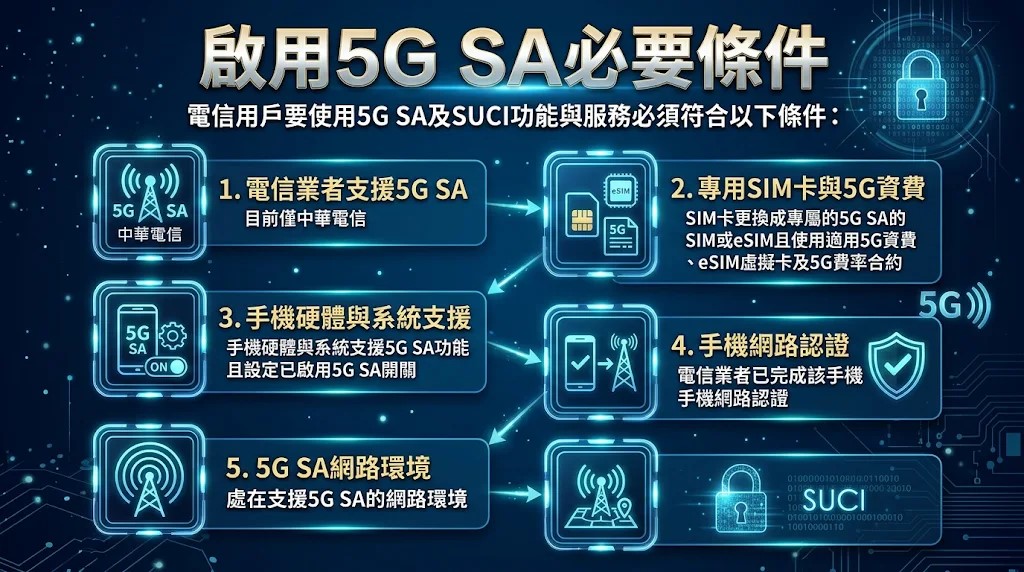
Users need to use 5G SA andSUCI functionality and services must meet five major conditions: the telecom operator supports 5G SA (currently only Chunghwa Telecom); the user uses an operator-specific 5G SA SIM or eSIM and an applicable 5G rate plan; the phone hardware and system support 5G SA and the 5G SA toggle is enabled in settings; the operator has completed network certification for that phone; and the user is in a network environment that supports 5G SA.
There are currently quite a few mobile phones on the market that support 5G SA., the three major telecom operators at the Ministry of Digital Affairs have rolled out an annual total exceeding NT$100 million「SA Network Construction Incentive ProgramWith 5G SA services set to fully launch in 2027 just around the corner, should you rush to apply for a 5G SA SIM replacement?
Because telecom operators tend to offer free 5G SA SIM replacements for users only when specific conditions are met., the moderator has the following suggestions on whether 5G users should proactively apply for a 5G SA SIM card replacement:
A. Customers who sign up for a 5G plan of 1,399 or above and whose phone supports 5G SA may apply first:
Since Chunghwa Telecom only provides unlimited 5G internet without speed reduction on 5G plans of NT$1,399 (inclusive) or above, and SIM replacement is free, it is advisable to replace your SIM early. On 5G plans of NT$1,199 (inclusive) or below, speeds are reduced once you exceed your quota, and a NT$300 SIM replacement fee applies, so upgrading to a 5G SA SIM is not very meaningful. “The higher the expectations, the greater the disappointment”—there is no need to worry unnecessarily. 。
B. Consider changing the card only when replacing it or renewing the contract:
If you need to replace your SIM card for any reason, or your phone number contract has expired and you need to apply for a 5G plan, you can switch to a 5G SA SIM card at the same time to avoid the hassle of replacing it later.。
4. Conclusion: Global 5G SA Outlook
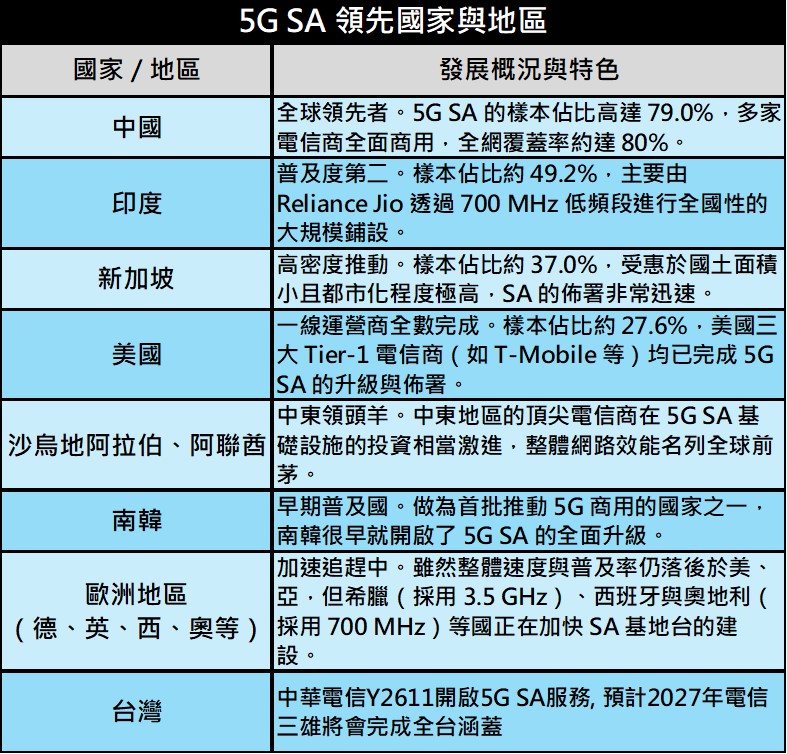
According to the latest release from network testing organization Ookla and research firm OmdiaFlagship ReportAs of Q4 2025, the proportion of samples with 5G standalone availability worldwide reached 17.6%, and 39 countries and regions worldwide (about 70 telecom operators) have officially put 5G standalone (SA, Standalone) into commercial use.。Is it necessary for the Ministry of Digital Affairs to provide the three major telecom operators with up to NT$114 million in annual subsidies to accelerate Taiwan’s deployment of 5G SA networks and catch up with leading 5G SA countries?
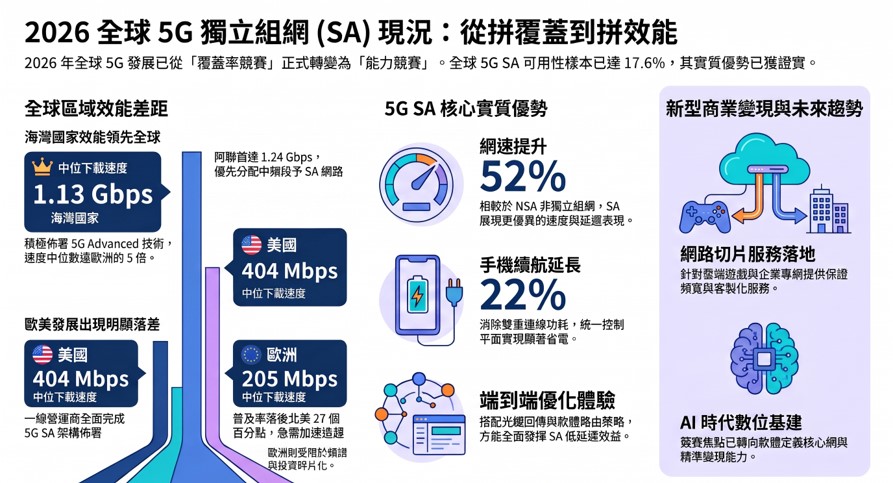
According to a research report by Ookla and Omdia, global5GThe focus of development has officially shifted from the previous race over the number of base stations to competing on actual network performance.Performance competitionData shows that upgrading 5G networks to 5G standalone can not onlySignificantly boosts transfer speed by up to 52%and reduce latency by 6%, and can also significantly improve mobile devices’ … thanks to the streamlined connection architectureBattery life 22%,Shedding 5G’s old reputation as a power-hungry monster. At the same time, telecom operators have also begun to useNetwork slicingand other innovative technologies to create business value, turning connection bandwidth into more efficient dedicated services.
In other words, as Taiwan’s 4G and 5G user numbers are about to reach a golden cross, accelerating 5G SA deployment in Taiwan can not only improveCancel the user’sExperience using 5G, and more importantly, for countries to lay the foundationDigital infrastructureand an important key to the future development of artificial intelligence.
In the future, 5G competition among telecom operators will no longer be about who has more base stations, but about who can use software-defined core and network slicing technology to turn bandwidth into “services” that can be precisely monetized, so that competition among Taiwan’s telecom operators no longer focuses solely on connecting online and offline core consumer ecosystems.「Points economy」, returning to competition in telecommunications services and development.
Source: KOCPC Chinese