


For creators who frequently use AI to generate videos, the most familiar frustration is when the story is just reaching its climax and the footage abruptly cuts off. Now, Google hopes to improve this. The company has officially launched its next-generation AI video generation model, Gemini Omni 1.2 Flash, which not only extends video generation duration but also further strengthens post-production editing and visual consistency, bringing the AI video creation workflow closer to professional production needs.
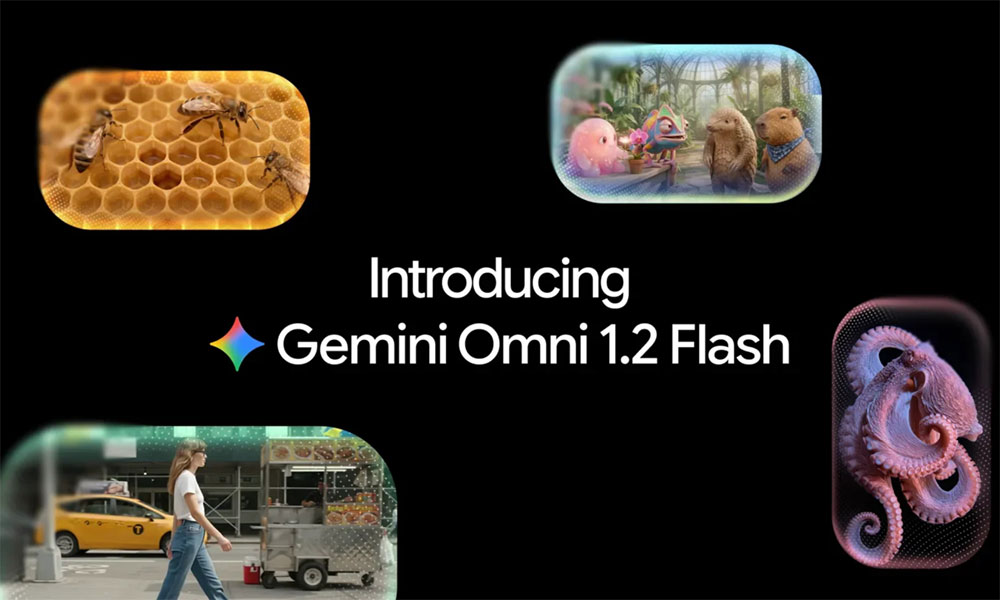
Gemini Omni 1.2 Flash makes AI video generation longer, cheaper, and easier to edit.
Compared with the previous-generation Omni 1.1, which supported video output of only up to 10 seconds, Gemini Omni 1.2 Flash increases the generation duration to 15 seconds. Users can also freely choose a video length between 3 and 15 seconds and adjust it in 1-second increments. Although it is still some way from full short-form video ads or brand storytelling, for creators, the 50% increase in video duration can effectively provide more room for plot development and shot presentation.
Today we are rolling out Gemini Omni Flash 1.2, with: – longer video generation (15 seconds) – deeper cinematic controls for camera pov – support for multi-turn conversation editing – less visual drift – 30% lower price than Omni Flash 1.1 Read more: https://t.co/U0VgGTGcmW
— Logan Kilpatrick (@OfficialLoganK) November 5, 2026
However, the upgrade truly worth noting is not just the video length. Google has put more effort into the video editing experience, allowing users to interact with AI models through natural language to directly adjust backgrounds, weather effects, and scene elements in videos, and even reset the aspect ratio, without having to regenerate the entire video from scratch. This capability greatly reduces the cost of repeatedly recreating content, especially when only a single detail needs to be corrected, saving substantial computational resources and time.
In terms of content consistency, Gemini Omni 1.2 Flash also shows significant progress. Users only need to provide reference images of a specific character, product, or brand materials, along with an audio prompt or motion reference clip of up to three seconds, and the system can maintain consistency in visual elements such as clothing, packaging design, and brand colors across different shots, avoiding the character appearance drift or brand identity confusion commonly seen in AI videos.
Meet Gemini Omni 1.2 Flash, our updated video generation model from @GoogleDeepMind 🎬 Get stronger consistency, more creative control, and faster, more cost-effective video creation at scale: ⚡ Fast & 30% lower cost: Draft at 360p or 720p ($0.07/s) and upscale to 1080p or 4K ⏱️ Longer clips: Generate and edit videos up to 15s, or pick any exact length from 3s to 15s 💬 Edit in conversation: Swap backgrounds, subjects, or lighting turn by turn without starting over from scratch 🗣️ More natural speech: Create fluid, multi-speaker dialogue with clearer lip-sync 🎬 More controllable shots: Direct continuous camera moves with fewer jump cuts See these updates in action ↓
— Google (@Google) November 5, 2026
Video quality has also improved. Google says the new model can more naturally render complex camera movements such as drone aerial shots and orbiting shots, reducing the abruptness of scene transitions. At the same time, lip-sync accuracy has improved in dialogue scenes; even in multi-character conversations, the recognizability and separation of multiple voices are clearer.
On pricing, Google has reduced the generation cost of Omni 1.1 by 30%, with 720p video costing only $0.07 per second. At that rate, generating a complete 15-second video costs about $1.05. Official pricing for 1080p or 4K versions has not yet been announced, but for creators, completing an initial version at a lower resolution and then upgrading the final product to high-definition output remains a practical approach that balances cost and efficiency.
Meet Gemini Omni 1.2 Flash ⚡️ We’ve made the model more cost-effective, bumped the video generation and editing limit up to 15 seconds, and made updates to how scenes hold together over time. We’ve also given character speech an upgrade, reduced visual glitches like jump cuts, and made sure the model stays even truer to any reference assets you upload. So… what does all of that actually mean for you? It gives you more room to tell your story. With up to 15 seconds to work with, you have more flexibility to create what you need — videos look more cinematic and smooth, offering stronger consistency that keeps objects anchored from start to finish. And when characters speak, the dialogue sounds more fluid and natural. Creators and everyday users can start directing scenes and multi-turn edits in @FlowbyGoogle, generating 15-second clips at no additional cost in Google Vids, or creating 15-second videos in the @GeminiApp. Plus, for developers and businesses building with the API, we’ve dropped the price by 30% from the previous generation, making it available at just $0.07 per second for 720p video. Watch the model in action as it turns a single style frame into a 4-shot, 15-second macro science explainer of a living beehive ↓
— Google AI (@GoogleAI) November 5, 2026
In terms of deployment and usage channels, developers can access Gemini Omni 1.2 Flash through Google AI Studio and the Gemini API, while enterprise users can scale applications on Google Cloud using reserved compute resources. In addition, services such as Flow, Google Ads, and Google Vids have integrated this technology. General users with a Google Account or Workspace subscription can try AI video generation of up to 15 seconds for free, while users subscribed to the AI Ultra plan can use the related features directly in the Gemini app.
With simultaneous upgrades in video length, editing capabilities, and content consistency, Gemini Omni 1.2 Flash shows that Google is actively closing the gap between AI-generated content and professional video production, moving AI video creation into a more practical new phase.
Source: KOCPC Chinese