


As controversy over PlayStation’s all-digital strategy continues to simmer, discussions about the “ownership” of digital games have been sprouting up one after another, and before long, the issue is set to enter the U.S. Congress once again for another round of debate.
According to explanations given by multiple digital game platforms such as PlayStation and Steam, when players purchase a digital version of a game, what they obtain is not “ownership” of the game itself, but merely a rented “right to use” the game on that platform. However, in recent years, as cases have gradually emerged of games being delisted, leaving players who paid for them unable to access them anymore, this has gradually become a focus of controversy and also the trigger for the “Stop Killing Games” movement.
Earlier this year, even Rockstar Games confirmed that the physical edition of its year-end blockbuster Grand Theft Auto 6 will not include a game disc, but rather a code that binds to the user’s account once used. Soon after, PlayStation officially announced that it will stop producing physical discs in 2028, sparking an even larger backlash. Many players have tried to find ways to address the issue through boycotts, protests, and even seeking legal assistance. Now, it seems a politician has finally heard the players’ voices.
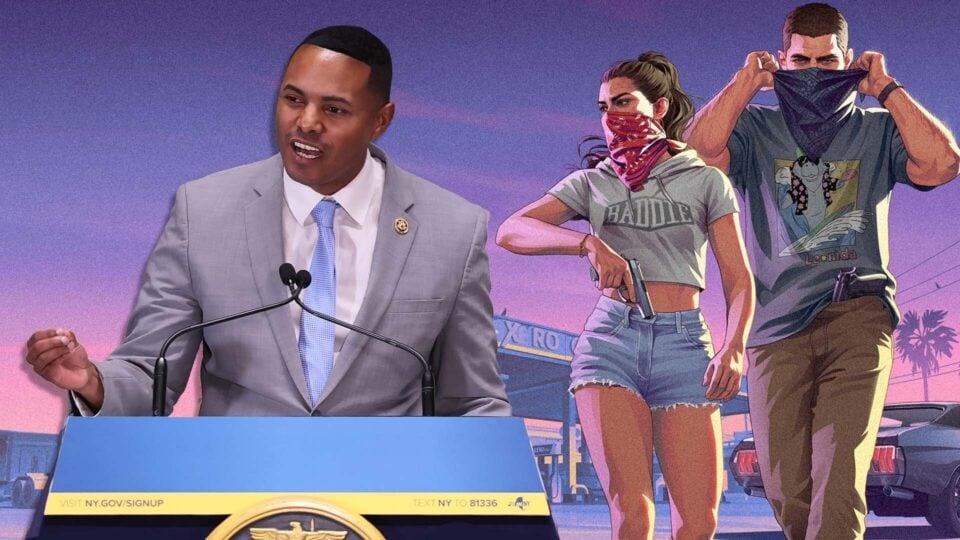
Recently, Democratic U.S. Representative Ritchie Torres of New York formally introduced a new legislative proposal called the “Power to the Players Act,” hoping to further protect consumer rights by preventing games players have paid for from one day being disabled by the game publisher or removed from their personal game library for certain reasons, and to change the way game developers and publishers offer games on digital platforms.

And while accepting 《KotakuIn an interview with the 》 website, Ritchie Torres stated that the goal of the draft “Power to the Players Act” is to ensure that players can truly own the digital games they purchase; even if the publisher or studio behind a game has long stopped supporting the work in question, players’ rights should still be protected.
Currently, the preliminary concept of the “Power to the Players Act” is to require digital games to offer offline play modes so that even if the development team shuts down the game servers, players can continue to play. In addition, the bill also requires digital game transactions to grant consumers full ownership, rather than merely selling a license to use a digital game that may expire or be revoked at any time.
It is worth noting that U.S. politicians had already proposed similar legislation before this, such as the “Protect Our Games Act,” jointly advanced by “Stop Killing Games” activists, which likewise sought to protect players’ rights through legal means. However, to date, no legislation has emerged that could have an impact on major companies such as Sony, Microsoft, and Epic Games.
In fact, long before the controversy erupted over Grand Theft Auto 6 and Sony abolishing physical games, the gaming industry as a whole had already shown a fairly clear digital trend. As early as 2020, Sony launched an all-digital version of the PlayStation 5 console with no disc drive, while the PC platform, thanks to the booming development of platforms such as Steam, had already moved to nearly 100% full digitalization.

As for whether the “Power to the Players Act” proposed by Ritchie Torres will ultimately pass, that will depend on subsequent votes by members of the U.S. Congress; and whether it can truly bring change to the entire gaming industry after it passes will, of course, also be something very much worth watching.
Source: KOCPC Chinese