


“Hello? This is the 165 Anti-Fraud Hotline. Your phone number has been reported many times as a scam number, and you are also involved in a money laundering case.” If the caller ID starts with “+1749,” the Criminal Investigation Bureau tells you: It’s fake. The 165 hotline will never call you from an overseas number. Whoscall, under trust technology company Gogolook, announced on October 12 that it is deepening cooperation with the Criminal Investigation Bureau of the National Police Agency to establish an “Overseas Scam Call AI Radar” mechanism. The two sides will cross-analyze Whoscall’s number database with Criminal Investigation Bureau intelligence and regularly release trends in overseas scam number attacks. In its first report, it singled out overseas scam calls starting with “+1”: nearly 200,000 were identified in just two months, and the variants changed extremely quickly.
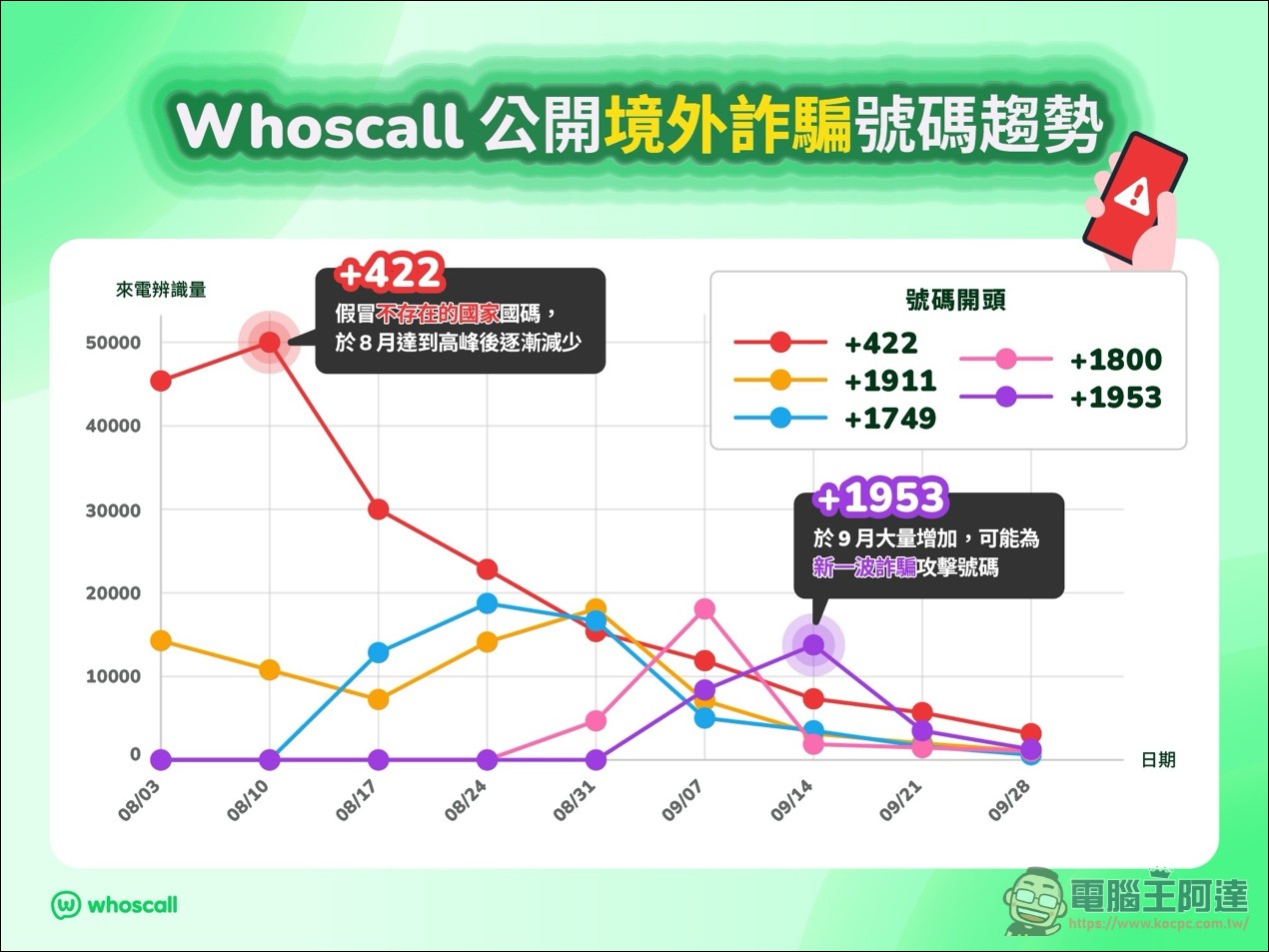
260,000 calls in a single month, with “+422” leading the charge.
Whoscall statistics show that in August alone, scam calls beginning with “+422” reached 260,000, accounting for 55.8% of international incoming calls. They peaked at 50,000 in a single week during the week of August 10, then declined week by week. On average, that translates to more than 8,000 “+422” scam calls entering Taiwan each day in August—one every 10 seconds. After the tactics were exposed and the public became alert, the numbers fell, and scammers switched numbers accordingly, shifting the battlefield to the “+1” North American number range.
International calls beginning with “+1” accumulated nearly 200,000 unknown-call identifications in August and September. Among them, “+1911” surged starting in August, with total volume exceeding 70,000 calls, then fell sharply after entering September, showing that this number block was used for short-term mass dialing and discarded after use. “+1749” followed a different rhythm: 30,000 identifications in August, and still nearly 20,000 in the first two weeks of September. The attacks have not slowed, making it a persistently operated number block. After entering September, prefixes “+1800” and “+1953” climbed rapidly, each surpassing 20,000 calls in a single month, becoming suspicious numbers that Whoscall and the Criminal Investigation Bureau are currently prioritizing for monitoring. From “+422” to “+1911” and then to “+1800,” the rotation of number blocks happens on a weekly basis, and it is precisely this hit-and-run rhythm that AI radar needs to watch.
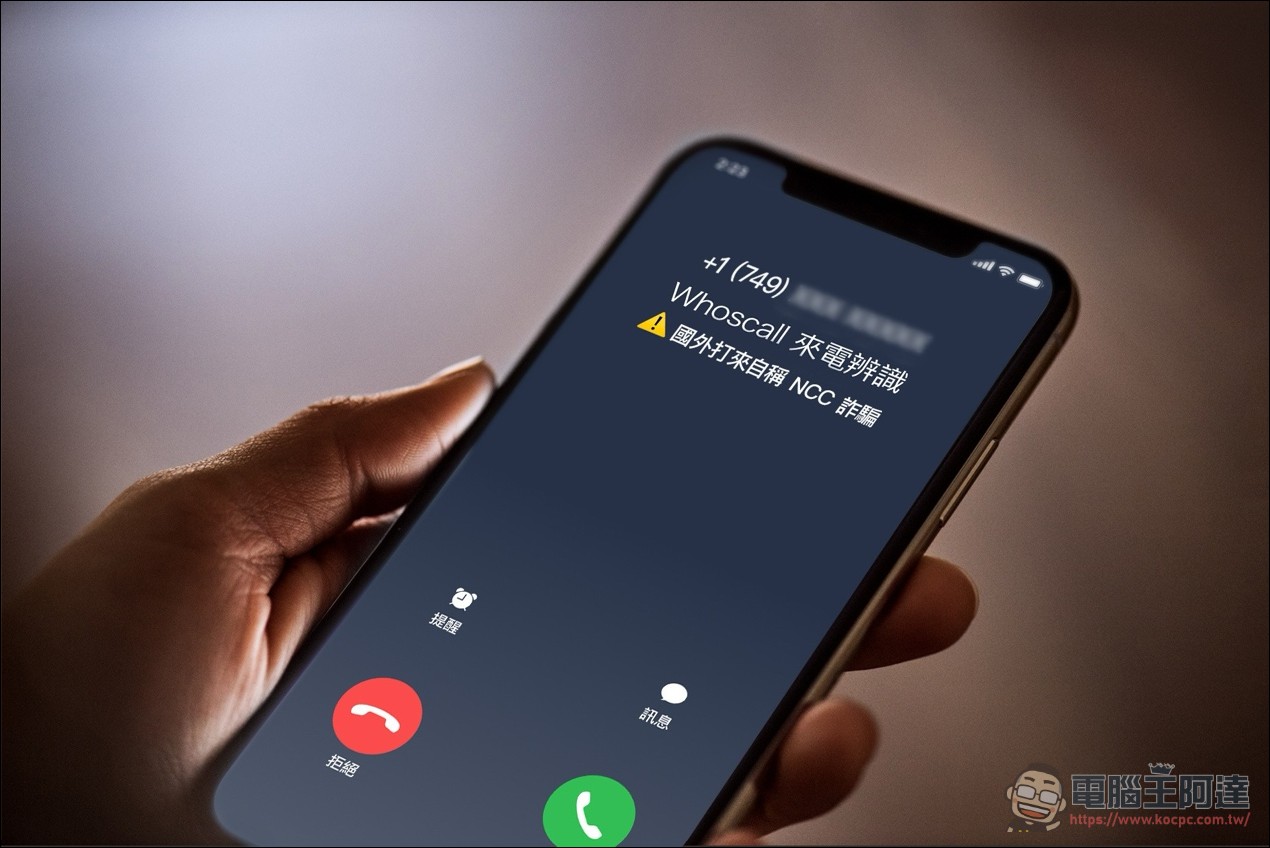
Script: fake 165, fake telecom carrier, fake NCC
Scammers use VoIP caller ID spoofing to disguise numbers—numbers that do not actually exist—and then use autodialers to make massive volumes of calls at low cost. The key to this combo is that the cost approaches zero: calling 10,000 times and calling 200,000 times makes little difference, and broad indiscriminate calling is the norm. Receiving a call does not mean your personal data has already leaked to a specific group; rather, your number segment was picked up by an autodialer. Some people have reported receiving calls from “+1911,” in which the caller starts by reading out a string of unfamiliar numbers and claims that the mobile number the person applied for is being used abnormally and that personal data may have been compromised. The voice has a foreign accent, and opening with a specific number to win trust is a standard opening move for this type of script.
Another spoofed number, “+1749,” claims to be the 165 Anti-Fraud Hotline, saying the person’s phone number has been widely reported as a scam number and is involved in a money laundering case. It uses intimidating scripts to deter them from verifying, then leads them to transfer funds. Impersonating 165 is the most vicious tactic because it targets precisely those who want to verify: by first taking over the name of the verification channel, the victim at that moment will not think of calling 165 to verify. In Whoscall’s number report records, the scripts also include claiming to be the National Communications Commission, an NCC specialist calling on a Saturday, an overseas call claiming to be from the NCC, and the Financial Supervisory Commission freezing accounts, among other lines. These scripts share one thing: they open by claiming to be a government agency, exploiting the public’s deference to public authority. They start by giving the agency’s full name, then throw out a case description, and finally ask for personal information or a transfer; the goal is always to extract personal information and then scam.
Criminal Investigation Bureau: Government agencies will never call you from a number starting with “+”.
The Criminal Investigation Bureau reminds the public that major telecom carriers have established an international voice warning service. Before answering an international call with a “+”, people will first hear a Mandarin and Taiwanese announcement: “This is an international call. Please beware of fraud.” This announcement is the first layer of filtering set up as part of the government’s anti-fraud defense line; before hearing the other party’s voice, it first reminds the person answering the call to be more alert. Domestic government agencies and the 165 hotline will never call the public through overseas numbers starting with “+”. This is the most important sentence in the entire report; remembering it can block all overseas calls impersonating government agencies. If the caller ID shows an international number such as “+1” or “+422” but the person claims to be a police officer or public official, it is definitely fraud. The 165 National Anti-Fraud Network is the official channel for verifying fraud information, and the 165 Anti-Fraud Dashboard also provides downloads of the latest fraud methods and publicity materials.
Android can block overseas calls with one tap, while iPhone can only do it manually.
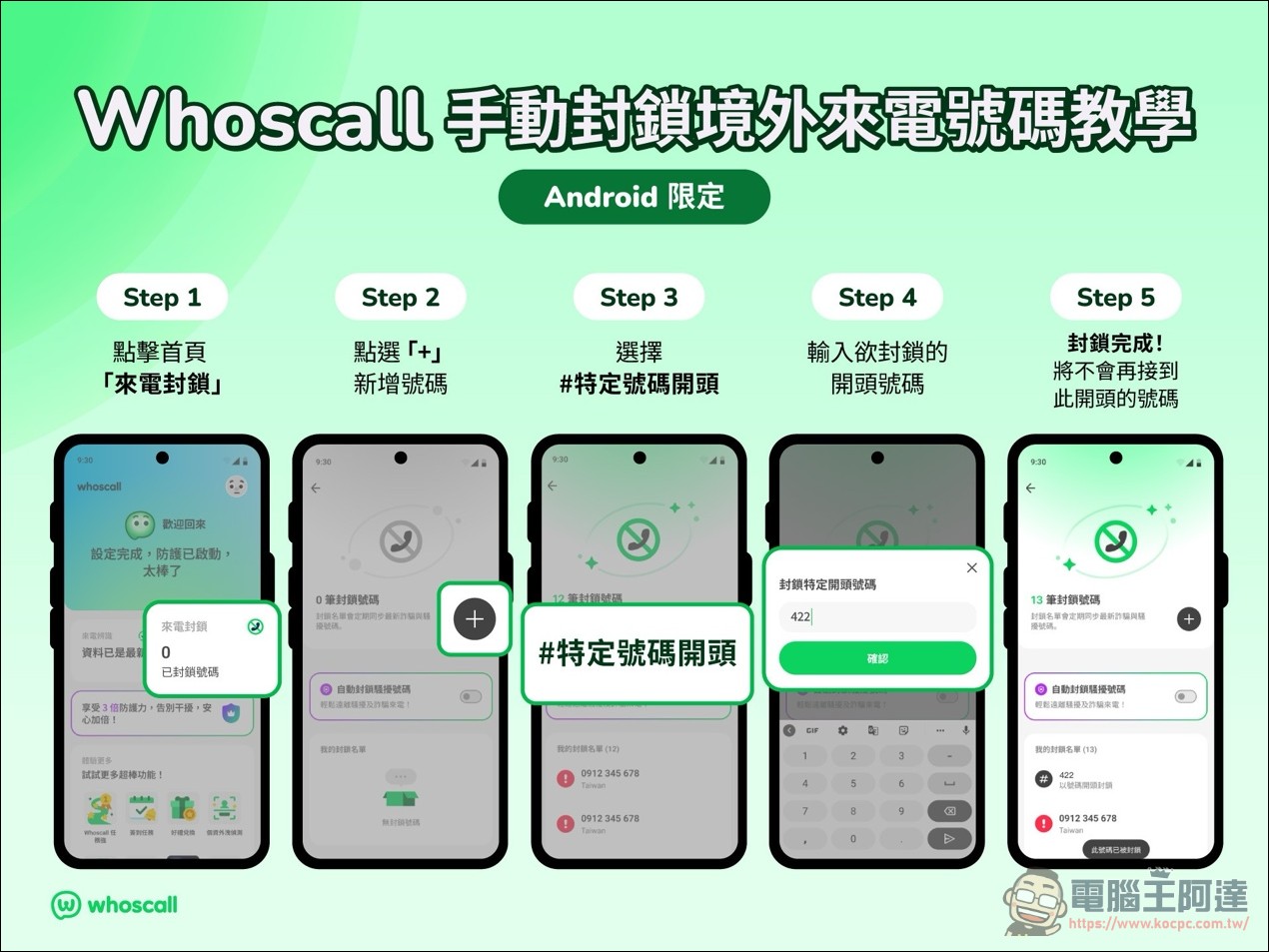
On Android, Whoscall offers a free “Block International Calls” feature that can block all international calls with one tap, or users can set individual blocks by prefix, such as +1, +422, and +87; calls matching those formats are blocked directly. Due to native iPhone system limitations, iOS users can only enter a complete number to manually block it one time. Whoscall said its public-private collaboration with the Criminal Investigation Bureau will regularly monitor patterns in international scam numbers and publish them on official platforms and social media, while also making suspicious international numbers appear faster in users’ incoming call identification warnings.
Whoscall itself is a caller ID app dedicated to blocking scams and malicious communications, with over 100 million downloads worldwide and a number database of more than 2.6 billion entries; together with its website database, these form the foundation of its AI anti-fraud technology. Its partners include Taiwan’s National Police Agency, Ministry of the Interior, the Royal Thai Police, the Royal Malaysia Police, the Philippines’ Cybercrime Investigation and Coordinating Center, and Japanese police agencies.
When you receive a suspicious call: 1) Listen, 2) Hang up, 3) Verify.
Whoscall and the Criminal Investigation Bureau urge people to stick to “Listen, Hang Up, Verify” when receiving a suspicious call: hang up first, then use a mobile phone or landline to dial the 165 anti-fraud hotline directly to verify, and do not follow the caller’s script. If a call starts with “+” and claims to be from a government agency, hanging up is the correct answer.
Source: KOCPC Chinese