


Compared with computers, phones can be said to be devices with more personal private data, so when using AI, many people hope to use local AI language models. Although today’s phones can already run some AI language models with smaller parameter sizes, limited by hardware performance and model capabilities, the actual user experience is not very good, and there are few scenarios in which they can truly be used.
The good news is that Qualcomm CEO Cristiano Amon recently revealed in an interview that customers have already asked Qualcomm for phones capable of continuously running large language models with at least 100 billion parameters (100B) locally by 2028. More notably, the ones making this request are not traditional phone brands, but companies at the forefront of AI technology, and some AI companies have even begun developing smartphones.

Qualcomm CEO confirms AI companies are demanding that 100B models run locally on phones by 2028, with some already investing in phone development.
Qualcomm’s CEO recently said on the Sources show hosted by tech journalist Alex Heath: “I have to be careful not to name names, but some AI companies, a few of the companies at the very forefront of AI, are telling Qualcomm: ‘By 2028, I need to make sure phones can run models with at least 100 billion parameters, and keep them running almost all the time.'”
Alex Heath followed up: “So you’re saying some AI companies are in talks…” Before he could finish, Cristiano Amon answered directly: “Yeah, AI companies are starting to make phones.”
Qualcomm CEO reveals AI companies want phones running 100-billion-parameter models continuously by 2028–and confirms some are building phones Cristiano Amon: “I have to be careful not to disclose names, but some AI companies—some of the companies at the forefront of AI—are telling Qualcomm, ‘By 2028, I need to make sure that I have the ability to run at least a 100-billion-parameter model in a phone, and I need to have this thing running kind of all the time.’” Alex Heath: “So you’re saying there are AI companies that are talking about—” Cristiano Amon: “Well, AI companies are starting to do phones.”
— Fireside Alpha (@firesidealpha) October 10, 2026
However, Qualcomm didn’t name which companies, nor did it promise which year it would launch corresponding chips or products. But at least we can expect that by 2028, we should see phones that can run decent AI models locally. As for 100B, I think that’s a bit too optimistic—after all, most computers still can’t do it today, let alone phones that are so much smaller.
Some readers may not be quite clear on just how big 100B is.
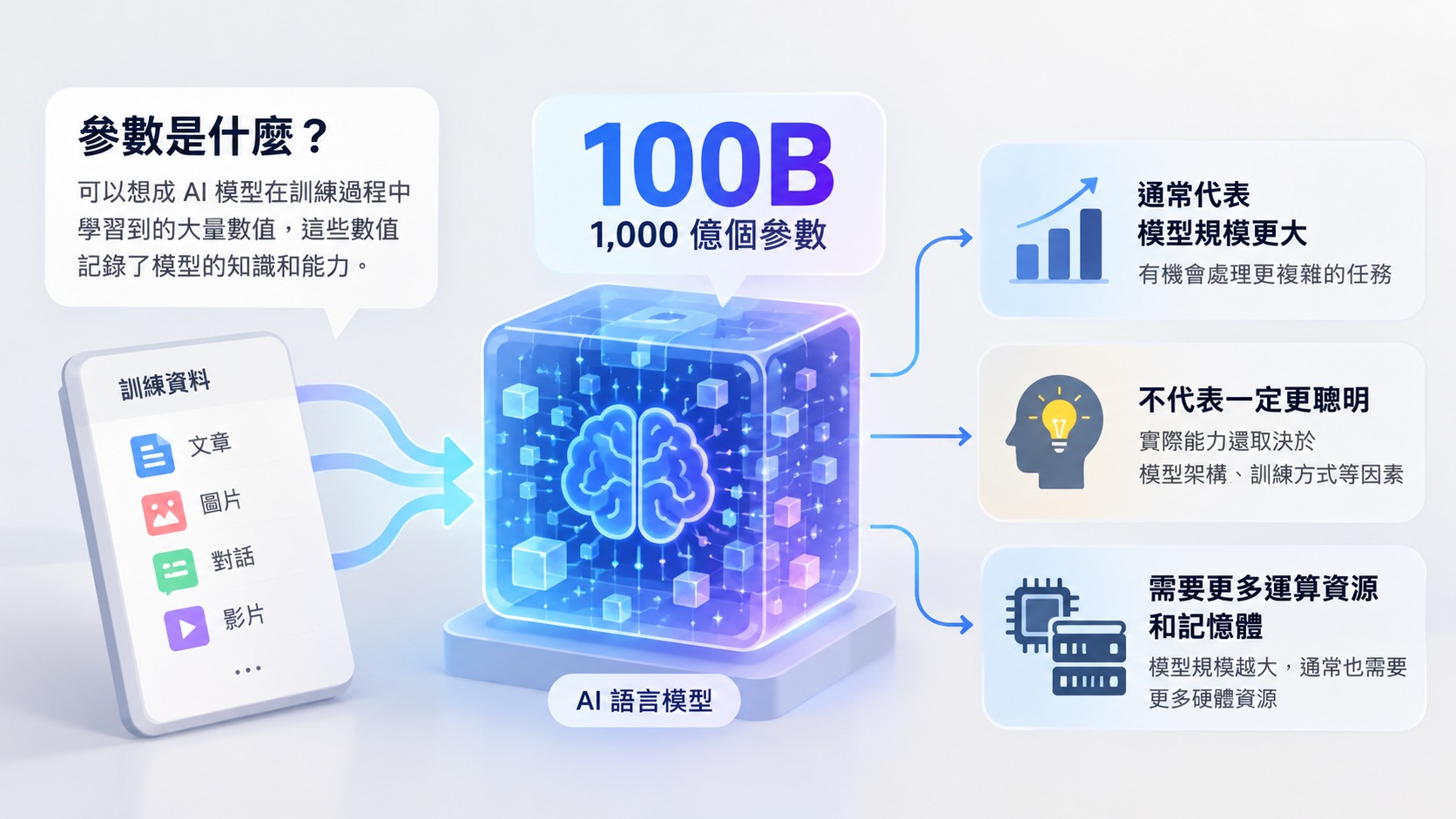
The so-called “parameters” can be simply understood as the large number of values an AI model learns during training, and 100B means the model has 100 billion parameters. Generally speaking, the more parameters, the larger the model, and the more likely it is to handle more complex tasks, but that does not necessarily mean it is smarter; its actual capabilities also depend on factors such as model architecture and training method. In addition, the larger the model, the more computing resources and memory it usually requires.
So how large a model can a phone run now?
Among Qualcomm’s Snapdragon 8 Elite Gen 6 and higher-end Snapdragon 8 Elite Extreme Gen 6 announced in September this year, the Extreme version can run 30B-class MoE (mixture of experts) models locally on a phone.
Moreover, for a phone to be able to run a 100B model, the biggest obstacle isn’t the processor but memory capacity. Even if a 100B model is compressed using 4-bit quantization, just storing the model weights would theoretically require about 50GB of memory; compressing it to 2-bit would still require around 25GB:
| Item | Required / Installed Memory |
|---|---|
| 100B model (16-bit original precision) | Approximately 200GB |
| 100B model (8-bit quantization) | Approximately 100GB |
| 100B model (4-bit quantization) | About 50GB |
| 100B model (2-bit quantization) | Approximately 25GB |
| iPhone 17 Pro、Galaxy S26 | 12GB |
| Mainstream Android flagship | 12GB~16GB |
| A few high-end Android models | 24GB |
(Note: The model requirements in the table only account for model weights and are converted using “parameter count × bit width ÷ 8”.)
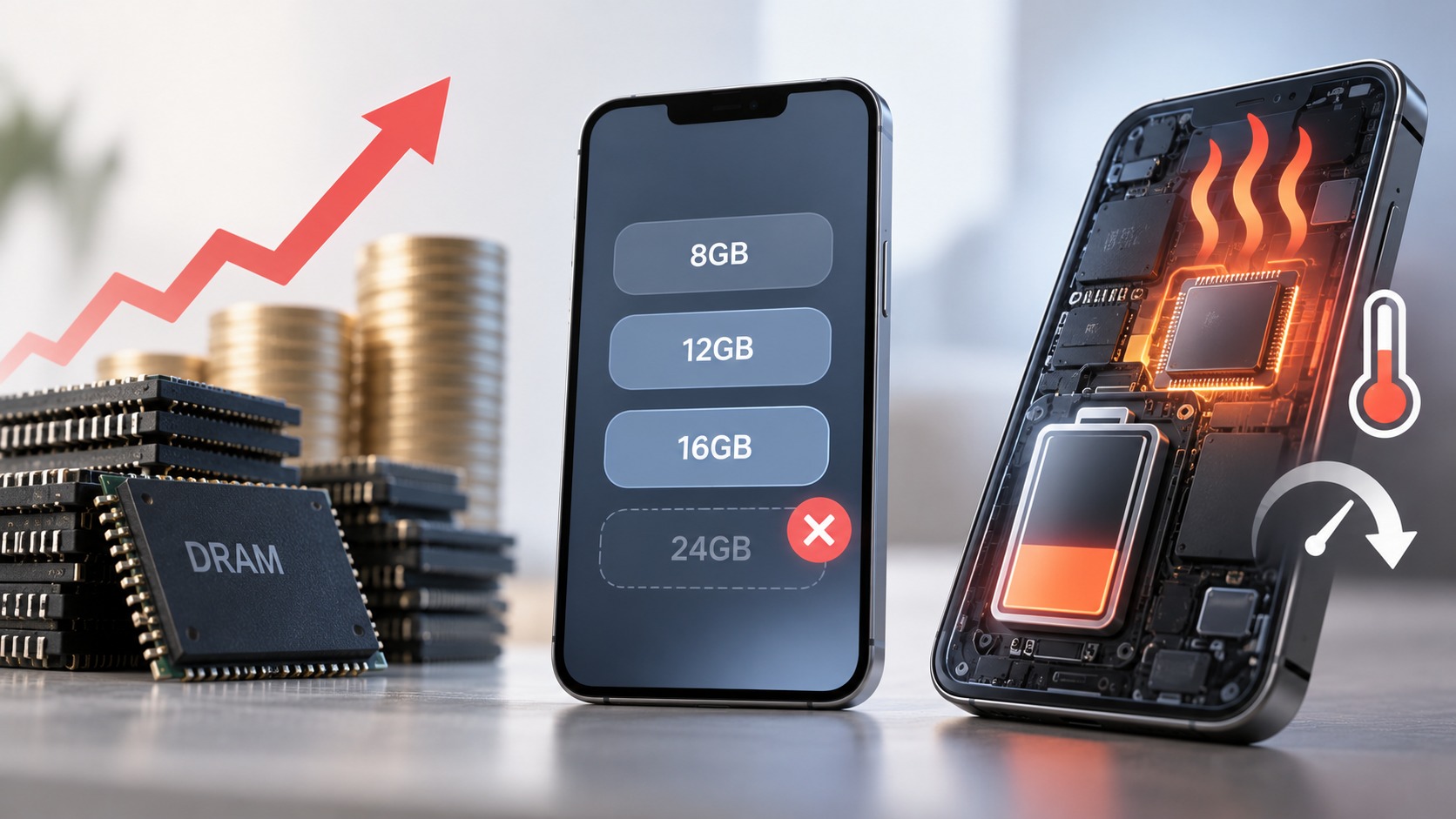
Beyond capacity, cost and supply are also major issues. Over the past year or so, DRAM prices have continued to soar. In addition to phones becoming more expensive, many manufacturers have also canceled high-capacity versions, and it will not be easy to see phones commonly exceed 16GB in the short term. The program Sources also mentioned that many people are delaying upgrading their phones because of high memory prices. Therefore, equipping phones with more than 50GB of memory in this environment can be said to be extremely difficult.
There’s also the battery and cooling. A phone’s battery capacity and cooling space are both very limited. When large models run in the background for long periods, power consumption will inevitably increase noticeably. Once the device temperature rises, the chip will throttle, and performance will drop along with it.
Although Qualcomm didn’t reveal which company it was this time, analyst Ming-Chi Kuo previously pointed out that Qualcomm and MediaTek are designing custom chips for OpenAI’s phone, with Luxshare Precision as the contract manufacturer and mass production expected in 2028 (some reports say it could be moved up to 2027). Therefore, even though Amon didn’t name OpenAI this time, it’s hard not to speculate that he was referring to OpenAI.
Some people might wonder why AI companies would want to cram large models into phones?
AI services like ChatGPT, Claud, and Gemini mostly send content to cloud servers for processing, then send the results back. When the network is unstable, they get stuck; responses always have some delay; and conversations, documents, and photos all have to leave the phone. If models could run directly on the phone, these issues could be improved.
Besides that, there is an even bigger incentive for AI companies: AI agents.
AI agents don’t just answer questions; they can also proactively get things done based on your instructions. For example, if you tell your phone, “Help me plan tomorrow’s schedule,” the AI can use the calendars, to-do lists, and messages you’ve authorized to put together a workable timetable and remind you which meetings conflict. Although it’s convenient, this also means the AI has to access your personal data—such as your calendar, messages, photos, and location—and be available on call at all times.
If all this data is sent to the cloud for processing, privacy and latency are both problems, which is why the requirement AI companies set is “always keep running,” not just “can run.”
Source: KOCPC Chinese