


A retired mining rig was selling for only $35 on a second-hand platform, cobbling together 54GB of VRAM to run local large language models, sparking a wave of “e-waste turned treasure” discussion on Reddit. On the Russian classifieds site Avito, a buyer purchased an old mining rig equipped with 9 graphics cards for 3,000 rubles (about $35, or NT$1,120), with total video memory reaching 54GB, and successfully deployed an LLM in a local environment.
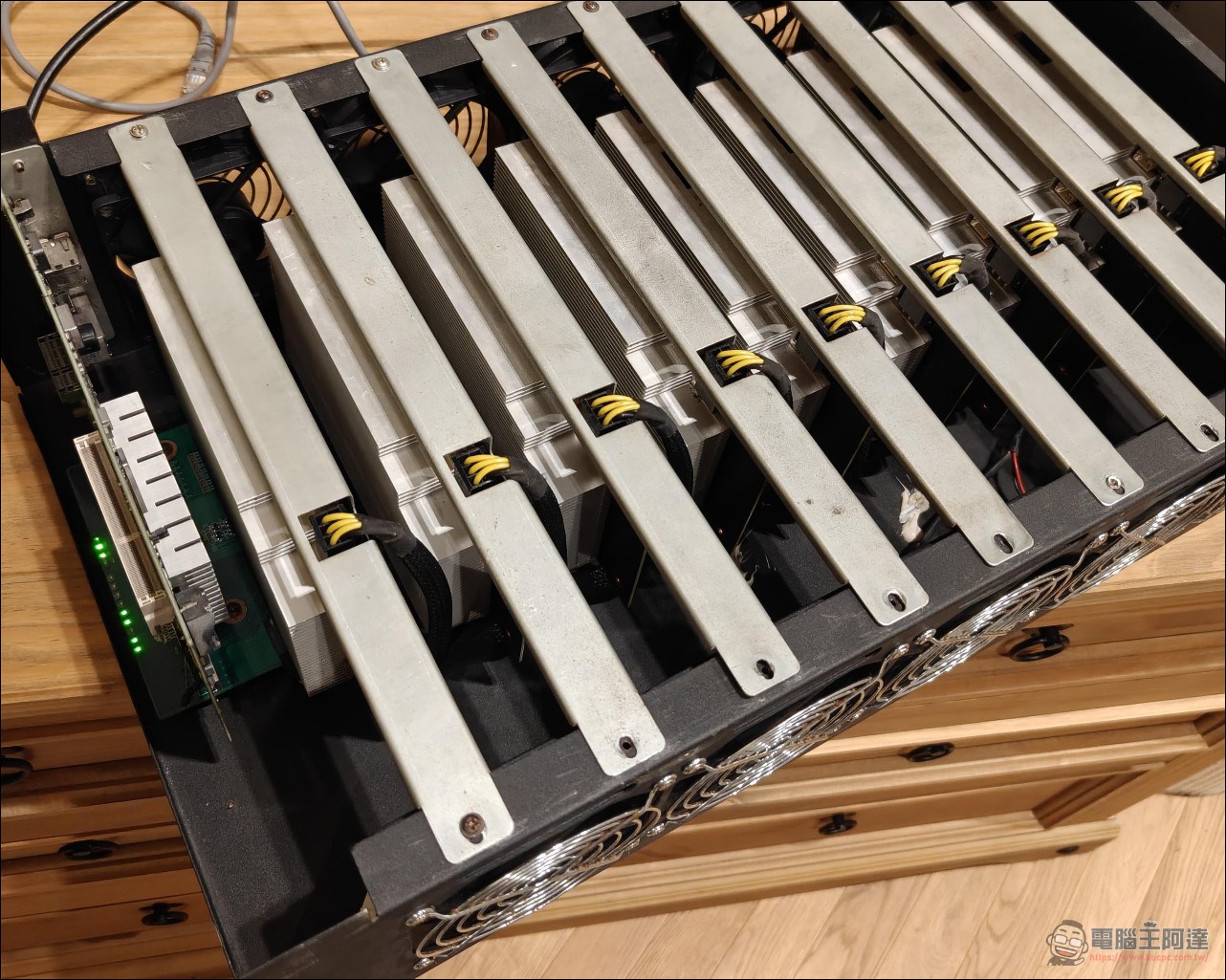
9 P106 mining cards, 6GB each — haggled down from 5,000 rubles to 3,000.
According to Reddit forum r/LocalLLaMA user markpronkin, this mining rig was equipment left in a garage by a former miner. The seller originally asked 5,000 rubles (about $60), but after negotiation it sold for 3,000 rubles ($35; about NT$1,120). At the heart of the setup are 9 NVIDIA P106 dedicated mining cards, architecturally equivalent to a display-output-less version of the GeForce GTX 1060, each with 6GB VRAM, for a total of 54GB of video memory across the machine. The P106 is a pure compute card NVIDIA launched in the 2016 Pascal generation. It has no video output ports; at the time, to avoid cannibalizing GTX 1060 sales, NVIDIA deliberately blocked the DirectX API and limited PCIe bandwidth.
Can run 27B or even 70B quantized models, but there are quite a few bottlenecks.
Although this rig may look a bit bare-bones or outdated, its 54GB of VRAM is enough to support 8-bit quantized 27B-class models, and with 4-bit or 5-bit quantization it can even load extremely large models with 70B parameters. In real-world testing, the buyer ran Qwen3.6 35B-A3B on Ollama and got a generation speed of over 30 tokens per second; he believes it can be even faster after optimization. This machine doesn’t even have an SSD—it can boot from a single USB flash drive.
Behind the extremely low price are obvious architectural limitations: the P106 lacks Tensor Cores designed specifically for tensor operations, and mining rigs generally connect GPUs via PCIe 3.0 x1 interfaces, causing severe bottlenecks in data transfer between GPUs. The main reason is that VRAM capacity is not the metric that determines a model’s prefill and token generation speed (it mainly determines how large a model can run); memory bandwidth is what actually matters. Pascal-generation cards are slow by today’s standards. Still, compared with AI workstations that cost thousands of dollars, spending only $35 to get 54 GB of VRAM is still a very cost-effective case of recycling and reuse (though whether the electricity cost of running it is worthwhile is another matter).
Ex-Mining Hardware Becomes an Affordable AI Option as Debate Over Reusing Old GPUs Heats Up
After the cryptocurrency mining boom subsided, a flood of second-hand mining hardware entered the market, becoming a way for budget-conscious tech enthusiasts to build AI computing platforms. One of the hottest recent examples is the old NVIDIA mining card CMP 170HX: after hidden compute power, VRAM capacity, and bandwidth were unlocked, its price was driven up tenfold in a short period. These are cases of old machines that would otherwise be scrapped or recycled being brought back to life. However, they generally require a certain amount of technical skill and luck (after all, they have been in use for a long time), so ordinary users are still advised not to gamble on buying such cards.
Source: KOCPC Chinese