


Android’s built-in photo picker has long provided a unified media sharing interface for many apps, and this feature may soon gain an additional layer of security protection. According to recent code analysis, Google appears to be planning to integrate the existing Sensitive Content Warning (SCW) feature into Android’s photo picker, thereby offering extra alerts and protection when users send or receive images that may contain nudity.

Android photo picker will introduce sensitive content warnings to reduce the risk of accidentally sending private photos.
Currently, the sensitive content warning feature is being rolled out first in Google Messages. Using on-device AI technology, it automatically detects nudity that may appear in photos and videos, blurs the media before it is displayed, and warns the user. When receiving such content, users can choose whether to unblur and view it. Before sending content, the system also asks for additional confirmation to ensure users really intend to share these sensitive images, helping prevent accidental or careless disclosure of personal private photos.
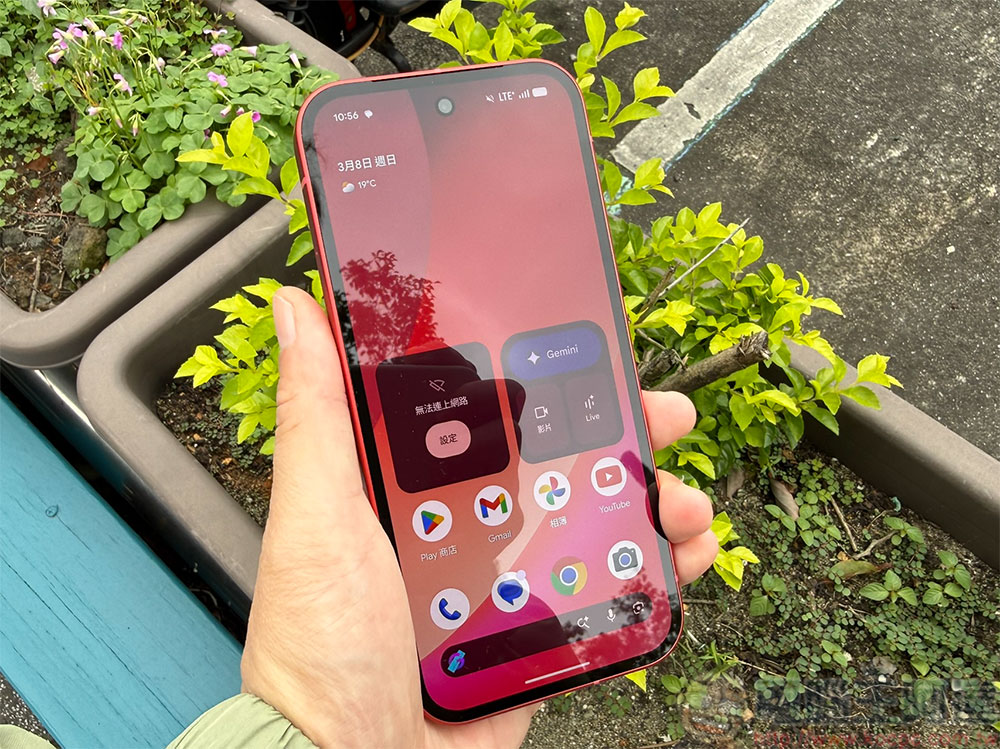
According to foreign media Android Authority A code analysis reveals that Google is attempting to extend the application of SCW technology from Google Messages to the Android photo picker. Since many third-party apps rely on this photo picker for image and video sharing, once integrated, more apps will be able to share the same security protection mechanism in the future, further enhancing content security across the overall Android ecosystem.

For users who have not yet encountered this feature, the sensitive content warning is essentially a content recognition system that operates entirely on the local device. All analysis processes are completed within the phone itself, and in theory, photos are not uploaded to Google servers for detection. Through this approach, Google hopes to protect personal privacy while also reducing the likelihood of users being exposed to inappropriate content.
Regarding activation, adult users must enable this feature themselves. However, for Google accounts under parental supervision or managed accounts, such as children’s accounts, the system enables it by default. For teen accounts aged 13 to 17, parents can still choose to turn off this protection through supervision settings, allowing adjustments based on family needs.
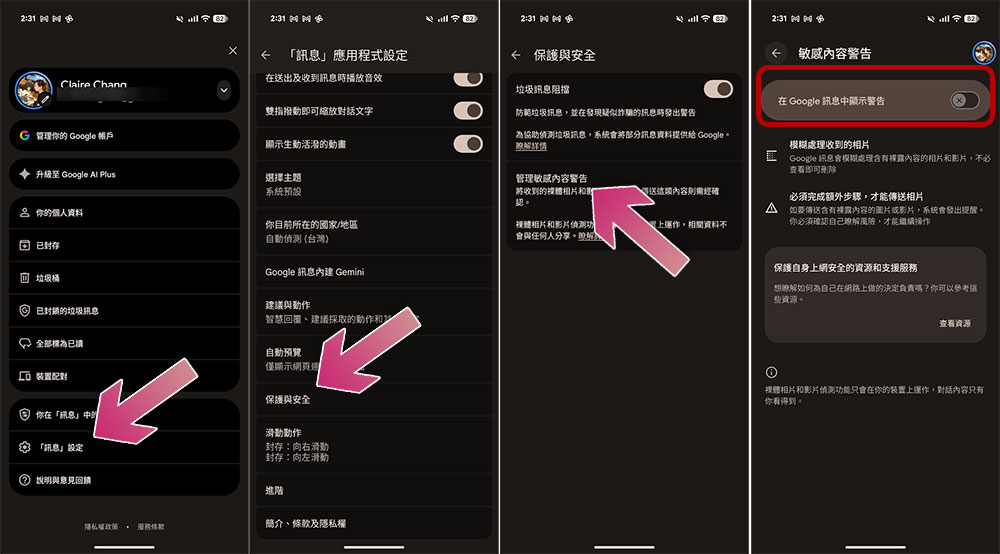
【Activation Path】
- In the messaging app, tap your profile picture in the top right corner.
- Select “Message Settings”.
- Click “Protection and Security.”
- Click “Manage sensitive content warnings.”
- Turn on the “Show warnings in Google Messages” switch.
From a security perspective, Google’s intent here is quite clear. As visual communication becomes increasingly common, the risk of minors or other vulnerable groups being exposed to inappropriate content continues to grow. By incorporating sensitive content detection and reminders into the photo-sharing process, the likelihood of accidental exposure to explicit imagery can be effectively reduced, and it can also discourage users from sending private photos without adequate forethought.

However, this technology is not without vulnerabilities. If users choose to send image files in a regular file format rather than through the photo or video sharing process, it is still possible to bypass the relevant protections. As such, SCW is better suited as a risk-reduction mechanism than as a 100% reliable safeguard. Still, even if it cannot completely eliminate all issues, improving security in most scenarios holds considerable value.
On the other hand, this development has also reignited discussions about the role of technology companies. Although Google emphasizes that all content analysis is performed on-device to protect personal privacy, for some users, having the system proactively determine which content qualifies as sensitive information inevitably raises concerns about surveillance and control. Striking a balance between content safety and user autonomy will be a key challenge that Google must continue to address as it advances such features in the future.

Overall, the expansion of the sensitive content warning feature demonstrates Google’s commitment to creating a safer Android environment. While the technology still has its limitations and comes with controversies over privacy and freedom, this measure holds positive significance in protecting minors and preventing the unauthorized spread of private images. If it is formally integrated into the Android photo picker in the future, it could become an important milestone in mobile content safety.
Source: KOCPC Chinese