


XiaomiCEO Lei Jun personally gave a preview today.Xiaomi 18 Fold It will be officially released at 7 PM on September 7. This marks the first update to Xiaomi’s large foldable product line after a long silence, and it is also the first to feature Xiaomi’s self-developedXRING O3 The phone with the processor. Based on leaked engineering unit photos and official information, Xiaomi has made a clear shift in foldable design this time: it no longer pursues the narrow, elongated book-style ratio, but instead adopts a shorter, wider body shape, making the unfolded inner screen closer to a landscape tablet reading experience. Lei Jun wrote in his post: “When closed, the 5.38-inch outer screen is compact and exquisite, easily held in one hand; when opened, the 7.58-inch inner screen is slim and expansive, opening up a broad view at a glance.”
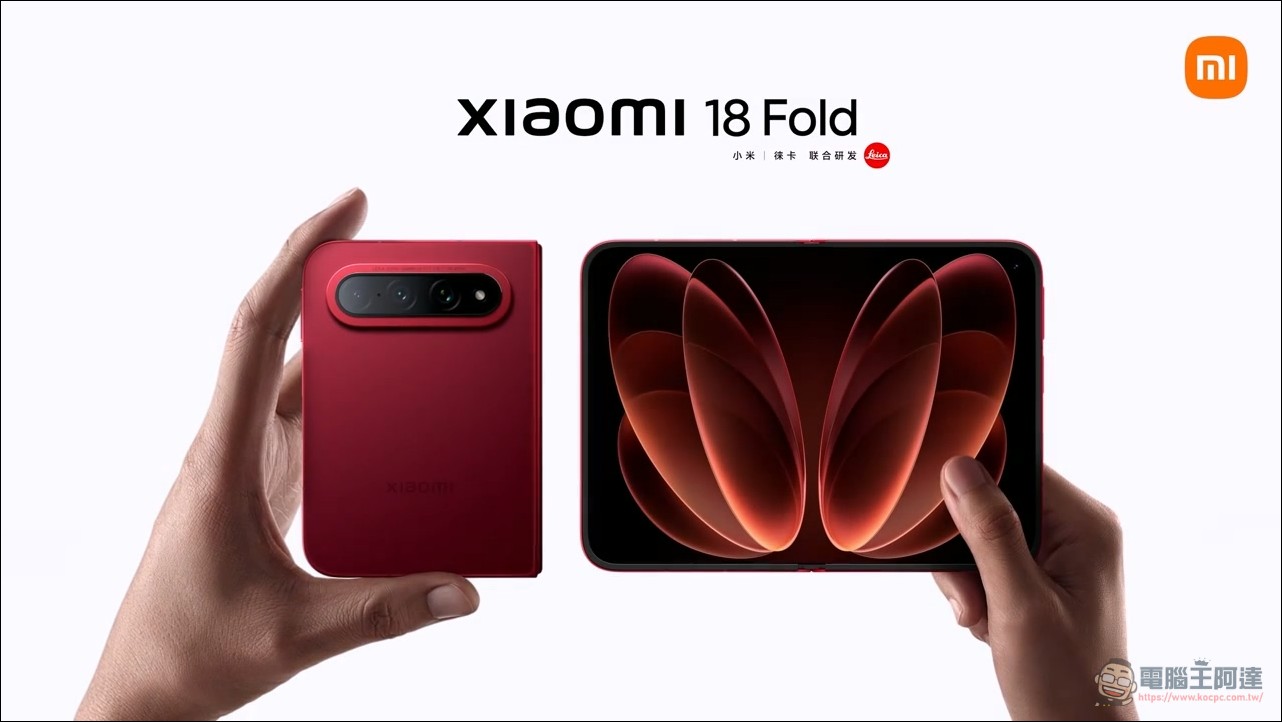
Lei Jun officially announces Xiaomi 18 Fold: bidding farewell to the narrow foldable design, a new “widescreen” form debuts on September 7
Wide-body design makes a comeback: from Galaxy Z Fold 8 to Xiaomi 18 Fold.
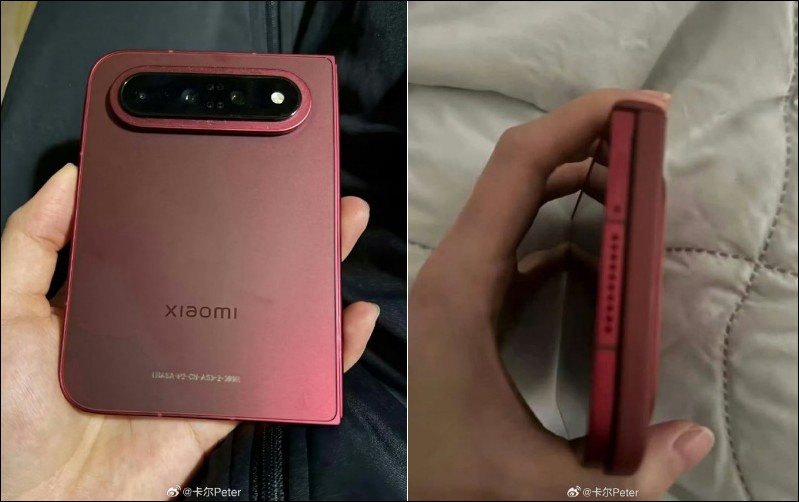
From the engineering unit photos leaked from the Weibo account “卡爾 Peter,” the Xiaomi 18 Fold’s body proportions are noticeably wider than its predecessor. This “wide design” is gradually becoming a new trend in the foldable phone market. Samsung’s Galaxy Z Fold 8 was the first to adopt a similar wider aspect ratio, Huawei’s Pura X has also followed the same path, and now Xiaomi is joining in—suggesting that the era of narrow, tall foldables may be over (though another major reason could be that the iPhone Ultra is likely to adopt this kind of design).
The advantage of the wider aspect ratio is intuitive: the outer screen is no longer overly tall and narrow, so everyday tasks like replying to messages and browsing the web feel closer to using a standard slab phone. When unfolded, the wider inner screen offers clear advantages for watching videos, reading documents, and multitasking. For users who frequently handle documents or work in split-screen on a foldable phone, this is a meaningful upgrade in experience.
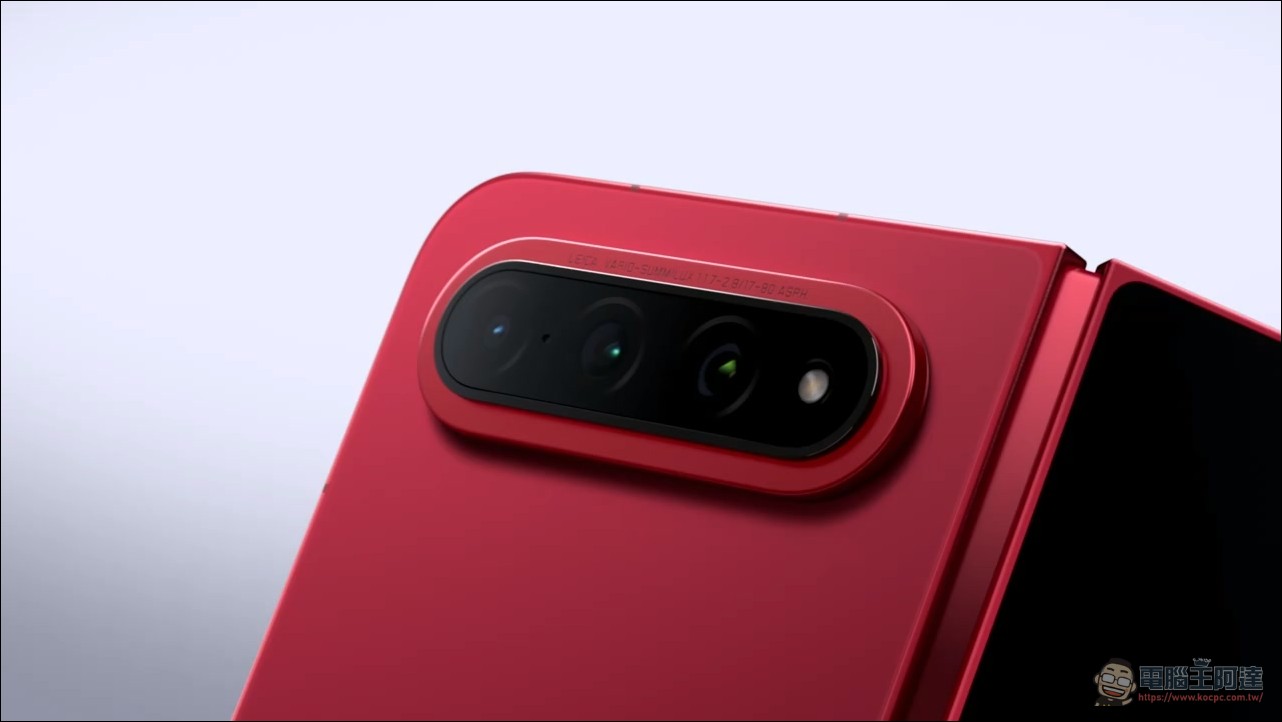
For the exterior, the leaked photos show the Xiaomi 18 Fold features a horizontally extending camera module on the back, with a triple-lens configuration where the cameras are clustered toward the upper portion of the device. The back cover has a wine red tone, a color scheme that echoes the phone color Lei Jun has previously used publicly.
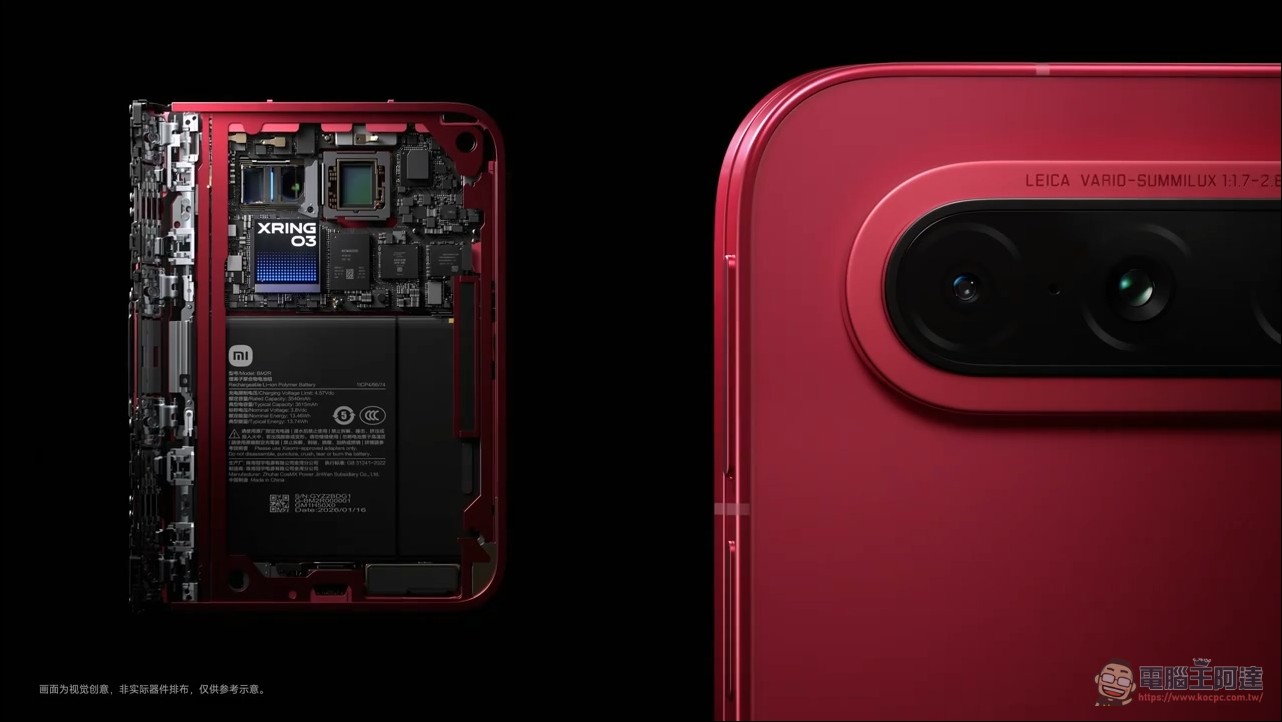
XRING O3 Processor: A Pivotal Battle in Xiaomi’s Self-Developed Chip Efforts
The core highlight of the Xiaomi 18 Fold is that it is expected to debut with Xiaomi’s next-generation self-developed processor, the “XRING O3.” At a technical communication meeting on August 24, Xiaomi officially unveiled this chip to the public and confirmed that the 18 Fold will be the first device to feature it.
According to currently leaked performance data, the XRING O3 can score around 5.22 million points on AnTuTu, which is notably higher on paper than the roughly 3.8 to 4 million points seen on many devices powered by the Snapdragon 8 Elite Gen 5.
The CPU side is rumored to adopt a 10-core architecture, with the core configuration leaning toward a high-performance design. Multi-core tests are said to exceed 15,000 points, an improvement of about 60% over the previous-generation XRING chip. As for the GPU, it is reportedly using the G2-Ultra NX, with graphics performance claimed to improve by about 85% while power consumption drops by about 64%.
If these numbers can be maintained on mass-produced units, they will be especially critical for foldable phones. Large internal screens and multitasking naturally tend to increase power consumption, and whether performance and power draw can be balanced will directly affect real-world battery life and heat generation. Xiaomi choosing to debut its self-developed chip on a foldable flagship, rather than first testing the waters with a regular bar-style flagship, also shows its confidence in this chip.
Specs at a glance: 200MP main camera and 6,000mAh large battery
Besides the processor, the Xiaomi 18 Fold has several other highlights in its specifications. Based on information compiled by multiple media outlets, the known core specifications are as follows:
- External screen5.38 inches, suitable for everyday one-handed use.
- Internal screen7.58 inches (some sources report 7.6 inches), with a wide aspect ratio design
- ProcessorXiaomi XRING O3 (XRING O3) self-developed chip
- Rear cameraTriple camera setup, with the main camera upgraded to 200 megapixels (200MP).
- battery6,000mAh large capacity, supports wireless charging
- Operating systemHyperOS 4 Global Debut
- Published dateSeptember 7, 2026, 7:00 PM (China market)
The addition of a 200MP main camera makes the Xiaomi 18 Fold’s imaging capability no longer just a “secondary feature.” In the past, foldable phones were limited by internal space, and their camera specs often sat one tier below the slab flagships of the same generation. This time, Xiaomi has gone straight to the 200MP level, clearly aiming to break the stereotype that foldable phones inevitably compromise on photography.
Pricing strategy: expected to exceed the 10,000 mark, high-end models to launch first.
According to a report from Sina News, the Xiaomi 18 Fold is expected to exceed 10,000 RMB (approximately NT$44,000 or more). This price point places the 18 Fold directly into the high-end foldable market, competing with Samsung’s Galaxy Z Fold series and Huawei’s Mate X series.
Xiaomi’s product release cadence also reveals its strategic intent: the foldable 18 Fold launches first in September, followed by the 18 Pro and 18 Pro Max, while the standard Xiaomi 18 is expected to be delayed until early 2027. This approach of leading with premium models while pushing volume sellers to the rear suggests Xiaomi aims to elevate its brand positioning through its self-developed chip and new foldable form factor, rather than rushing to grab market share with low prices.
Market Watch: The ‘Widescreen’ Wave in Foldable Phones
The Xiaomi 18 Fold’s wide-body design reflects exactly the structural shift the foldable phone market is undergoing. Industry analysts note that with rumors swirling about Apple’s upcoming first foldable device, brands including Huawei, Samsung, and ASUS are all gravitating toward wider, shorter body proportions.
The logic behind this shift is clear: narrow foldable screens deliver a poor experience for watching videos and browsing the web, and the overly slim outer display makes everyday operations feel awkward. Now that Apple is entering this market with its “experience-first” product philosophy, every Android foldable maker must rethink its form-factor design, or risk falling behind when consumers compare their options.
At this point in time, Xiaomi’s launch of the 18 Fold serves two purposes: staking a claim in the foldable market, and proving to the market the strength of its self-developed chips. If the XRING O3 delivers performance and power efficiency at the claimed level, then Xiaomi isn’t just “making a foldable phone” — it’s “making a flagship foldable phone with a self-developed chip.” The difference in brand significance between the two is enormous.
Conclusion
Xiaomi 18 Fold will be officially announced on September 7, with full specifications, pricing, and launch plans revealed at that time. The release date and price for the Taiwan market have not been announced yet, but based on Xiaomi’s previous experience where devices powered by the XRING O1 processor were not sold outside of China (due to production capacity issues), Taiwan likely won’t have the chance to experience this flagship phone. Still, hopefully Xiaomi Taiwan will have an opportunity to bring it in.
Source: KOCPC Chinese