


Apple users should have recently felt the sting of computer shortages, because besides competing with people who’ve started using Apple devices over the past two years due to AI, now AI giants are also joining the race to snap up machines—and they’re placing orders starting in the tens of thousands! According to an exclusive report from The Information, OpenAI has purchased tens of thousands of Mac mini and Mac Studio units to enhance its learning and training of AI agents capable of operating computers autonomously (computer-use agents). And it’s not just OpenAI—the same report notes that Anthropic has been renting Mac mini computing resources through Amazon AWS to handle similar workloads.
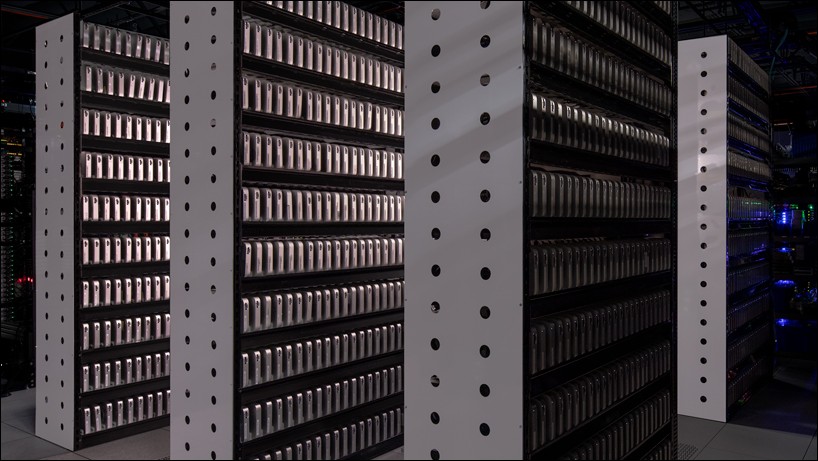
Two AI giants snap up Mac mini and Mac Studio
Why do AI companies need Macs?
On the surface, this seems a bit contradictory. OpenAI and Anthropic have been fighting fiercely over GPUs these past few years, deploying hundreds of thousands of NVIDIA H100/B200 chips at a time—so why would they turn around and buy a Mac mini that costs a few tens of thousands of NT dollars? The issue comes down to different training objectives.
GPU clusters excel at large-scale matrix operations, which are used to train the backbone networks of language models. But the computer-use agent (CUA) that OpenAI is developing requires a different training approach: the model repeatedly attempts to operate computer interfaces through reinforcement learning, seeing the screen, clicking the mouse, typing on the keyboard, and then learning from the results. This “observation → action → feedback” loop needs to run on real operating systems, not in GPU virtualized environments.
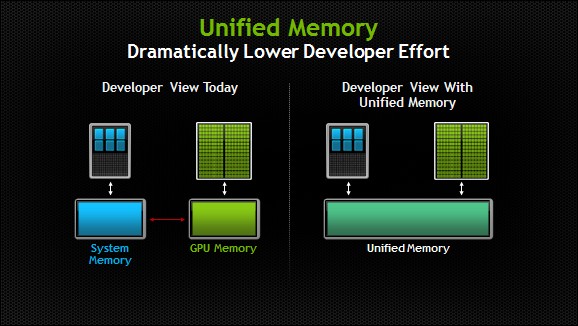
Mac’s Unified Memory Architecture becomes a key advantage here. AI agents need to simultaneously load model weights, maintain on-screen context, and process streams of mouse and keyboard events during operation—these memory access patterns are entirely different from GPU training, making high-capacity unified memory a better fit. This is also why OpenAI chose the Mac mini and Mac Studio: both models offer a higher memory ceiling within the same compact form factor. (Editor’s note: I think another reason is that most AI developers are already in the Mac ecosystem)
Anthropic chooses the AWS route
Anthropic takes a slightly different approach. Instead of sourcing hardware themselves, they rent Mac minis through AWS EC2 Mac instances. AWS has offered bare-metal Mac mini (dedicated host) plans since late 2020, with each instance corresponding to a standalone Mac mini host. The advantage of this route is flexibility—there’s no need to make a large upfront purchase of hardware, and usage can be scaled up or down based on training demands.
But both approaches point to the same phenomenon: the training demands for AI agents have grown so large that both companies are willing to bypass the GPU ecosystem and embrace traditional desktop hardware instead. This is not a fleeting experiment. Sources from The Information reveal that OpenAI has already purchased “tens of thousands” of units, and is urgently looking to scale up that number further.
The AI order that caught Apple off guard
According to reports, Apple has no internal engineering team dedicated to serving enterprise customers and lacks an enterprise AI strategy. Some enterprise customers who wanted to purchase access to Private Cloud Compute were directly turned down by Apple.
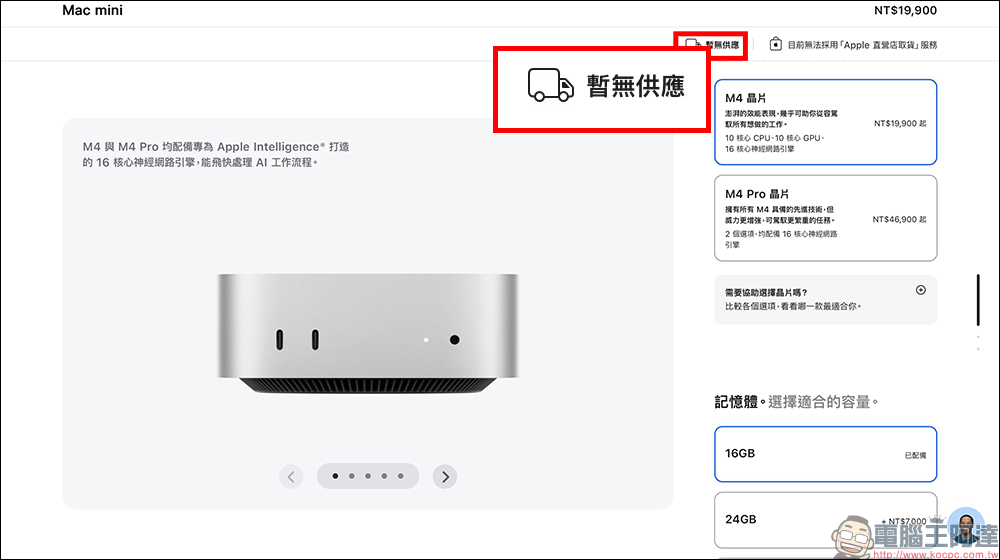
The result is that demand from AI labs has directly cleared the shelves. Starting in the first half of this year, high-end Mac mini and Mac Studio configurations have been consistently out of stock, with some models facing wait times of several weeks. Behind this are not only OpenAI’s purchase orders, but also a new wave of “neocloud” providers—such as Mount Thor, a startup that builds cloud services using Apple hardware—raising funds to expand pure-Mac infrastructure.
The Mac is becoming Apple’s AI growth engine.
This demand has already been reflected in the financial figures. Apple’s Q3 2026 earnings report (for the period ending June 27) shows that Mac revenue reached $10.35 billion (approximately NT$336.4 billion), up 28.7% year over year, significantly exceeding analysts’ expectations of $8.74 billion and surpassing the growth rates of both iPhone and the services business. The analysis suggests that AI demand may be one of the indirect drivers behind Mac’s better-than-expected revenue, but Apple officials did not specifically quantify AI’s contribution to Mac sales during the earnings call.
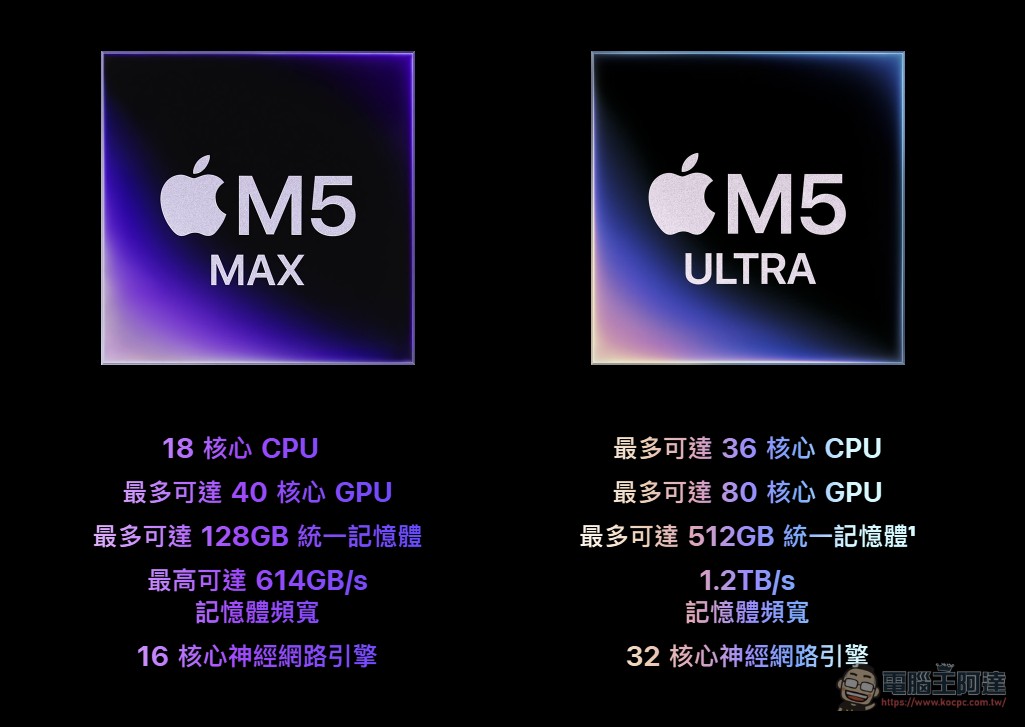
The timing is also quite interesting. Just one week before The Information published its report, Apple had unexpectedly released the new Mac mini (M6/M5 Pro) and Mac Studio (M5 Max/M5 Ultra) on August 25. This launch of the Mac mini and Mac Studio came earlier than Apple’s customary fall update, with enterprise AI demand being one of the driving factors.
The chip specifications also reflect this direction. The top-tier M5 Ultra uses a four-die 3nm package and can be configured with up to 512GB of unified memory, exceeding what average consumers need for video editing—this enables developers to load and run large-scale open-source models on a single Mac Studio.
How does NVIDIA view this?
This trend has also caught NVIDIA’s attention. Aaron Tilley’s report noted that NVIDIA has begun to view Apple as a major competitor in on-device AI processing. Compared to GPU servers that can easily cost millions of dollars, the Mac mini’s pricing strategy allows AI labs to deploy the endpoint devices needed for agent training at a relatively low cost and at scale.
But this doesn’t mean Macs are going to replace GPU clusters. The division of labor between the two is clear: GPU clusters handle the training and inference of language models themselves, while Macs handle the training and testing of agent behavior. What’s worth paying attention to is that this division of labor model could change the procurement structure of AI infrastructure—future AI labs may need both GPU farms and Mac farms.
Some enterprise customers who have already been squeezed out of the market have turned to the DGX Spark, which NVIDIA launched last year. This compact AI desktop is similar in size to the Mac mini, and although its target audience overlaps slightly, it shows that there is indeed a market gap for “desktop-class AI hardware.”
Summary
This exclusive report from The Information sheds light on an overlooked phenomenon: Mac desktops are becoming the foundational hardware for AI agent training. OpenAI’s tens of thousands of orders and Anthropic’s AWS rental plans have turned the Mac mini and Mac Studio from consumer desktops into AI training infrastructure. Although the 28.7% revenue growth in Mac cannot be entirely attributed to AI—it also includes the effects of the M4/M5 chip generation upgrade—the demand from AI labs has indeed grown large enough to influence Apple’s product release cadence and supply situation.
For Taiwanese readers, this news has an additional personal dimension: if you’ve recently tried to buy a Mac mini or Mac Studio only to find high-end configurations out of stock, the reason might be that your order is competing with OpenAI’s training clusters for shelf space.
Source: KOCPC Chinese