


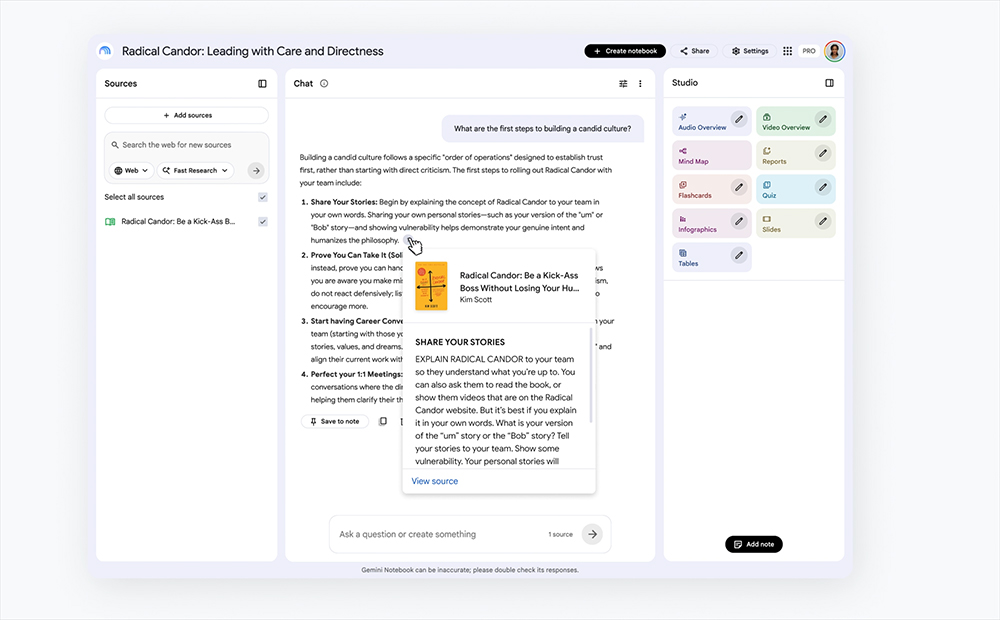
Google is further adjusting the usage rules for its AI product, Gemini Notebook. Going forward, it will no longer use a fixed number of interactions as the primary limitation, but will instead adopt a “compute resource quota” model consistent with the Gemini platform. This change means that users’ available allowances will be determined by the actual AI computing resources consumed, including factors such as the complexity of prompt content, the type of features used, model specifications, and the length of interaction time.
Google Adjusts Gemini Notebook Usage, Switching to a Compute Resource Quota Model from September
Before May of this year, Google primarily used a “prompt count” method to calculate daily usage limits for Gemini, meaning the cap was determined by how many requests users sent. This approach differed from OpenAI’s ChatGPT and Anthropic’s Claude, both of which generally use token consumption as the limiting standard, allowing for a more accurate reflection of actual AI computing resource usage.
However, after the Google I/O conference in May 2026, Google has begun shifting the Gemini platform entirely to a compute-resource-based usage model. In addition to the change in calculation method, the quota update cycle has also been shortened from the previous 24 hours to a refresh every 5 hours, allowing users to allocate and manage available quota more flexibly. However, at that time, Gemini Notebook, still operating under the name NotebookLM, did not immediately follow this policy. The service continued to use feature-usage counts as the basis for limits. For example, the free plan allows users to create up to 3 audio or video overviews and complete 10 reports or quizzes per day; as for Ultra subscribers, they can perform up to 5,000 chat queries per day and use the audio or video overview feature 200 times.
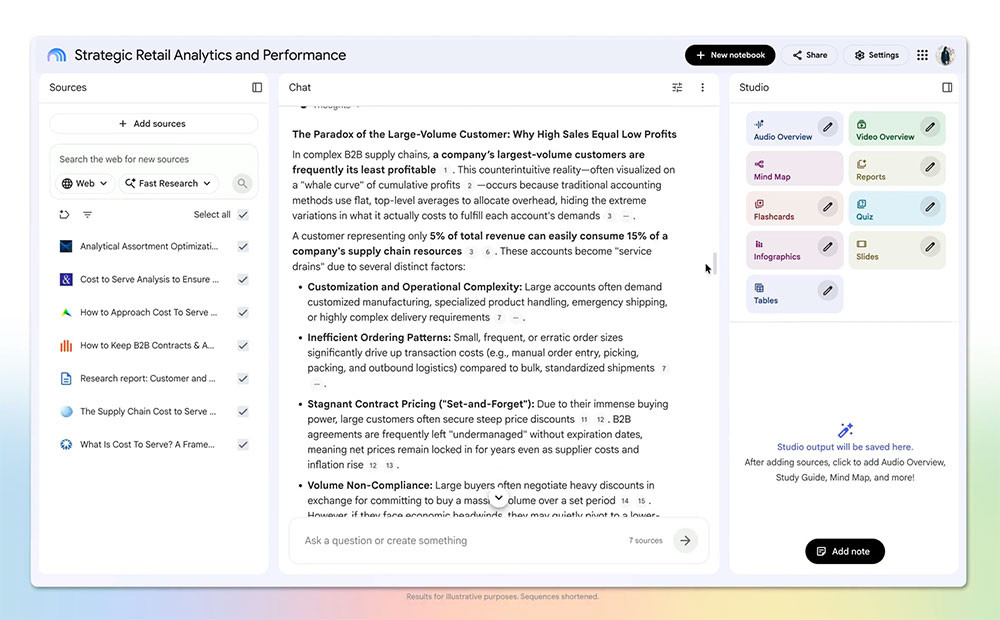
This system is about to officially become history.Google announcedStarting September 2, 2026, Gemini Notebook will fully implement a compute-resource-based quota system. According to the official explanation, the system will dynamically calculate resource consumption by evaluating factors such as prompt complexity, the selected AI model, feature category, chat duration, and frequency of specific feature usage. Reaching the current quota limit does not mean users are completely unable to continue using the service that day. Google stated that system quotas will refresh every 5 hours until the weekly usage limit is reached. Users who need higher usage limits can also upgrade their subscription plan to obtain larger resource quotas.
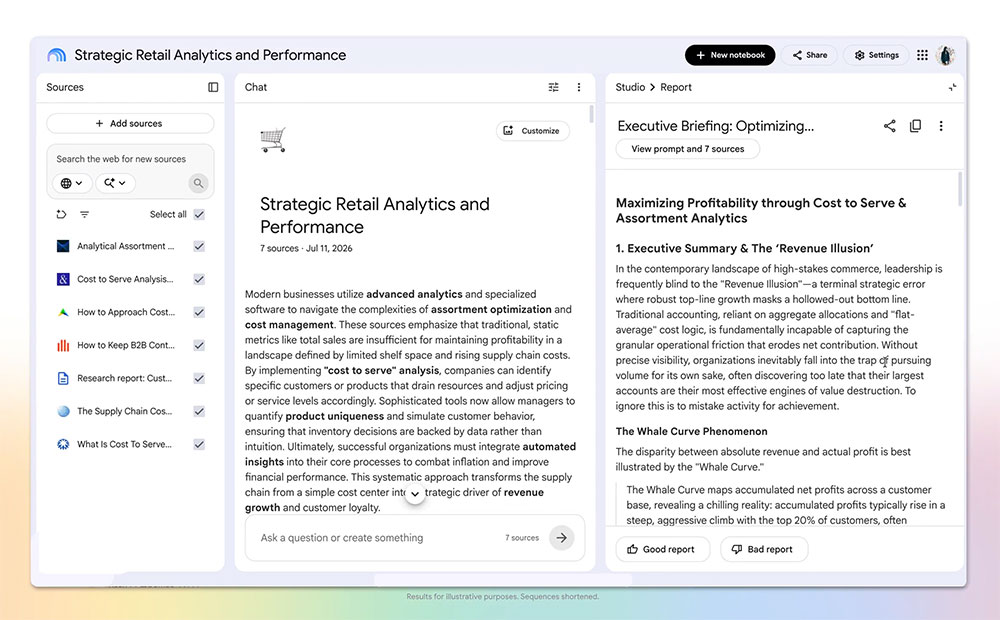
Under the new plan framework, free users will receive a “standard quota.” The available quota for the AI Plus subscription plan is doubled compared to the standard version; AI Pro is further increased to four times. As for AI Ultra users, they will enjoy higher resource limits depending on their subscription tier, with the $100 plan offering five times the quota and the $200 plan reaching up to 20 times the standard limit.
Besides adjusting usage limits, Google has also improved the user experience of certain features. If the output format a user selects exceeds the currently available quota, the system will proactively suggest switching to a more resource-efficient output method. Additionally, when high-compute content such as video overviews or presentation slides cannot be generated immediately due to quota restrictions, users can choose to schedule generation for a later time. Once the content is ready, Gemini Notebook will proactively send a notification, so users don’t have to keep waiting.
Overall, Google hopes that through a more flexible approach to managing computing resources, AI resources can be allocated more efficiently based on actual demand, while providing clearer user experiences and upgrade value for subscribers at different tiers.
Source: KOCPC Chinese