


NVIDIA made several major announcements at the Hot Chips 2026 conference on August 24, the most notable being its deep partnership with SpaceX. SpaceX CEO Elon Musk subsequently confirmed on X that SpaceX and NVIDIA have co-designed a Vera Rubin NVL72 system optimized for space environments, scheduled to launch into orbit in Q4 2027 and reach large-scale deployment by 2028. Musk emphasized that the system’s design is simpler, lower-cost, higher-density, and lighter than traditional racks.
SpaceX, in partnership with Nvidia, has designed a space-optimized Vera Rubin NVL72 system for launch to orbit in Q4 next year, with significant scale in 2028 https://t.co/qdDq8YBkzl
— Elon Musk (@elonmusk) August 24, 2026
NVIDIA announces: Vera Rubin NVL72 is expected to enter orbit in Q4 2027.
This collaboration covers two aspects: on the ground, SpaceXAI will deploy NVIDIA’s newly announced Vera CPU to accelerate the computing needs of its AI applications; in space, SpaceX plans to mount the entire Vera Rubin NVL72 rack-scale system on the first-generation Starmind AI satellite, bringing the ground-based AI supercomputing architecture directly into orbit. NVIDIA described the collaboration as “from gigawatt-scale AI factories to orbit, the same NVIDIA architecture, everywhere.”
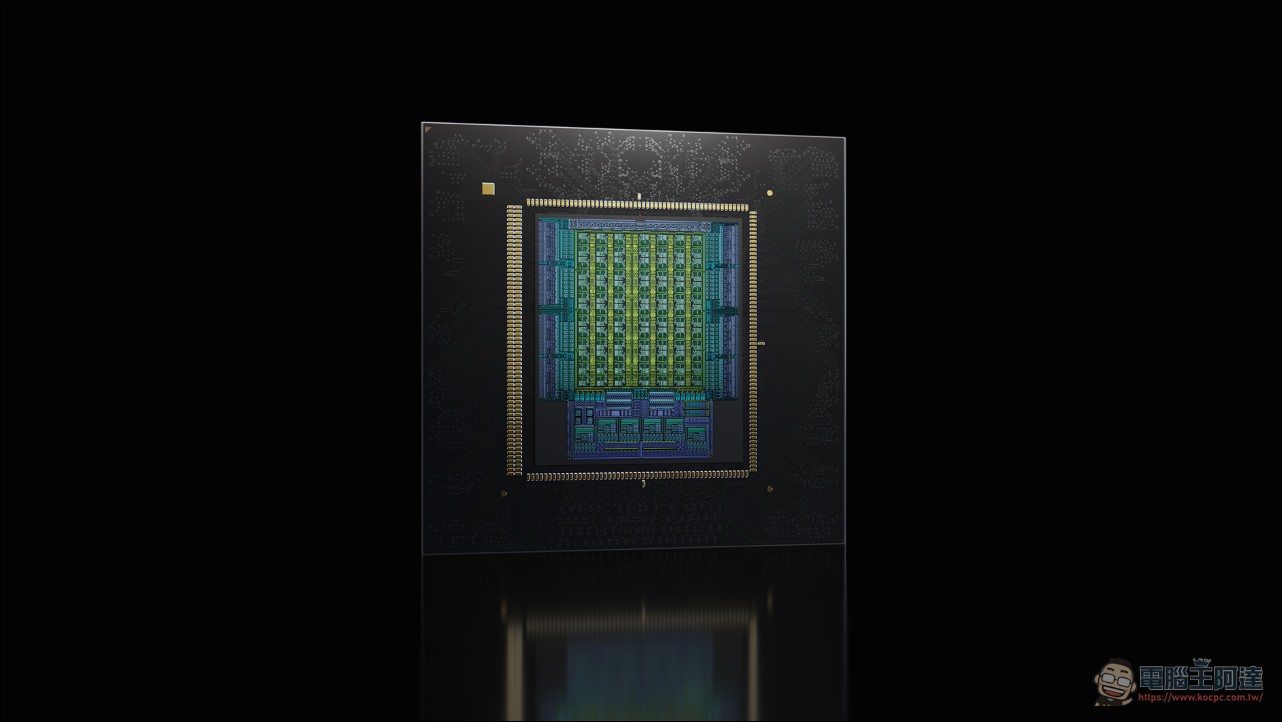
NVIDIA Vera: The First CPU Built for AI Agents
NVIDIA positions Vera as “the first CPU built for AI agents.” Unlike traditional inference workloads, agentic AI applications require substantial CPU compute between model calls to coordinate tools, execute code, process data, and run simulations. If the CPU side can’t keep up, GPUs sit idle waiting, and overall efficiency drops significantly. This is also why NVIDIA chose Hot Chips—an event centered on chip architecture—to unveil Vera: the CPU’s role in the agent era is being redefined.
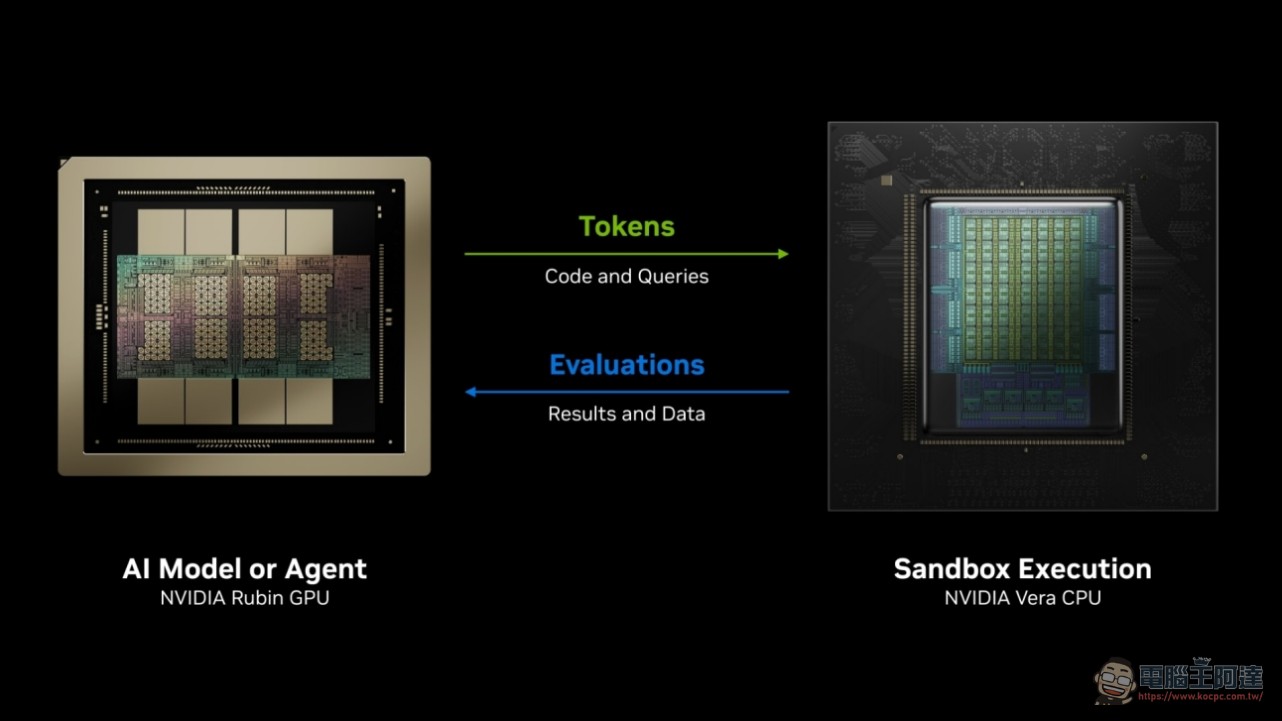
Vera is equipped with 88 NVIDIA self-developed Olympus cores, supports NVIDIA Spatial Multithreading technology, and features high-bandwidth LPDDR5X memory with up to 1.2TB/s of bandwidth. According to NVIDIA’s published specifications, Vera offers 176 threads, 1.8TB/s of NVLink-C2C bandwidth, up to 1.5TB of system memory, and 227 billion transistors. NVIDIA claims that for workloads such as agentic AI, reinforcement learning, and data processing, Vera can complete tasks up to 1.8 times faster than x86 processors.
Mike Nicolls, President of SpaceXAI, stated: “The CPU performance and memory bandwidth provided by Vera allow us to handle large volumes of coordination, code, and data processing tasks, while letting the GPU focus on what it does best. This means higher-performance AI Agents, and more effective work produced per watt of computing power.”
Vera Rubin Performance Benchmark: 30x Throughput per Megawatt
NVIDIA also released the first wave of benchmark data for the Vera Rubin platform. In SemiAnalysis’ AgentX workload testing (using the DeepSeek V4 Pro model, simulating real Agentic code-writing traces), Vera Rubin’s per-megawatt throughput can reach up to 30x that of GB300 NVL72, while token costs are reduced by up to 35x.
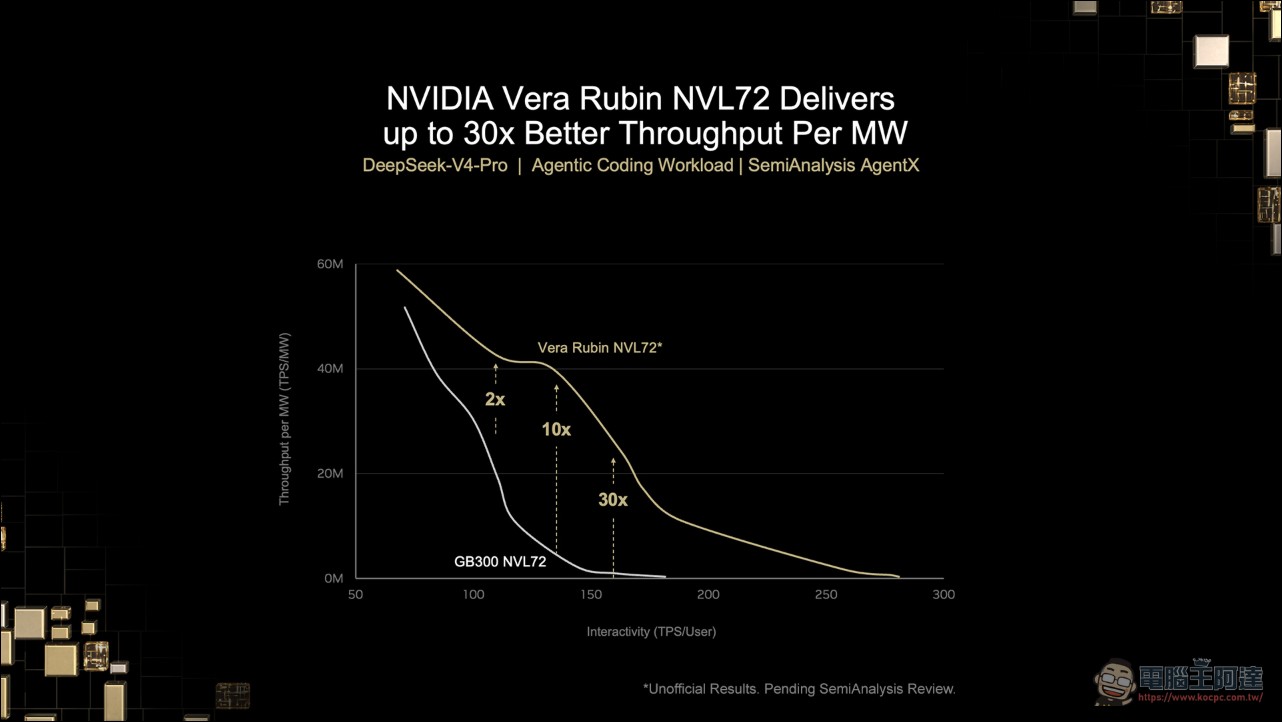
NVIDIA specifically emphasizes that agentic sessions are fundamentally different from typical chat or summarization workloads. As an agent executes tasks, its context grows continuously across hundreds of steps, potentially accumulating to hundreds of thousands of tokens. This long-sequence, multi-step working pattern places far more pressure on CPUs than traditional inference scenarios, and it is precisely the core focus of Vera’s design. In SemiAnalysis’s testing, the performance gap between Vera Rubin and the previous generation GB300 NVL72 validates the actual value of this new architecture in agentic scenarios.
From ground AI factories to orbital computing
SpaceXAI is currently expanding toward gigawatt-scale computing capacity, with infrastructure for its Grok models to be built on the Vera Rubin platform. The Vera Rubin platform integrates accelerated computing, NVLink interconnect technology, Spectrum-X Ethernet, BlueField data processing, and NVIDIA software into a unified architecture, aiming to reduce per-token costs at scale. But what’s drawing even more attention is the space-side plan.
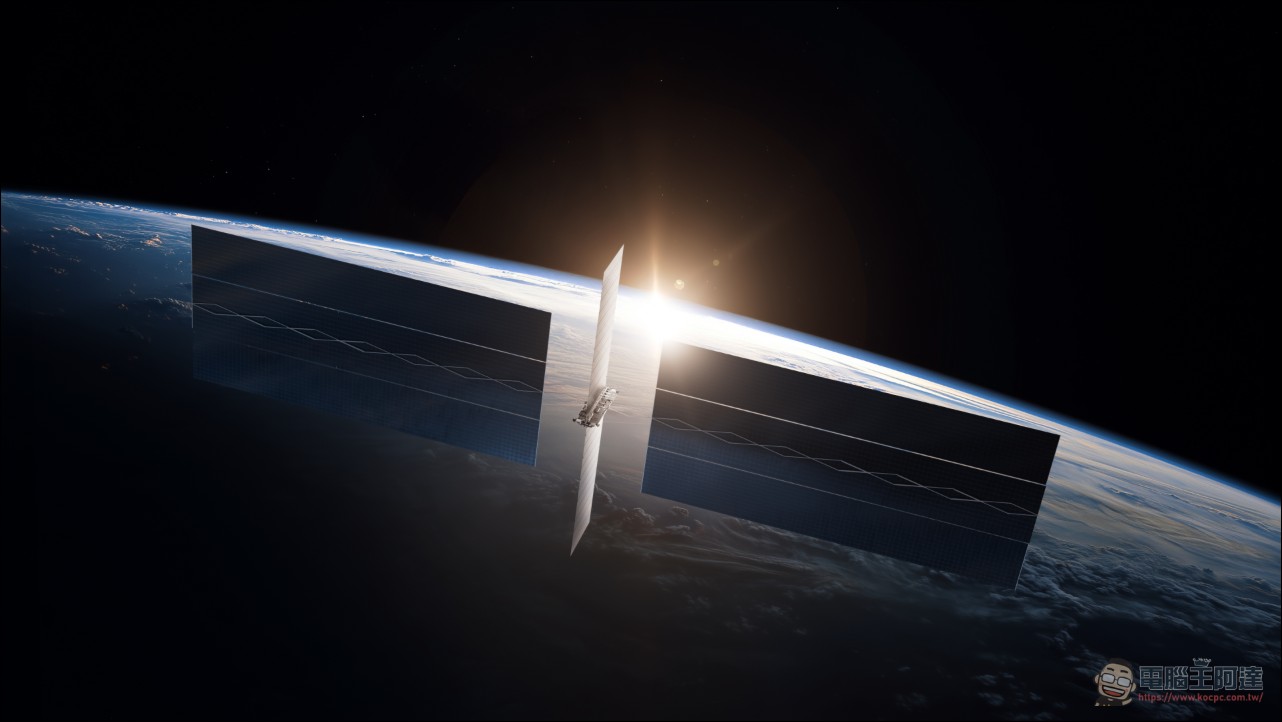
According to NVIDIA Press ReleaseSpaceXAI is developing AI computing infrastructure for orbital deployment. In the space environment, the constraints on power, cooling, bandwidth, reliability, and physical integration are fundamentally different from those of terrestrial data centers. The first-generation Starmind AI satellite planned by SpaceXAI will be based on an optimized Vera Rubin NVL72 rack-scale system, leveraging the same accelerated computing architecture and software ecosystem as terrestrial AI factories.
NVIDIA’s Vice President of Hyperscale and High-Performance Computing Ian Buck said: “Agentic AI requires a completely new computing system, not just to generate answers, but to take action. Vera enables AI agents to execute code in real time, process data, and coordinate complex tasks. SpaceXAI is pushing this architecture from large-scale AI factories to the next frontier of orbital computing.”
Technical details and challenges
A complete NVL72 system includes 72 Rubin GPUs, 36 Vera CPUs, ConnectX-9 SuperNICs, and BlueField-4 DPUs, housed in 18 compute trays plus 9 NVLink switch trays. NVIDIA says each rack, including the frame, weighs about 1,800 kilograms (4,000 pounds), roughly the weight of a pickup truck.
Each rack consumes 120kW of power and uses liquid cooling. SpaceX’s Starmind satellite design features a 210kW solar array and uses liquid radiators to dissipate heat into space. SpaceX’s Falcon 9 rocket can deliver 22,800 kg of payload to low Earth orbit, and its fairing interior has enough space to accommodate multiple NVL72 racks. SpaceX can perform over 100 Falcon 9 missions per year, theoretically giving it the capability to launch large numbers of racks into space.
SpaceX is partnering with @Nvidia to design the Starmind AI1 satellite compute payload.
Each of the Starmind satellites will include NVIDIA Rubin GPUs and Vera CPUs for datacenter class space compute → https://t.co/4MOQv0DvTQ pic.twitter.com/rC7UBAznAO
— SpaceX (@SpaceX) August 4, 2026
However, the specific meaning of “space optimization” has not yet been publicly disclosed. Outside speculation suggests it should include radiation-resistant treatment and tolerance design for launch vibrations, but whether it involves server quantity or other hardware adjustments remains unclear. NVIDIA showcased the Space-1 Vera Rubin module designed for orbital deployment at GTC 2026, but did not provide specific timelines or capacity data at the time. Additionally, NVIDIA classified the Starmind satellite program as a forward-looking statement in its official announcement, indicating that this space deployment still carries uncertainty.
Conclusion
From NVIDIA’s presentation at Hot Chips 2026 to Musk’s tweet confirmation, the SpaceX-NVIDIA collaboration showcases the ambition of extending AI computing from ground-based data centers to orbit. The Vera CPU is precisely positioned to address the CPU bottleneck in Agentic AI, while the Vera Rubin platform’s performance figures demonstrate significant improvements over the previous generation. This partnership also reflects an industry trend: as AI agents evolve from simple conversations to complex multi-step task execution, CPU-side computing power is no longer a supporting player but a critical factor determining overall system efficiency. As for whether the NVL72 can be delivered to orbit as scheduled in Q4 2027, observers remain cautious given the complexity of space missions and Musk’s track record on timeline commitments. Regardless, this collaboration has already established a concrete technical blueprint for the concept of “orbital AI computing.”
Source: KOCPC Chinese