


OpenAI early engineer and former Tesla AI Director Andrej Karpathy recently sat down with Sarah Guo, host of the well-known AI podcast No Priors. Exclusive interviewIn the 65-minute conversation, Karpathy said in the interview that he has been experiencing an “AI Agent frenzy” since December 2025, from the day he stopped writing code by hand, to using AI to build a home automation assistant named “Dobby,” to his latest published microGPT and industry-shaking auto research Autonomous research system. This interview is considered one of the most in-depth discussions on AI Agents to date in 2026; here we summarize the key points for you.

I haven’t written a single line of code myself since December.
Karpathy describes how his current software development workflow has completely changed: from “80% written by myself, 20% delegated to tools” in the past to “20% written by myself, 80% delegated to Agent” now, and he believes the ratio has long since moved past 20/80.
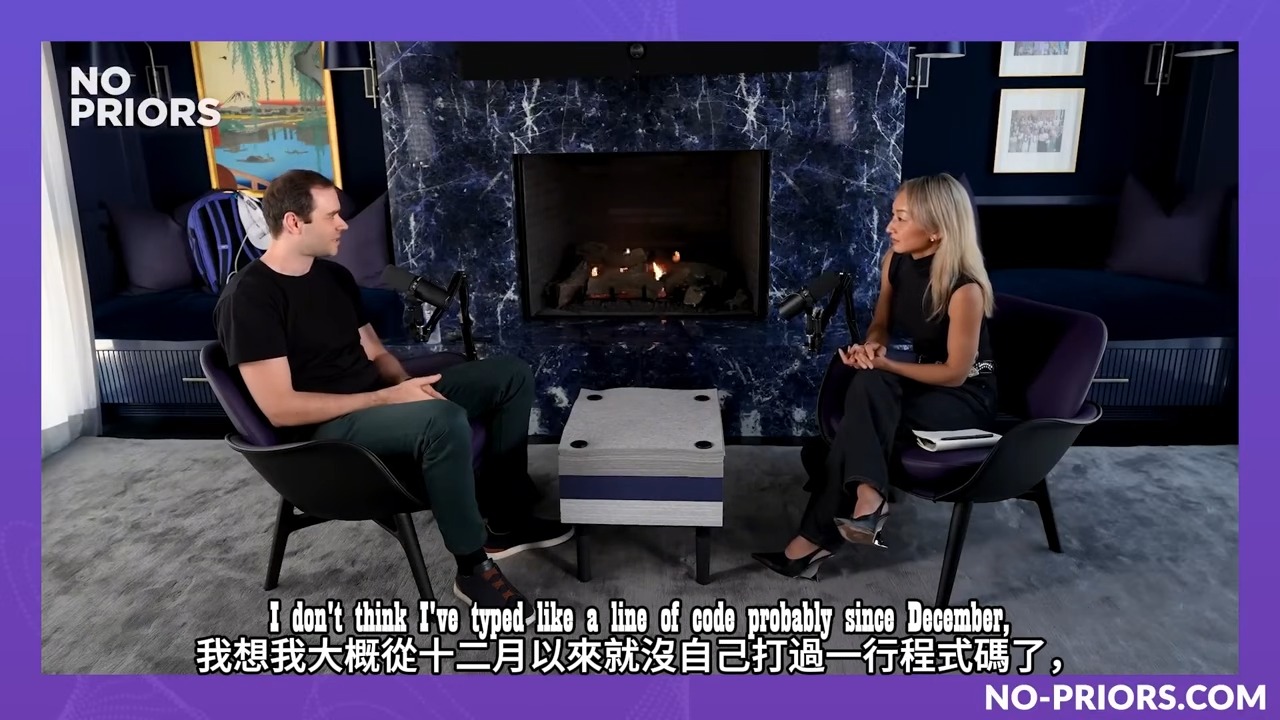
“I think I’ve probably not written a single line of code myself since December,” Karpathy said. “This is an enormous change. If you pick any software engineer at random and look at what they’re doing at their desk, the default workflow for how they build software has basically been completely different since December.”
He even described himself as being in a state of “psychosis”: constantly exploring possibilities and trying to push Agent to its limits.
Karpathy sees December 2025 as a watershed moment for software development, a timing that aligns with the maturation of several AI tools. His description is not merely a personal observation, but also reflects a paradigm shift across the entire software engineering industry.
Token is the new GPU: compute is infinite, you are the bottleneck.
Karpathy offered a sharp analogy to explain developers’ new reality: GPU FLOPs used to be the scarce resource, and researchers would get anxious when GPUs sat idle; now, token throughput has become the new scarce resource.
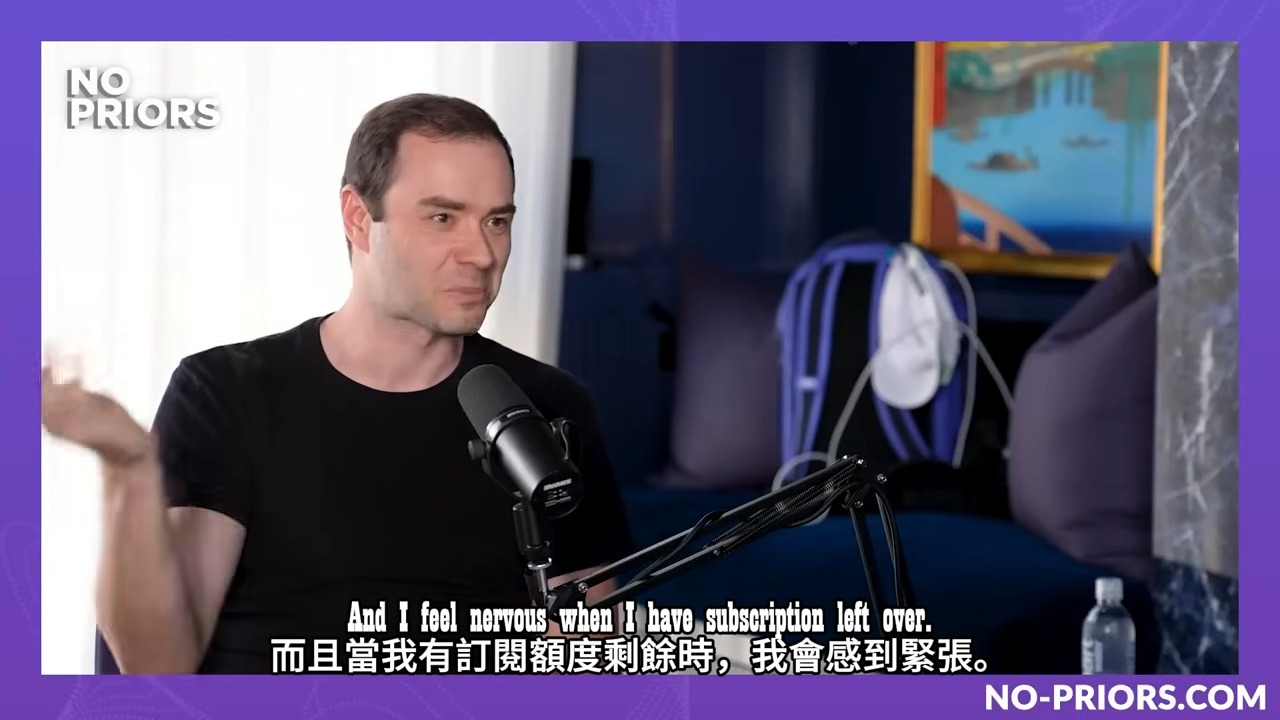
“When I have leftover credits in my subscription plan, I get nervous,” Karpathy said. “That means I’m not maximizing my token throughput. It’s like when I was a PhD student and got nervous when GPUs weren’t running. But now it’s not about FLOPs—it’s about tokens.”
He described that if multiple Agents can operate simultaneously, “you are the bottleneck in the system pursuing maximum capability. You are the constraint. This is a question of skill, not capability.”
The Peter Steinberg Effect: The Future of 20 Agents Working Simultaneously
When it comes to multi-agent collaboration, Karpathy cited the example of renowned developer Peter Steinberg. Steinberg is known for running dozens of Codex Agents simultaneously on his screen; each Agent takes about 20 minutes to complete a task and checks out multiple repos.
He doesn’t just say “here’s a line of code” or “here’s a new function,” but rather “here’s a new feature, hand it to Agent 1; here’s a non-interfering new feature, hand it to Agent 2.” Then review their work as best you can.
Karpathy believes this way of thinking about “macro actions” is a new muscle memory developers need to develop.
Dobby the Butler: AI Home Automation in a Weekend
Beyond software engineering, Karpathy shared his most interesting side project: an AI butler named “Dobby” (the house-elf from Harry Potter). In January this year, he spent about a week using Agent to complete a whole-home automation system.
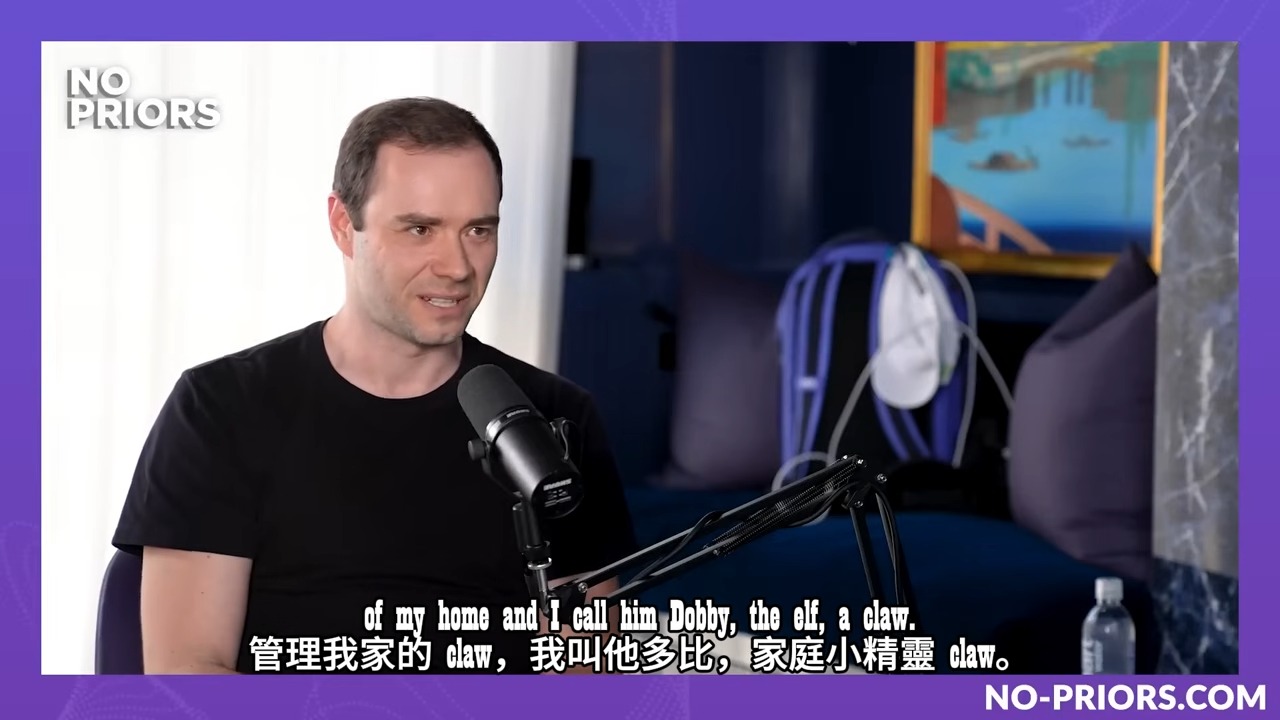
I just told it, “I think I have Sonos at home, can you try to find it?” Then it scanned all the devices on the local network. It turned out there was no password protection at all, so it logged right in, and then it said, “Oh right, you have these Sonos systems installed, let me try to reverse engineer how they work.” It searched online and found the API endpoints, then asked if I wanted to give it a try.
Karpathy said Dobby now communicates with him through WhatsApp and can control all the lights, HVAC, curtains, swimming pool, spa, and even the security system at home. The outdoor cameras are equipped with the Quinn model for image recognition, and when someone approaches, Dobby sends a WhatsApp message: “Hey, a FedEx truck just pulled up.”
“I used to use about six different apps, and now I don’t need them at all. Dobby controls everything with natural language,” he said. “I haven’t even pushed this paradigm to the extreme, but it’s already so helpful and so inspiring.”
“Customers Are No Longer Users, but Agents: A Total Overhaul of the Software Industry”
Karpathy made a bold claim: the software industry is undergoing a fundamental restructuring. All those apps designed for smart home devices “shouldn’t really exist in some sense.”
“The customer is no longer the user themselves, but the Agent acting on the user’s behalf,” Karpathy said. “The apps in the App Store used to control smart home devices—shouldn’t they just be APIs? Agents should use them directly; humans shouldn’t have to tap around on a UI.”
He believes the future world should be one where API endpoints are exposed and Agents act as “intelligent glue” that ties all the pieces together. This restructuring will be thorough, spanning everything from tool design to business models.
Auto Research: The Power of Autonomous Agent Research
The most technically impressive part was the auto research system introduced by Karpathy. Building on the data chat project, Karpathy developed a framework that enables agents to autonomously conduct machine learning research.
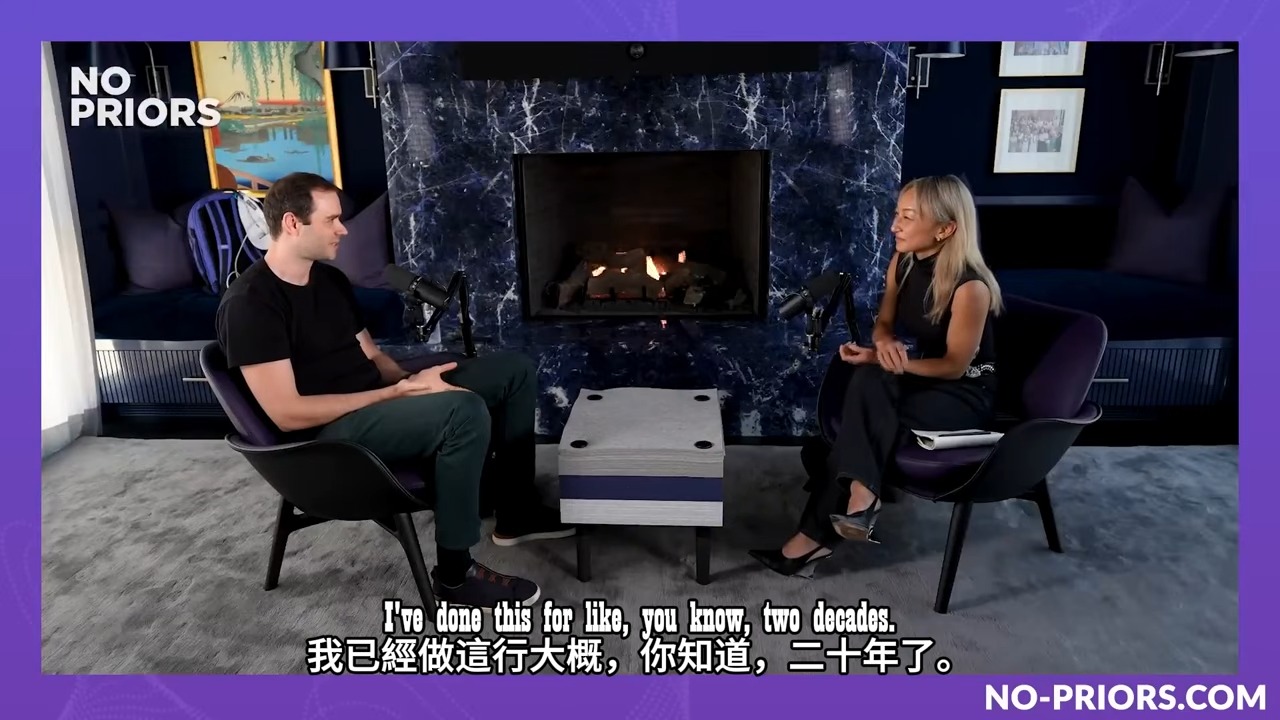
I’ve been doing manual experiments for twenty years and thought I had things tuned pretty well. Then I let auto research run overnight, and it came back with tuning parameters I hadn’t seen. I had honestly forgotten about the weight decay on value embeddings, and my Adam betas weren’t fully tuned either—and these things interact with each other.
He noted that the core idea is to “remove yourself from the bottleneck.” Rather than personally watching the results and tweaking parameters by hand, researchers should design a self-running loop where the Agent keeps improving itself guided by objective metrics.
He even proposed a bolder vision: ultimately, the entire research organization could be described by a set of Markdown files (which he called program.md). Different organization files would produce different research efficiencies, and a meta-layer Agent could optimize these Markdown files, achieving “research on research itself.”
[Analysis] This is essentially the concrete implementation of recursive self-improvement—the very direction at the core of what AI frontier labs are secretly working on. Karpathy has turned this concept from theory into a working system.
microGPT: The Essence of LLMs in 200 Lines of Python
In the latter half of the interview, Karpathy introduced microGPT, which he published in February 2026: a GPT implementation with only about 200 lines of pure Python code and zero dependencies (no PyTorch, no NumPy, no GPU).
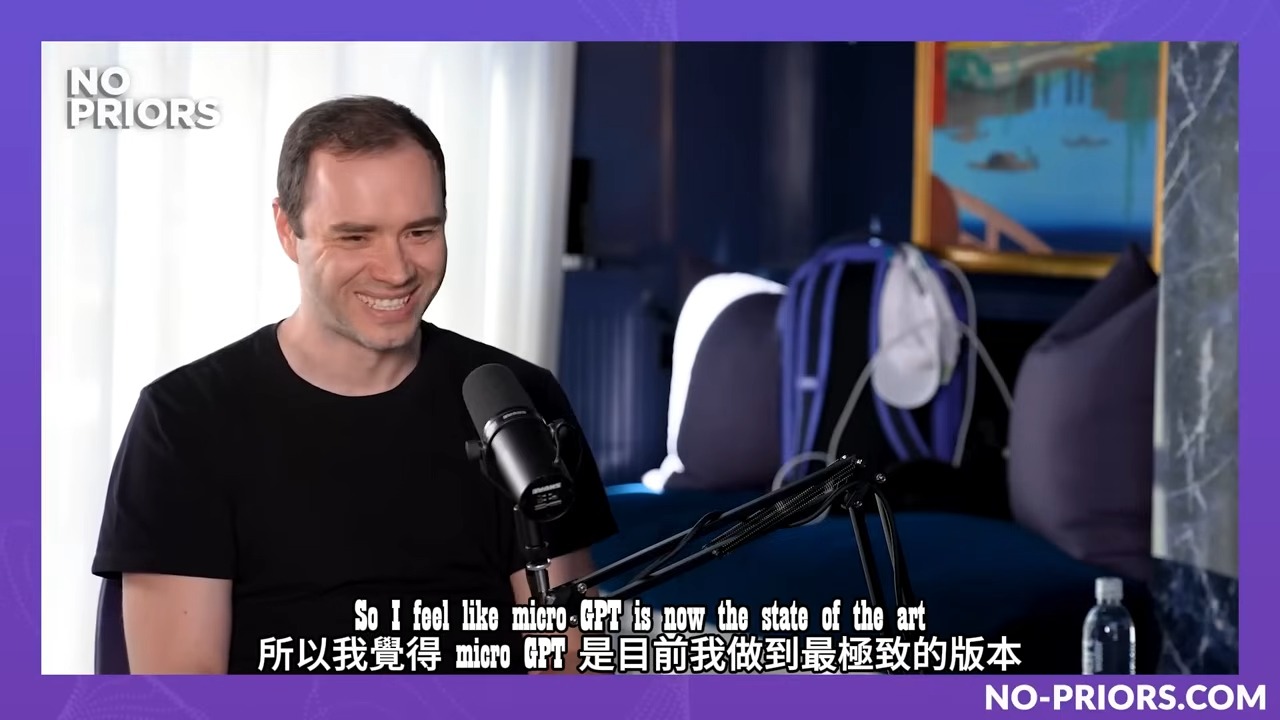
He explained that this was his decade-long obsession: continuously simplifying and distilling LLMs down to their purest essence. From nano GPT, make more, and micro grad to today’s microGPT, he gradually condensed what was originally tens of thousands of lines of training code into just 200 lines.
“Training neural networks, especially LLMs, requires a lot of code, but all that code is really just complexity introduced for efficiency—it’s only there because you need it to run fast. If you don’t need it to run fast and only care about the algorithm itself, that algorithm is really just 200 lines of Python.”
These 200 lines include: the dataset, tokenizer, autograd engine (about 100 lines), GPT-2 architecture (about 50 lines), Adam optimizer (about 10 lines), training loop, and inference.
The Education Revolution: Explaining to Agents, Not Humans
Karpathy believes education will also be completely reshaped by AI agents. He used to make videos and write guides to explain how microGPT works, but quickly realized that approach was already outdated.
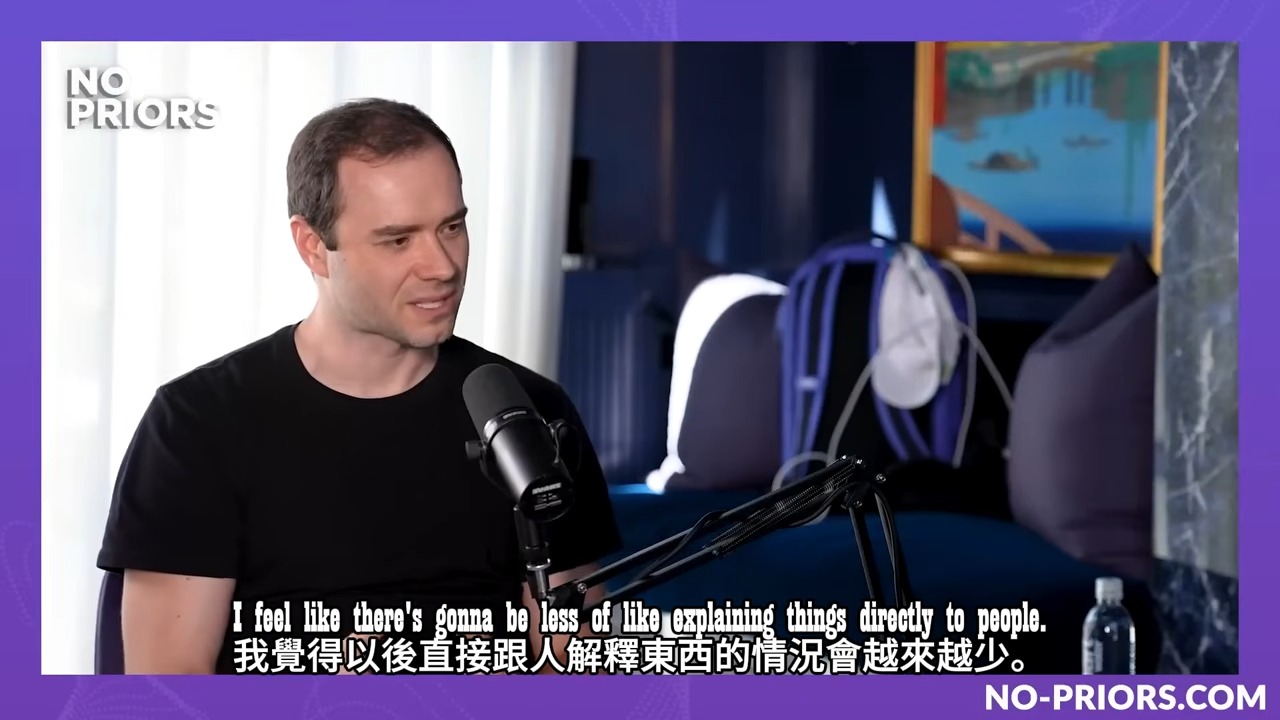
“I’m no longer explaining to people; I’m explaining to the Agent. If you can explain things clearly to the Agent, it can act as a router—relaying information in the other person’s language, with infinite patience, and tailored to their level. Going forward, directly explaining to people will happen less and less; instead, it’ll be more about, ‘Does that Agent get it?'”
He even made a bold prediction: instead of writing HTML documents for humans to read, we should write Markdown documents for Agents to read. If Agents understand them, they can then explain each part within. “Education is probably changing in this way: the era of people teaching one another is coming to an end.”
[Analysis] Karpathy’s argument touches on a paradigm shift in knowledge transfer in the AI era: humans no longer need to teach directly, but instead need to teach Agent how to teach. Its impact on the education industry, content creation, and even the entire knowledge economy is incalculable.
The “Sawtooth” of AI and Model Speciation
On the current distribution of capabilities across AI models, Karpathy used the term “jaggedness”: “I simultaneously feel like I’m talking to an exceptionally brilliant PhD student who has been a systems programmer his whole life, and also like I’m talking to a ten-year-old child.”
He pointed out, for example, that the most advanced models can spend hours performing complex Agentic tasks for you, move mountains and fill seas, but when you ask them to tell a joke, they serve up a five-year-old stale joke: “Why don’t scientists trust atoms? Because they make up everything.” “This is the joke you would have gotten three or four years ago, and it’s still the joke you get today.”
He believes this is because “verifiable” tasks have reinforcement learning (RL) continuously optimizing them, while “soft” domains such as jokes are not being optimized. This also explains why AI models have advanced rapidly in code generation but stagnate in areas that require subtle understanding and creativity.
Karpathy predicts that the future will bring more “model speciation”: not one all-knowing, oracle-like general model, but smaller models specifically optimized for particular tasks. Just as some animals in the animal kingdom have an overdeveloped visual cortex, the future will also see models designed specifically for Lean mathematicians or other specialized domains.
We’ve also translated the full interview into a bilingual version. If you’re interested, feel free to take a look—we believe it will be very helpful:
Summary: What the agent cannot do is your job.
Throughout the interview, Karpathy’s core message, which he repeated again and again, was this: AI agents are advancing far faster than most people imagine, and individuals should approach this transformation strategically. He summed up the principle in a simple sentence: “What agents can’t do is now your job. What agents can do, they probably already do better than you—or will soon. So you should think strategically about where you actually spend your time.”
For Karpathy himself, his value lies in those few things like microGPT: distilling a concept down to its purest essence. All other work—education, explanation, tuning—no longer falls within his domain.
That’s my contribution: those few points. The Agent can understand everything else; it just couldn’t come up with them itself.
Source: KOCPC Chinese