


The well-known AI code editing tool Cursor officially released its programming model Composer 2 on March 19, 2026, and promoted it as a “self-developed” flagship programming model with powerful performance that can compete with any cutting-edge model in the industry. The official press release explains its improvement in capabilities by “continuing pre-training and reinforcement learning.” The tone is low-key, but it always implies that the technology comes from Cursor’s internal team. However, in less than 24 hours, netizens caught Cursor’s so-called “self-developed model” as a Chinese model.
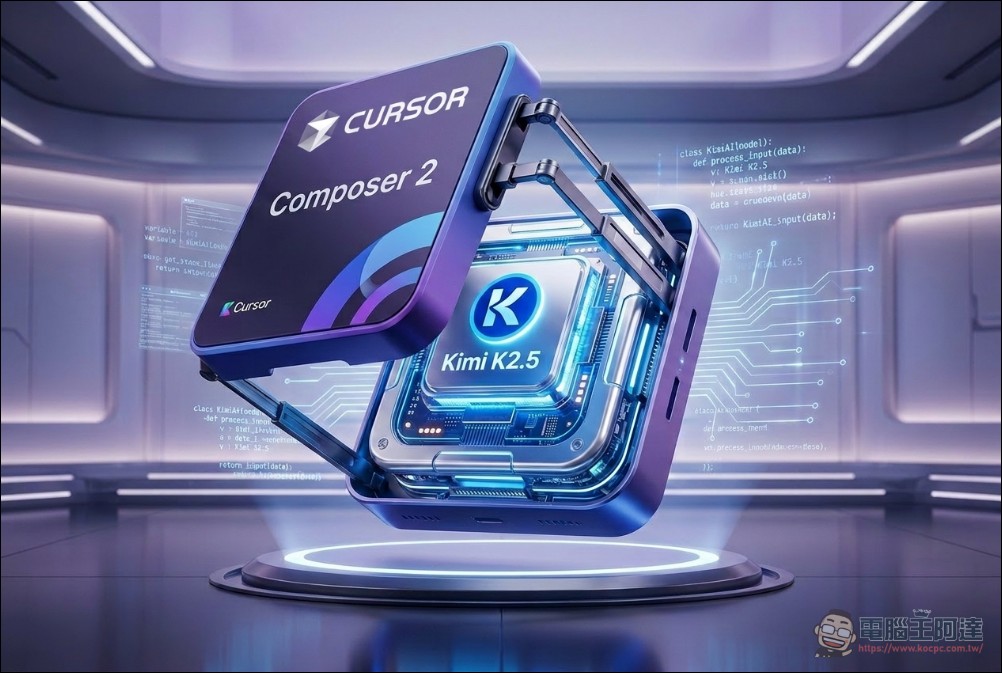
Cursor’s self-developed programming model Composer 2 was caught and turned out to be a Chinese open source model Kimi K2.5 reskinned
Developer kicks the tires: model ID directly exposed
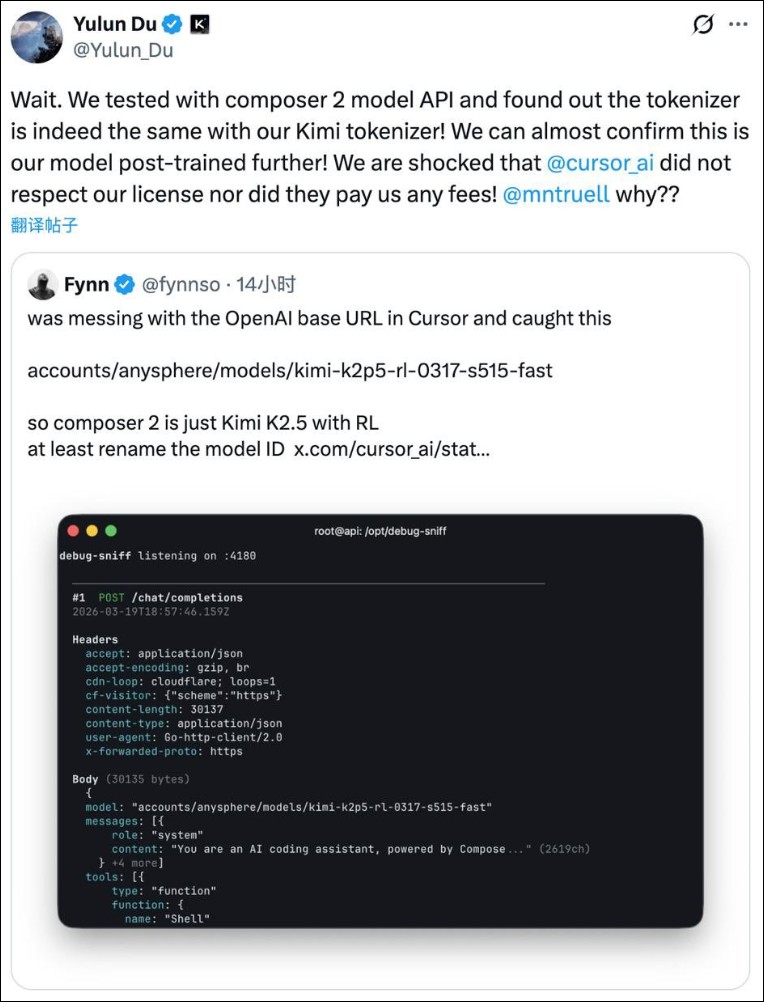
On the day Composer 2 was released, later on, a developer @fynnso accidentally caught a glimpse of the real model identification code of Composer 2 while debugging the Cursor API——kimi-k2p5-rl-0317-s515-fast. This string of characters is not a random number, but directly embedded with clear markings of “Kimi K2.5” and “RL (Reinforcement Learning)”. If you don’t even have to click to read, you can tell from this line of identification code alone: Cursor’s so-called “self-developed” Composer 2 is basically based on Kimi K2.5 developed by the Chinese AI company Moonshot AI (Dark Side of the Moon), and is a product of intensive learning and post-training.
was messing with the OpenAI base URL in Cursor and caught this
accounts/anysphere/models/kimi-k2p5-rl-0317-s515-fast
so composer 2 is just Kimi K2.5 with RL
at least rename the model ID https://t.co/MQOuEuF3Pd pic.twitter.com/fyUWbo1InF— Fynn (@fynnso) March 19, 2026
Moonshot AI fires: Tokenizer is completely consistent and asks why it is not paid
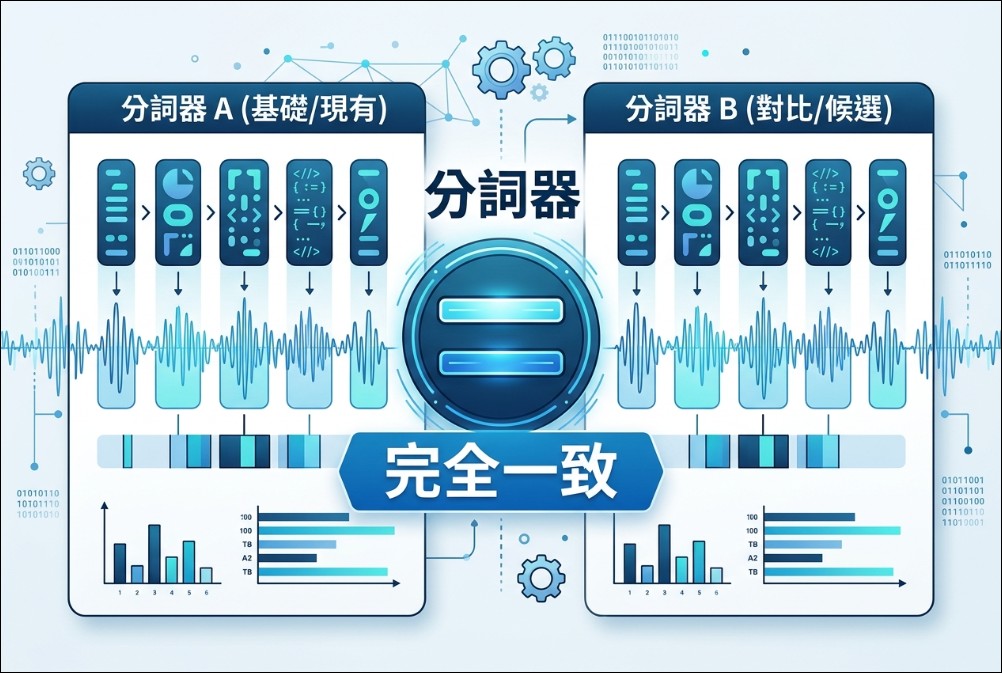
Later on March 19, Yulun Du, the head of Moonshot AI pre-training, published a public post on the X platform (formerly Twitter), directly targeting Cursor co-founder Michael Truell. Du Yulun said that the team conducted an emergency reverse analysis on Composer 2 and tested its tokenizer (text tokenizer) and found that it was “completely consistent with our Kimi tokenizer.” He further pointed out that, combined with the dual evidence of tokenizer comparison and model ID, “it is almost certain that this is the result of further training of our model.”
Du Yulun’s post had a rare tough tone. He directly shouted to Michael Truell: “Why didn’t you respect our license and didn’t pay any fees?” This question pointed out the commercial core of this case: Kimi K2.5 is not an open source free model. Its license has clear commercial use terms. Does the use of Cursor violate the agreement?
Kimi K2.5 adopts a modified version of the MIT licensing agreement. It is loose on the surface, but there is a commercial threshold that cannot be ignored: any commercial product with more than 100 million monthly active users or more than 20 million US dollars in monthly revenue must clearly mark “Kimi K2.5” in the user interface when using Kimi K2.5.
Let’s compare Cursor’s actual size: the company was last valued at $29.3 billion, has a sizable base of paying users, and its monthly revenue clearly exceeds the $20 million threshold. Judging from objective data, Cursor has almost certainly triggered this license provision. However, in the press release and product page of Composer 2, Cursor only vaguely mentions “continuing pre-training and reinforcement learning”. Not only does it not mention the name of Kimi K2.5, it also fails to provide any form of source identification in accordance with the license requirements.
Reactions from all parties: Developers are in an uproar, and the industry is discussing
After the incident was exposed, the reaction of the technology developer community was polarizing. One group believes that Cursor’s move is suspected of deceiving users and the market. The promotional caliber of “self-research” is seriously inconsistent with the actual source of technology, which constitutes a certain degree of false statement. The other group is on the same page and believes that in the AI industry, it is a common practice to use third-party models as the basis for post-training. The crux of the dispute lies in whether it is disclosed truthfully and whether it is paid according to the contract, rather than “whether it can be done” itself. In fact, this is not the first time a similar situation has occurred. Recently, Japan’s Rakuten claimed that its 700 billion-parameter Rakuten AI 3.0 large model was fully self-developed. In fact, it was also packaged using DeepSeek V3. However, these people are not only not technically good enough, but also do not take it seriously when it comes to making changes, so they are easily caught.
Subsequent developments: Cursor admitted to using Kimi K2.5, the controversy seems to have been put to rest
The pressure was overwhelming, but Cursor did not choose to remain silent. On March 20, less than 24 hours after the controversy broke out, Cursor officially confirmed: Composer 2 is indeed based on Kimi K2.5. The company also promised that “complete pre-training will be carried out in the future,” which means that it has not yet trained its basic model from scratch. In addition, Moonshot AI’s latest statements have also cooled down. The Kimi team confirmed in a follow-up statement that the license terms “are being complied with,” and the dispute seems to have been settled. This means that the two parties may have reached some form of commercial agreement or authorization consensus under the table, and the details have not been disclosed.
Congrats to the @cursor_ai team on the launch of Composer 2!
We are proud to see Kimi-k2.5 provide the foundation. Seeing our model integrated effectively through Cursor’s continued pretraining & high-compute RL training is the open model ecosystem we love to support.…
— Kimi.ai (@Kimi_Moonshot) March 20, 2026
However, this does not mean that the storm has completely subsided. There are still many voices in the developer community who believe that Cursor’s “get on the bus first and pay later” strategy, although it ended in compromise, has caused damage to its corporate integrity. As competition in the AI industry becomes increasingly fierce, the transparency of model sources has become an important part of corporate credibility. Investors and users are increasingly sensitive to the boundaries between “self-research” and “other research.”
summary
Looking back on this crisis, there are several structural issues that deserve continued attention. First of all, with the rapid development of large-scale language models and multi-modal models, the practice of “post-training based on models from other manufacturers” has become extremely common. However, how to strike a balance between technical facts and market promotion is still a fuzzy area. Most companies choose to deal with source issues in a low-key manner, and only a few, like Cursor this time, were forced to admit it after being explicitly named.
Secondly, the license design of Kimi K2.5 provides an interesting industry sample: through clear commercial thresholds and labeling requirements, it attempts to strike a balance between the open source spirit and commercial interests. However, law enforcement and tracking are extremely difficult: unless third-party developers like @fynnso actively dig out, most users will have no way of knowing the true technical makeup of the product.
Third, with the rise of China’s AI, Chinese AI models used to be regarded as synonymous with “plagiarism,” “imitation,” and “distillation” of the results of other major manufacturers. However, since DeepSeek, China’s own large models have been used by more and more manufacturers because of their “open source” characteristics. Currently, the capabilities of Chinese open source models such as MiniMax, Kimi, GLM-5, and Qwen 3.5 Plus can even compete with the closed source models of major manufacturers. This is also reminiscent of LLama’s previous experience. Meta, which has been leading the open source model for some time, may no longer have a better model that can compare with Chinese manufacturers, which is a pity.
Source: KOCPC Chinese