


Apple recently officially announced a high-level appointment: Lilian Rincon, formerly Google’s vice president of product management, has been hired as Apple’s vice president of AI Product Marketing (VP of AI Product Marketing) and will be responsible for the product marketing and management of Apple Intelligence and Siri. This change signals that Apple is comprehensively reorganizing its product blueprint for “Apple Intelligence” and Siri, trying to regain the dominance of market communication in the wave of generative AI.
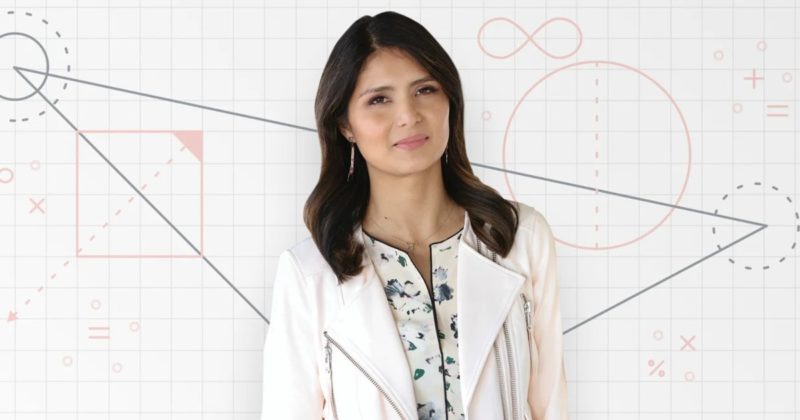
After Lilian Rincon joins Apple, he will report directly to Apple’s Senior Vice President of Worldwide Marketing Greg Joswiak (known as Joz in the industry). The arrangement of this reporting line appears to be of great strategic significance. As the soul of Apple’s marketing system, Joz has long dominated the market positioning of flagship products such as iPhone and iPad, while Rincon’s responsibilities will cover product marketing and product management (Product Management) of Apple Intelligence and Siri. This means that Rincon must not only be responsible for “how to sell” AI, but also be deeply involved in “how to do” AI, ensuring that technology research and development can be accurately transformed into killer features that consumers are willing to pay for and can deeply perceive.
For Apple, this is a battle it cannot lose. Since the launch of Siri on iPhone 4S in 2011, Apple once led the digital assistant market. However, in the following more than ten years, Siri was gradually separated by Google Assistant and Amazon Alexa due to overly conservative privacy policies and slow technological iterations. Rincon’s joining is regarded by the outside world as Apple’s key to making up for this “lost decade.” She not only brings the core confidential experience of competitors, but also brings practical ideas on how to transform complex models into large-scale consumer applications.
Industry analysts pointed out that Apple’s current AI strategy is in a critical transformation period after “from 0 to 1”. After Apple Intelligence was released at WWDC24 in 2024, although Apple established a hybrid architecture of “Private Cloud Computing (PCC)” and “Device-side Processing”, it still showed weakness in the pace of feature implementation. Rincon’s mission is very clear: give a boost to Siri’s overhaul before the upcoming WWDC26, and re-establish Apple’s professional image as an “AI leader” in the market, rather than just a chaser.
Google’s nine-year cold window: What can Rincon bring to Apple?
To understand the value of this appointment, one must first look at Lilian Rincon’s depth at Google. Before moving to Apple, Rincon served at Google for nearly nine years. Her last position was vice president of product management, directly leading the two strategic product teams of Google Shopping and Google Assistant. Although Google Assistant also faced challenges after the rise of generative AI, in its heyday, Rincon successfully enabled the assistant to achieve smooth human-computer interaction on billions of devices. This is the large-scale operation capability that Siri currently needs.
Before Rincon worked at Google, she worked at Microsoft and Skype, where she experienced the critical period of the explosion of mobile networks and the transformation of instant messaging. This “cross-giant, cross-platform” vision allows her to be more market-sensitive than a scientist who simply comes from a laboratory when dealing with Apple’s complex software and hardware integration ecosystem. Last week, she emotionally announced her departure from Google on LinkedIn and said she was “very excited” about the journey ahead. Now it seems that this expectation stems from her redefining the future of digital assistants in a completely different cultural environment.
While on the Google Assistant team, Rincon particularly emphasized that AI must be “feeling.” She has mentioned in many interviews that users don’t care about the number of parameters behind them. What they care about is whether the AI can accurately understand the context when they say “book a ticket for me” or “find the sweater in the photo.” This logic with “user tasks” as its core coincides with the user experience that Apple has always advertised. Apple poached her obviously because of her experience in combining e-commerce (Google Shopping) with personal assistants. This indicates that Apple Intelligence in the future will no longer be just a simple text generation, but will deeply penetrate into users’ shopping, life planning and cross-App linkage.
However, this career change is not without its challenges. Google’s culture emphasizes “fail fast and iterate quickly”, while Apple advocates “extreme perfection and one-hit kill.” Rincon must find a balance between two very different corporate DNAs. Analysts believe that the addition of Rincon may mean that Apple is relaxing its pace control on AI product development.
The rise of the “Google system” in Apple’s AI decision-making circle: a comprehensive reorganization of the power structure
Rincon’s appointment is not an isolated personnel change, but the last piece of the puzzle in Apple’s “big shakeup” of AI leadership in the past six months. Observing Apple’s actions starting from the end of 2025, it is not difficult to find a clear trend: Cupertino is being “Googled”. This reflects the anxiety of Apple CEO Tim Cook and Senior Vice President of Software Engineering Craig Federighi: Facing the onslaught of generative AI, Apple’s original technical reserves are obviously insufficient and must introduce external “powerful medicine.”
The shock began in December 2025. At that time, John Giannandrea, who had long led Apple’s AI development, announced that he would be resigning from his original position and became an AI strategy consultant. He planned to officially leave the company in the spring of 2026. Interestingly, Giannandrea himself is also a “former Google veteran” that Apple poached from the position of Google’s search director in 2018. His fading out marks the end of Apple’s first phase of AI construction, and also means that the original development model can no longer adapt to the needs of the current LLM (Large Language Model) era.
Replaced by Amar Subramanya, who also has a strong Google background. Subramanya has been with Google for 16 years, serving as Vice President of Engineering at Gemini, where he was directly involved in the development of Google’s most powerful multimodal models. He currently serves as Vice President of AI at Apple, reporting to Craig Federighi. Now, coupled with Rincon, who is responsible for marketing and product management, Apple’s AI core decision-making layer (engineering + marketing) is controlled by two leaders with deep “Google genes”. This double sword combination of “the technology is handled by Subramanya and the market is opened by Rincon” is Apple’s final layout for the explosion in 2026.
An in-depth analysis of this layout shows that Apple is trying to use “Google talent” to fight “Google technology.” It is an industry-recognized fact that Siri is lagging behind. Although Siri made its stunning debut in 2011, for the next 14 years, it became more like a simple voice command interface. On the other hand, Google Assistant and the latecomer ChatGPT have achieved continuous dialogue, complex reasoning and multi-modal senses. Apple has successively recruited senior executives with experience in large-scale platforms to completely break the technical debt of Siri’s internal stacking and give the digital assistant “real intelligence” rather than just “voice reading”.
Symbiosis under the Gemini Protocol: Apple’s balancing act
While introducing talents, Apple also made compromises on its technical base. In January 2026, Apple and Google reached a historic multi-year Gemini cooperation agreement. The conclusion of this agreement actually set the tone for Rincon’s new job: she must work in an environment full of “competition and cooperation.” On the one hand, she has to lead the Apple team to develop independent device-side models; on the other hand, she has to work closely with her former employer, Google, to integrate the Gemini model into Siri’s cloud service.
Apple 確認與 Google 合作,將推出基於 Gemini 驅動 Apple Intelligence 與 Siri
Countdown to WWDC26: iOS 27 and Siri’s “Rebirth”
All indicators are currently pointing to June 9, 2026; the opening day of WWDC26. This will be Rincon’s first big show after taking office, and it will also be the moment when iOS 27 is unveiled. According to current news flowing from the supply chain and developer community, iOS 27 will be the largest system update for AI changes in Apple’s history, and the rebirth of Siri will be the core drama.
The market predicts that, under the leadership of Rincon and Subramanya, Siri will usher in several revolutionary changes. The first is “System-wide Awareness”. Siri is no longer just a pop-up window, but an invisible butler who can understand the content on your screen, who you are chatting with, and what photos you are looking at. The second is “Proactive Action”, which was Rincon’s strength during the Google Assistant period – AI predicts what you want to do next and prepares it in advance. For example, when you receive a screenshot of a restaurant reservation, Siri will proactively ask if you want to add it to your calendar and enable map navigation to estimate transportation time.
More importantly, WWDC26 is expected to reveal “multi-model dynamic switching technology.” Through Rincon’s knowledge of Google technology and Subramanya’s engineering implementation, iPhone will be able to automatically switch between Apple’s device-side model, Apple’s private cloud model and Google Gemini based on the difficulty of the problem. This seamless and fast experience, if realized as expected, will completely rewrite the stereotype of “Siri is stupid”. Analysts even boldly predict that Apple may remove the “Hey, Siri” wake-up word that has been used for more than ten years in iOS 27, and instead pursue an interaction mode that is more natural and more like a real person conversation.
However, competitors have not stopped. Microsoft’s Copilot+ PC has integrated NPU (neural processing unit) at the hardware level to achieve near-instant local AI computing; Meta relies on the open source advantages of the Llama model to establish a powerful AI interactive ecosystem in social software. Can Apple turn things around in just a few months with the charisma of Lilian Rincon’s product marketing and the engineering prowess of a new team? The global technology community is waiting with bated breath. For Apple, this is not just a personnel poaching, but also an ultimate battle to defend Apple’s “soul” in the AI era.
Source: KOCPC Chinese