


In the field of global satellite navigation, the U.S. GPS system has long played a key role. It is not only the cornerstone of civilian navigation, but also the core pillar of the U.S. military’s combat capabilities. However, a “next-generation GPS operation control system” (OCX) that cost up to US$8 billion (approximately NT$256 billion) and took 16 years to develop is now in a dilemma and may be forced to be cancelled. This plan, regarded by the industry as one of the “Pentagon’s most failed software procurement projects,” not only exposed serious management problems between the military and contractors in large-scale software development projects, but also significantly delayed the deployment schedule of the M-code (Military Code) anti-jamming signal that the US military is proud of.
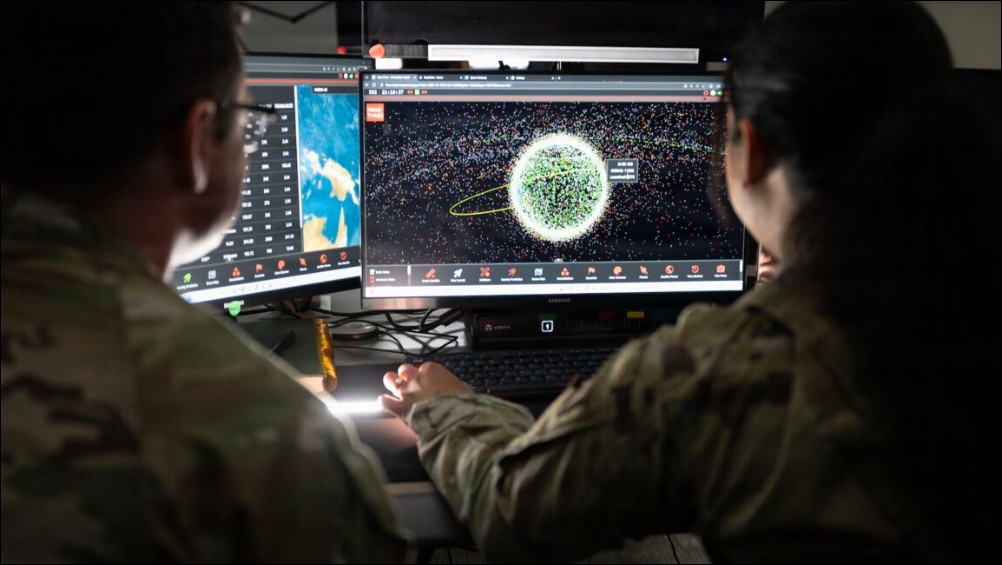
OCX project background and original intention
OCX (The Next-Generation Operational Control System) is a next-generation ground control system tailor-made by the U.S. military for the GPS satellite network, aiming to completely replace the old GPS architecture that has been in service for decades. According to Ars Technica, RTX Corporation (formerly known as Raytheon, referred to as Raytheon) won the Pentagon contract in 2010 with an initial cost of approximately US$1.5 billion and was originally scheduled to be completed in 2018. The core mission of this system is to command and control the U.S. military’s GPS constellation of more than 30 satellites, and to handle the new signals and anti-jamming capabilities of the latest generation of GPS III satellites.
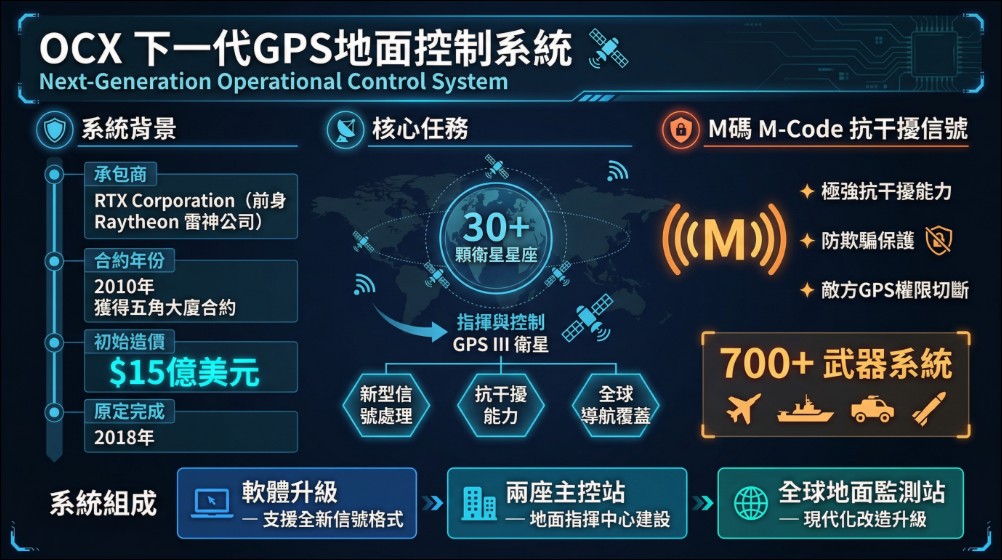
The system includes software upgrades to support new signal formats, the construction of two master control stations, and the modernization of ground monitoring stations around the world. Of particular concern is that OCX is designed to fully enable the “M-code” anti-jamming signal specially designed for war environments. The M code has extremely strong anti-interference and anti-spoofing capabilities, which can effectively resist attacks by the enemy using false data to deceive weapon receivers, and ensure that the US military can maintain its own navigation advantages while cutting off the enemy’s GPS authority in conflicts. This capability is crucial to the strike effect of modern precision weapons. About 700 U.S. military weapon systems, including aircraft, ships, ground vehicles and missiles, are looking forward to fully utilizing the combat effectiveness of M-code through OCX.
16 years of development: from hope to despair
However, the actual development runs counter to the original intention. After 16 years of long development, the actual cost of OCX has soared to at least US$6 billion (approximately NT$195 billion). If coupled with the enhanced version of OCX used to support GPS IIIF satellites (costing more than US$400 million), the total investment in the entire project has exceeded the US$8 billion mark. Even more shocking, according to SpaceNewsreport, the entire project schedule has been delayed by more than 7 years, and the original completion target of 2018 is now far away.

The turning point came in July 2025. Just before the National Day, the U.S. Space Force officially received the OCX system. At that time, the outside world hoped that this ups and downs project might finally come to fruition. However, good times don’t last forever. In subsequent real-environment tests, the military found that all subsystems of the system had a large number of serious unresolved flaws. Air Force Assistant Secretary for Space Acquisition Thomas Ainsworth made it clear in written testimony to the congressional Armed Services Committee Strategic Forces Panel: “More extensive and more operationally relevant testing with real GPS satellites, antennas, and user equipment resulted in the discovery of numerous systemic issues across all subsystems, many of which have not yet been resolved.”
Congressional Hearings: A Scandalous Failure
On March 25, 2026, the U.S. Congress held a hearing, and the difficulties of the OCX project were officially exposed to the sun. During the meeting, Rep. Don Bacon directly questioned relevant officials: “OCX was already in trouble 15 years ago, and it continues to be so. Can we tell us what went wrong this time, or what did we learn from it?”
Ainsworth’s answer revealed the deeper structure of the problem: “There have been problems for many years on both the government and contractor side in terms of project management, contractor performance, systems engineering. This is a very challenging program. We are still considering how to move forward.” He further pointed out that the program “has faced significant technical challenges, schedule delays and related cost growth for more than 15 years, jeopardizing the launch and deployment of future GPS satellites.”
The Government Accountability Office (GAO) investigation report is even more shocking. The report pointed out that the problems with the OCX project stemmed from “poor procurement decisions and slow recognition of development issues.” As a result, the project exceeded cost and schedule targets in 2016, triggering the Pentagon’s automatic review mechanism and possibly facing cancellation. Issues include difficulties with software cybersecurity features and “continued high software development defect rates.” At the time, defense officials blamed the problem on the government’s lack of software expertise and Raytheon’s “poor systems engineering” practices.
M-code deployment delays: endangering US military combat capabilities
OCX’s woes have a far more profound impact on the U.S. military than surface numbers. Ongoing delays with OCX are hampering the deployment of the M-code jamming-resistant signal, according to a warning from the Pentagon’s independent test office. “Continued delays in OCX put U.S. warfighters and allies at risk,” the office made clear in its annual report, noting that the full M-code capability has not yet been fielded for operational use.
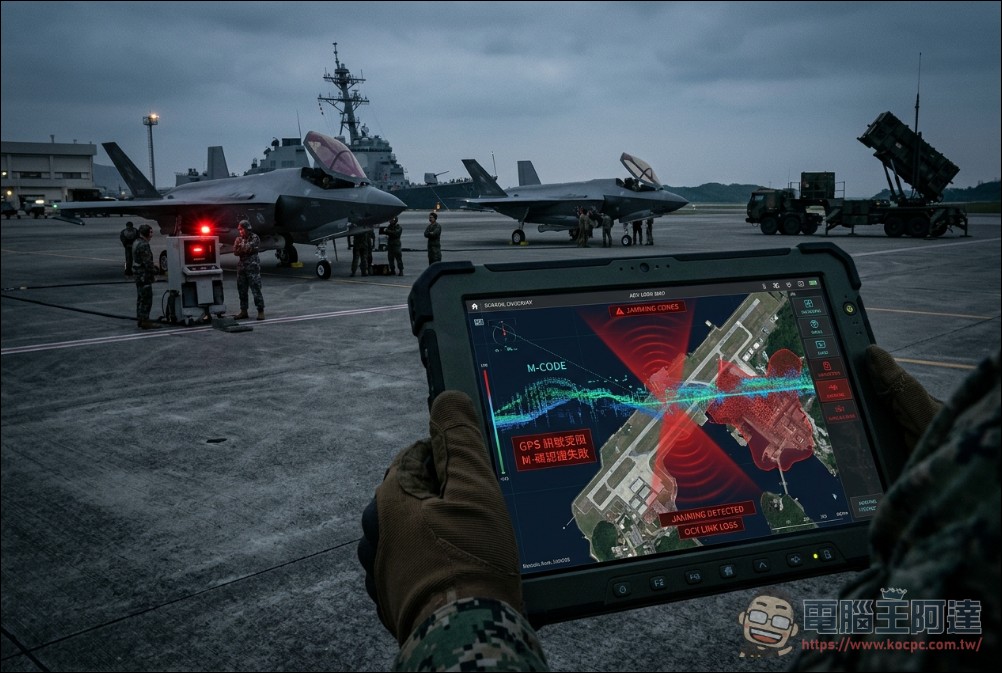
“GPS networks are an ‘attractive target’ for adversaries due to their civilian and military importance,” said Lt. Gen. Doug Schiess, deputy chief of operations for the Space Force. “Jamming (denial of signals) and spoofing (false signals) pose current and growing threats to GPS. We are modernizing GPS to mitigate these threats.”
Experience in the battlefields of Ukraine and the Middle East has proven that GPS jamming and deception technology has become the norm in modern warfare. In these areas, the anti-interference ability of M codes is crucial to maintaining the precision strike capabilities of US military weapon systems. However, with OCX out of service, the U.S. military is forced to rely on decades-old systems to manage the newly launched GPS III satellites. The 2020 upgrade allows the Space Force to begin using some of the new capabilities of M-code signals, but it is a workaround, not a complete solution.
Solution: Rescue or give up?
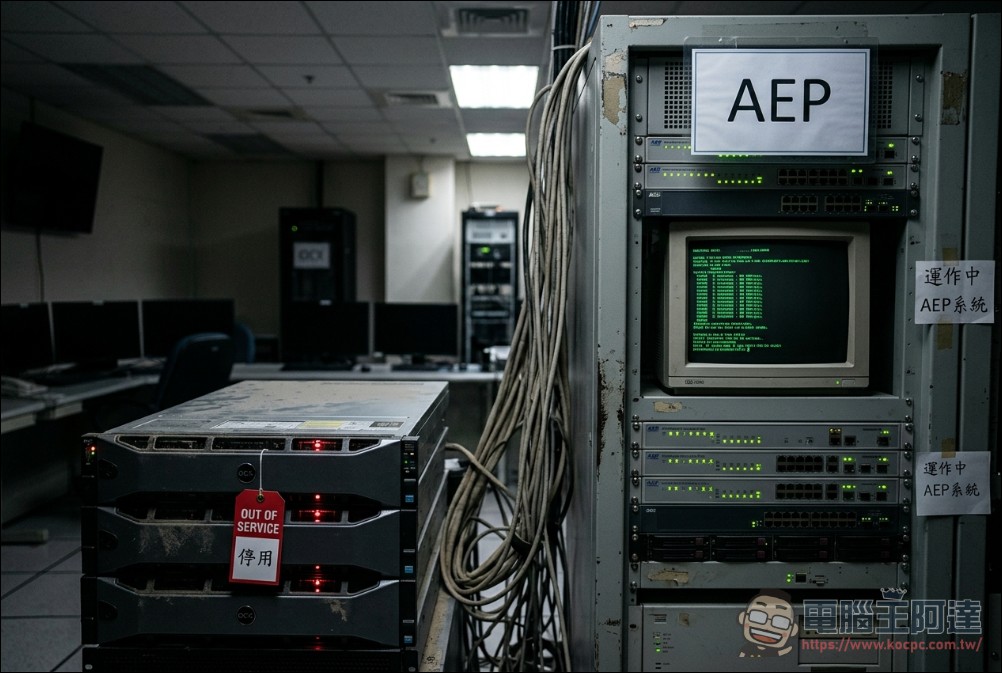
Faced with OCX’s deep flaws, the Space Force is evaluating several possible paths forward. According to a report in Air & Space Forces Magazine, the Pentagon is considering scaling back or terminating the program entirely. One option is to “port” software elements already delivered by OCX to the existing Architecture Evolution Program (AEP): a legacy ground control system that was originally intended as a stopgap measure.
This alternative seemed unthinkable just a few years ago, but now AEP has evolved into a viable long-term alternative. Officials are evaluating whether to “harvest” and integrate components available in OCX into the AEP baseline rather than continue full development of the new system. However, even if this path is adopted, further upgrades to support the next generation of GPS IIIF satellites (called OCX 3F) are not expected to wait until fiscal year 2027, with actual service time being extended to 2028.
In response to media inquiries, an RTX spokesperson said: “The GPS OCX program is a large-scale, extremely complex ground system modernization effort. The U.S. Space Force accepted the mission-viable system in 2025 and assumed operational control at that time. RTX is working with the government to resolve any post-delivery issues.” However, this statement is in stark contrast to the systemic deficiencies revealed in congressional hearings.
Expert interpretation: Systemic failure of the procurement system
This incident triggered a profound reflection on the US arms procurement system. Jon Ludwigson, director of defense acquisition at GAO, commented: “This is certainly a beleaguered program. I think everyone would very much like it to be completed and call it a victory.”
Air Force Secretary Troy Meink admitted at a meeting on March 17: “OCX encountered difficulties about 15 years ago. And it continues to do so.” These remarks were interpreted by the outside world as a pessimistic hint about the prospects of the project.
The deeper problem is that the US military seems to have failed to learn enough lessons from this failure. Analysis by Ars Technica points out that after reorganizing the program in 2016, the military and Raytheon continued development, but encountered more delays and cost overruns. This pattern of “repeating the same mistakes again and again” has raised questions about the arms procurement system.
Conclusion
After 16 years and $8 billion spent, the OCX system still failed to achieve its core goals. This is not only a major setback in the history of U.S. arms procurement, but also a typical case of the risks of modern military software system development. As GPS threats in the battlefields of Ukraine and the Middle East become increasingly severe, the U.S. military is still forced to rely on old systems for emergency response. This is undoubtedly a great irony for U.S. national security.
At present, the Pentagon has not made a final decision, but regardless of whether it chooses to “rescue” or “abandon”, this incident will become an important reference for future military software procurement decisions. The lessons of OCX tell people that while pursuing cutting-edge capabilities, they need to face the inherent risks of large-scale software system development pragmatically. Otherwise, no matter how much money is invested, it may just result in another “bad end of the century.”
Source: KOCPC Chinese