


A civil lawsuit for infringement of spousal rights that occurred in the northern region has recently triggered extensive discussions among all walks of life on the standards for collecting evidence of extramarital affairs. In the case, the plaintiff woman was dissatisfied with her ex-husband’s frequent contacts with another woman during the marriage and registered her marriage with the other woman just a few months after the divorce. She was angry and demanded NT$1.2 million from each of them.
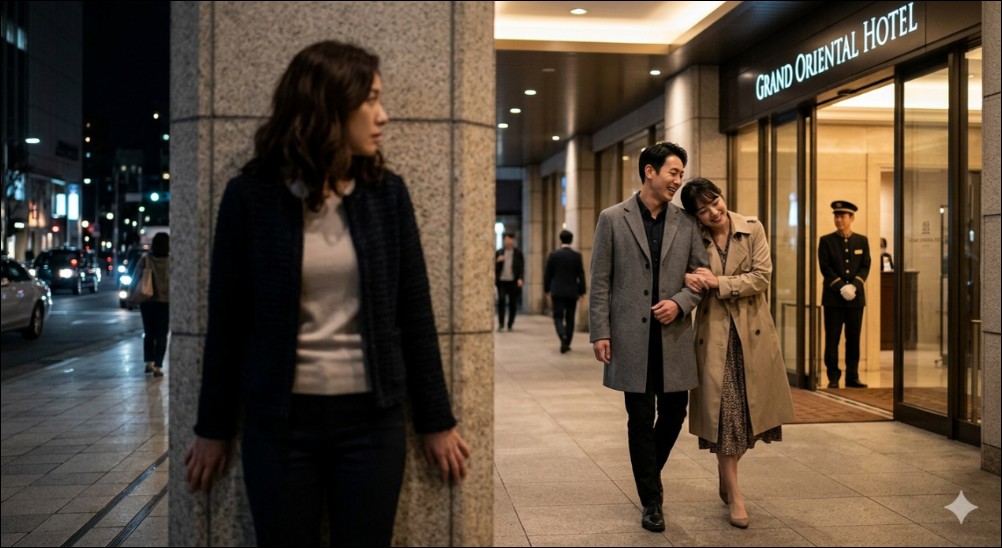
According to the plaintiff’s accusation, the ex-husband had had inappropriate dealings with the woman since 2024. Although the two parties had reached a settlement, they had not truly severed contact. In February 2025, the ex-husband not only took the other party to the cat cafe, but also had the access control magnet of the other party’s community to enter and exit freely. In April of the same year, the plaintiff photographed the two of them holding hands closely in the rain and holding an umbrella together. The plaintiff said that her ex-husband used litigation pressure to force her to sign a divorce in May of the same year, and then registered her marriage with the other party in August. There were obvious signs of “seamless integration.”
However, after reviewing the relevant images, the judge pointed out that there were no intimate actions such as kissing or hugging in the coffee shop, and the place was not exclusive to couples. The ex-husband entered the community with a magnetic buckle and left within five minutes, so it was difficult to determine that the spousal rights were violated. Regarding the key scene of “holding hands in the rain”, the judge believed that the image was taken from the back and side, and visual errors caused by angle problems cannot be ruled out. Even if there is indeed walking with hooked hands, it is still within the scope of normal friendship among ordinary friends based on social communication. As for remarriage within a short period of time after divorce, the court also held that it cannot be inferred that there must have been improper dealings during the marriage. In the end, all requests were dismissed on the grounds that the plaintiff lacked evidence.
Lawsuits for infringement of spousal rights are unsuccessful, mostly due to insufficient quality of evidence collected
For such cases,Taiwan Detective AssociationSecretary-General Chen Yijun said that the above-mentioned judgment is not an isolated case, but a very common dilemma in litigation for infringement of spousal rights. The association has long observed that many injured spouses often only focus on “photographing two people together” when entrusting evidence collection or collecting evidence on their own, but ignore that when hearing cases of infringement of spousal rights, the court’s requirements for the content of evidence are much stricter than most people expect.
Chen Yijun pointed out that when the court determines whether the infringement of spousal rights is established, the parties usually need to provide specific evidence that is sufficient to prove that the relationship between the two parties has gone beyond ordinary social interactions, including intimate physical contact, prolonged alone time, entering and exiting private places, and other behavioral records that are sufficient to show the intimate relationship between men and women. Just because two people appear in the same place, share an umbrella or have occasional physical contact, under the judge’s free judgment, it is easy to be deemed to belong to the general social category, and it is difficult to meet the criteria for serious infringement of spousal rights.
In this regard, experts further explained that the failure of the lawsuit due to insufficient quality of evidence collection is the most common and regrettable situation in current cases of infringement of spousal rights. If the victim spouse spends a lot of time and effort to obtain video data that is insufficient in terms of shooting angle, behavioral clarity, or continuity of recording, it may be questioned one by one by the opposing lawyer in court, and ultimately lose the validity of the evidence. The Taiwan Detective Professional Association therefore calls on people who need relevant entrustments to seek the assistance of professional credit agencies with practical experience before conducting affair evidence collection to ensure that the evidence collection results truly meet the court’s acceptance standards.
What is the focus of collecting evidence after adultery is exonerated? Practical judgment tells you which evidence the court pays the most for
After the decriminalization of adultery, civil lawsuits that infringe on the rights of spouses have become the main way for injured spouses to seek legal relief. However, there are fundamental differences in the logic of proof between civil litigation and criminal adultery prosecutions in the past. In criminal cases, prosecutors are responsible for collecting evidence, while in civil cases, the plaintiff bears the burden of proof. This means that the quality and completeness of the evidence collection directly determines the final direction of the lawsuit.
In choosing the focus of evidence collection,Taiwan Detective AssociationIt is pointed out that the injured spouse should focus on evidence collection that can clearly show the specific behaviors of both parties “crossing ordinary social boundaries”, rather than just proving that the two have met or been in the same room. According to the observation of current practical judgments, the following types of evidence have high admissibility when the court hears cases of infringement of spousal rights.
First, clear images of intimate physical contact. Clear intimate behaviors such as kissing, hugging, and long-term physical cuddling are the most direct evidence that the court finds infringement of spousal rights. The image must clearly show the details of the behavior, and the choice of shooting angle and distance is crucial. Blurred or side-shot images can easily be challenged by opposing lawyers on the grounds of visual errors.
Second, complete records of entry and exit from private premises. A complete record of both parties entering the same house, hotel or other private space and staying there for a period of time is quite persuasive in practical judgments. Records of behavior in private settings are more difficult to interpret as general social interactions than interactions in public settings.
Third, digital communication content. Under the premise of being legally obtained, call records, message exchanges or social media interactions between the two parties can also be used as auxiliary supporting information to build a complete evidence collection structure in conjunction with video evidence if they can clearly show the emotional nature of the conversation.
The Taiwan Detective Association emphasizes that the above-mentioned evidence collection points are not independent, but need to be matched with each other to form a complete evidence chain in order to be truly effective in court. The Federation also recommends that people who need evidence collection should seek the assistance of professional credit agencies with practical experience to ensure that the evidence collection results truly play their due role in legal procedures and achieve the purpose of claiming compensation or safeguarding rights.
An affair is not the fault of the victim, please be brave and take the first step to seek help.
In the perception of many people, an affair is something that cannot be said, is difficult to say, and is useless even if it is said. But such silence is one of the reasons why victims continue to suffer unfair treatment. However, times are changing, and society’s discussion of marital betrayal has gradually shifted from the silence of “family scandals should not be publicized” to a direction where more people are willing to speak out publicly and actively seek legal remedies. Victims of an affair are always gender-neutral. Whether it is a heterosexual marriage or a same-sex partnership, the pain caused by betrayal is equally real, and they should receive the same legal protection and respect.
Fuxin Credit Information Co., Ltd.Senior detective Zhong Meijun pointed out that based on years of practical experience, what victims of an affair face when asking for help is not only the problem of how to obtain evidence, but also a major decision about the direction of life. Many people are not sure what they really want when they walk into Fuxin. Some are angry, some are sad, and some are hesitant whether it’s worth continuing. Zhong Meijun said that in the cases Fuxin has come into contact with, although there are not a few clients who choose divorce, there are also a considerable proportion of clients who choose another path after clarifying the facts.
“The purpose of collecting evidence of an affair is never just to go to court.” Zhong Meijun said. After obtaining conclusive evidence, some clients choose to sign an affair divorce agreement with their partner, clearly agreeing on the behavioral norms and breach of contract responsibilities of both parties, as a starting point for saving the marriage and rebuilding trust. Some people also choose to use the evidence search results as a bargaining chip to strive for more favorable property distribution and child custody arrangements during the divorce process. No matter what the final choice is, having complete and legal evidence collection information in hand is the key to making yourself stand firmer on any road.
Zhong Meijun emphasized that it is never easy to seek help bravely when faced with an affair, but only by choosing to face it can you have a chance to find a better way out for your life. No matter where the client ultimately hopes to go, Fuxin Credit Information Agency exists to allow every victim to have the truth and confidence before making any decision.
Source: KOCPC Chinese