


As Samsung’s self-developed Exynos 2600 processor entered mass production, the outside world thought that the yield problem that the South Korean giant has been troubled for many years has finally been solved. However, the latest news has once again made people worry about Samsung’s 2nm mass production capabilities. According to South Korea’s “Business Korea”report, Qualcomm is evaluating the foundry strategy for the next generation of Snapdragon flagship processors. The focus of production will shift to TSMC instead of Samsung: it is even possible to give all orders to TSMC.

2nm yield problem: a stumbling block for Samsung to return to the glory of chip foundry
The reason that prompted Qualcomm to consider abandoning Samsung’s foundry was Samsung’s own 2nm yield problem. As we all know, Samsung has never OEMed Qualcomm’s Snapdragon 8 series flagship chips after 2022 (I was afraid of being cheated). This time was originally an excellent opportunity for the two parties to cooperate again.
According to reports, Samsung’s 2nm yield rate in the second half of 2025 will be only 20%, such a yield rate simply cannot be used for meaningful mass production of wafers. A too low yield rate will result in extremely expensive costs per wafer. The latest yield data shows a significant improvement, but it is still far from the level required for stable mass production. 60% There is still a gap in standards. In comparison, TSMC’s 2nm process can stably maintain 60-70% yield range, while Qualcomm’s standards require higher requirements: More than 70% Only then can we put into production with confidence.
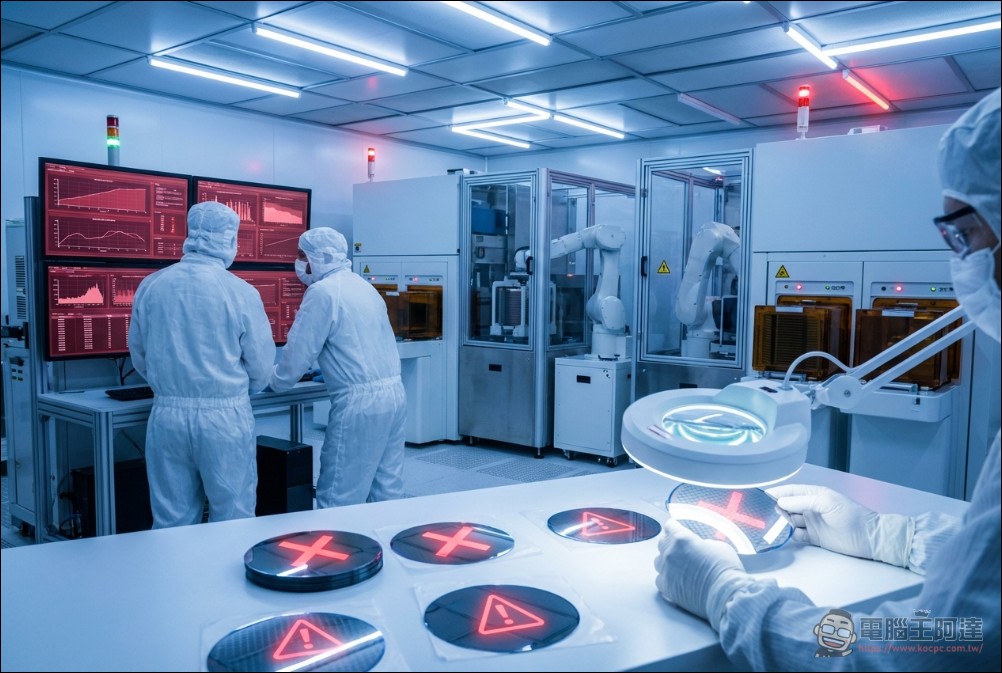
According to assessments, Samsung’s current 2nm GAA (all-around gate) yield rate is about 60%, which is still a few percentage points away from the 70% target required by Qualcomm. The report pointed out that this bottleneck has brought cooperation negotiations between Samsung and Qualcomm to a deadlock, hindering the possibility of the two parties forming a long-term foundry partnership.
Even though Samsung claims that the yield rate has increased to 60%, Qualcomm has planned all next-generation Snapdragon flagship chips (Snapdragon 8 Elite Gen 6) to be mass-produced on TSMC’s 2nm “N2P” process. Since the chip design has already been completed and entered the final tape-out stage, it is difficult for Qualcomm to temporarily change foundry partners in the short term (because of redesign).
The key reason why Samsung lags behind TSMC: Yield rate determines production capacity and cost
For years, yield rate has been a key factor keeping Samsung behind TSMC in the semiconductor foundry competition. TSMC has been like a “plug-in” since the 28nm node. Each generation of process has maintained steady improvement. Customers can trust TSMC to produce their products – even if the cost of advanced processes continues to rise, customers are not willing to easily change foundry partners.
This forms a cycle that is difficult to break: customers are unwilling to place orders with Samsung, which has unstable yields → Samsung lacks experience in mass production → it is difficult to increase yields quickly → customers are even less likely to place orders.
However, Samsung has made many changes in the 2nm generation. The 20% yield is for the second half of 2025, and by March 2026 it is said to have improved to about 60%. If this data is true, the 70% gap with Qualcomm’s requirements is not unacceptable. Moreover, Samsung’s foundry prices are usually much cheaper than TSMC, which is enough to make up for this gap.
Insufficient production capacity: Another reason for losing Qualcomm orders
However, another greater possibility is that Samsung cannot obtain Qualcomm’s next-generation Snapdragon 8 flagship chip foundry orders.Insufficient production capacity. Samsung has previously signed major customers such as Tesla, and its 2nm chip production capacity has been mainly allocated to important partners such as Tesla.
The current supply strategy of the Galaxy S26 series mobile phones also reflects the seriousness of Samsung’s 2nm yield problem. The Galaxy S26 Ultra uses Qualcomm Snapdragon 8 Elite Gen 5 processors in all markets around the world: including the United States, Europe, and Asia. No region uses Samsung’s self-developed Exynos 2600. The standard S26 and S26+ use the Exynos 2600 in South Korea, India and most European markets, but US consumers get the Snapdragon version across the board.
This analysis points out that part of the reason is because Samsung’s Exynos 2600 supply is extremely limited when 2nm yields are still immature.
Exynos 2600 performance: better than the previous generation, but still lagging behind Qualcomm
It is worth noting that the Exynos 2600 actually delivered good results in the performance test. According to market research firm TrendForcereport, Exynos 2600 is built using Samsung’s 2nm second-generation SF2 process, and its performance is unexpectedly stronger than its predecessor. However, there is still a clear gap between this performance and Qualcomm’s flagship chips. Exynos 2600 trails Snapdragon chips by up to 10% in battery life tests 28%, its 2nm energy efficiency performance still faces doubts.
三星 Galaxy S26 雙版本續航實測:驍龍 8 Elite Gen 5 大幅領先 Exynos 2600 達 2 小時 38 分鐘
TrendForce also pointed out that Samsung is reportedly aiming to complete the design finalization (tape-out) of the Exynos 2800 in 2026, but the 1.4nm transfer schedule has been delayed. Samsung said in its half-quarter earnings call and investor briefing in early 2026 that it aims to Second half of 2026 (2H26) Started mass production of second-generation 2nm process (SF2P).
Summary: The road to Samsung OEM revival is still long
For Samsung’s semiconductor foundry business, the 2nm yield issue not only affects its ability to accept external orders, but is also directly related to the supply stability of its self-developed Exynos chips. The only thing that is certain is that Qualcomm’s strict requirements for foundry quality (above 70% yield) and the fact that TSMC maintains a stable yield of 60-70% on the 2nm process make it difficult for the American chip giant to find a more suitable partner than TSMC in the short term. If Samsung wants to return to the flagship chip foundry market, in addition to continuing to improve its yield rate, it may also take time to rebuild customers’ trust in its foundry capabilities.
Source: KOCPC Chinese