


All-solid-state batteries are regarded as one of the most powerful candidate technologies for the next generation of electric vehicle batteries because they can theoretically bring higher energy density, faster charging speeds and higher safety than current lithium-ion batteries. However, the long-term difficulty of this technology has never been to make a single sample in the laboratory, but whether it can be enlarged to a real vehicle size that can actually be installed in a car and stably achieve the required performance. Nikkei Chinese website latestreportIt was pointed out that Nissan has made crucial progress in the development of all-solid-state batteries, that is, after stacking the smallest unit cell of the battery to a 23-layer scale that can be mounted on a real vehicle, it has completed the verification of charge and discharge performance, showing that this technology is moving from the laboratory stage to mass production and actual deployment.
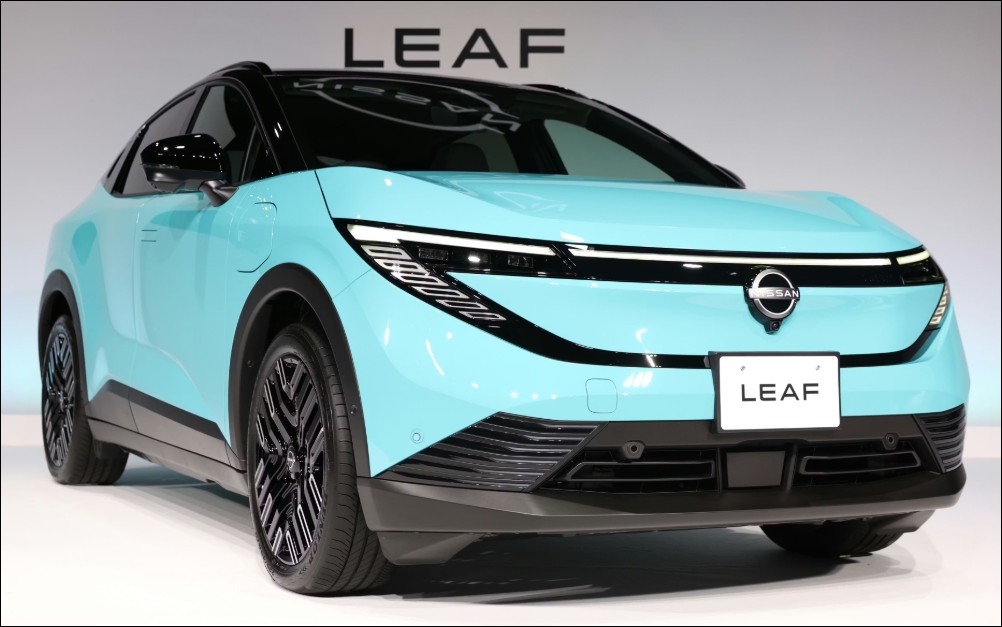
NISSAN’s all-solid-state battery takes another step toward real-vehicle applications, with 23-layer battery cells completing performance verification
For Nissan, this is not just a breakthrough at the material or component level, but an important milestone in its 2028 goal of practical all-solid-state batteries. Because the commercialization of battery technology has never just looked at the performance of a single cell, but whether it can be scaled up, mass produced, and able to work stably under actual vehicle conditions. Nikkei reportmentioned, Nissan has already achieved the necessary performance of a single cell trial in 2025, and this time it has further stacked the cells to 23 layers close to the size of the actual vehicle and still completed the verification, which means that it is dealing with the most critical engineering issues for real commercialization, rather than staying at the concept demonstration stage.
The verification of 23-layer battery cells means that Nissan has begun to deal with the real problem of real vehicle size.
When outsiders talk about all-solid-state batteries, they often focus on the materials themselves, such as solid electrolytes, lithium metal anodes, or interface stability. However, what really affects the mass production schedule is often whether the battery can still maintain stable performance once it is scaled up from a single cell to a vehicle size. The key point of Nissan’s disclosure this time is that it has stacked the smallest component unit of the battery “cell” to a 23-layer scale, and confirmed that it can still achieve the required charge and discharge performance at a size suitable for actual installation in vehicles. From a technical point of view, this shows that Nissan is no longer just making single-point samples, but is beginning to move closer to modularization, mass production and vehicle applications.
This is important because the challenge of all-solid-state batteries goes beyond experimental performance. As the number of cell layers increases, problems with internal impedance, thermal management, mechanical stress, process consistency and yield will be quickly amplified. Many technologies that seem to be very eye-catching in the research stage will face problems such as too high costs, unstable lifespan, or too harsh production conditions once they reach mass production. Therefore, Nissan did not simply announce “continuous technological progress” this time, but came up with verification results that are closer to actual vehicle scenarios, which makes the statement of practical use in 2028 more concrete than in the past.
If the technology is implemented, battery life is expected to be doubled and charging time reduced to one-third.
The all-solid-state battery currently under trial production by Nissan has twice the capacity per unit volume compared to existing lithium-ion batteries. If mounted on an electric vehicle of the same size, the cruising range can theoretically be doubled. At the same time, this battery can also withstand higher power charging, reducing charging time to one-third of existing systems. If these properties can eventually be realized in mass-produced vehicles, it will be of great significance to the electric vehicle market, because currently consumers’ biggest concerns about EVs are still focused on battery life and recharge time, and these two points are where all-solid-state batteries are most often expected to bring substantial improvements.
Of course, there is still a long way to go between the performance of trial products and the actual performance of mass-produced cars. The industry has seen a lot of publicity about “doubling battery life” and “charging in minutes” in the past, but in the end it was limited by mass production costs, material lifespan and vehicle integration and could not be fully implemented. Therefore, a more reliable way to interpret it at this stage is that Nissan has proven that its all-solid-state battery is feasible at a size closer to that of a vehicle. As for whether it can finally fully transform the battery life and charging performance into commercial vehicle advantages, it will depend on the production technology, yield and vehicle mounting verification in the next 2 to 3 years.
The goal of practical application in 2028 remains unchanged, and mass production technology will become the key to the next stage.
Another important signal from this news is that Nissan has not adjusted its 2028 practical target for all-solid-state batteries. Judging from the content of the report, the next focus will be on the discussion of production technology required for mass production. In other words, the focus of R&D work has gradually shifted from “can it be made?” to “can it be produced stably, in large quantities, and at a reasonable cost.” This is the most difficult step for any new battery from research to commercialization.
This is also in line with the current pace of all-solid-state battery competition among global automakers. Many companies, including Japanese automakers, regard 2027 to 2028 as an important time window for the first wave of all-solid-state battery introduction. Nikkei XTECH has also mentioned in the past that Japanese camps such as Toyota and Idemitsu Kosan are accelerating mass production schedule planning, showing that Japanese car companies and energy companies are considering all-solid-state batteries as one of the core technologies for the next wave of electric vehicle competition. Nissan has now disclosed the results of the 23-layer vehicle size verification to the public, which seems to be showing the market that it has not fallen behind in this competition compared to China.
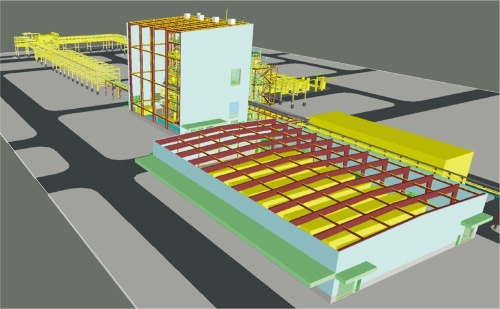
Nissan is not only betting on batteries, but also simultaneously strengthening two-way charging and SDV platforms
It is worth noting that Nissan’s technical briefing revealed not only all-solid-state batteries. Nissan also simultaneously announced new developments related to electric vehicle charging services and software-defined vehicles (SDV), including plans to develop a two-way charger that connects electric vehicles to homes and other scenarios, and is expected to be sold starting in 2028. Nissan said that the current price of a two-way charger is about 1.5 million yen. In the future, new products will significantly reduce the price, hoping to make it easier for ordinary families to introduce it. After 2030, it is even hoped to support users in selling surplus electricity back to the power company.
From a strategic perspective, this shows that Nissan’s idea is not just to upgrade the next-generation battery as a single component, but to try to integrate “new batteries, higher endurance, faster charging, home energy interaction, and vehicle software platforms” into the next generation of EV competitiveness. In other words, Nissan hopes that future vehicles will not only be transportation vehicles, but also part of energy nodes and software platforms. If all-solid-state batteries can be successfully introduced in 2028, these peripheral systems will also amplify the overall product value.
AI autonomous driving and AI partner functions show that Nissan wants to tie technology upgrades into the same main line
In addition to batteries and charging systems, Nissan also talked about SDV and AI directions at the technical briefing. According to reports, Nissan will introduce an independent in-vehicle software development platform in 2026, which is said to be able to automatically develop software using data collected from vehicles. By 2027, Nissan will also introduce AI-based autonomous driving functions, and plans to use AI to provide support through navigation and other methods to form a so-called “AI partner” function. Nissan even mentioned in its long-term vision published on April 14 that 90% of all its models will be equipped with AI autonomous driving functions in the future.
This information and all-solid-state batteries seem to be different topics, but in fact they all point to one thing, that is, Nissan is trying to integrate the competitive elements of next-generation cars into a systematic narrative, including batteries, energy management, software platforms, autonomous driving and AI assistant functions. This is quite consistent with the current evolution direction of the global automobile industry, because in the future, automakers will not only compete in terms of horsepower or appearance, but who can quickly integrate electrification and intelligence into a commercially competitive product portfolio.
All-solid-state batteries have not yet been mass-produced
It must be emphasized that this news does not mean that Nissan has solved all the mass production problems of all-solid-state batteries, nor does it mean that mass-produced EVs equipped with this set of batteries will be available on the market soon. From R&D to mass production, a large amount of process verification, cost optimization and safety testing are often required. However, the reason why the progress announced by Nissan this time is important is that it no longer just stays at the concept level, but uses more engineering-meaning indicators such as “vehicle size”, “23-layer stacking”, and “completed performance verification” to prove that the technology is moving in the direction of real implementation. However, compared with Nissan’s installation in 2028, many Chinese car companies have officially announced that they will launch vehicles this year, and small batch production will be launched in 2027. You will see whose all-solid-state battery progresses faster at that time.
Source: KOCPC Chinese