


With the explosive development of generative AI technology, the types of information security threats faced by enterprises are also rapidly changing. TrendAI, an enterprise AI security brand owned by Trend Micro, recently announced an in-depth cooperation with Anthropic to deploy the Claude Opus 4.7 model on a large scale in security research scenarios, trying to identify, prioritize and mitigate threats before vulnerabilities are exploited by hackers.

AESIR platform: Let AI use “attacker thinking” to find weaknesses
TrendAI launched the AESIR (AI Enhanced Security, Intelligence, and Research) internal security research platform in 2025, which combines machine-speed automated execution capabilities with human expert supervision, and Claude Opus 4.7 is the core inference engine of AESIR. AESIR uses Claude Opus 4.7 to conduct “attacker thinking” reasoning to determine which assets are accessible and controllable in a complex software ecosystem, as well as weaknesses that may be exploited to launch attacks. Through large-scale automated operations, AESIR can autonomously discover and verify real vulnerabilities.
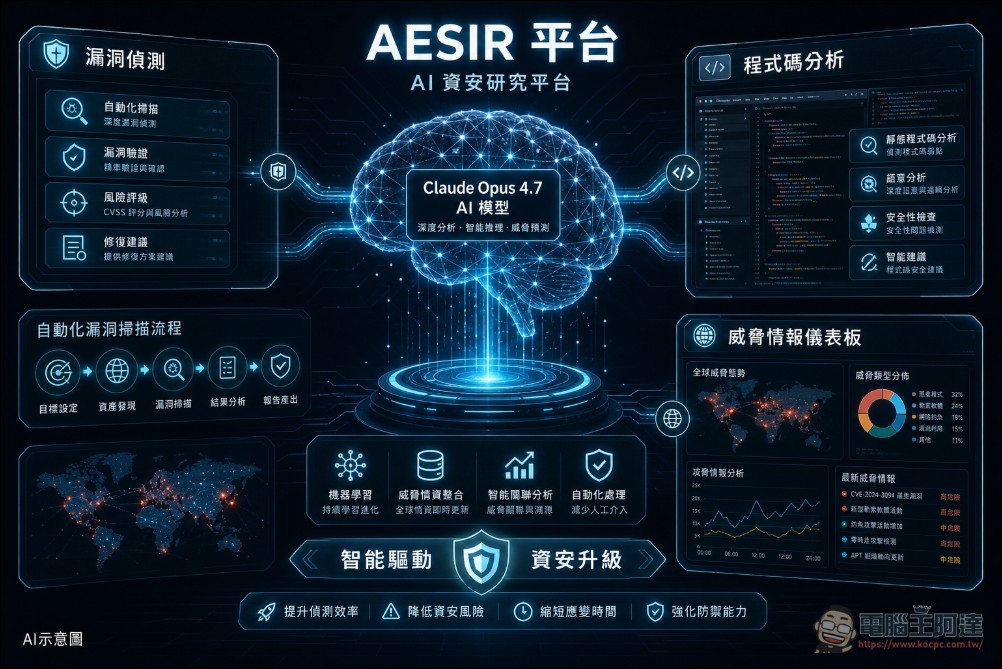
TrendAI has also joined Anthropic’s Cyber Verification Program. The program provides qualified security agencies with the authorization and credentials to conduct vulnerability research, penetration testing and red team exercises using cutting-edge AI models in a controlled environment.
A complete closed loop from discovering vulnerabilities to fixing risks
Jin Jingxiu, Chief Operating Officer of Trend Micro Enterprise Business Group, said: “AI is accelerating the discovery of vulnerabilities at an unprecedented speed, but the timeline for patching and mitigating threats has not kept pace. Our cooperation with Anthropic ensures that enterprises can obtain the highest quality vulnerability threat intelligence and effectively reduce risks before attacks occur.”
AESIR has currently cooperated with TrendAI’s bug bounty program ZDI (Zero Day Initiative) to successfully discover and help patch a number of major CVE vulnerabilities. Affected vendors include NVIDIA, Tencent, and AI platforms such as Agentic Frameworks and MCP tools that have attracted much attention recently.
The TrendAI Vision One™ platform further extends these research results to help enterprises prioritize vulnerability patching, compare attack paths, and quickly execute mitigation measures including virtual patching in hybrid cloud environments—even if formal code patching takes time, it can reduce risks immediately.
The estimated number of AI vulnerabilities in 2026 is staggering
TrendAI predicted in its “State of AI Security Report” that 2,800 to 3,600 AI-related CVE vulnerabilities may appear in 2026 alone. This number reflects the rapid expansion of the AI supply chain: from model frameworks, agent-based architectures, MCP tools to AI chips, the attack surface is expanding at an unprecedented rate. The AESIR platform is built to address challenges of this scale and complexity.
Anthropic simultaneously launches Claude Security, and the ecosystem continues to expand
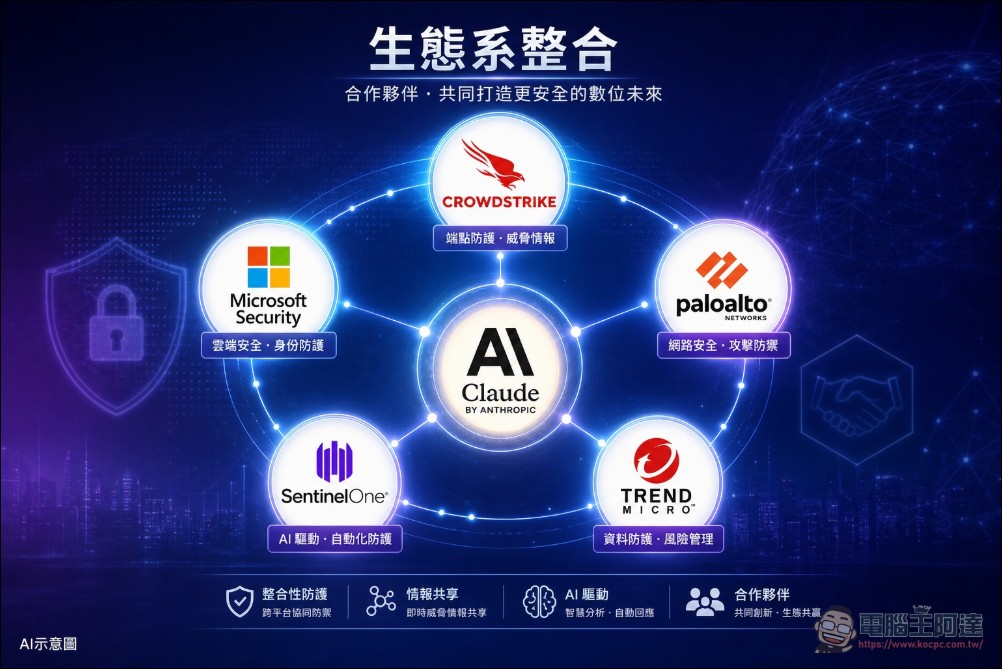
In the same week that TrendAI announced its cooperation, Anthropic also officially released the public beta version of Claude Security: a tool based on Claude Opus 4.7 specifically designed for enterprise code security scanning. Unlike traditional static analysis tools, Claude Security can understand the component interactions and data flow of the program code in a way similar to a human researcher, thereby finding complex vulnerabilities that are difficult to find with traditional tools. Many leading security vendors, including CrowdStrike, Microsoft Security, Palo Alto Networks, SentinelOne and TrendAI, have begun integrating Opus 4.7 into their respective security products.
The arms race for AI defense has just begun
TrendAI is at the intersection of two key trends in today’s security landscape: on the one hand, the emergence of new types of AI-driven threats, and on the other hand, the AI defense capabilities that must match them. From AESIR’s “attacker thinking” reasoning, to Claude Security’s automated code scanning, to the ecosystem integration of multiple major manufacturers, the application of AI in the information security field is evolving from an “auxiliary tool” to a “core capability.” For enterprises, it has become an indispensable key capability to determine which vulnerabilities pose real risks, prioritize them, and complete mitigation before the vulnerabilities are exploited.
Source: KOCPC Chinese