


Although consumption typememoryThe price has now risen to the point where everyone can no longer afford it, but the development of the next generation is still on the way. Recently, Korean media reported that the world’s three largest DRAM Manufacturers Samsung, SK Hynix and Micron have asked substrate manufacturers to carry out collaborative development of DDR6. The goal is to officially launch it in 2028 ~ 2029. The theoretical speed may be directly doubled, which is quite exciting.
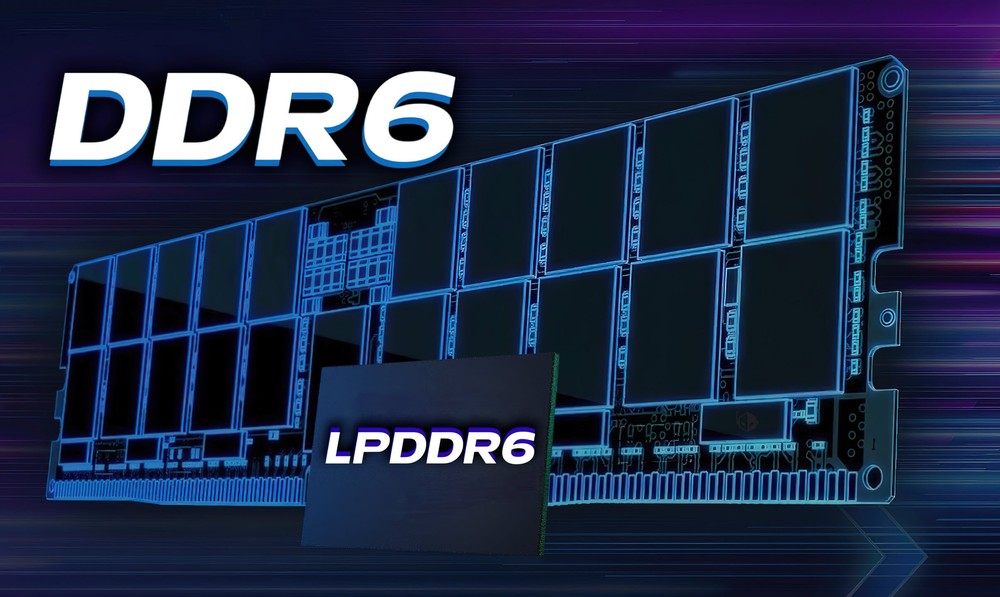
Image source:Wccftech
DDR6 development officially starts: Samsung, SK Hynix, and Micron strive for commercialization in 2028 ~ 2029, with priority given to the AI data center
According to a report by Korean media The Elec, a substrate industry insider mentioned: “Memory companies and substrate manufacturers usually start joint development more than two years before the product is launched, and the initial development of DDR6 has recently begun.”
However, the JEDEC standard for DDR6 has not yet been finalized. Parameters including module thickness, stacking structure, circuit routing, etc. are currently only partially shared information. The substrate factory has already carried out pre-development based on these preliminary designs and produced early test samples. After the specifications are finalized, they will prepare for subsequent mass production. In other words, this time the three major manufacturers did not wait until the specifications were fully finalized before developing. Instead, they entered the early verification stage in sync with the supply chain before standardization was completed.
The main reason why DDR6 will start development so early this time is related to the rising demand for AI data centers.
As the demand for high-bandwidth, large-capacity, low-power memory in AI servers continues to expand, and the current supply of DDR5 is already tight, DDR6 is likely to be first adopted by AI data center customers after it is commercialized in the future. Therefore, Samsung, SK Hynix and Micron are starting development in advance, which is equivalent to preparing for the first wave of DDR6 commercial demand that may appear in 2028 to 2029, so as to avoid falling behind competitors in terms of technology, production capacity or customer cooperation progress.
In terms of specifications, the speed of DDR6 is directly higher than that of DDR5. JEDEC specifies that DDR5 starts from 4,800 and has an upper limit of 8,800 MT/s, while DDR6 starts from 8,800 and reaches 17,600 MT/s. Representatives say that the speed range will be directly doubled.
The low-power version of LPDDR6 has been finalized before. JEDEC announced the JESD209-6 standard in July 2025, with a speed range of 10,667–14,400 MT/s and an effective bandwidth of approximately 28.5–38.4 GB/s. LPDDR6 also adopts a dual-channel architecture, a 32-byte small access granularity, and adds DVFSL (low-power dynamic voltage and frequency scaling). Overall, it is 33% faster than LPDDR5X and saves more than 20% of power.
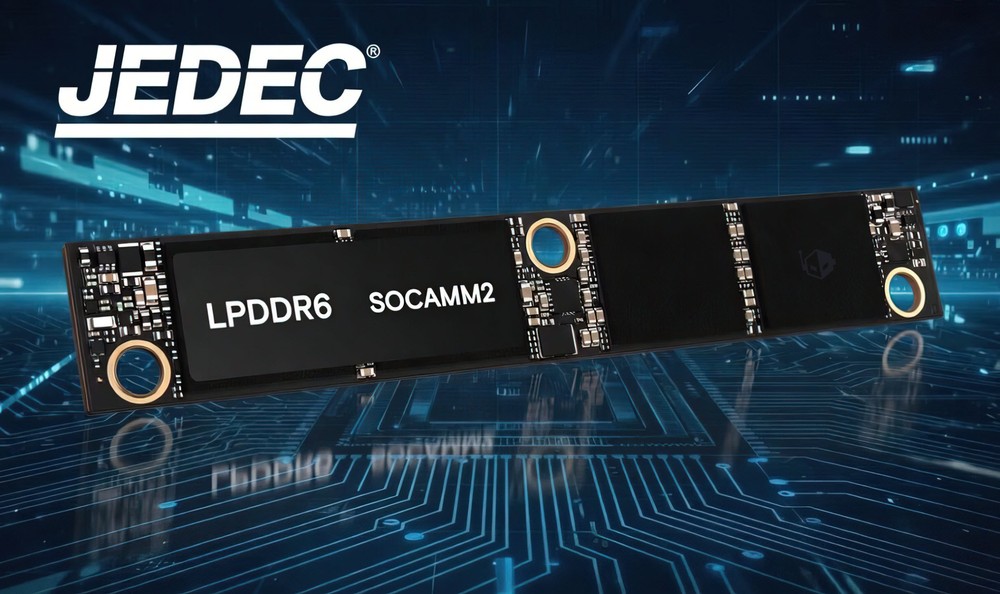
Image source:Wccftech
According to substrate manufacturers and industry consensus, the commercialization time of DDR6 should fall in 2028 ~ 2029. However, the first batch of DDR6 modules will likely be supplied to AI data centers first. Consumers will have to wait until the demand for data centers is almost filled before they have a better chance. It will probably be delayed for another year or two. Therefore, ordinary PC players can really buy DDR6 sets. It is speculated that the fastest is from the second half of 2029 to 2030. years.
Source: KOCPC Chinese