


Recently, many people have probably had their Facebook, Instagram, and Threads accounts inexplicably deleted or blocked for all sorts of strange reasons, right? This isn’t an isolated case in Taiwan—it’s a low-level mistake happening all over the world. In March this year, English teacher Camille Hanson was jolted awake by a notification: her English-teaching accounts on Facebook and Instagram, assets with nearly 1 million followers, had been marked as “pending deletion.” Meta accused her of violating its community guidelines on “fraud and deceptive behavior,” but Hanson is just a teacher who helps non-native speakers learn English. According to The New York Times,Report from July 21Meta is increasingly handing content moderation over to AI systems in an attempt to replace human reviewers, only to see a large number of user accounts mistakenly deleted by AI. What makes it even more hopeless for users is that when they try to appeal, the one reviewing their appeal is still AI (how ironic).

Meta AI globally deletes accounts at random, and with no human customer service available, users are trapped in an endless “unblocking loop.”
From “AI Takeover” to “AI Misjudgment”: The Transformation of Meta’s Moderation System
In March 2026, Meta announced plans to give more power to AI bots to decide which accounts to ban or which harmful images to delete. Months later, the company laid off thousands of employees, including those working on content moderation. Meta spokesperson Daniel Roberts claimed that the new AI moderation tools made 13% fewer errors than human employees and detected 10% more violating content. But he also admitted that all five banned accounts flagged by The New York Times to Meta were banned by the company’s “old” AI moderation tools.
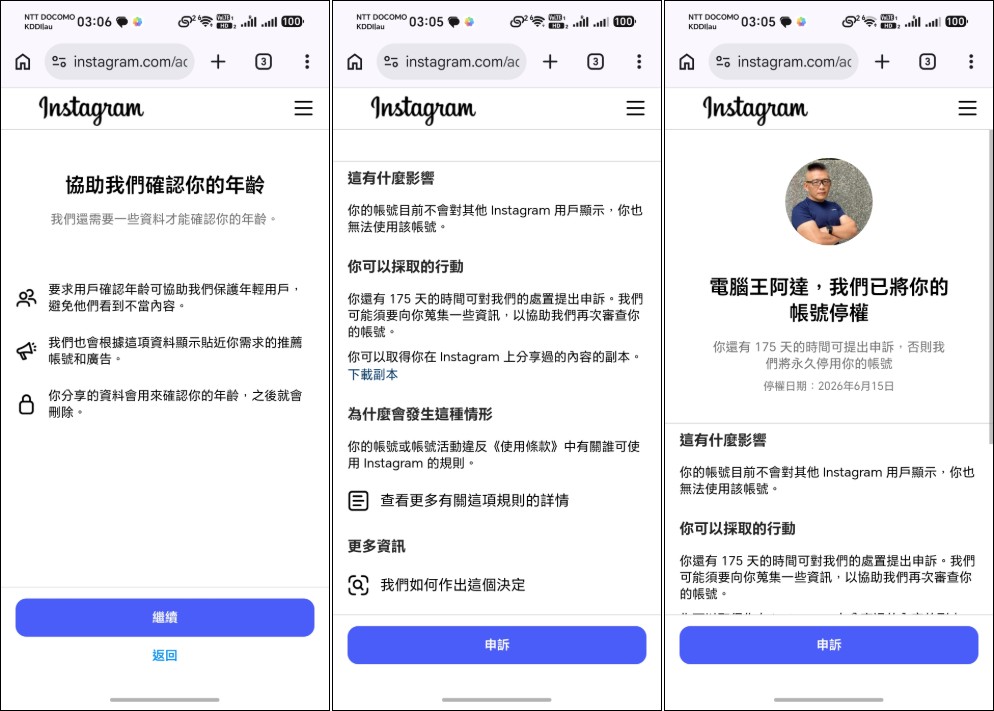
The common feature of the above cases is:After receiving the ban notice, the user filed an appeal, which was rejected by AI, and was then informed that “no new review request can be made regarding this decision.” The entire process was handled entirely by an automated system, with no human customer service agent taking over or making any judgment.。
Now Meta users have begun organizing online, with the user advocacy group “People Over Platforms” launching an online petition demanding that Meta provide more information about account bans and have humans review appeals. As of now, more than 60,000 people have signed the petition. Even more ironic is that Meta has accused many of the petition signatories of “sharing child exploitation material” and banned them, an accusation users call “nonsense” (editor’s note: I also have friends who were banned for this reason).

In June 2026, Meta’s own Oversight Board publicly stated that the company’s account suspension process “lacks due process and transparency.” After reviewing multiple appeal cases, the board noted that users often cannot obtain sufficient information to understand why their accounts were suspended, nor can they effectively file appeals.
Journalists have also fallen victim.
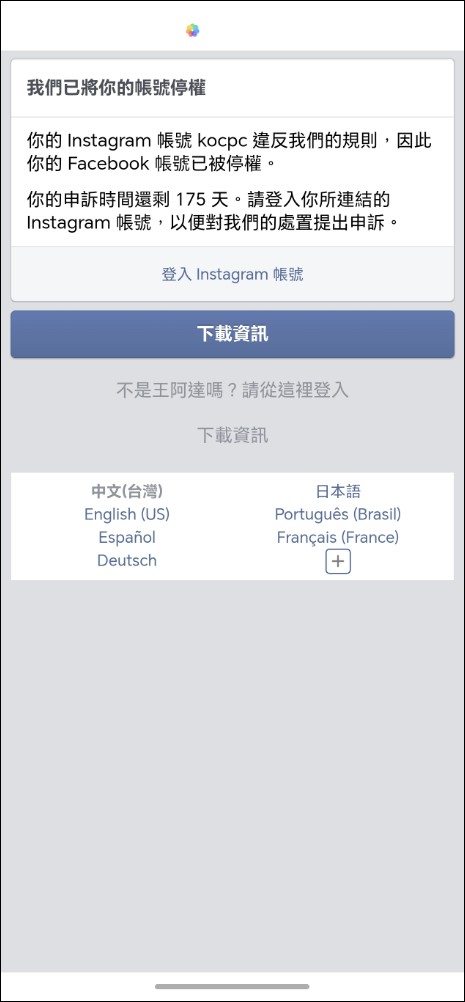
This problem is not limited to regular users or business accounts. According to the Latam Journalism Review in July,ReportIn Brazil, several journalists and local news organizations have reported that after their accounts were banned, they could only talk to AI chatbots, falling into an infinite loop with no way to reach a human customer service representative. Affected journalists noted that the AI’s response pattern was almost identical: acknowledging the problem, saying it would be handled, and then providing a link that failed to resolve the issue. For independent media that rely on social media to publish news, losing their Facebook and Instagram accounts means losing their primary channel for reaching their audience.
Systemic Risks of AI Review
Meta’s AI moderation system has experienced major problems multiple times. In May 2026, hackers exploited a vulnerability in its AI customer service chatbot to attack 34,000 Instagram accounts, including the White House account of former US President Obama. That same month, Meta employees protested an internal program that tracked keystrokes to train AI, leading the company to suspend the program. Earlier, 26 former Meta employees alleged in a lawsuit that the company used an AI algorithm to fire them, and that the algorithm targeted disabled employees. A Meta spokesperson responded: “Human resources management and organizational decisions were and are made by people, not AI.” As early as April 2026, a large number of users reported that their accounts had been deactivated without cause. Banned users claimed they had not violated platform rules and believed that AI had made mistakes.
“My mistake, sorry”: The cost of passive repair
After The New York Times flagged five banned accounts to Meta, Meta conducted an investigation and found that two of the accounts were banned due to hacking, while another was “banned for legitimate reasons.” Meta also admitted that two of the five accounts were mistakenly banned, including the Hansons’ account. Ms. Hanson eventually received an email from Meta: “We reviewed your account and found that the activity on it does comply with our community guidelines on fraud and deception, so you can use Instagram again. We’re sorry we got it wrong.”

The question is: without the New York Times getting involved, could the wrongly banned accounts have been restored? The answer is probably “no.” Rodney spent months trying every official appeal channel, and all of them failed. After Suarez’s account was restored, it got banned again, and it took media involvement to get it reinstated once more. The logic behind how this system works is: AI makes a mistake, the user appeals, AI rejects the appeal, until external pressure (media coverage) forces humans to step in.
Conclusion
Meta is pushing AI moderation on the grounds of “reducing execution errors” and “protecting user accounts,” but the current reality is that AI systems are making ban decisions without adequate human oversight, while the appeal mechanism is also handled by AI, creating a closed loop that users can barely break through. More than 60,000 people have signed a petition demanding reform, and Meta’s own Oversight Board has publicly criticized the lack of transparency, yet Meta has not announced any structural changes so far. For billions of Facebook and Instagram users worldwide, the security of their own accounts now largely depends on an algorithm they can neither understand nor challenge.
Source: KOCPC Chinese