


KYMCO recently notified ionex electric scooter owners that it will adjust its battery swap service pricing plans and require owners to sign new contracts. The new plans may significantly increase costs for some early adopters and users on lower-tier pricing plans, sparking widespread backlash and drawing attention from the Consumers’ Foundation and legislators.
What adjustments have been made to KYMCO’s Ionex electric scooter battery swapping service pricing plans? What controversies exist? The following is a summary:
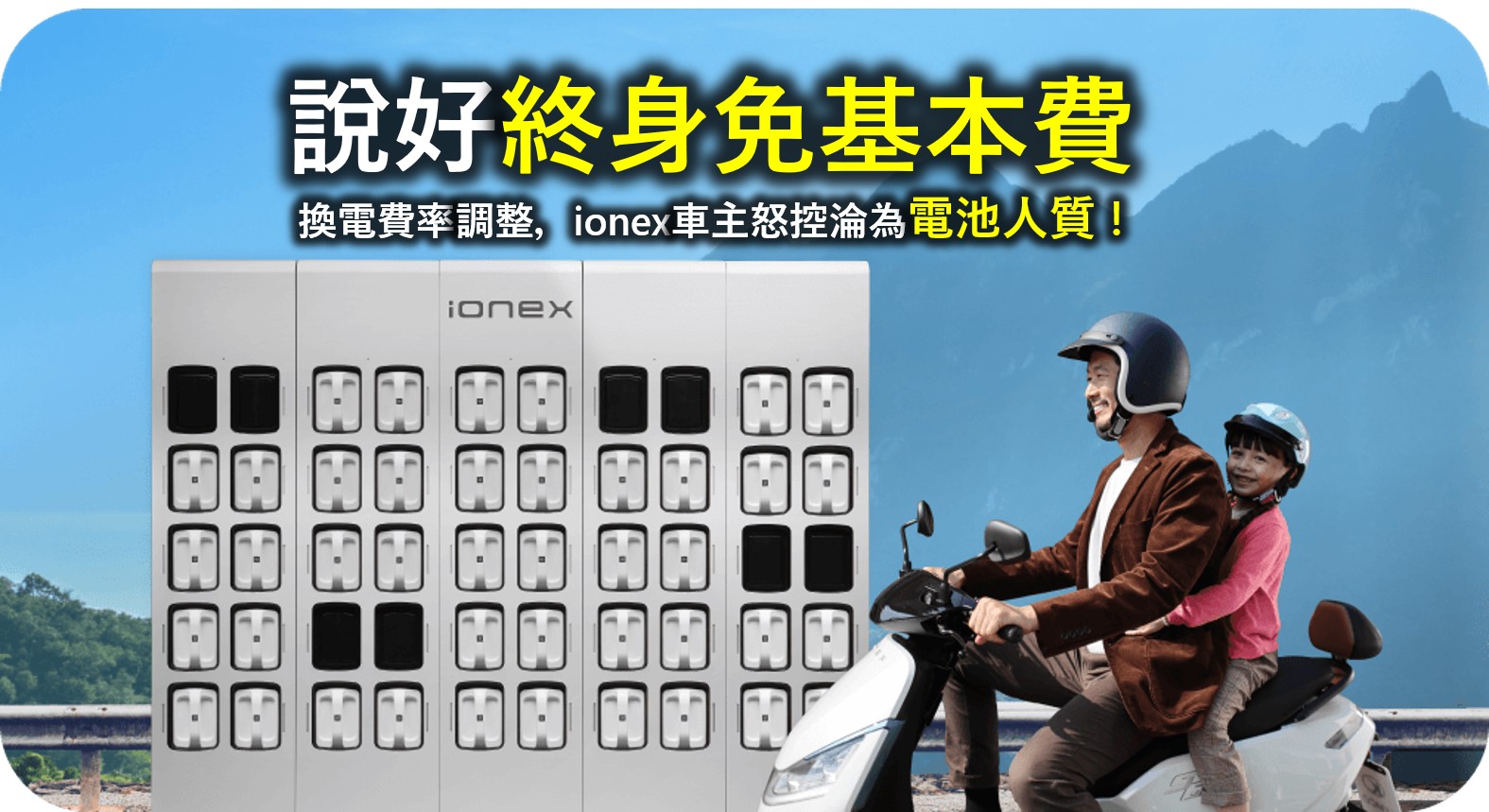
1. Adjustment of ionex electric scooter battery swapping service pricing plans?
Guangjie Co., Ltd. (ionex車能網) recently notified ionex electric scooter owners that it will adjust the battery swap service pricing plans and require owners to sign new contracts upon contract expiration. The plans are as follows:
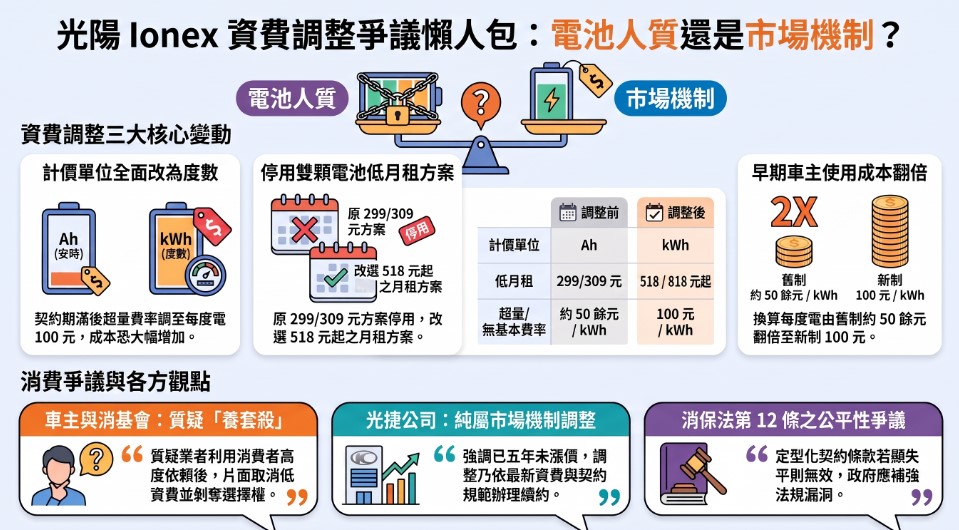
A. Key Points of the Tariff Adjustment: Change in Billing Units, some car owners’ costs have doubled:
Completely abolish Ampere-hour (Ah) pricing and switch to the internationally accepted electrical energy unit, kilowatt-hour (kWh), for billing. After the contract term expires, the battery usage fee rate for excess usage or plans without a basic fee will be adjusted to NT$100 per kilowatt-hour (kWh). The new pricing adjustment will affect early vehicle owners who enjoy “lifetime exemption from basic fees” — under the old system, converted to per-kWh pricing (approximately equivalent to 26 to 28 Ah), the rate was only about NT$50-plus, which will now double to NT$100, resulting in a significant increase in overall usage costs.
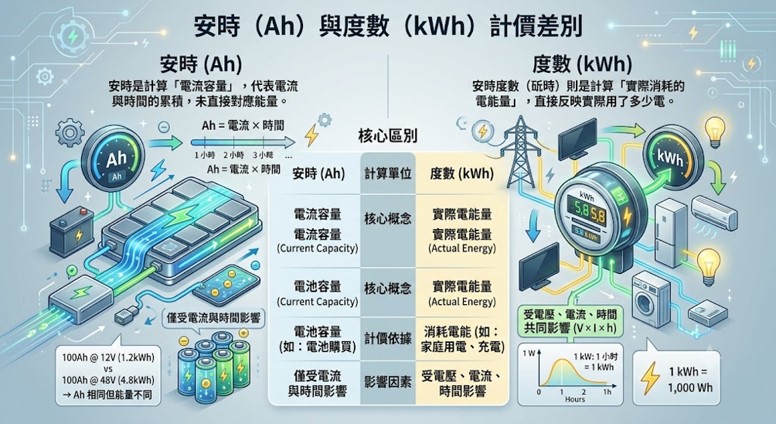
ampere-hour (Ah) and degrees (kWhWhat is the difference in pricing?
Amp-hour (Ah) measures “current capacity,” representing the accumulation of current over time, and does not directly correspond to energy; amp-hour degree (kilowatt-hour) measures “actual electrical energy consumed,” directly reflecting how much electricity was actually used.
B. Deactivate the dual battery low monthly fee plan:
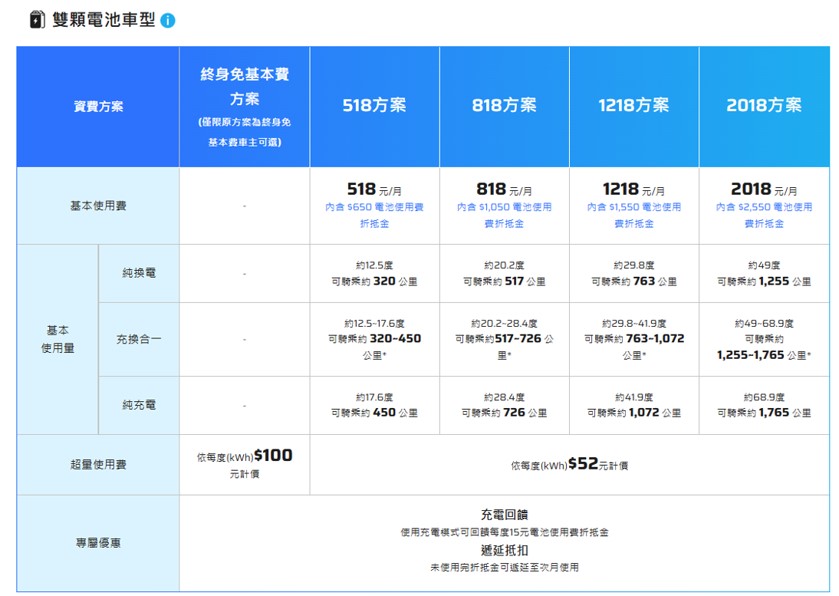
KYMCO is discontinuing its original low monthly rental plans for dual batteries, such as the NT$299 and NT$309 options, requiring users to switch to plans like NT$518 or NT$818 instead. Overage fees are calculated at NT$52 or NT$100 per kilowatt-hour, depending on the plan.
C. Contract Specifications:
KYMCO is requiring owners to sign a new service contract upon expiration, and owners are questioning whether this reneges on the promise of a “lifetime waiver of basic fees.”
2. What controversies did the ionex battery swap service rate adjustments cause?
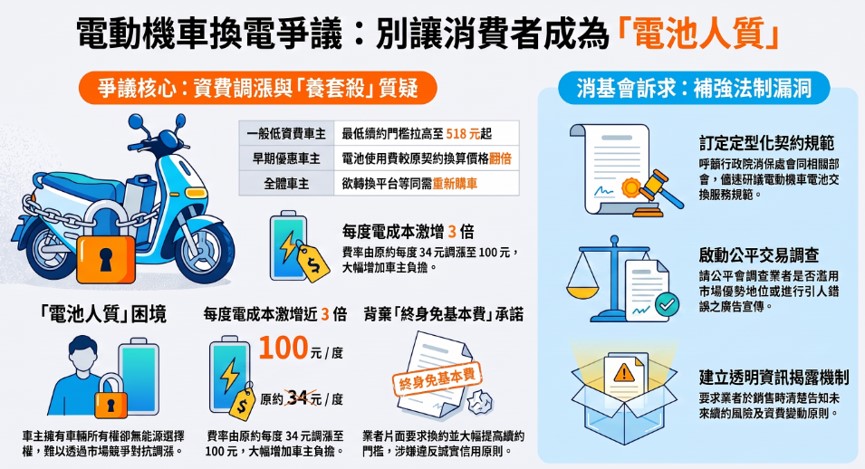
After ionex electric scooter battery-swapping fees were changed to per-kilowatt-hour billing, some owners with lifetime basic-fee waivers and low monthly rental plans now face having to sign new contracts after expiration. The adjusted thresholds and billing methods have increased their financial burden. Some owners suspect they are being lured, trapped, and victimized by Guangjie Co., Ltd., becoming battery hostages. They have filed complaints and appeals with the Consumers’ Foundation and legislators.The Consumers’ Foundation said it has received a number of complaints against Guangjie Co., Ltd. (Ionex), questioning whether the company, through standard-form contract terms, unilaterally canceled the original low-rate options after consumers had already formed a high degree of dependency, and then raised renewal prices to a level that consumers were practically unable to avoid.
AppellantIt pointed out that the economic conditions and usage costs on which consumers based their vehicle purchase have been fundamentally changed. After the original contract period expires, the provider no longer offers the original low-cost rate plan for the battery-swapping fee scheme, and substantially raises the threshold for contract renewal, forcing consumers to pay significantly increased monthly rental fees or battery usage fees; otherwise, they cannot continue to use the service normally. As a result, consumers are effectively compelled to accept the new terms imposed by the provider.
Guangjie CompanyThe company stated that its battery fees have not increased for a full five years, and this adjustment is made purely in accordance with market mechanisms. The original contract lease period is 24 months. After the contract expires, consumers who wish to continue using the service should renew based on the latest fee plan announced by the company at that time. All related notifications will be handled in accordance with the contract terms.
Consumers’ Foundation, Chinese TaipeiBelieves that this case is no longer a mere price adjustment.Whether the issue is contract expiration, or major consumer protection issues such as the fairness of standard-form contracts, abuse of market dominance, deprivation of consumers’ reasonable right to choose, and insufficient regulation of battery swap services under current laws, these merit serious government attention. The Consumers’ Foundation believes that under Article 12 of the Consumer Protection Act, standard-form contract terms that are clearly unfair are void. It calls on the Consumer Protection Division of the Executive Yuan to study and formulate standardized contract rules for electric motorcycle battery swap services to remedy loopholes in the existing legal framework.
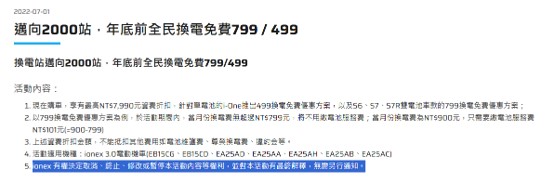
Since past Ionex battery-swap service discount programs have all included the disclaimer 【Ionex reserves the right to cancel, terminate, modify, or suspend the content of this activity, and holds final interpretation of this activity without further notice】. Given the lack of standardized contract terms for electric scooters, Ionex’s low market share in electric scooters, the continued losses of the Ionex battery-swap network, and the fact that the Fair Trade Commission chairperson is still in an acting capacity, it is unfortunately unlikely that the Executive Yuan Consumer Protection Committee and the Fair Trade Commission will be able to seek justice for some Ionex owners.
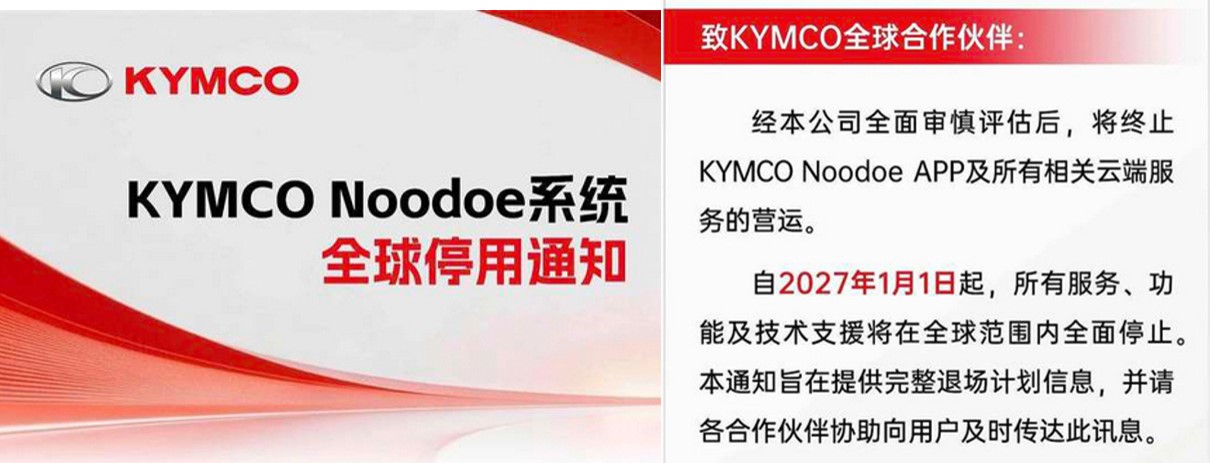
In April 2025, Kymco underwent a family upheaval, with Ko Chun-pin taking over as chairman. He gradually replaced the previous management team and redefined strategy, shifting the business focus back to gasoline scooters and slowing down electric vehicles. In addition to adjusting the battery swap service pricing plans for Taiwan’s electric scooters to stem the bleeding, Kymco’s U.S. and China operations have both announced the discontinuation of the “Kymco Noodoe” connected vehicle network.
Taiwan’s electric scooters have sparked considerable controversy in the past over battery swapping versus outright battery purchase.Besides KYMCO’s battery-swap fee rate controversy this time,Gogoro has also drawn strong backlash from owners in the past over contract terms such as canceling the “unlimited riding” plan, raising subscription fees, and fining delivery riders for commercial use. However,Taiwan’s electric scooter market size has fallen short of expectations. To maintain battery swap quality and the operation of swap station infrastructure, the adjustment of battery swap fees appears to be an irreversible trend. In the future, marketing for electric scooters can no longer emphasize affordability, nor should it target light-use owners. Instead, it should focus on suitability forUrban commuters、Short-to-medium distance commuter, valueEco-friendly and low-carbonandQuiet riding experienceTalent is the right path.
Source: KOCPC Chinese