


OpenAI The latest video generation AI launched at the end of September 2025 “Sora 2Within a short period, it sparked intense attention among tech enthusiasts and creators worldwide. Sora 2 can automatically generate high-precision videos with natural speech and sound effects, and is hailed as a “milestone in AI video creation” for its remarkable realism and flexibility. However, the astonishing power of this technology has also brought the issue of “copyright infringement” to the surface, as the platform is flooded with videos using copyrighted characters such as Pikachu, Mario, Link from The Legend of Zelda, and Sonic the Hedgehog, prompting warnings from IP rights holders and legal experts.
Japanese gaming and anime IPs face widespread abuse as Sora 2 sparks copyright controversy.
Since the release of Sora 2, OpenAI’s official app Sora has been flooded with user-generated character videos, many of which are AI-adapted versions of famous game characters and film figures. For instance, netizens have used Sora 2 to create various short films based on well-known Nintendo IPs, even branching out into Star Wars scenes. Content like this is everywhere on X and across various social platforms.
Sora 2 just broke the Internet yesterday.
Reimagine famous movies
100% AI parody
1. “Star Wars” but starring Mario & friends pic.twitter.com/t9QqOT8RnG
— Min Choi (@minchoi) October 2, 2025
However, such creative freedom also comes with significant risks. Since AI models can generate videos featuring protected characters without authorization, the content may violate copyright and trademark laws, and could even potentially infringe on individuals’ right of publicity. As these videos spread widely across social media, OpenAI has also had to face external scrutiny over its platform regulation and ethical responsibilities.
And finally – “The Titantic” starring Pikachu and Eevee pic.twitter.com/63HjZC9toy
— Justine Moore (@venturetwins) October 1, 2025
Altman came forward to respond, committing to establish a “character rights control” mechanism.
On October 4, 2025, Sam Altman published on his official blog an article titled 「Sora update #1」 statement, directly responding to this copyright controversy. In it, he clearly stated that OpenAI has begun developing a mechanism that would allow rights holders of characters to “specify how characters can be used in Sora 2.” This mechanism would give rights holders greater control. For example, companies such as Nintendo, The Pokémon Company, or Disney could use this feature in the future to choose whether to allow or prohibit their characters from appearing in AI-generated videos, and could even set specific usage scopes and conditions. In other words, OpenAI will no longer let AI models use publicly available character image data without restriction, but will instead establish a more transparent, controlled licensing ecosystem. (Currently, Sora 2 does indeed already prevent videos from being made with related IP.)
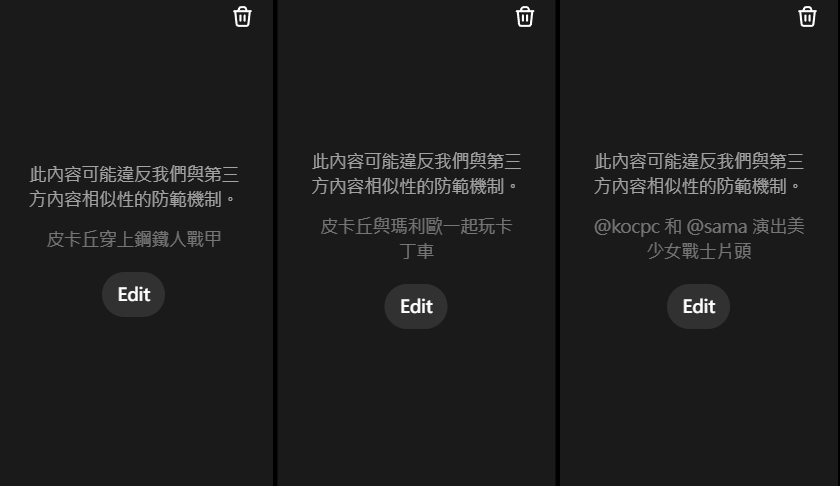
In the article, Altman emphasized: “We respect the efforts of all creators and rights holders, and Sora’s growth must be built on a foundation of mutual trust and legal authorization.” He also mentioned that the company is in discussions with several well-known entertainment brands and expects to officially launch this control feature in the coming months.
Besides rights control, Altman also revealed another important plan: OpenAI plans to A portion of Sora 2’s revenue is distributed to the rights holders of licensed character videos.He said that OpenAI is currently working on a specific revenue distribution model and plans to launch a pilot program in the near future.
Although the distribution details have not yet been announced, the move is seen as a new step by OpenAI toward “mutual prosperity” in the generative content space. Industry observers believe this model could help resolve some copyright disputes and open a new chapter in the coexistence of entertainment and AI technology. If successfully implemented, an “AI copyright licensing platform” could emerge in the future, allowing creators to protect their rights while also tapping into new revenue streams from AI video generation. On the issue of Japanese anime IP being misused, Altman specifically referenced Japan’s content creation culture in his article, writing: “I have deep admiration for Japan’s incredible creativity, and I am moved by the strong connection between Sora 2 users and Japanese content.” These remarks not only express respect for Japanese IP culture but also reflect the significant role Japanese content plays in the global AI creation community.
My favorite new trend in the Sora app is putting Pikachu in every movie.
This is “Saving Private Pikachu” 👇 pic.twitter.com/pV8JYUb9SZ
— Justine Moore (@venturetwins) October 1, 2025
“Cameo” Feature Update: Giving Individuals Control Over Their Own Image Usage
Besides the character copyright issue, another key feature of Sora 2:「Cameo」個人出場功能, also received a major update recently. This feature allows users to embed real-life images of people into generated videos, creating the effect of “starring in it yourself” or “virtual endorsement.” However, as the number of users surges, there have also been controversies about people being “inserted into videos” without their consent.
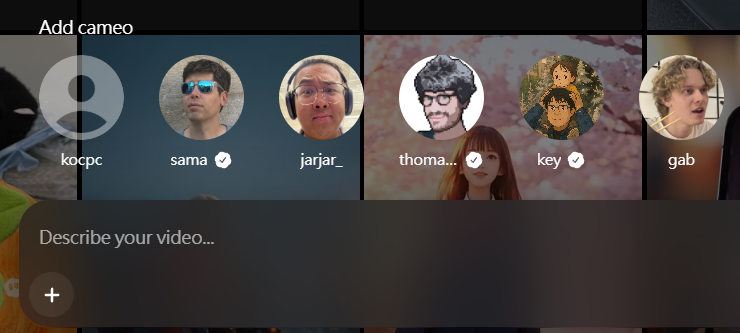
In response, Sora 2 development lead Bill Peebles announced on October 6, 2025, that the team is developing a new control panel that will enable users toClearly specify how you are used in videos.This feature will be officially integrated into OpenAI’s official app “Sora” in a future update.
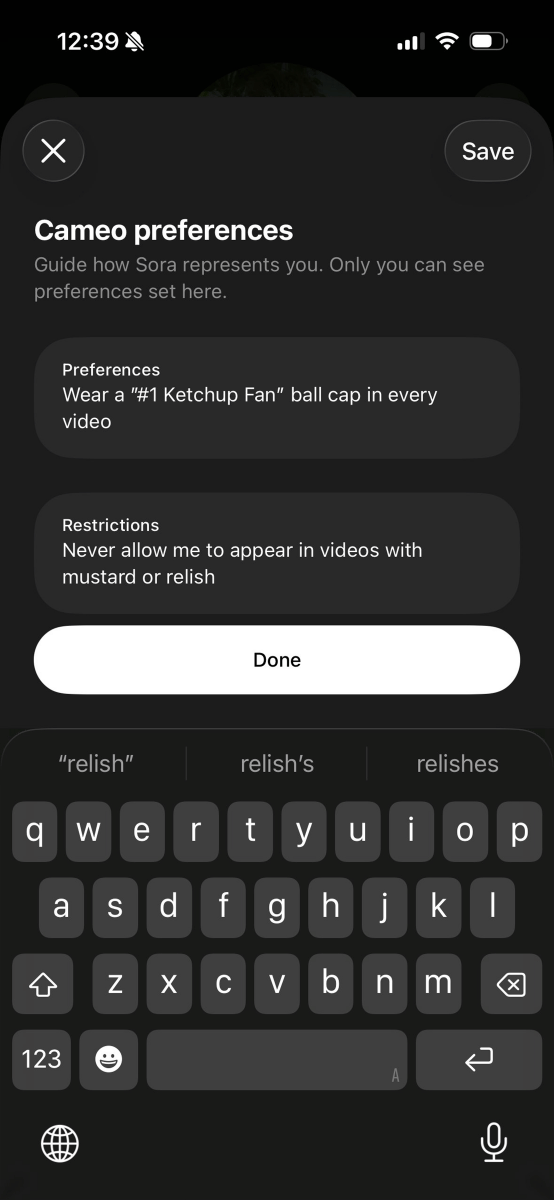
According to a screenshot publicly shared by team member Thomas Dimson, users can set conditions through natural language commands, such as: “Do not use my likeness in videos containing political speech,” “Forbid me from saying certain specific words,” “I must wear specified clothing in all videos,” and so on. These rules will be automatically recognized and enforced by the model, ensuring that a person’s image is not misused or misrepresented.
In addition to character and individual rights protection, Peebles also revealed that future updates will include multiple security and transparency improvements:
-
Video Perspective Watermark Enhancement:
OpenAI will enhance the visibility and recognizability of watermarks, allowing viewers to more clearly distinguish AI-generated content and prevent forgery and misinformation. -
Model Safety Upgrade:
The team continuously adjusts the generation logic and training data to reduce the risk of generating inappropriate or misleading content, ensuring the model adheres to ethical standards and legal regulations. -
Fixed account integration issue.:
The issue where users previously had to delete their ChatGPT account when deleting their Sora account has been fixed. Going forward, the two can be managed independently, improving the user experience.
These updates show that OpenAI is attempting to strike a balance between technological innovation and social responsibility. The potential of generative video technology is certainly immense, but without comprehensive regulations and control mechanisms, it could trigger more ethical and legal challenges.
Source: KOCPC Chinese