


Ransomware is a well-known threat that can disrupt businesses and cause real problems for everyday people. When you suddenly can’t access important files—such as family photos, homework, or financial documents—the impact is immediate and personal. As this risk grows, Google is introducing an AI-powered system in Google Drive on desktop that can detect ransomware activity early and help users recover before the damage spreads.
Google Drive AI upgrade can detect ransomware before it spreads.
Based on the provided text Google’s blog postGoogle is embedding a new layer of protection in Drive for macOS and Windows to monitor for mass file encryption or corruption, a behavior that typically signals a ransomware attack. This AI model doesn’t look for malicious code (as traditional antivirus does) but instead monitors how files change.
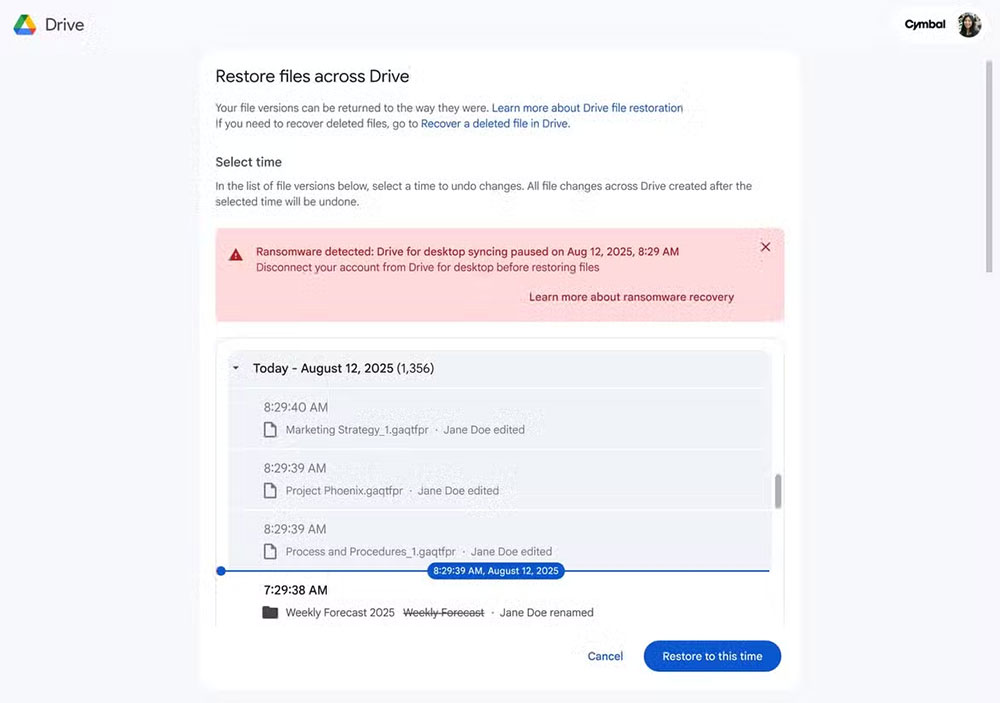
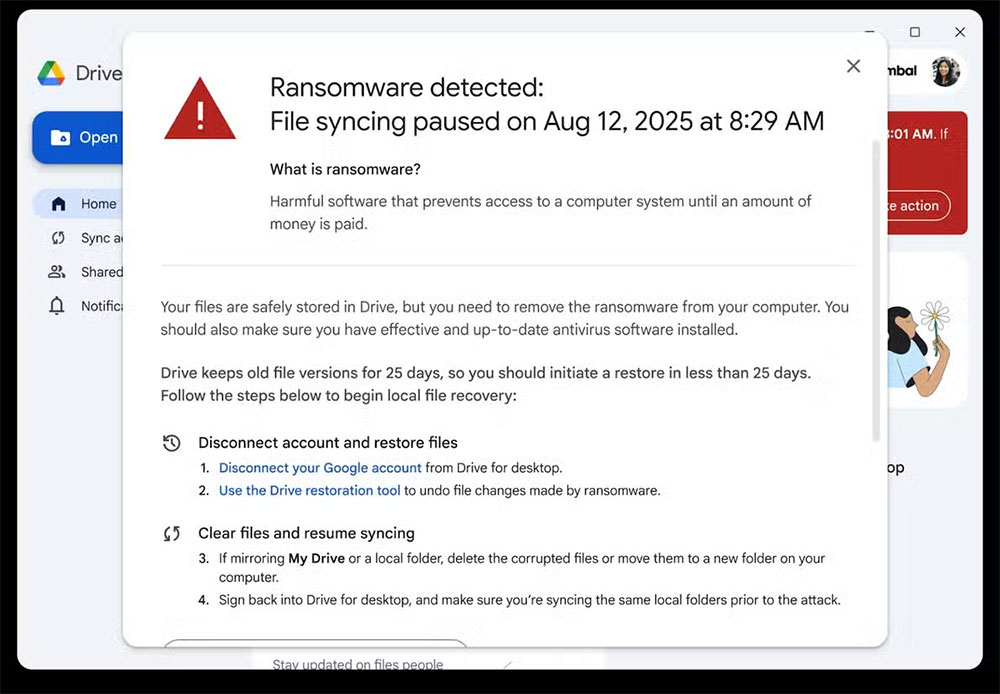
Once it detects a suspicious pattern (usually after a few files have been tampered with), it pauses the sync between your device and the cloud, creating a protective barrier so compromised files can’t overwrite the clean ones in your cloud drive. After that, Google gives you the chance to get your files back to normal. You’ll receive alerts on your computer and in your inbox, and you can use the new, easy-to-use web interface in Google Drive to restore files to a safe version.
Today, ransomware remains a serious threat. In 2024, 21% of intrusions tracked by Mandiant involved ransomware, with the average cost per incident exceeding $5 million. Many organizations—particularly healthcare, retail, education, manufacturing, and government—feel this acutely. What is often overlooked is the phase that occurs after the attack begins but before your data is fully corrupted. Google’s logic is that antivirus tools attempt to block threats at the entry point, and backup systems help you recover after damage occurs; the gap between the two is where AI tools provide protection.

Google hasn’t positioned this as a replacement for antivirus or endpoint detection/response (EDR) systems. You still need layered defense, but this adds a buffer that catches things before it’s too late. One point worth noting: the tool focuses on file types that ransomware tends to target (such as Office documents and PDFs), rather than Google’s own native files/sheets, which already have built-in protection. Additionally, Google says it won’t collect user data to train its AI models (at least not without explicit permission).
This AI ransomware detection was initially launched as a public beta. For most Google Workspace business customers, this feature comes at no extra cost; personal users can also access file recovery features without paying extra. At present, there is no word on whether Google will extend similar protections to its enterprise cloud storage products.
Source: KOCPC Chinese